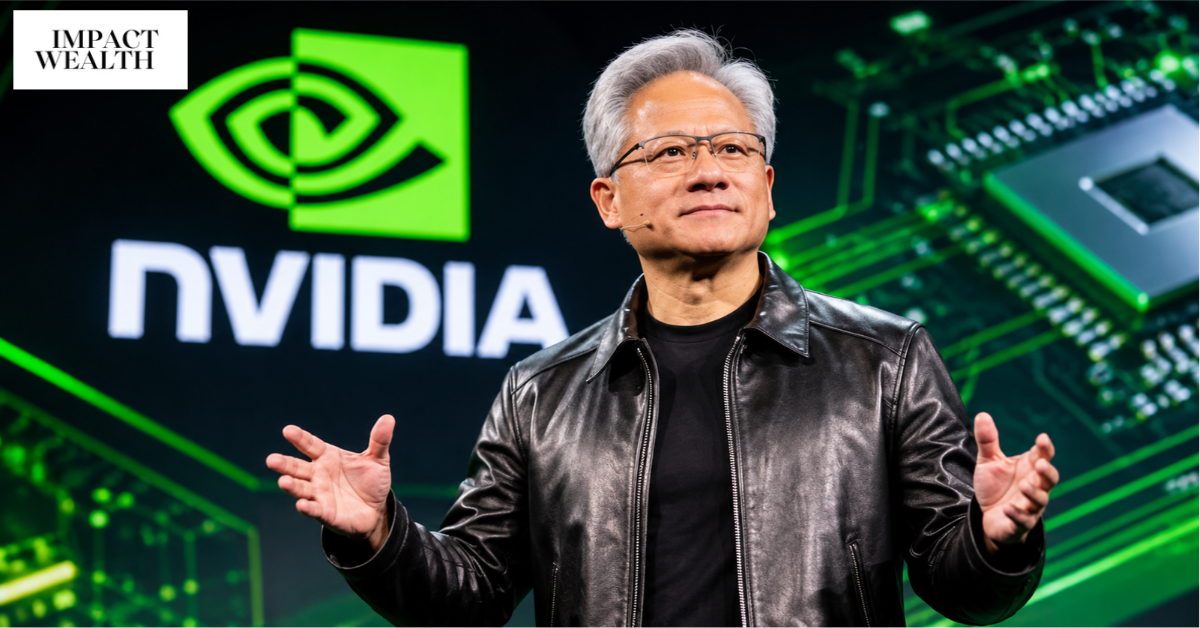
Nvidia has reinstated Jensen Huang as CEO. The company announced the decision on November 23, only 11 days after he resigned. With Jensen Huang reinstated, the world’s most closely watched chipmaker returns to its co-founder after a month of scandal, political pressure and market turmoil. This article explains what happened, who said what, how the timing lines up with Anthropic’s record IPO, and what investors should watch next. It draws on company filings and reporting from major news outlets, and it attributes every allegation to its source. Nothing here is investment advice.
What Nvidia Announced
Nvidia’s board voted unanimously to restore Huang as president, CEO and board member, effective immediately. The board said a series of meetings with Huang satisfied it on his candor and ability to lead. It also said it received input from senior levels of the U.S. government and felt confident that his return poses no national security risk. The statement did not name the officials involved.
Chair Harvey C. Jones keeps his role. Colette Kress, who served as interim CEO, continues as chief financial officer. In the company’s filing, Huang said, “I can’t wait to get back to work.” Meanwhile, an independent probe into the reported foreign intelligence effort continues. You can read the full text in Nvidia’s 8-K filing.
Timeline: A Chaotic Month at Nvidia
The story moved quickly. Here is the sequence, based on BBC reporting:
- October 29: The New York Times reported that Huang had a close relationship with a woman whom U.S. officials allege is a Chinese spy. The report said Secretary of State Marco Rubio had warned officials about it earlier in the year.
- November 8: Huang admitted a romantic relationship outside his marriage. Nvidia’s board opened an independent investigation.
- November 9: President Trump said the FBI was investigating. Beijing rejected the spying allegations as a smear.
- November 10: Anthropic’s amended IPO filing disclosed that Nvidia agreed to buy about $10 billion of shares in a private placement.
- November 11: Reports emerged of a separate relationship with a colleague. The board reportedly met to discuss his future.
- November 12: Huang resigned as shares fell. Kress became interim CEO.
- November 16: A “Bring Jensen Back” campaign gained traction. Trump said he would not mind a reinstatement. Nvidia dismissed the campaign.
- November 17: On the earnings call, Jones said the board “does not intend to reinstate Jensen as CEO” and that it had hired a search firm.
- November 18–19: Anthropic priced its IPO at $83 and began trading on the Nasdaq as ANT on November 19, while Huang was out.”
- November 20: Shares closed down nearly 14% after Reuters reported that the SEC was investigating the company’s accounting practices.
- November 23: The board reversed course.
Why the Board Reversed Course
Several forces pushed in the same direction. First, the stock had fallen sharply. Second, the U.S. government gave assurances on national security. Third, prominent investors and tech leaders pressed for his return.
BBC economics editor Faisal Islam argued that the markets simply did not like a Nvidia without Huang. He also pointed to the White House as the biggest reason for the reversal. Analyst Dan Ives told CBS that the board “had no choice,” because the resignation had turned into a broader economic and market problem. One tech investor told the BBC that the outcome was not a huge surprise, since Huang had said he would be honored to return.
The episode also echoes OpenAI’s 2023 crisis. The board fired Sam Altman then, and he returned five days later. However, Altman’s return followed a negotiated deal and a new board. Huang’s came from Nvidia’s existing board.
Trump’s Role and the Political Response
President Trump played an unusually visible part. He told CNBC that he spoke with board members through direct and indirect contacts. He said the board wanted to know whether a national security problem existed, and that his administration told them it did not. Asked whether Huang would have returned without him, Trump said, “I believe my intervention was very important.” NBC News called his push highly unusual for a U.S. president.
Trump also said he first backed the idea of former Apple CEO Tim Cook running Nvidia. He later concluded that Huang’s return would help the stock more. In addition, he voiced concern that China might try to hire Huang if Nvidia did not take him back.
On Truth Social, Trump said the board made the “correct and proper decision.” He also praised Huang as a patriot and national treasure, and he said the attorney general confirmed that the government has no evidence of unlawful conduct. Trump has described the affair as a lapse in judgment rather than a security matter.
Not everyone agrees. Senator Elizabeth Warren called the decision reckless. She is set to chair the Senate Banking Committee when Democrats take control in January, and she said Huang’s return raises the urgency of export control legislation. Republican Representative Don Bacon argued that Nvidia should have moved on without Huang. He also asked for more transparency about who pushed for the reversal. Treasury Secretary Scott Bessent had earlier urged a major shakeup and an outside hire, before sounding more open to a reinstatement on Sunday.
What Tech Leaders Said
Reaction from the technology industry ran mostly in Huang’s favor, though some voices stayed cautious.
- Elon Musk reacted within minutes. He posted on X, “The mistake has been corrected.” Earlier, he joined dozens of tech leaders in signing a “Stand With Jensen” letter. The letter argued that Huang deserved “due process, not mob justice.”
- Sam Altman, OpenAI’s CEO, expressed empathy after the resignation. He said it is “hard to imagine the AI revolution without Jensen.”
- Jeff Bezos said he lacked the details to judge whether Huang should return. Still, he said Huang deserves admiration and respect for building the company.
- Tim Sweeney, the CEO of Epic Games, also called for Huang’s reinstatement, according to the BBC.
Supporters stressed Huang’s role in building the AI industry. For example, Musk claimed that critical deals involving Nvidia technology could suffer without him. Critics countered that no executive should sit above scrutiny, especially when national security concerns are in play.
Market Reaction
Investors responded immediately. Nvidia shares opened about 30% higher. According to the BBC’s Faisal Islam, the jump added roughly $1 trillion to the company’s value at the open. He said no precedent exists for such a one-day gain for a single company. The tech-heavy Nasdaq also rose more than 6% in early trading, which reversed Friday’s losses.
Context matters, though. Even after the bounce, Nvidia sits about 25% below its level a month ago. The BBC reports that the company’s value peaked at $5.8 trillion in early October and now stands near $3.8 trillion. Wider concerns also remain. Investors had already worried about Democratic gains in the midterm elections, since many Democrats campaigned for tougher AI regulation. They also keep asking whether huge AI investments, which Goldman Sachs expects to exceed $1 trillion in 2026, will pay off.
Reinstated After the Anthropic IPO
Huang’s exit and return bracket one of the biggest market events of the year. Under Anthropic’s 10 November filing, Nvidia agreed to buy about $10 billion of shares at the IPO price, part of a $26 billion private placement. Anthropic priced the offering at $83 on November 18, above its range, and raised $81.3 billion, the largest IPO on record. Shares opened at $111.50 on November 19. All of this happened while Huang was out. The board reinstated him four days after the debut.
The commitment itself predates his resignation, so it was not a deal struck in his absence. It does tie Nvidia’s balance sheet to Anthropic’s performance, and the purchase depends on the IPO completing and other contract terms. Nvidia has not publicly detailed settlement, so investors should watch for that.
What Investors Should Watch Next
With Jensen Huang reinstated, the scandal is not necessarily over. Several questions remain open:
- The independent probe: its findings could still affect governance and the board’s confidence.
- The reported SEC inquiry: Reuters reported an investigation into accounting practices, and Nvidia’s response will matter.
- Export controls: last week, new interim guidelines required Chinese firms to obtain a U.S. license for advanced chips. Congress may push further when Democrats take over committees in January.
- Circular financing: Nvidia sells chips to customers such as Meta, SpaceX and OpenAI, and it also lends to or invests in some of them, including its roughly $10 billion commitment tied to Anthropic’s IPO. Analysts worried about how that web of deals would hold up without Huang.
- Key-person risk: Huang had up to 200 people reporting to him directly. The stock’s swings show how much of Nvidia’s value investors tie to one person.
- Anthropic stake: whether Nvidia’s $10 billion purchase settles as planned, and how ANT shares trade.
Our earlier look at Nvidia’s CEO change and portfolio concentration explains how larger investors think about that exposure. Likewise, our guide to direct investments for family offices covers how they weigh single-company positions against a broader portfolio.
Conclusion
The Jensen Huang reinstated story shows how much a single founder can shape a company’s value, its politics and its market. Supporters point to his role in building the AI boom. Critics point to unanswered questions about oversight, export controls and political influence. Both sides have a case. For now, investors should follow the independent probe, the regulatory questions and Nvidia’s next results, and they should treat headlines with caution as the story develops.
FAQs
Is Nvidia reinstating Jensen Huang?
Yes, and it already has. Nvidia’s board voted unanimously on November 23, 2026, to reinstate Huang, effective immediately. It announced the decision in an SEC filing.
Is Jensen Huang CEO again?
Yes. He is again president and CEO, and he is back on the board. Colette Kress, who served as interim CEO, continues as chief financial officer. Harvey C. Jones stays on as board chair.
Did Nvidia buy a $10 billion stake in Anthropic while Huang was out?
Nvidia agreed to buy about $10 billion of Anthropic shares at the IPO price, a commitment disclosed in a filing before Huang resigned. The IPO priced and began trading while he was out. Nvidia has not detailed when the purchase settles.
Why did Jensen Huang resign?
He resigned on November 12 after reports about his relationships, including one with a woman whom U.S. officials allege is a Chinese spy. China rejects the allegation.
How did Nvidia’s stock react?
Shares opened about 30% higher on November 23. They remain well below their early October peak.
Can Nvidia survive without Jensen Huang?
The company kept operating under interim CEO Colette Kress, but investors reacted badly to his exit. Shares fell sharply after the resignation and jumped about 30% when he returned. That swing shows how much of Nvidia’s value the market ties to him. Jeff Bezos said he would not hire an outsider to replace him, because complex companies rarely do well with outside CEOs.
Why is Nvidia stock falling?
Several factors hit the stock in November: the scandal around Huang, his resignation, and a Reuters report of a reported SEC inquiry into accounting practices. Wider doubts about AI spending added pressure. According to the BBC, Nvidia’s value fell from a peak of $5.8 trillion in early October to about $3.8 trillion, even after Monday’s rebound. “Collapsing” overstates it, since the shares still sit about 25% below their level a month ago after the rebound.
What does Elon Musk say about Nvidia?
Musk backed Huang throughout. He signed the “Stand With Jensen” open letter calling for his return. When Nvidia reinstated him, Musk posted on X, “The mistake has been corrected.” He also claimed that critical deals involving Nvidia technology could be lost without Huang.
Is Elon Musk buying Nvidia chips?
Yes, through his companies. The BBC lists SpaceX among Nvidia’s customers, alongside Meta and OpenAI. Fortune also reported that Musk and Larry Ellison pressed Huang for more GPUs.
Who is Nvidia’s largest shareholder?
Vanguard. Nvidia’s regulatory filings show Vanguard holds about 9.1%, BlackRock 8.1%, Fidelity 4.3% and State Street roughly 4.2%. These stakes mostly sit in index funds and ETFs.
How much of Nvidia does Jensen Huang own?
Less than 4%. The 2026 proxy filing puts his beneficial ownership at 3.58%, about 871 million shares as of March 23, 2026. That makes him the largest individual insider shareholder, though institutions such as Vanguard and BlackRock hold larger stakes.
How many citizenships does Jensen Huang have?
Two. He is a citizen of Taiwan and the United States. He was born in Taipei in 1963.
Where will Nvidia be in 3 years?
Nobody can say. The outcome depends on whether AI spending pays off, on U.S. export controls on chips sold to China, on the independent probe and any regulatory findings, and on how well the board and Huang work together. Goldman Sachs expects AI investment to exceed $1 trillion in 2026, so demand looks strong now. This is general information, not investment advice.