Jensen Huang’s departure from Nvidia has brought an uncomfortable question to the forefront for investors: how much confidence in a company rests on one person?
On November 12, Nvidia named Chief Financial Officer Colette Kress interim CEO as Huang stepped down. The company is considering internal and external candidates for a permanent successor and appointed Harvey Jones its first board chair. The transition follows scrutiny of Huang’s conduct. Reuters reported the leadership changes Thursday. Earlier in the week, Nvidia’s board had announced an independent investigation following reports that Huang had been the target of a foreign intelligence effort.
For family offices and other long-term investors, the immediate challenge is assessing what has changed in the investment case, while separating that judgment from the portfolio’s capacity to absorb uncertainty.
The Business Behind the Stock
Nvidia enters this transition with substantial operating momentum. In its second-quarter fiscal 2027 results, covering the quarter ended July 26, 2026, the company reported $96.2 billion in revenue, an increase of 106% from a year earlier. Data Center revenue was $89 billion, up 117% year over year, and GAAP gross margin was 75%.
Those figures describe the business before the leadership change. They do not establish how customers, employees or partners will respond, and they cannot settle the question of what investors should pay for future earnings. But they do provide a starting point. Evaluating Nvidia now requires examining product execution, customer spending and profitability alongside the search for a permanent chief executive.
For investment committees, that argues for identifying what would change their assessment: a shift in customer commitments, deterioration in margins, delays in product delivery or a material change in capital allocation.
An AI Allocation Can Be Larger Than It Looks
A family’s Nvidia position may sit in several places at once: directly held shares, a broad equity fund, a technology fund and accounts run by outside managers.
FINRA’s guidance on concentration risk highlights this problem. Owning several funds does not necessarily produce diversification when their underlying holdings overlap. Concentration can also build gradually as a successful investment grows faster than the rest of the portfolio.
In a hypothetical portfolio with 10% directly invested in one stock, a 20% decline in that holding would subtract approximately two percentage points from total portfolio value, assuming everything else remained unchanged. Exposure through funds would add to that effect.
The wider AI allocation requires a different examination. A private data-center investment is not the same asset as Nvidia stock. Yet its economics may depend on some of the same assumptions about demand for computing capacity, customer financing and the pace of infrastructure spending.
Different investment structures can conceal shared economic risks even when they do not hold the same securities.
What Family Offices Should Review
A useful review begins with a consolidated view of holdings across managers and legal entities. It should distinguish direct Nvidia exposure from broader investments whose performance depends on the AI buildout.
The next step is to test the portfolio against several scenarios. What happens if Nvidia recovers but financing becomes more expensive for its customers? What if demand remains strong but infrastructure projects take longer to generate cash? Which holdings could be sold, and which would require further capital?
Liquidity deserves particular attention. A publicly traded share can usually be sold much more readily than a private investment. But using the liquid part of a portfolio to meet commitments elsewhere can force decisions at an inconvenient time. Taxes, borrowing arrangements and spending obligations should therefore be part of the same discussion.
Succession Belongs in the Investment Case
Questions about management depth and succession are easier to ask before an unexpected departure. Who owns the customer relationships? How widely is technical knowledge distributed? Does the board have a credible process for replacing the chief executive?
Nvidia’s next chapter will be judged through operating results and the decisions of its new leadership. A family office can remain constructive on AI while deciding that its exposure is too concentrated. It can also tolerate a meaningful position if that risk is deliberate, measured and compatible with the family’s financial obligations.
The essential task is knowing which of those positions the portfolio actually reflects.
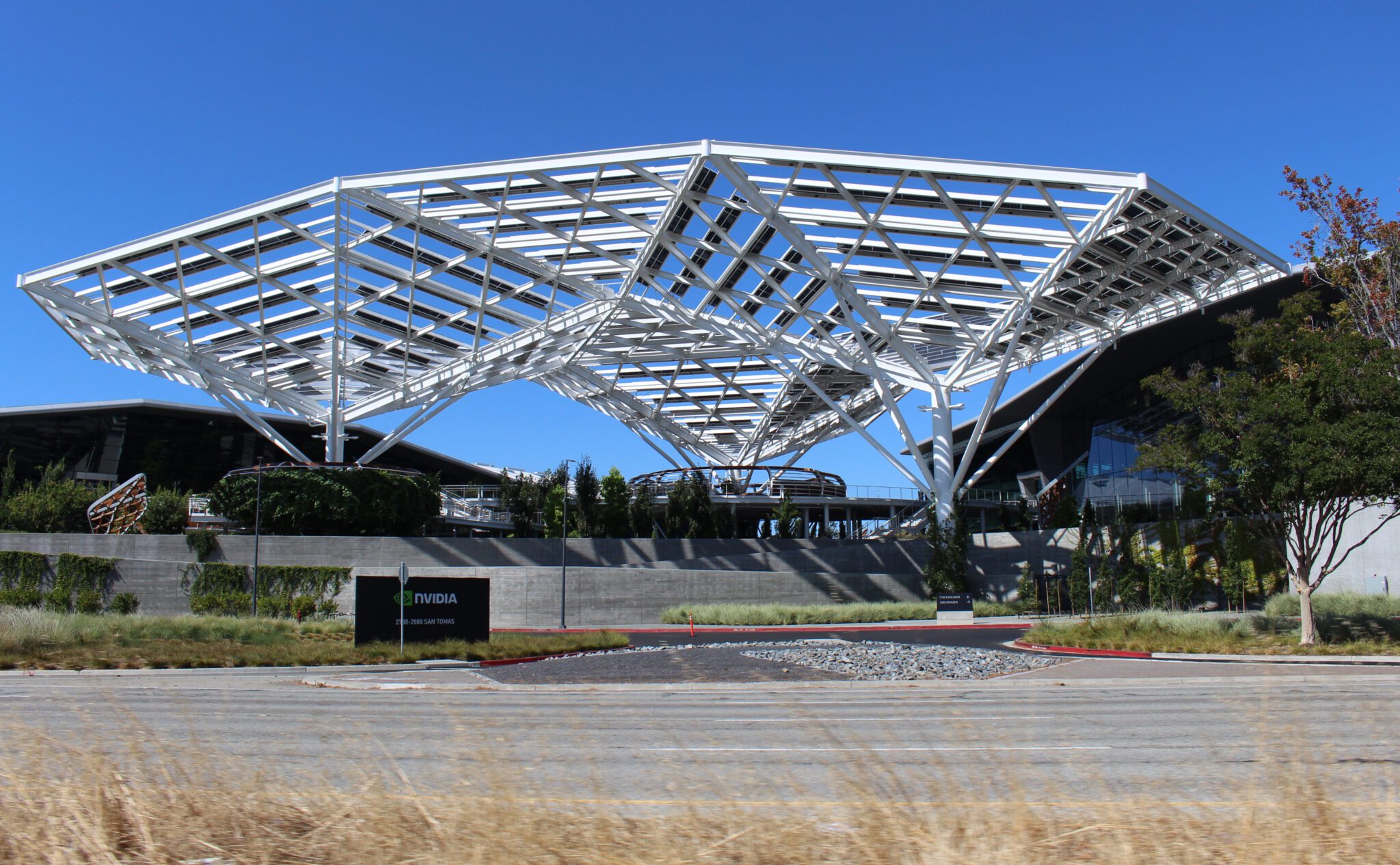
Featured photo: Nvidia’s headquarters in Santa Clara, California, photographed in 2022. Coolcaesar / Wikimedia Commons, CC BY-SA 4.0.