Updated posts August 2026
Sebastien Montabonel: Bridging Traditional Art and the Digital Frontier
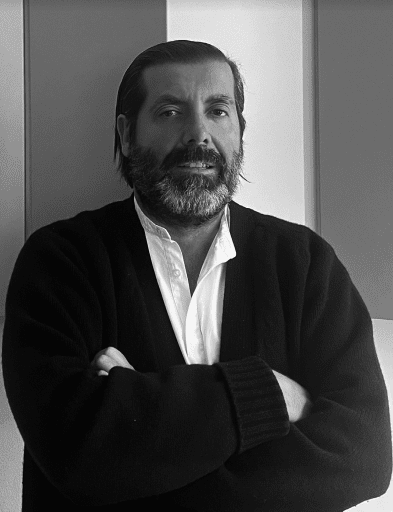
Sebastien Montabonel spent many years as a seasoned European Senior Specialist in Contemporary Photography at Phillips, giving him a wealth of experience collaborating with esteemed private and corporate collections. His remarkable journey includes pivotal contributions to expanding prestigious art collections worldwide. Notably, in 2011, Sebastien played a vital role in advising Tate Modern during its acquisition of the Jacobson/Hashimoto Collection, propelling it to become the most comprehensive collection of vintage modernist Japanese photographs in the West.
Building on his success, Sebastien initiated The Private Collector Project, a groundbreaking endeavor that brought influential private collections into the public sphere, in partnership with the renowned Saatchi Gallery and Phillips. He later secured the exhibition of the Juan Yarur Contemporary Art Collection in collaboration with the Chilean Ministry of Foreign Relations that same year. Presently, as founder of Montabonel and Partners Post-War and Contemporary Art Advisory, he lends his expertise to governments, foundations, private collections, museums, and international companies.
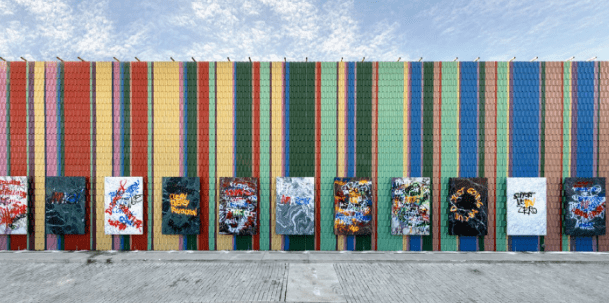
Recently, Sebastien unveiled his latest creation, The Island, a digital platform forging partnerships with international museums to broaden their permanent collections and raise additional funds. The Island introduces a groundbreaking concept, commissioning on-chain artworks by traditional artists. The inaugural project features works by artist Stefan Brüggemann and aligns with Mostyn, a renowned contemporary art museum, to inaugurate their first ever public art collection.
Let’s delve into Sebastien Montabonel’s journey, his groundbreaking platform, and his insights on the post-pandemic challenges facing museums.
Can you describe the post-pandemic challenges you see museums facing? Would that be audience participation, funding, conservation, education, or all of the above?
In Europe, the challenges museums are confronting around audience participation, funding, conservation, and education are closely tied to their respective countries’ cultural budgets, rather than being attributable solely to the pandemic. For instance, I anticipate France and Germany will fare well, as both have recently demonstrated real commitment to bolstering their cultural budgets. France has impressively increased its culture budget by 7 percent and now allocates £3.86 billion to culture, a record amount. Germany has similarly raised arts spending by 7 percent in response to the unprecedented crises of our time, reinforcing arts, culture, and media. In contrast, Arts Council England currently spends £446 million a year in England. While English art professionals remain resourceful and pragmatic, their cultural institutions may face real challenges in executing and managing the resulting funding disparities.
Is the purpose of The Island to present works of art from different collections in a digital format?
The Island functions as a platform that collaborates with established traditional artists to create museum quality on-chain art commissions. Leveraging our team’s accomplishments in the traditional art world, we aim to bridge the gap between traditional visual and conceptual artistic practice and the digital realm. The Island operates across three interconnected areas.
The first is collecting: we curate and commission museum quality on-chain works from top established artists, elevating their value and visibility by placing key pieces in museum collections, exhibitions, and leading galleries.
The second is assisting traditional artists: we help traditional artists explore and advance digital and on-chain technology as an artistic medium, supporting their creative and conceptual process, as well as digital production, through partnerships with leading digital production agencies.
The third is influencing institutional and traditional art narrative: our goal is to help traditional art institutions embrace on-chain art in order to remain relevant in the digital era and engage new audiences and generations. We aim to integrate on-chain art discussion into traditional art contexts through art publications, academic journals, conferences, talks, and panels, introducing traditional art collectors to on-chain art.
How would you describe The Island’s commission with Stefan Brüggemann to those who might not be familiar with the digital art world?
The commission features bold, impactful statements rendered in a minimalistic aesthetic. Stefan Brüggemann explores the power of language and its ability to convey complex ideas, emotion, and social commentary. By extracting final lines from iconic movies and presenting them as standalone statements juxtaposed against real time headlines from media outlets, the artwork takes on a unique, dynamic form.
Each on-chain piece is distinct and sources new headlines three times a day using on-chain technology, often manipulating the wording through AI to mimic the artist’s own editing process. These artworks dynamically incorporate headlines from prominent media outlets, creating a thought provoking amalgamation of reality, the news, and fiction, the films. The enigmatic, ambiguous selected lines encourage viewers to reflect on dominant themes and narratives present in daily life, prompting contemplation on the contemporary human experience.
What sparked your interest in art?
Art is a realm that transcends mere creativity, it’s a platform where artists use their unique sensibilities to observe and interpret the world in ways most of us simply cannot. Their artistic language allows them to act, react, or reenact significant moments in our lives, effectively turning their artwork into a mirror of our society. At their best, artists’ works become the memory of humankind, transforming into timeless cultural imprints. To be part of the process that initiates this transformative alchemy is an immense privilege, and it continues to fuel my passion for the art world.
You wear many hats. How do you describe your work?
Indeed, my work encompasses various roles and titles, which can vary depending on the institutions I serve, whether that’s a government, a cultural institution, a bank, or an individual collector. Regardless of context, my core responsibilities always revolve around knowledge, connection, interpretation, and creativity. The key to success lies in adapting how I transfer that knowledge to suit each specific situation, since that adaptability can make all the difference in achieving a positive outcome.
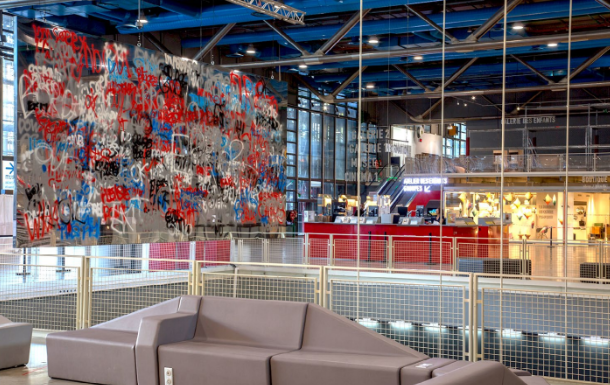
The art world has seen significant changes since the 1970s, from the roles of women and minorities to the influence of money and power on who gets recognized and showcased. Can you discuss the practice of instituting and how it has evolved?
The art world’s ecosystem is perpetually evolving, and continuous reassessment remains crucial. The dynamics between money, power shifts, and trends are intricately connected within the art world. Art collections worldwide reflect geographical wealth distribution, and the timeline of collection building often mirrors the economic health of a given region. The data derived from art collections offers objective insight into societal progress, and the art world itself acts as a barometer of cultural and economic change.
Our foundation, AI21C, constantly monitors these shifts and seeks to understand their implications for museums, exhibitions, markets, audience engagement, financial products, education, and artistic production. As society evolves, it’s essential for art institutions to adapt in kind, ensuring inclusivity, diversity, and representation that accurately reflects the dynamics of the world we actually live in.
Where Technology Meets Curatorial Instinct
What continues to distinguish Sebastien’s approach is his insistence that digital innovation serve established artistic practice rather than replace it. Rather than treating on-chain art as a break from tradition, The Island positions it as an extension of an artist’s existing conceptual language, a distinction that allows established institutions like Mostyn to engage with blockchain technology without abandoning the curatorial rigor that gives museum collections their lasting value.
Sebastien Montabonel’s journey in the art world, and his groundbreaking platform The Island, stand as testimony to the symbiosis between traditional and digital art. By fostering collaboration between established artists and emerging on-chain technology, Sebastien strives to propel the art world into the digital era, working toward a vibrant, inclusive future for museums, artists, and audiences alike. As the art world continues to evolve, the insight of visionaries like Sebastien will undoubtedly play a vital role in shaping its course.