A plant can run lean and still be fragile. Low inventory reduces storage space, handling, and money tied up in materials. It also leaves less room for trouble when a supplier misses a delivery window or a truck gets stuck two states away.
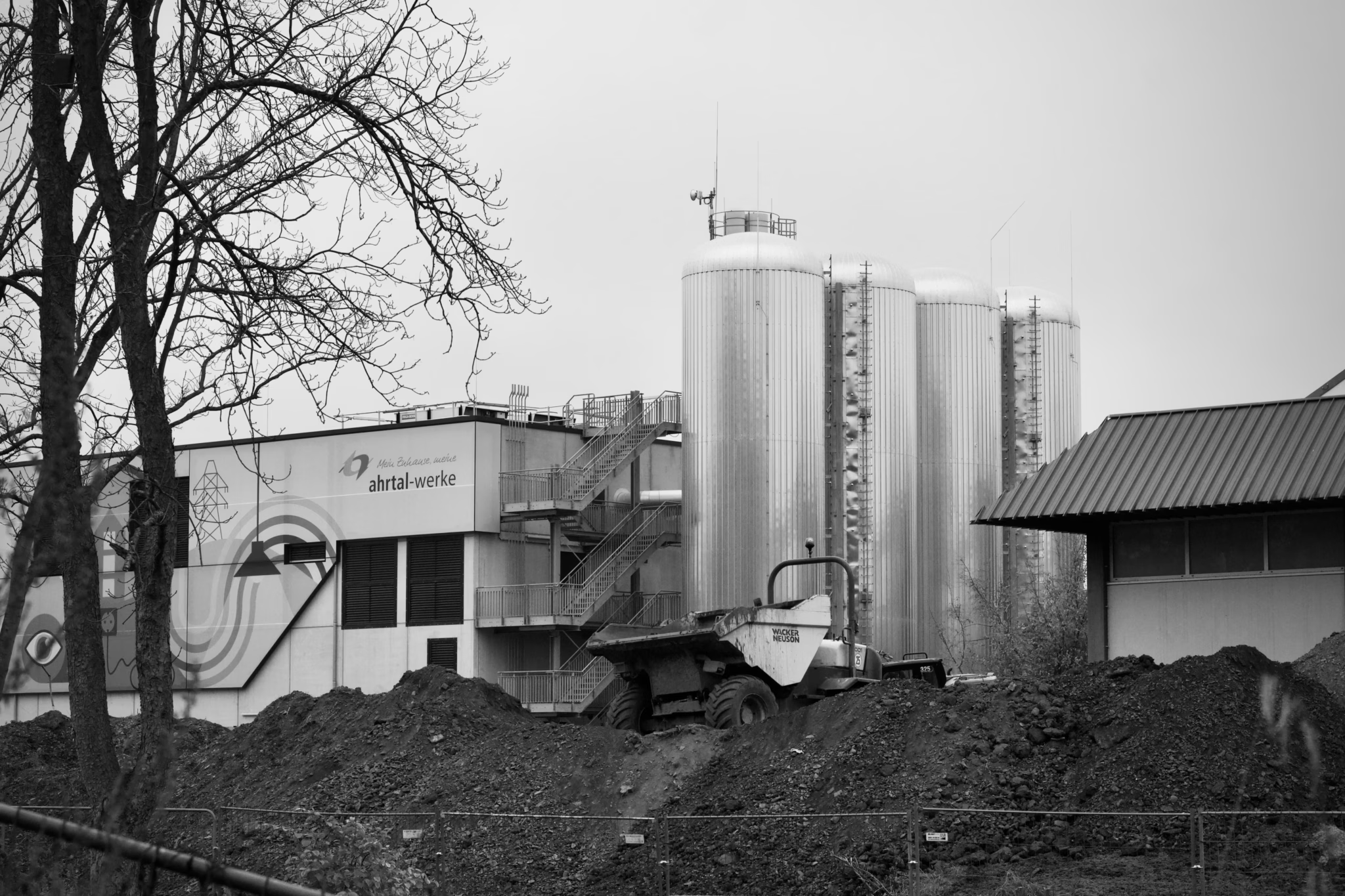
Most manufacturers do not choose between just-in-time and just-in-case as if one cancels the other. They use both, depending on the material. Common supplies with steady lead times can arrive often. Harder-to-replace materials may need a reserve. For powders, pellets, minerals, and other bulk inputs, dry bulk tanks can give a plant more control between scheduled deliveries and actual production demand.
The work is deciding which materials deserve that space.
The Inventory Trade-Off
Just-in-time purchasing works when the supply chain behaves. A plant places smaller orders, receives material closer to the point of use, and avoids storing more than it needs. That can make sense for reliable suppliers, short routes, predictable demand, and materials that are easy to replace.
The risk shows up when one missing input stops the line. A material does not have to be expensive to be critical. A low-cost powder, additive, resin, mineral, or processing aid may be used in small amounts but still be required for every batch. If it is not there, production waits.
Just-in-case planning gives selected materials extra protection. It may mean more on-site stock, a larger reorder buffer, or enough storage to cover a delayed delivery. The goal is not to fill every corner of the plant. It is to protect the materials that would create the most damage if they ran out.
Identify Materials Worth Keeping in Reserve
The right reserve list usually comes from plant experience, not only from purchase price. Operators often know which materials cause the most trouble when they are late. Purchasing knows which suppliers slip. Maintenance may know which storage or discharge points are sensitive. Production knows which missing input stops an entire shift.
Materials worth reviewing often include:
- items with long or unreliable lead times
- bulk ingredients used across several product lines
- powders, pellets, minerals, or additives with limited suppliers
- materials affected by seasonal demand or transport delays
- items that require testing or approval before substitution
- inputs that stop a line when unavailable
Cost can be misleading here. A high-value material that can be sourced locally by the next morning may not need much reserve. A cheaper material that takes two weeks to replace may need more protection because the downtime risk is larger than the inventory cost.
Calculate the Full Cost of Holding Stock
Extra inventory has a cost even when it prevents trouble. The plant has to buy it, store it, move it, track it, sample it, and protect it. Some materials do not sit quietly. They absorb moisture, settle, bridge, expire, separate, or become harder to discharge after long storage.
Those costs should be compared with the cost of a shortage. Emergency freight can be expensive. A missed order can strain a customer relationship. Downtime can put labor, packaging, warehouse space, and shipping appointments out of order.
There is no perfect calculation. A reserve that sits too long can become waste. A reserve that is too small can disappear during the first disruption. The numbers need regular review because demand, supplier performance, and production schedules change.
Keep Reserve Capacity Operational
Reserve stock only helps if the storage system is ready when the plant needs it. A full silo with a discharge problem is not a reserve. A tank that cannot be inspected, cleaned, or safely returned to service is not useful protection either.
Slow-moving reserve materials can hide problems longer than fast-turn stock. A valve sticks. A sensor stops reading. Material builds up near the discharge point. A seal or vent needs attention. By the time production needs that stored material, the storage issue can become the real cause of the delay.
Inspections, planned repairs, and maintenance scheduling belong in the reserve plan. Services such as storage tank repair services can support that work when tanks or silos need attention before peak demand, shutdowns, or known supplier constraints.
A practical storage review should cover:
- Access: staff need safe ways to inspect, clean, sample, and service the system.
- Discharge: the material has to move out at the rate production needs.
- Condition: seals, valves, vents, panels, supports, coatings, and instruments should be checked before problems appear.
- Contamination risk: stored material needs protection from moisture, residue, pests, or cross-contact.
- Repair timing: planned work should happen before the reserve is needed, not during a shortage.
A reserve plan should not depend on equipment that has been ignored because it was not used often.
Build a Flexible Replenishment Plan
Inventory rules should not stay frozen. A supplier that was dependable last year may become slower. A material that once moved steadily may start spiking during certain seasons. A new product line may change how quickly a bulk input is used.
Reorder points and safety stock need to reflect those changes. Common materials with reliable supply may stay close to just-in-time. Higher-risk materials may need larger reserves, second suppliers, or more storage capacity. Some plants also use different inventory rules during peak season, maintenance shutdowns, or periods when transport is known to be tight.
The plan works best when production, purchasing, maintenance, and warehouse teams share the same picture. They need to know what is on site, what is committed, what is on order, and what happens if the next delivery is late. Without that shared view, reserve inventory becomes guesswork.
Conclusion
Just-in-time and just-in-case are not enemies. A manufacturer may use frequent deliveries for routine materials and keep reserves for the inputs that carry more production risk.
The right reserve is not always the largest-volume material or the highest-cost item. It is often the material that is slowest to replace, hardest to substitute, or most likely to stop production if it runs out. When manufacturers review supplier reliability, storage condition, lead time, downtime risk, and replenishment rules together, reserve inventory becomes a working part of production rather than stock sitting in a corner.