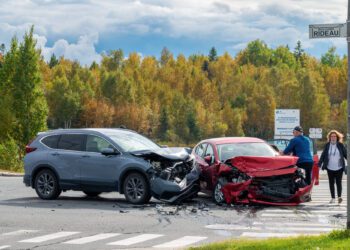
In a New Mexico personal injury case, fault is determined by examining each party’s actions and whether they acted reasonably under the circumstances. The court may consider the extent to which each party contributed to the accident when determining responsibility for the resulting injuries and damages.
Albuquerque is the largest city in New Mexico and is located in Bernalillo County. Its busy roads and urban traffic bring together commuters, interstate travelers, pedestrians, and cyclists, creating situations where disputes over fault can arise after an accident.
People involved in an accident in Albuquerque may benefit from speaking with a skilled personal injury attorney in Albuquerque to understand how New Mexico’s negligence and comparative fault laws may affect their claim.
What Must Be Proven?
Typically, in a personal injury case involving negligence, you must establish a duty of reasonable care, a breach of that duty, causation, and harm. For instance, if a driver fails to stop for a red light, they may be in breach of a duty to drive safely, but if a person is injured in the accident, they will have to prove the failure to stop was responsible for the crash and the resulting losses.
Generally, it’s the injured party’s responsibility to prove the case by a preponderance of evidence. The explanation of negligence at the Legal Information Institute includes duty, breach, injury, and causation.
What is Comparative Fault?
New Mexico is a comparative-fault state. NMSA 1978, § 41-3A-1 provides that generally a defendant will be liable for only a proportion of damages based on that defendant’s percentage of fault.
If a jury determines that a driver is responsible for 70% of an accident and a passenger is responsible for 30% of the accident, who is at fault? If a jury decides that a driver is at fault for 70% of an accident and a passenger is at fault for 30% of the accident, who is truly at fault?
Based on the percentage of fault, the recovery of $100,000 for damages may be diminished. Evidence relating to each person’s behavior can thus be relevant.
In New Mexico, recovery is also possible even if the person who was injured was part of the cause, but how much they fault themselves as well as how much they fault the other party will be determined in court.
Evidence Required to Prove Fault
Some of the evidence that will be helpful to include is:
- Police or incident reports
- Photographs and video footage
- Medical records and treatment notes
- Witness statements
- Vehicle or property damage
- Employment and wage records
- Expert testimony when specialized knowledge is needed
A review of New Mexico crash data highlights the importance of investigation. According to NHTSA’s New Mexico safety plan, there were 429 fatal crashes and 12,404 injury crashes in New Mexico in 2021.
What if Several People Contributed?
Fault doesn’t necessarily lie only with one person. Another party’s negligence, distracted driver behavior, and unsafe property conditions may all come into play to cause the same injury. Under New Mexico’s several liability law, responsibility would be divided based on fault (except as provided by statute).
What Should You Do Next?
- Keep photos, video, reports, and information for contact with witnesses.
- Have medical records of injuries and when they were sustained.
- Hold receipts and records of losses of income and medical expenses.
- Don’t make any assumptions regarding fault before evidence is considered.
- Discuss the facts of New Mexico’s comparative-fault law.
Key Takeaways
- Conduct, causation, and evidence are components of fault.
- Negligence involves establishing a duty, a breach of duty, an injury, and a cause between the duty and the injury.
- New Mexico has comparative-fault laws.
- Generally, liability is divided by the percentage of fault as provided for in NMSA § 41-3A-1.
- Reports, photos, records, witnesses, and expert testimony may be used as evidence.
- An injury could be caused by more than one individual.