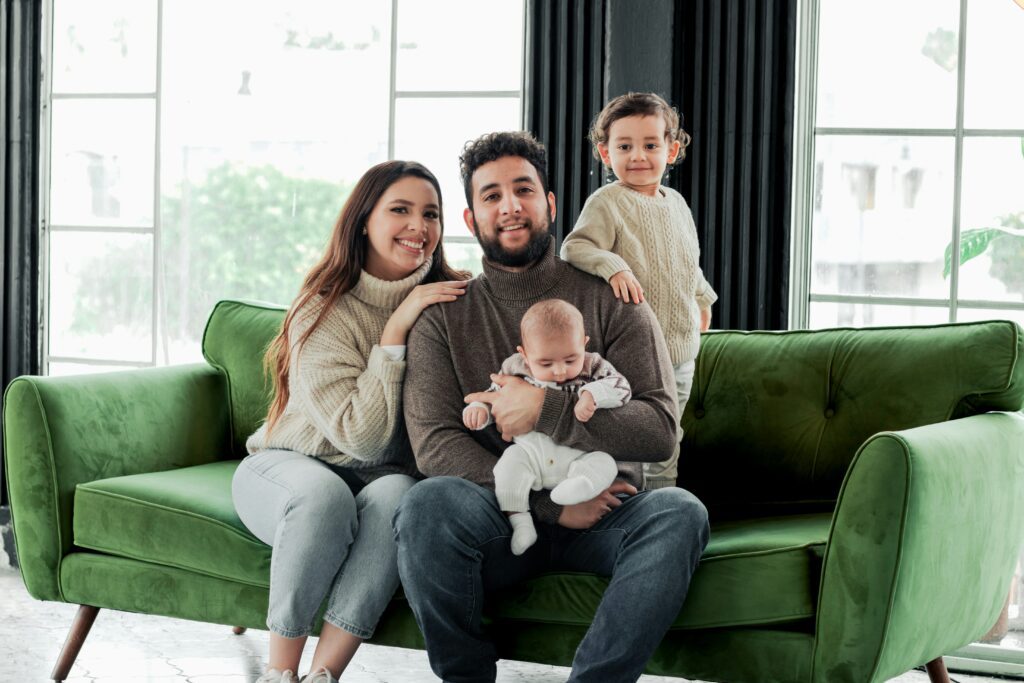
Postpartum support for dads means the emotional resources, practical tools, and professional help available to fathers adjusting to life after a baby’s birth — including screening for paternal postpartum depression, peer groups through Postpartum Support International, and concrete ways to help a partner recover while managing their own mental load. Roughly 1 in 10 fathers experiences clinically significant depression during pregnancy or the first year postpartum, so this isn’t a niche concern — it’s a normal part of new fatherhood that deserves the same attention mothers receive.
Key Takeaways
- About 1 in 10 fathers experiences postpartum depression, and paternal depression rises to roughly 24–50% when the mother also has PPD.
- Postpartum Support International (PSI) offers a free, confidential HelpLine (1-800-944-4773), dad-specific chats, and a directory of over 50 specialized support groups, including groups just for fathers.
- Dads can meaningfully support breastfeeding without ever nursing — through logistics, food, hydration reminders, and protecting the mother’s rest.
- The most useful new-dad gifts and words are seldom material; they’re time, food, sleep, and specific offers of help rather than vague ones.
- Paternal postpartum depression is treatable, but fathers underreport it far more than mothers do because of stigma and unfamiliar symptoms like irritability rather than sadness.
What Postpartum Support for Dads Actually Means
Postpartum support for dads is the umbrella term for everything that helps a father function, cope, and stay emotionally present during the fourth trimester — the roughly twelve weeks after birth when hormonal, physical, and identity shifts hit the whole household, not just the birthing parent.
For a long time, “postpartum” was treated as something that only happened to mothers. Fathers were expected to be the steady one: sleep-deprived but functional, worried but silent, present but not really processing anything. That framing has cracked under two decades of research showing that fathers go through their own adjustment — hormonally, psychologically, and socially — even though they didn’t give birth.
Support for dads spans several layers:
- Mental health support — screening, therapy, and peer groups for paternal anxiety and depression.
- Practical/logistical support — help learning newborn care, managing household load, and returning to work without collapsing.
- Relational support — tools for communicating with a partner who is also depleted, possibly recovering from birth trauma, and possibly experiencing her own postpartum depression or anxiety.
- Community support — other fathers who normalize the confusion, exhaustion, and identity shift that comes with the role.
A father who has access to all four layers recovers faster, bonds with his baby more securely, and — critically — becomes a better support to his partner. Paternal wellbeing and maternal recovery aren’t separate tracks; they’re linked. Research consistently finds that a father’s mental state is one of the strongest predictors of how well a mother recovers from postpartum depression, because he is often her primary source of daily support.
Can Dads Get Postpartum Depression? What the Research Shows
Yes — dads can get postpartum depression, and it’s medically recognized, though it’s sometimes called Paternal Postnatal Depression (PPND) to distinguish it from the hormonally driven maternal form. It meets the same diagnostic criteria as major depressive disorder and typically lasts longer than two weeks, unlike the short-lived “baby blues.”
Peer-reviewed meta-analyses place paternal PPD prevalence between roughly 8% and 10.4%, with the most widely cited figure — 10.4% — coming from a large meta-analysis of 43 studies. Independent estimates from the Journal of Affective Disorders land close behind: 8.4% across 74 studies covering more than 41,000 fathers, and 8.75% across the first twelve months postpartum in a later analysis that also tracked timing.
Timing matters. One comprehensive meta-analysis of 47 studies and over 20,700 subjects found prenatal depression prevalence in fathers of 9.76% across all three trimesters — highest in the first trimester at 13.59% — while postpartum depression prevalence was 8.75% across the whole first year, peaking between three and six months after birth at 9.23%.
The single biggest risk factor for paternal depression isn’t sleep loss or financial stress — it’s the mother’s mental health. When a mother has postpartum depression, the rate of paternal depression rises to somewhere between 24% and 50%, and fathers whose partners have PPD carry roughly 2.5 times the risk of depression at six weeks postpartum compared to fathers of non-depressed partners.
Why Paternal Postpartum Depression Gets Missed
Fathers rarely present the way clinical checklists expect. Instead of tearfulness or expressed sadness, paternal depression more often shows up as:
| Common presentation in dads | Common presentation in moms |
| Irritability, anger outbursts | Sadness, tearfulness |
| Withdrawal into work or screens | Withdrawal from the baby |
| Increased alcohol use or risk-taking | Appetite/sleep changes |
| Physical complaints (headaches, fatigue) | Intrusive worry about the baby’s safety |
| Reluctance to admit “weakness” | More openness to naming distress |
Because standard screening tools like the Edinburgh Postnatal Depression Scale (EPDS) were built and validated on mothers, symptoms framed around irritability or emotional numbness in fathers can slip past a quick conversation with a pediatrician. The EPDS has nonetheless been validated as a reliable and valid measure of mood in fathers, and public health guidance now recommends screening fathers for depression alongside mothers, particularly during the first year postpartum, since early identification and treatment improve outcomes for the whole family.
Warning Signs Worth Taking Seriously
- Persistent irritability or a short fuse lasting more than two weeks
- Loss of interest in the baby, partner, or previously enjoyed activities
- Escalating conflict with a partner that feels new or disproportionate
- Increased drinking, gambling, or other numbing behaviors
- Feeling like a burden, or feeling disconnected from the reality of becoming a father
- Any thoughts of self-harm — this always warrants immediate professional help
If several of these have lasted more than two weeks, it’s worth a real conversation with a doctor — not a “let’s see how next week goes.”
Postpartum Support International (PSI): Help for Dads Explained
Postpartum Support International (PSI) is the largest nonprofit organization dedicated to perinatal mental health, and it runs a dedicated track of programs specifically for fathers, not just mothers.
PSI states plainly that studies show one in ten dads experiences postpartum depression, and that 5–15% of fathers develop an anxiety disorder — generalized anxiety, OCD, or PTSD — at some point during pregnancy or the first year postpartum. Their messaging to fathers is direct: you are not alone, and perinatal mental health disorders are treatable.
PSI Resources Built for Fathers
| Resource | What it offers | How to access |
| PSI HelpLine | Confidential support and resource referrals; a trained volunteer returns your call or text | 1-800-944-4773 (call or text), English & Spanish |
| Dads’ Chat with an Expert | A free, facilitated monthly phone call with a perinatal mental health expert, held the first Tuesday of every month | Via PSI’s website call-in line |
| Specialized Support Groups | Over 50 free peer support groups, including one specifically for dads | Listed on postpartum.net |
| Provider Directory | Local therapists trained in perinatal mental health who work with fathers | PSI online directory |
| Crisis Resources | Referral to the National Maternal Mental Health Hotline (833-852-6262), Crisis Text Line (text HOME to 741741), and the 988 Suicide & Crisis Lifeline | Provided if a caller is in crisis |
A few practical notes if you’re considering the HelpLine: it is not a crisis line and doesn’t handle emergencies — calls and texts are returned during business hours, roughly 8am–11pm EST — but every response comes from an actual trained volunteer, not an automated system. If you or someone you know is in immediate danger, PSI directs you straight to 988 or local emergency services instead.
Why “Postpartum Support International Help for Dads” Specifically Matters
Searching for “postpartum support international for dads” usually signals one of two things: either a father is quietly worried about his own mood, or a partner is trying to find him somewhere to turn. PSI’s dad-specific track exists precisely because general postpartum resources are written with mothers in mind — different symptoms, different stigma, different entry points. Having a father-facing landing page, a monthly call hosted by someone who understands paternal mental health specifically, and a support group of other dads lowers the barrier that keeps many men from reaching out at all.
How to Find a Postpartum Support Group for Dads
A postpartum support group for dads is a recurring, facilitated space — in person or virtual — where fathers talk about the realities of new parenthood with people who are living through the same thing, rather than with well-meaning friends who haven’t.
Where to Look
- Postpartum Support International’s directory — searchable by state/country, includes both general and dad-specific groups.
- Hospital or birthing center postpartum programs — many hospitals that deliver babies also run new-parent groups, sometimes with a dads-only track.
- Community mental health centers — local nonprofits often run free or low-cost fatherhood groups.
- Employer Employee Assistance Programs (EAPs) — some include parental mental health benefits or counseling referrals.
- Online communities — moderated forums and video groups can bridge the gap for dads without local in-person options, though they work best as a supplement to real human contact, not a replacement.
What a Good Group Actually Looks Like
| Feature | Why it matters |
| Facilitated by a trained professional or peer leader | Keeps the conversation constructive, not just venting in circles |
| Small enough for everyone to speak | Groups over 10–12 people rarely let quieter members open up |
| Confidential | Fathers are more honest when they trust nothing leaves the room |
| Recurring, not one-off | Adjustment takes months, not a single session |
| Focused on fathers specifically | Concerns like identity shift, provider pressure, and intimacy changes land differently in a room of dads than in a mixed group |
If in-person options are limited, PSI’s monthly “Dads’ Chat with an Expert” call is a low-commitment first step — no registration, no pressure to speak, just a chance to hear that the confusion is common.
How Can Dads Help With Postpartum Recovery at Home
The question “how can dad help with postpartum” usually comes up in the first days or weeks, when everyone is exhausted and nobody has a clear job description. The honest answer: postpartum recovery is a physical healing process for the birthing parent, and a father’s job is to protect the conditions that let that healing happen — rest, nutrition, low stress, and time.
The Core Areas Where Dads Make the Biggest Difference
- Protect sleep, aggressively. Recovery from birth — vaginal or cesarean — requires real rest, not naps stolen between feedings. A father who takes even one stretch of night duty, handles diaper changes between feeds, or sends a partner to sleep in another room for a few uninterrupted hours is doing genuine medical support, not just being “helpful.”
- Handle the invisible logistics. Pediatrician appointments, insurance calls, grocery runs, thank-you notes for gifts, laundry that’s piled up since the hospital bag was packed — these don’t stop because a baby arrived. Taking full ownership (not just “helping” when asked) of even two or three of these categories removes real cognitive load.
- Watch for physical warning signs. Postpartum recovery has real medical red flags: heavy bleeding, fever, severe headache, calf pain/swelling, or wounds that look infected. A father who knows these signs and gently checks in can catch something serious early — mothers are often too exhausted or too focused on the baby to monitor themselves.
- Manage visitors. Well-meaning family and friends can overwhelm a recovering household. Being the one who sets boundaries — “let’s wait a week,” “text before you come,” “please don’t expect to hold the baby the whole visit” — takes real social pressure off a partner who may not feel able to say no herself.
- Ask, don’t assume. Recovery needs shift day to day. What helped Tuesday might not help Thursday. A short, low-effort check-in (“What would make the next two hours easier?”) beats guessing.
A Simple Weekly Division-of-Labor Table
| Task category | Good default owner in week 1–4 | Why |
| Overnight baby settling (non-feeding tasks) | Dad | Physical recovery needs uninterrupted rest |
| Meals and hydration for both parents | Dad or outside help | Recovery burns significant calories; forgetting to eat is common |
| Medical appointment scheduling/tracking | Dad | Reduces mental load during a foggy period |
| Visitor coordination | Dad | Protects recovery time and privacy |
| Direct baby care during feeds | Shared, based on feeding method | Keeps both parents bonded and competent |
| Household admin (bills, insurance) | Dad | Frees the recovering parent from non-baby stress |
None of this requires perfection — it requires consistency and follow-through on whatever gets agreed on.
How Dads Can Support Breastfeeding Moms
A common misconception is that breastfeeding is entirely a two-person job between mother and baby, and dads are just bystanders. In practice, the logistics, endurance, and mental toll of breastfeeding depend heavily on what happens around the feed — and that’s where fathers have real influence.
Direct, Practical Ways to Help
- Handle every non-nursing task around a feeding. Bring the baby to her, adjust pillows, refill her water, and handle burping and diaper changes afterward so she can rest between sessions.
- Track feeds if she wants it tracked. Apps or a simple notebook logging times and duration take a small but real task off her plate, especially in the newborn haze.
- Protect hydration and calories. Breastfeeding burns a substantial number of extra calories daily, and it’s easy for a nursing parent to forget to eat or drink for hours. Keeping a full water bottle and easy snacks within arm’s reach — without being asked — makes a real difference.
- Do a night feed with pumped milk or formula, if that’s the plan. This is one of the single highest-impact things a father can do, giving a nursing mother one longer, protected stretch of sleep.
- Learn to spot and troubleshoot common problems. Cracked nipples, engorgement, clogged ducts, and mastitis symptoms (fever, redness, flu-like aches) are common. Knowing to say “that sounds like it needs a lactation consultant, let’s call one” is genuinely useful.
- Manage the lactation consultant relationship. Booking appointments, driving her there, or sitting in on video calls to help remember the advice afterward removes friction during an already exhausting stretch.
- Defend her choice, whatever it is. Whether she breastfeeds, combo feeds, exclusively pumps, or uses formula, unsolicited opinions from relatives are common. A father who runs interference — “we’ve got this figured out, thanks” — protects her confidence.
- Handle bottle-related supply logistics if pumping. Washing pump parts, sterilizing bottles, and organizing the freezer stash are unglamorous but genuinely time-consuming jobs a partner can fully own.
A Quick Comparison: Passive vs. Active Support
| Passive support (well-intentioned but limited) | Active support (measurably helpful) |
| “Let me know if you need anything” | Bringing water and a snack before she asks |
| Offering to “help” with the baby when asked | Taking full ownership of diaper changes after every feed |
| Assuming breastfeeding is “her thing” | Learning positions, latch basics, and warning signs together |
| Staying out of the lactation consultant visit | Attending or calling in to help remember the advice |
Breastfeeding is physically demanding and can be a significant source of postpartum anxiety when it doesn’t go smoothly. A father who treats it as a shared project — even without ever nursing himself — measurably reduces that stress.
What to Say to a Father Who Just Had a Baby
New fathers get a strange mix of silence and jokes. People ask about the baby, ask about the mother, and often say very little directly to the father — as if he’s a bystander rather than someone also going through a massive life shift. Knowing what to say matters more than people assume.
Things That Actually Land Well
- “How are you doing — not just the baby, you?”
- “You’re allowed to be tired and overwhelmed too. That’s normal.”
- “What’s been the hardest part so far?”
- “You don’t have to have this figured out yet. Nobody does at first.”
- “I’m proud of you.” (Simple, and rarely said to men becoming fathers.)
- “Let me bring dinner Thursday — not asking, just doing it.” (Specific offers beat vague ones.)
- “It’s okay to say you’re struggling. That doesn’t make you a bad dad.”
Phrases Worth Avoiding
| Avoid | Why it lands badly | Better alternative |
| “At least you got to sleep” | Dismisses his exhaustion and assumes an easy role | “Sleep deprivation hits everyone in the house — how are you managing?” |
| “You’ll figure it out” | Sounds dismissive of real anxiety | “What’s one thing I can actually help with?” |
| “Must be nice to just go back to work” | Minimizes the emotional weight of leaving a newborn | “That transition back to work sounds hard — how are you feeling about it?” |
| Focusing only on the baby, never the parents | Reinforces the idea he doesn’t matter in the story | Ask about him directly, even briefly |
If you sense he might be struggling more than “normal tired,” a direct but gentle question — “Is this just exhaustion, or does it feel like something more?” — opens a door many men won’t open themselves.
What to Get a New Dad After Birth: Gift Ideas That Actually Help
Gifts for new mothers are everywhere; gifts for the father are an afterthought at best. But a thoughtful gift for a new dad signals that his experience matters too — and the best ones solve a real problem rather than adding clutter.
Practical, High-Value Gift Ideas
| Gift category | Specific examples | Why it works |
| Time | A gift card for a cleaning service, meal delivery, or lawn care for a month | Buys back hours he’d otherwise lose to chores |
| Food | A stocked freezer meal delivery, a meal-train sign-up, or his favorite takeout on standby | Removes decision fatigue during exhausting weeks |
| Comfort | A quality set of loungewear, slippers, or a weighted blanket for middle-of-the-night duty | Small physical comfort during a physically hard stretch |
| Coffee/caffeine | A subscription or a good thermal mug for one-handed drinking while holding a baby | Directly addresses sleep deprivation |
| Experience | A gift certificate for a solo outing later (haircut, massage, round of golf) once things stabilize | Signals his individual identity still matters |
| Baby-wearing gear | A well-reviewed baby carrier | Enables hands-free bonding and soothing |
| Books | A practical, non-preachy new-dad guide rather than a generic parenting book | Gives him concrete answers, not just encouragement |
| Personal check-in | A card that actually asks how he’s doing, not just congratulations | Emotionally, this often matters more than any object |
What Tends to Miss the Mark
- Generic “World’s Best Dad” novelty items with no practical use
- Anything that adds a task (a plant to care for, a complicated gadget)
- Gifts framed entirely around the baby with zero acknowledgment of him
- Alcohol as a “congrats” gift if you know or suspect he’s already struggling emotionally — it can read as tone-deaf
The common thread across every good option: it either gives him time, reduces a burden, or explicitly acknowledges that he went through something too.
Building a Long-Term Support System as a New Father
Postpartum support isn’t a one-week problem — the adjustment period realistically runs the better part of a year, sometimes longer. Building a support system that lasts matters more than any single gesture.
Layers Worth Building Deliberately
- A go-to person for honesty. One friend, sibling, or fellow new dad you can tell the unfiltered truth to — “I’m struggling,” “I resent how tired I am,” “I don’t feel bonded yet” — without performing strength.
- A professional relationship, even before it’s urgent. Establishing a therapist or counselor early — even for a single “just in case” session — removes the barrier of finding one during a crisis.
- A workplace conversation. Understanding paternity leave policies, flexible scheduling, and whether an EAP includes mental health coverage before you need it.
- A couple’s check-in rhythm. A short, regular (even 10-minute) conversation with your partner about how you’re each actually doing, separate from logistics about the baby.
- Physical health basics. Sleep when possible, minimal alcohol, and some form of movement — these sound obvious but are the first things fathers drop, and they compound stress fast.
A Simple Self-Check Fathers Can Use Monthly
| Question | If the honest answer worries you |
| Have I felt persistently irritable or numb for more than two weeks? | Talk to a doctor or call the PSI HelpLine |
| Am I withdrawing from my partner or baby? | Name it out loud to someone you trust |
| Has my drinking or screen use noticeably increased? | Treat it as a signal, not a coping strategy |
| Do I feel like a burden or disconnected from fatherhood? | This warrants a real conversation, not just “pushing through” |
| Have I had any thoughts of harming myself? | Seek immediate help — call 988 or the PSI HelpLine now |
A father who checks in on himself with this kind of honesty models something valuable for the whole family: that struggling and asking for help are not failures of masculinity — they’re part of being a present, engaged parent.
Frequently Asked Questions
What is postpartum support for dads?
Postpartum support for dads refers to the mental health resources, peer groups, and practical guidance available to fathers during pregnancy and the first year after birth. It includes screening for paternal depression and anxiety, organizations like Postpartum Support International, and concrete strategies for helping a partner recover while managing a father’s own emotional adjustment.
Can dads get postpartum depression?
Yes. Paternal postpartum depression is a recognized condition affecting roughly 8–10% of fathers, meeting the same clinical criteria as major depressive disorder. It often shows up as irritability, withdrawal, or increased risk-taking rather than the sadness more commonly associated with maternal postpartum depression, which is one reason it’s frequently missed.
How common is postpartum depression in fathers compared to mothers?
Global estimates put maternal postpartum depression at around 1 in 5, while paternal postpartum depression affects closer to 1 in 10 fathers. However, when a mother experiences PPD, the rate of paternal depression rises sharply — to roughly 24–50% — making maternal mental health one of the strongest predictors of paternal mental health.
How can I find postpartum support international help for dads?
Postpartum Support International runs a dad-specific track that includes a confidential HelpLine (1-800-944-4773, call or text), a monthly “Dads’ Chat with an Expert” phone call, and a directory of specialized peer support groups, some designed specifically for fathers. All of these are listed on PSI’s official website under their fathers’ resources section.
Is there a postpartum support group specifically for dads?
Yes. PSI maintains a directory of over 50 specialized peer support groups, including groups specifically for fathers, alongside groups for partners, military families, and other specific populations. Many hospitals and community mental health centers also run local dads’ groups worth asking about at your birthing facility.
How can dad help with postpartum recovery in the first few weeks?
The most effective things a father can do are protecting sleep by taking overnight non-feeding duties, handling household logistics and appointments, watching for physical warning signs like fever or heavy bleeding, managing visitors to protect recovery time, and regularly asking what would actually help rather than assuming.
How can dads help with breastfeeding if they can’t nurse?
Fathers can handle everything around the feed: bringing the baby to the mother, managing diaper changes and burping afterward, keeping her hydrated and fed, doing an occasional night feed with pumped milk, learning warning signs like mastitis symptoms, and managing lactation consultant appointments and follow-through.
What should I say to a father who just had a baby?
Ask how he’s doing directly, not just about the baby — something like “How are you holding up?” or “What’s been the hardest part?” Avoid dismissive lines like “at least you got to sleep.” Offer specific, concrete help (“I’m bringing dinner Thursday”) rather than vague offers like “let me know if you need anything.”
What’s a good gift for a new dad after the baby is born?
The most valuable gifts save time or reduce a burden: meal delivery, cleaning services, a quality baby carrier, comfortable loungewear for night duty, or a caffeine-related gift for sleep deprivation. A card that genuinely asks how he’s doing, rather than only congratulating him on the baby, often matters more than anything material.
When should a new dad seek professional help?
If irritability, withdrawal, sleep or appetite changes, increased substance use, or feelings of disconnection from the baby or partner persist for more than two weeks, it’s worth talking to a doctor or contacting the PSI HelpLine. Any thoughts of self-harm should be treated as urgent — call 988 or the National Maternal Mental Health Hotline (833-852-6262) immediately.
Does paternal postpartum depression affect the baby?
Research has found that paternal depression during a child’s early years can be associated with emotional and behavioral difficulties in children later on, which is part of why clinicians increasingly recommend screening fathers alongside mothers rather than treating paternal mental health as secondary.
Is paternal postpartum depression treatable?
Yes. Like maternal postpartum depression, it responds well to treatment — therapy, peer support groups, and in some cases medication. Postpartum Support International specifically notes that perinatal mental health disorders, including in fathers, are treatable, and that reaching out early tends to shorten recovery time.
Conclusion
Postpartum support for dads isn’t a “nice to have” tacked onto maternal care — it’s a distinct, well-documented need with real numbers behind it: roughly 1 in 10 fathers facing depression, rates that climb even higher when a partner is also struggling, and a system of screening tools and symptom checklists that still weren’t built with men in mind. The good news is that real infrastructure exists. Postpartum Support International’s HelpLine, dad-specific chats, and peer groups are free, confidential, and built for exactly this moment. And the practical side — protecting sleep, owning logistics, showing up for a breastfeeding partner, and simply asking a new father how he’s doing — costs nothing but attention and follow-through. Fatherhood’s fourth trimester deserves the same seriousness as motherhood’s. Fathers who get support recover faster, bond more securely, and become steadier partners in a season that asks a lot of everyone in the house.