Quick Answer
Preventative Botox targets facial muscles before repeated contraction etches permanent lines into the skin. Treatment begins when dynamic wrinkles appear during expression but vanish at rest, typically between the late twenties and mid-thirties. Smaller doses at wider intervals maintain muscle relaxation without freezing expression. Patient selection depends on skin quality, muscle strength, and line depth rather than birthday alone.
Introduction
Anti-aging prevention rests on a mechanical premise: that a crease forms because collagen and elastin fibres fatigue under thousands of repeated folds, so reducing the folding reduces the crease. Dermatological consensus places the transition from dynamic to static lines somewhere in the early thirties for most patients, earlier for those with strong expressive musculature or significant sun exposure.
Assessment quality separates good outcomes from disappointing ones. Injectors working in Alberta’s dry climate account for baseline dehydration and its effect on line visibility, and practices such as The Injectionist Edmonton build consultations around muscle strength testing before any dosing decision is made.
What Prejuvenation Actually Targets in the Skin
Prejuvenation describes intervention aimed at the mechanism of ageing rather than its visible result. Two different tissue processes produce facial lines, and only one responds to muscle relaxation.
Dynamic Lines Versus Static Lines
A dynamic line appears during expression and disappears at rest. A static line remains visible on a relaxed face because the dermal architecture beneath it has changed. Collagen bundles fracture along the fold axis, elastin fibres lose recoil, and the groove persists without any muscular input.
Wrinkle prevention works on the first category. Once a line has crossed into the static phase, neuromodulators soften it but rarely erase it, which is why the treatment window carries genuine clinical weight.
What Determines the Crossover Point
Timing varies more than age tables suggest. Several factors shift the transition earlier or later:
- Baseline muscle strength, measured during maximum contraction at consultation
- Cumulative ultraviolet exposure, which degrades dermal collagen independently of movement
- Skin thickness and sebaceous density, both of which resist creasing
- Smoking history and its effect on microvascular supply
- Sleep position, particularly for lateral cheek and periorbital folds
Where Neuromodulators Stop Working
In practice, muscle relaxation addresses folding only. Volume loss, dermal thinning, and pigmentary change follow separate pathways and require separate approaches. Patients who expect a single injectable to hold the whole ageing process still are the ones most likely to escalate dosing without benefit, and clinics in the region increasingly screen for that expectation before treating.
Mechanism sets the boundary of what early intervention can deliver.
How Early Intervention Changes Dosing Over Time
The assumption behind most cost objections is that early starters pay indefinitely at a fixed rate. Treated muscle behaves differently.
Disuse Atrophy and Falling Product Requirements
Sustained neuromodulator use produces measurable disuse atrophy in the target muscle. Fibres that stop contracting at full force lose cross-sectional bulk, and a weaker muscle needs less product to reach the same relaxation threshold. Long-term patients on preventative Botox protocols commonly move from three sessions annually to two, at lower unit counts, once the pattern stabilizes after roughly two years.
Duration extends alongside dose reduction. The result is a treatment curve that flattens rather than climbing.
Compensatory Recruitment
Adjacent untreated muscles sometimes increase activity to restore an expression the patient has lost. Brow depressors compensate for a relaxed frontalis, producing heaviness that patients misread as excessive dosing.
The table below sets typical trajectories against each other.
| Factor | Early start, consistent protocol | Later start, corrective protocol |
| Initial units | Lower, muscle at baseline strength | Higher, established static lines |
| Interval by year three | 5 to 6 months | 3 to 4 months |
| Dose trend | Declining then stable | Stable or rising |
| Compensation risk | Managed early through mapping | Higher, entrenched movement patterns |
| Realistic ceiling | Softening of dynamic movement | Partial reduction only |
Trajectory depends on injector consistency, since mapping changes between practitioners reset the adaptation.
What Sustains the Curve
Several conditions keep the downward trend intact:
- Consistent injector and consistent mapping across sessions
- Intervals long enough to permit partial return of movement
- Photographic assessment at each visit
- Treatment of compensating muscles before patients self-correct
Pro Tip: Ask for a units log across all visits. A flat or falling number over three years indicates the protocol is working as intended. Dosing economics reward patience more than frequency.
Choosing the Right Starting Point Without Overtreating
Age alone is a poor selection criterion. Clinical assessment carries the decision.
Assessment Before Age
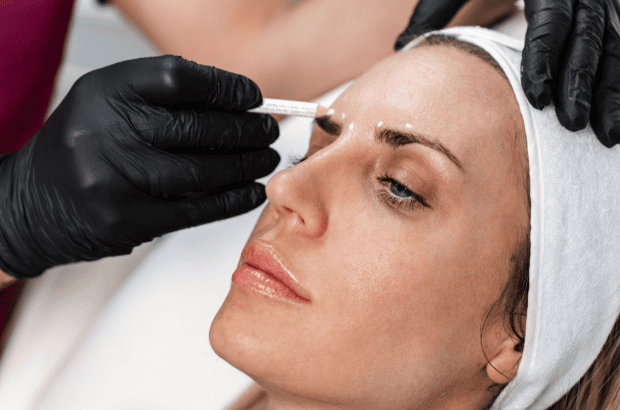
Muscle strength testing at maximum contraction reveals more than a birthdate. A patient of twenty-six with a powerful frontalis and visible resting horizontal lines has crossed the threshold. Another at thirty-four with fine musculature and no static creasing has not.
Cosmetic treatments in this category succeed when matched to observable tissue behaviour rather than to a demographic bracket. Screening also filters out body dysmorphic presentations, where no clinical result satisfies the patient.
When Waiting Serves Better
Deferral is the correct call in several situations:
- No visible dynamic lines at full expression
- Pregnancy or breastfeeding
- Active inflammatory skin disease in the treatment field
- Neuromuscular conditions affecting acetylcholine transmission
- Expectations centred on volume loss, which requires a different modality
- Unstable weight, which alters facial contour independently
Building the Wider Protocol
Injectables handle folding. Photoprotection, retinoid use, and barrier support address the dermal side of the same process, and patients who combine both approaches hold results longer at lower injectable volumes. Clinics across Edmonton increasingly present the two tracks together at the initial consultation rather than sequentially.
By contrast, patients treated on request without assessment tend to escalate. That pattern is well documented in aesthetic practice and drives most cases of frozen expression. Selection discipline determines whether early intervention ages well.
Why Prejuvenation Rewards Assessment Over Age
Early intervention works on folding, not on the full ageing process, and its value depends entirely on catching lines before they set. Muscle strength testing, photographic tracking, and consistent mapping produce falling doses over time rather than rising ones. Patients screened properly need less product by year three. Those treated on request alone tend to need more.