AI and consciousness have become two of the most compelling topics shaping conversations across technology, healthcare, and finance. While artificial intelligence is already transforming industries through automation and predictive analytics, growing interest in human consciousness is encouraging researchers to ask deeper questions about cognition, decision-making, and the future of human potential. Together, these fields are opening new possibilities for improving human longevity, enhancing medical care, and redefining how wealth is created and preserved.
Public interest in this intersection has grown alongside rapid advances in machine learning, neuroscience, and biotechnology. Healthcare providers are increasingly using artificial intelligence to identify disease risks before symptoms emerge, while researchers are exploring how cognitive science and precision medicine can extend healthy lifespans rather than simply prolong life. Investors have also recognized the rise of the longevity economy, directing capital toward longevity technology, digital health innovation, and AI-powered healthcare platforms.
Among the influential voices exploring this evolving landscape is Dr. Deepak Chopra, who has argued that technology should complement rather than diminish human awareness. His perspective provides an intriguing starting point because it frames technology as a tool capable of supporting human flourishing. However, today’s conversation extends far beyond philosophy or spirituality. Scientific institutions, healthcare leaders, and global economic organizations are now examining how AI can improve diagnostics, personalize treatments, accelerate drug discovery, and reshape the economics of aging.
The intersection of AI and consciousness is therefore no longer a purely theoretical discussion. It has become a multidisciplinary field that combines healthcare innovation, cognitive science, biotechnology, and wealth strategy to address one of humanity’s oldest ambitions: living longer, healthier, and more productive lives.
Understanding AI and Consciousness
Although they are frequently discussed together, artificial intelligence and consciousness represent fundamentally different concepts.
AI Versus Human Consciousness
Artificial intelligence refers to computer systems designed to perform tasks that typically require human intelligence. Modern AI systems recognize patterns, process enormous datasets, generate language, support clinical decisions, and continually improve through machine learning. They excel at analyzing information far faster than humans, making them valuable across healthcare, finance, manufacturing, and scientific research.
Consciousness, by contrast, remains one of science’s greatest mysteries. It generally describes subjective awareness the ability to experience thoughts, emotions, sensations, and self-reflection. Neuroscientists continue investigating how consciousness emerges from the brain, while philosophers debate whether it can ever be fully explained through biology or computational models alone.
This distinction matters because today’s AI systems are highly capable without being conscious. Large language models, diagnostic algorithms, and autonomous software can process information with remarkable efficiency, yet there is no scientific consensus that they possess subjective awareness or genuine understanding. Leading researchers from institutions such as Stanford University, Harvard Medical School, and the National Institutes of Health continue to emphasize that intelligence and consciousness are not interchangeable concepts.
Deepak Chopra’s discussions about technology and human awareness have helped broaden public interest in these questions. Rather than suggesting machines possess consciousness today, his work encourages people to consider how technology might influence human perception, well-being, and personal growth. That perspective becomes increasingly relevant as AI systems become integrated into everyday healthcare and decision-making.
Why the Debate Matters Today?
Meanwhile, neuroscience is advancing rapidly. Brain imaging technologies, computational neuroscience, and AI-assisted analysis now allow researchers to study neural activity with unprecedented precision. Although these developments have not solved the mystery of consciousness, they are accelerating research into cognition, aging, memory, and neurological disorders.
Consequently, the modern discussion surrounding AI and consciousness is shifting away from science fiction toward practical applications. Instead of asking whether machines can become conscious tomorrow, scientists are exploring how AI can help humans better understand the brain, preserve cognitive health, and improve quality of life throughout aging.
That shift naturally leads to one of AI’s most promising real-world applications: transforming human longevity.
How Artificial Intelligence Is Transforming Human Longevity?
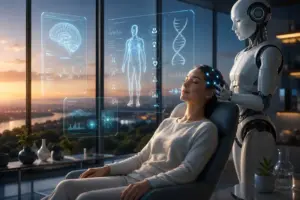
For decades, healthcare focused primarily on treating disease after symptoms appeared. Artificial intelligence is gradually reversing that model by enabling predictive, preventive, and personalized care. This transition could become one of the defining advances in human longevity.
Predictive Healthcare and Precision Medicine
Predictive healthcare is among AI’s most significant contributions. Machine learning algorithms can analyze electronic health records, medical imaging, laboratory results, genetic information, and lifestyle data to identify health risks long before they become clinically apparent. Earlier detection often leads to earlier intervention, improving patient outcomes while reducing long-term healthcare costs.
Precision medicine is another area experiencing rapid progress. Rather than applying standardized treatments to every patient, AI helps physicians tailor therapies according to genetics, biomarkers, medical history, and environmental factors. As genomic sequencing becomes more affordable, AI is making it possible to translate enormous volumes of biological data into individualized treatment recommendations.
Drug discovery has also entered a new era. Developing new medicines traditionally requires years of laboratory research and billions of dollars in investment. AI models can screen millions of molecular compounds, identify promising drug candidates, and predict biological interactions far more efficiently than conventional methods. This acceleration could shorten development timelines for therapies targeting cancer, neurodegenerative diseases, cardiovascular disorders, and rare genetic conditions.
AI-powered diagnostics continue to demonstrate remarkable progress as well. Advanced imaging systems assist radiologists in detecting subtle abnormalities across X-rays, CT scans, and MRIs that might otherwise be overlooked. Similarly, AI supports pathologists by identifying microscopic cellular changes associated with disease progression. Rather than replacing clinicians, these systems increasingly function as decision-support tools that enhance diagnostic accuracy and consistency.
Another emerging field involves digital biomarkers. Wearable devices and connected health technologies continuously monitor physiological signals such as heart rate variability, sleep quality, blood oxygen levels, physical activity, and glucose trends. AI analyzes these datasets to detect meaningful changes that may indicate early illness, allowing interventions before serious complications develop.
Technology Driving Longer, Healthier Lives
| Technology | Role in Longevity | Potential Impact |
|---|---|---|
| AI-powered diagnostics | Earlier disease detection | Higher survival rates and improved treatment outcomes |
| Precision medicine | Personalized therapies based on genetics | More effective treatments with fewer side effects |
| Digital biomarkers | Continuous health monitoring | Earlier intervention and better preventive care |
| Predictive analytics | Forecasting disease risk | Reduced healthcare costs and longer healthy lifespans |
| AI-assisted drug discovery | Accelerating pharmaceutical research | Faster development of life-extending therapies |
| Wearable health technology | Real-time physiological tracking | Improved daily health management and chronic disease prevention |
Digital Biomarkers and Preventive Care
These technologies are beginning to work together rather than independently. For example, wearable sensors generate continuous streams of physiological data, AI analyzes the information for emerging health patterns, and clinicians combine those insights with genomic testing to create individualized treatment plans. This integrated approach represents a significant evolution in AI healthcare and digital health innovation, moving medicine from reactive care toward continuous health optimization.
As these capabilities mature, their influence extends beyond hospitals and research laboratories. Longer healthy lives affect workforce participation, retirement planning, insurance models, consumer spending, and investment strategies. In other words, advances in longevity science are not only transforming medicine they are reshaping the economic foundations of modern society.
The Connection Between Longevity and the Future of Wealth
Historically, wealth planning assumed relatively predictable life expectancies. Today, however, advances in longevity technology, preventive medicine, and artificial intelligence are challenging those assumptions. As people live longer and remain healthier for more years, individuals, businesses, and governments must rethink how wealth is accumulated, managed, and preserved.
The Rise of the Longevity Economy
One immediate implication is the prospect of longer working lives. AI-assisted healthcare and precision medicine could enable many professionals to remain productive well beyond traditional retirement ages. Rather than viewing retirement as a fixed endpoint, future generations may increasingly adopt flexible career models that combine continued employment, lifelong learning, entrepreneurship, and phased retirement.
At the same time, investors are paying closer attention to sectors positioned to benefit from the longevity economy. Companies developing AI-driven diagnostics, biotechnology platforms, personalized medicine, and digital health infrastructure are attracting growing interest because they address expanding global demand for healthier aging.
The economic implications extend beyond financial markets. Healthier populations generally experience higher productivity, lower healthcare expenditures over the long term, and greater opportunities to build and preserve wealth. AI-enabled preventive care can reduce the burden of chronic diseases by identifying risks earlier, allowing interventions before conditions become severe. For individuals, this may translate into fewer medical expenses, more years of earning potential, and increased financial resilience.
Rethinking Wealth Longevity Planning
This shift is also redefining wealth longevity planning. Financial advisors increasingly recognize that retirement strategies must account not only for longer life expectancy but also for potentially longer periods of active employment, changing healthcare costs, and evolving investment opportunities. Rather than focusing solely on preserving assets, future wealth planning may emphasize maintaining physical and cognitive health as essential components of long-term financial security.
Governments and businesses face similar adjustments. Pension systems, insurance models, workforce planning, and healthcare infrastructure must adapt to populations that may remain healthier and economically active for longer. Consequently, the intersection of AI and consciousness is becoming relevant not only to scientists but also to policymakers, institutional investors, and business leaders seeking sustainable models for future economic growth.
However, these opportunities introduce equally important ethical and societal questions.
Ethical Questions at the Crossroads of Technology and Humanity
The promise of AI-driven healthcare depends not only on technological progress but also on public trust. As artificial intelligence becomes more deeply integrated into medicine, ethical considerations are becoming central to responsible innovation.
Privacy, Bias, and Human Agency
Privacy is one of the most pressing concerns. AI systems often rely on enormous volumes of personal medical data, genetic information, and lifestyle records to generate accurate predictions. Protecting that information from misuse or unauthorized access remains essential. Patients increasingly expect transparency regarding how their health data is collected, stored, shared, and used.
Data ownership presents another challenge. Individuals generate valuable health information through wearable devices, genomic testing, and digital health platforms, yet questions remain regarding who ultimately owns that data and who benefits financially from its commercial use.
Bias within healthcare algorithms also deserves careful attention. AI systems learn from historical datasets, which may contain demographic imbalances or unequal access to healthcare. If these biases are not identified and corrected, AI recommendations could unintentionally reinforce existing disparities across different populations. Developing diverse training datasets and maintaining ongoing human oversight are therefore critical components of responsible AI healthcare.
Human agency remains equally important. AI can process medical information at extraordinary speed, but healthcare decisions often involve values, empathy, and nuanced judgment that extend beyond statistical probability. Rather than replacing physicians, AI should function as a sophisticated decision-support system that enhances clinical expertise while preserving meaningful patient-doctor relationships.
Accessibility is another defining issue. Many breakthroughs in precision medicine, biohacking, and longevity technology initially emerge at premium price points. Without thoughtful public policy and broader healthcare access, the benefits of AI-powered longevity could become concentrated among wealthier populations, widening existing inequalities.
Regulation must evolve alongside innovation. Policymakers face the difficult task of encouraging technological advancement while establishing safeguards for patient safety, algorithmic accountability, and ethical deployment. Flexible regulatory frameworks will likely become increasingly important as AI systems continue advancing faster than traditional legislation.
Innovation, Wealth, and Human Benefit
| Innovation | Wealth Implication | Human Benefit |
|---|---|---|
| AI-powered preventive healthcare | Lower long-term healthcare costs | Earlier disease prevention and healthier aging |
| Precision medicine | More efficient healthcare spending | Personalized treatments with improved outcomes |
| Brain-computer interfaces | New technology investment opportunities | Potential restoration of neurological function |
| Digital health platforms | Growth of the longevity economy | Improved access to continuous healthcare |
| AI-assisted financial planning | Better retirement and longevity planning | Stronger long-term financial resilience |
| Biotechnology research | Expansion of innovation-driven industries | Development of therapies targeting age-related diseases |
Building Responsible AI for Healthcare
Beyond these measurable challenges lies a deeper philosophical question. While AI can increasingly simulate conversation, recognize patterns, and support decision-making, scientists still lack a definitive explanation for consciousness itself. The distinction between computational intelligence and subjective experience remains unresolved, making it essential to separate scientific evidence from speculation. Responsible public discussion should acknowledge both the remarkable capabilities of AI and the limits of current knowledge.
What the Next Decade Could Bring?
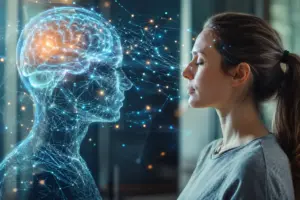 The coming decade is likely to witness closer collaboration between artificial intelligence, biotechnology, and cognitive science than ever before. Rather than pursuing science fiction scenarios, researchers are focusing on practical innovations capable of improving everyday health and extending healthy lifespan.
Emerging Technologies Shaping Human Potential
Brain-computer interfaces represent one promising area of development. These systems seek to create direct communication pathways between the brain and external devices, potentially helping individuals with neurological disorders regain lost functions such as communication or movement. Although still in relatively early stages for widespread clinical use, ongoing research suggests meaningful therapeutic potential.
AI-assisted cognitive enhancement may also become increasingly sophisticated. Personalized learning systems, digital cognitive assessments, and adaptive wellness platforms could help individuals monitor memory, attention, and mental performance throughout life. Combined with advances in neuroscience, these technologies may support healthier cognitive aging rather than attempting to replace human intelligence.
Preventive medicine is expected to become even more proactive. Continuous monitoring through wearable sensors, digital biomarkers, and AI analytics may enable healthcare providers to identify subtle physiological changes before diseases fully develop. This shift could significantly reduce the burden of chronic illness while improving quality of life across aging populations.
Investment activity within longevity startups is also likely to accelerate. Venture capital firms, institutional investors, and healthcare companies continue allocating substantial resources toward biotechnology, AI diagnostics, regenerative medicine, and personalized therapeutics. As the global population ages, demand for solutions that extend healthy living is expected to grow steadily.
Balancing Innovation with Scientific Uncertainty
Nevertheless, important scientific uncertainties remain. Researchers still debate the biological mechanisms of aging, the full complexity of human consciousness, and the long-term societal effects of increasingly intelligent machines. Maintaining rigorous scientific standards while encouraging innovation will remain essential.
Ultimately, the most transformative advances may come not from creating machines that think like humans but from building technologies that help humans live healthier, make better decisions, and realize greater potential.
The Real Opportunity at the Intersection of AI and Consciousness
The future of AI and consciousness will likely be defined less by the pursuit of artificial minds than by the intelligent integration of technology into human health, decision-making, and longevity. Artificial intelligence already demonstrates measurable value in predictive diagnostics, precision medicine, drug discovery, and digital health innovation, while consciousness research continues to deepen our understanding of the human brain without offering definitive answers about subjective awareness.
The societies that benefit most may not be those that adopt AI the fastest, but those that integrate innovation responsibly. Combining ethical governance, accessible healthcare, evidence-based science, and long-term investment in human capital could redefine both well-being and economic prosperity. In this context, wealth creation becomes inseparable from health creation: healthier individuals remain productive longer, contribute more to innovation, and require fewer costly medical interventions over time.
Although many questions surrounding consciousness remain scientifically unresolved, AI is already reshaping how humanity approaches aging, healthcare, and the future of wealth. The greatest breakthrough may therefore be neither artificial consciousness nor radical life extension alone, but a future in which technology amplifies human potential while preserving the values that define our humanity.
Conclusion
The intersection of AI and consciousness represents one of the most fascinating frontiers in modern technology, healthcare, and economics. What began as a philosophical discussion has evolved into a multidisciplinary field encompassing artificial intelligence, neuroscience, biotechnology, and precision medicine. While AI is already transforming diagnostics, preventive healthcare, personalized treatment, and longevity research, consciousness remains an open scientific question that continues to inspire investigation rather than certainty.
Looking ahead, the long-term value of these innovations will depend on more than technical capability. Ethical responsibility, transparent governance, equitable access, and evidence-based regulation will determine whether AI serves humanity broadly or deepens existing inequalities. At the same time, the growing longevity economy highlights that healthier, longer lives can reshape productivity, retirement planning, and wealth preservation for individuals and societies alike.
Ultimately, AI and consciousness should be viewed not as competing ideas but as complementary lenses through which to examine humanity’s future. AI offers powerful tools for improving health and extending healthy lifespan, while consciousness research reminds us that human experience cannot yet be reduced to algorithms alone. Balancing scientific progress with human values will determine whether this remarkable convergence delivers lasting improvements in quality of life and long-term prosperity.
Frequently Asked Questions
What is AI and consciousness?
AI and consciousness refers to the relationship between artificial intelligence and the study of human awareness. While AI performs intelligent computational tasks, consciousness describes subjective experience and self-awareness. Current AI systems are highly capable but are not considered conscious by the scientific community.
Can artificial intelligence improve human longevity?
Yes. AI supports human longevity through predictive healthcare, precision medicine, earlier disease detection, accelerated drug discovery, and personalized wellness strategies that help prevent illness before it becomes severe.
How is AI transforming healthcare?
AI is improving healthcare by assisting with diagnostics, analyzing medical images, identifying disease risks, supporting clinical decision-making, accelerating pharmaceutical research, and enabling digital health innovation through wearable technologies and continuous monitoring.
What did Deepak Chopra say about technology and consciousness?
Deepak Chopra has suggested that technology should complement human awareness rather than replace it. His perspective encourages discussion about how innovation can support human well-being, although today’s research extends far beyond philosophy into neuroscience, medicine, and economics.
Can AI predict disease before symptoms appear?
In many cases, yes. AI analyzes medical histories, genetic information, imaging, laboratory results, and digital biomarkers to identify patterns associated with elevated disease risk before clinical symptoms become apparent.
What is precision medicine?
Precision medicine tailors medical treatment according to an individual’s genetics, lifestyle, environment, and biomarkers, allowing therapies to become more personalized and potentially more effective.
How does longevity affect wealth planning?
Longer, healthier lives influence retirement planning, healthcare spending, investment strategies, and career longevity. As a result, wealth longevity planning increasingly incorporates both financial and health-related considerations.
What ethical concerns surround AI in healthcare?
Major concerns include patient privacy, data ownership, algorithmic bias, accessibility, transparency, regulation, and preserving human oversight in medical decision-making.
Will AI replace human decision-making in medicine?
No. AI is expected to complement healthcare professionals by providing decision support, improving efficiency, and identifying patterns, while physicians continue making final clinical judgments in partnership with patients.
Why is AI and consciousness becoming an important investment theme?
Investors recognize that advances in artificial intelligence, biotechnology, digital health, and longevity research could reshape healthcare delivery, productivity, retirement economics, and the future of wealth, creating long-term growth opportunities across multiple industries.