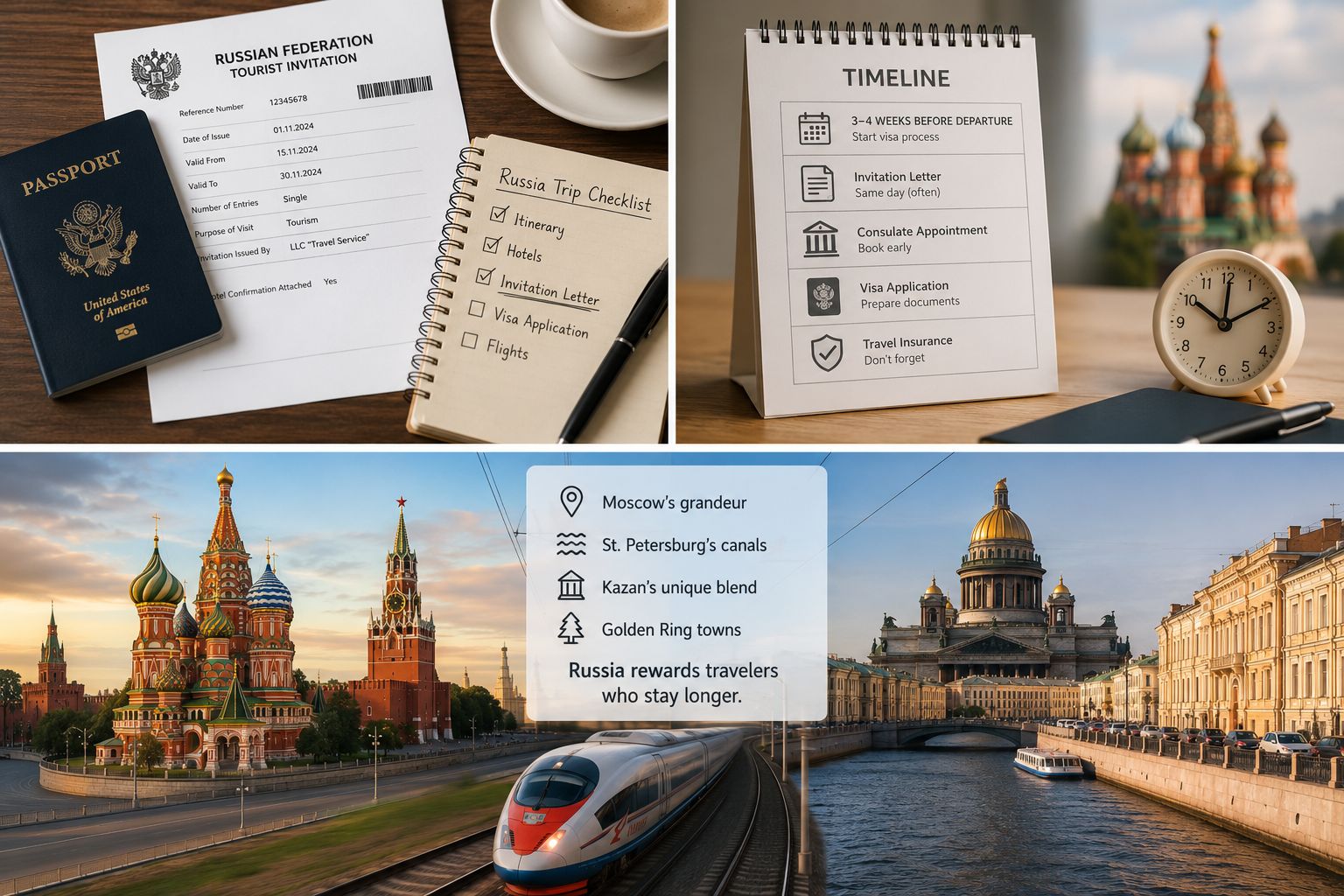
For family offices and executives weighing opportunities in Russia — whether a real estate acquisition, a joint venture, or simply a relationship-building visit — the friction rarely shows up where people expect it. Currency controls, sanctions screening, and local counsel get the attention. The document that actually opens the door, a formal visa invitation, tends to get handled last, and often too late.
Every standard Russian visa, tourist or business, requires a Letter of Invitation before a consulate will accept an application. It’s a short administrative step, but it’s a gating one: no invitation, no visa, regardless of how well the rest of the trip is planned. For a principal or a CIO whose calendar is booked months out, that single dependency deserves the same advance planning as the flight and the hotel. A russia invitation letter can now be arranged well ahead of departure, with business invitations issued on official letterhead once the inviting Russian company’s details are confirmed — a process that, done early, removes the one variable that otherwise dictates everyone else’s schedule.
Why This Matters More for High-Value Travel Than It Seems
The tourist version of this process has become largely automated — electronic invitations issued within minutes, accepted as standard by consulates since 2012. Business travel is a different track. A letterhead invitation ties the visit to a specific host entity, and verifying that relationship takes longer than a tourist voucher does. For a family office coordinating a delegation, or a principal traveling with an assistant and counsel, that means the invitation should be the first item confirmed once dates are set, not something delegated to a travel coordinator the week before departure.
Private invitations — for visits tied to a Russian-based relationship rather than a corporate host — follow a related but distinct path, typically processed through local migration authorities rather than a consulate directly. Executives relocating staff or coordinating longer stays face a further variant tied to work authorization. None of these are interchangeable, and choosing the wrong category is a more common source of delay than any actual documentation shortfall.
Building It Into the Itinerary, Not Around It
Family offices that handle this well tend to treat the invitation the same way they treat a private aviation slot or a hotel buyout: confirmed early, with named specialists handling it rather than a generalist assistant. A reasonable planning window is three to four weeks ahead of travel for standard business trips, with additional buffer for any delegation involving multiple travelers or first-time visits by principals whose documentation needs closer verification.
Groups managing recurring travel to Russia — for portfolio companies, real estate holdings, or standing joint ventures — increasingly work with dedicated corporate accounts for invitation letter Russia processing rather than starting the request from scratch each trip. A standing account with volume pricing and a named account manager turns a recurring administrative task into something closer to a fixed-cost line item, with far less exposure to last-minute surprises before a high-stakes trip.
The Broader Picture
None of this changes the substance of why a family office or executive is traveling to Russia in the first place — the investment thesis, the relationship, the site visit. What it does is remove one of the few genuinely avoidable sources of delay in an itinerary that otherwise depends on private aviation schedules, counsel availability, and the counterpart’s own calendar. For principals whose time is the scarcest resource in the entire trip, that’s a small piece of logistics worth getting right well before wheels-up.