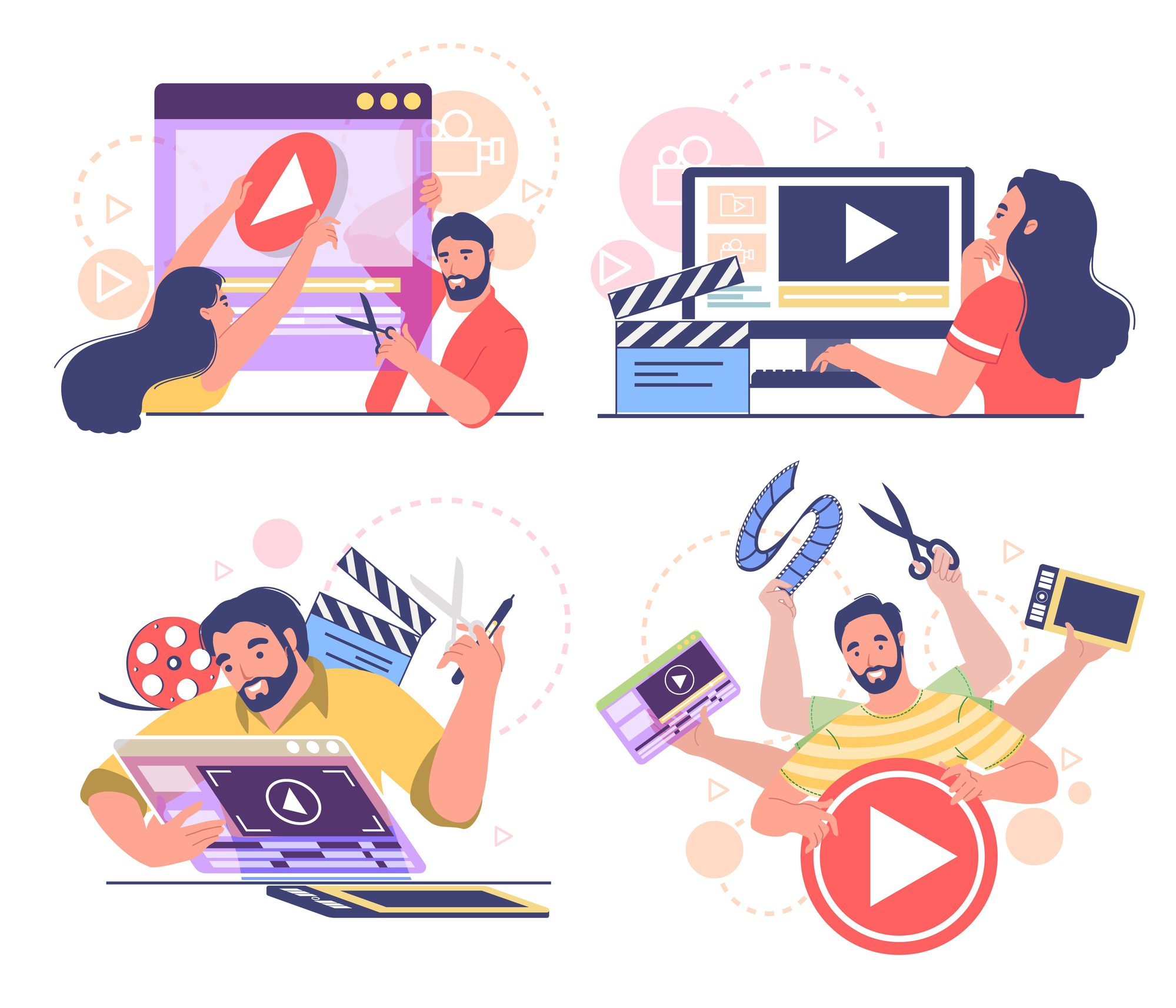
Animated video used to read as a marketing flourish — a slick explainer for a product launch. Inside organizations, it has become something more practical: a way to teach complex ideas, standardize a message across thousands of people, and get information to stick. For executives weighing where training budgets go, the question is no longer whether animation looks good, but whether it earns its cost. This article lays out when animated training video is a sound investment and when it isn’t.
What animated video does that other formats can’t
Animation’s advantage is control — over what the viewer sees, when, and how an abstract idea is made visible. Filmed video captures what exists; animation shows what can’t easily be filmed: a process, a data flow, a concept, a future state. Text can describe those things, but the viewer has to construct the mental picture themselves.
Three capabilities set it apart:
- Visualizing the abstract — processes, systems, and concepts that have no physical form to film.
- Directing attention — the eye goes exactly where the message needs it, with no set, lighting, or distraction.
- Consistency at scale — the same polished explanation reaches every employee identically, in any market.
For corporate training that must land the same way for 50 people or 50,000, that repeatability is the practical draw.
Where it earns its place — the core use cases
Animated video pays off most where content is abstract, repeated, and high-stakes. The strongest use cases:
- Complex or abstract topics — how a system, policy, or model works.
- Compliance — consistent, on-record explanation of rules, delivered identically to everyone.
- Onboarding — the same high-quality introduction for every new hire, without repeating live sessions.
- Change communication — explaining a reorganization or new strategy clearly and calmly.
- Global rollouts — one animation, re-voiced or subtitled, deployed across languages.
The common thread is reuse: content watched many times by many people, where a one-time production cost is spread thin.
Why animation aids retention
Animation helps memory because it engages two mental channels at once, not just one. Allan Paivio’s dual coding theory holds that information encoded as both words and images creates two memory traces instead of one — so if one fades, the other can still cue recall.
Richard Mayer’s cognitive theory of multimedia learning, built on more than 200 experiments, extends this: people learn better from words and pictures together than from words alone — but only when the visuals reduce cognitive load rather than add clutter. That caveat matters for the business case. Well-designed animation improves knowledge retention; decorative, overstuffed animation can hurt it. The format helps employee engagement and memory only when it’s built to clarify, not to impress.
Producing or sourcing animated video
Organizations either build animation with an internal creative team or bring in a specialist studio, and the choice usually turns on volume and cadence. A company producing occasional videos rarely justifies a standing in-house animation team; one running continuous training programs might. Many organizations without that internal capacity use external animated training video services so the production pipeline, tooling, and instructional design already exist rather than being assembled per project.
Either way, the decisive input is not software but design: someone has to turn the subject matter into a clear script and visual sequence. That planning step, not the rendering, is where an animation succeeds or fails.
The cost and ROI logic
Animation costs more per minute than filmed or text content, and the ROI case rests on reuse, not unit price. The cost drivers are predictable: length, visual complexity and style, custom illustration, and the number of revision rounds. A bespoke, richly illustrated minute costs far more than a simple motion-graphics one.
The way to judge it is total cost over the content’s life:
- How many people will watch it?
- How long will it stay accurate before needing updates?
- What does the alternative cost — repeated live sessions, trainer time, inconsistent delivery?
An animation watched by 10,000 employees over two years is cheap per view; the same production for a 20-person audience on a topic that changes next quarter is not. Video-based learning earns its budget on scale and shelf life.
When animated video is the wrong choice
Animation is a poor fit whenever content is volatile or needs a human. Skip it when:
- The material changes frequently — re-animating is slow and expensive.
- The audience is small, so per-viewer cost stays high.
- The skill needs live demonstration, practice, or interaction — a human on camera or in the room teaches it better.
For quick, perishable updates, a plain screen recording or a short written note is often the smarter spend. Even brief microlearning clips only justify animation when they’ll be reused widely.
Conclusion
Animated video is a high-leverage format for the right content: abstract, repeated, high-stakes material seen by many people over time. Its value comes from clarity and reuse, not novelty — and the business case is decided by audience size and shelf life, not by production polish. For executives, the discipline is simple: use animation where it will be watched widely and stay accurate, design it to clarify rather than decorate, and choose cheaper formats for everything short-lived or small-scale.
photo by depositphotos