Cardiac arrest is one of the most urgent medical emergencies a person can face. It happens when the heart suddenly stops pumping blood around the body. Within seconds, the person will usually collapse and become unresponsive. Their breathing may stop or become abnormal, and without immediate help, their chances of survival fall quickly.
This is why the first few minutes are so important. In many cases, emergency services cannot arrive instantly. Even a fast ambulance response may take several minutes, and during that time, the brain and vital organs are not getting the oxygen they need. What happens before professional help arrives can make the difference between life and death.
That is where automated external defibrillators, better known as AEDs, play such an important role. These devices are designed to be used quickly, even by people with little or no medical experience. When combined with CPR and a fast emergency call, an AED can greatly improve the chances of survival.
What an AED Actually Does
An AED is a portable device that checks the heart’s rhythm and, if needed, delivers an electric shock. This shock is called defibrillation. It can help the heart reset itself and return to a normal rhythm.
Many sudden cardiac arrests are caused by a dangerous rhythm called ventricular fibrillation. In simple terms, the heart is shaking or quivering instead of pumping blood properly. CPR can help keep some blood moving around the body, but it usually cannot correct this rhythm on its own. Defibrillation is often needed to give the heart the best chance of restarting effectively.
Modern AEDs are made to be simple. Once switched on, the device gives spoken instructions. It tells the user where to place the pads, when to stand clear and whether a shock is needed. The AED analyses the heart rhythm automatically, so the person using it does not have to make a medical judgement. It will only advise a shock if one is required.
This makes AEDs suitable for workplaces, schools, gyms, shopping centres, sports clubs and other public spaces. They are built for emergencies where ordinary people may need to act before paramedics arrive.
Note: Not every cardiac arrest requires a shock. If the AED says no shock is advised, continue CPR and keep following the device prompts until emergency responders take over.
AEDs Save Time When Every Minute Counts
In a cardiac arrest, every minute matters. The sooner someone calls 999, starts CPR and uses an AED if one is available, the better the person’s chances may be.
AEDs help because they can be used before emergency services arrive. While CPR helps keep blood and oxygen moving around the body, the AED checks the heart rhythm and advises whether a shock is needed. If other people are nearby, one person should call for help, another should start CPR and someone else should get the nearest AED.
AEDs are an important part of the chain of survival, alongside recognising cardiac arrest, calling for help, giving CPR and getting advanced medical care. Not every cardiac arrest needs a shock, and an AED will only advise one if it is suitable. If no shock is advised, rescuers should continue CPR and follow the AED prompts until emergency responders take over or the person shows clear signs of recovery.
Confidence Helps People Act
Although AEDs are designed for public use, many people still hesitate in an emergency. They may worry about hurting the person, using the device incorrectly or being held responsible if something goes wrong. These fears are common, but they can prevent people from taking action when action is exactly what is needed.
Training helps remove that hesitation. It shows people what cardiac arrest looks like, how to respond, how to perform CPR and how to use an AED safely. It also helps people understand that the device is there to guide them. They do not need to be a doctor, nurse or paramedic to use it.
For organisations that want staff to feel more prepared, online AED training can be a practical way to build confidence. It gives learners a clear understanding of what to do in a cardiac emergency, so they are more likely to respond quickly rather than freeze.
This confidence matters. In a real emergency, people rarely have time to stop and think through every step. Training gives them a mental framework to follow. It makes the situation feel less unfamiliar and helps them focus on the actions that matter most.
AEDs Make Public Places Safer
AEDs are especially valuable in places where large numbers of people gather. Offices, factories, airports, train stations, leisure centres, schools and shopping areas all have the potential for sudden medical emergencies. The more people there are in one place, the greater the chance that someone may suffer a cardiac arrest.
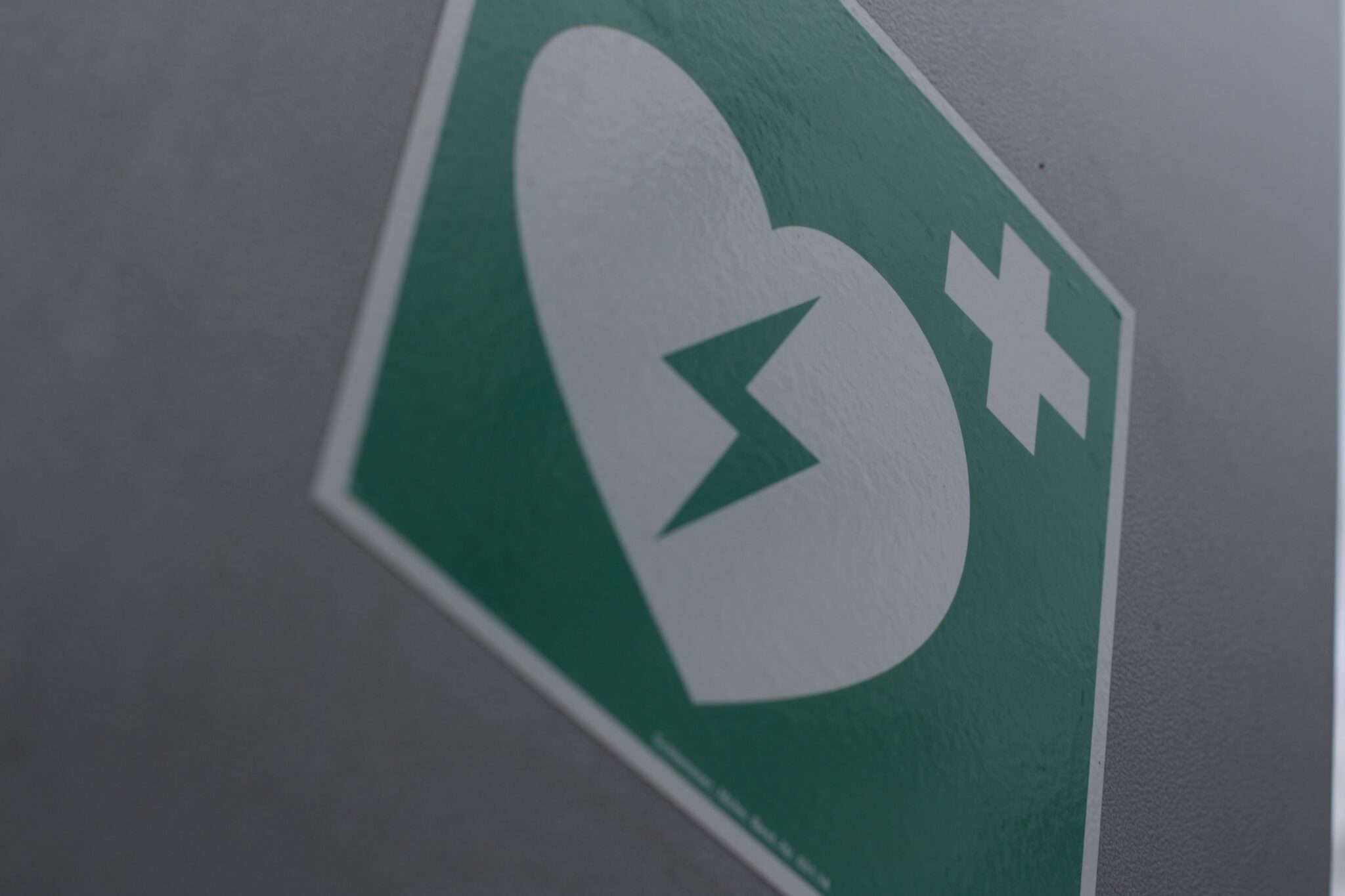
Having an AED on site means help can start sooner. But simply owning a device is not enough. It must be easy to find, clearly signposted and properly maintained. Staff should know where it is kept, how to access it and who is expected to respond during an emergency.
Regular checks are also important. Pads can expire, batteries can run down and devices can be moved or blocked from view. A well-managed AED programme makes sure the equipment is ready when needed.
Some organisations also register their AEDs with local or national defibrillator networks. This can help emergency call handlers direct bystanders to the nearest available device. In a cardiac arrest, that kind of information can save valuable time.
CPR and AEDs Work Together
An AED is powerful, but it should not be seen as a replacement for CPR. The two work together. CPR keeps blood and oxygen moving through the body, while the AED treats certain abnormal heart rhythms.
If someone collapses and is not breathing normally, emergency services should be called immediately. CPR should begin as soon as possible. If another person is nearby, they should be sent to get the AED. Once the AED arrives, it should be switched on and used straight away, with rescuers following the voice prompts.
After a shock is delivered, CPR usually needs to continue. The AED will keep giving instructions and will recheck the heart rhythm at set intervals. Rescuers should continue until the person shows clear signs of recovery, they are too exhausted to carry on or emergency responders take over.
This simple sequence can feel intense in the moment, but it is easy to understand: call for help, start CPR, use the AED and keep going.
Building a Culture of Emergency Readiness
AEDs are most effective when they are part of a wider approach to first aid and emergency planning. People need to know how to recognise danger, how to raise the alarm and how to support someone until professional help arrives.
In workplaces, this means having trained first aiders, clear procedures and staff who understand their role in an emergency. It also means making first aid knowledge part of everyday safety culture, not something that is only thought about after an incident.
Broader first aid training courses can help organisations prepare for more than cardiac arrest alone. They can support staff in responding to injuries, illness, choking, bleeding, fainting and other urgent situations. This wider knowledge helps create a safer, more confident environment for everyone.
Conclusion
AEDs improve survival rates because they bring life-saving treatment closer to the people who need it. In a cardiac arrest, time is critical. CPR can help maintain blood flow, but early defibrillation can give the heart its best chance of restarting properly.
The real value of an AED is not just the device itself. It is the combination of access, awareness and confidence. When AEDs are easy to find, properly maintained and supported by training, more people are willing and able to act.
A bystander with an AED may be the first real chance a person has of surviving a cardiac emergency. That is why AEDs are not just useful pieces of equipment. They are essential tools for saving lives.