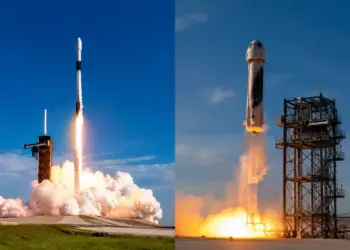
Blue Origin has emerged as one of the most closely watched companies in the modern space sector. As the new space race accelerates, driven by technological innovation, private investment, and growing government demand, Blue Origin is steadily building a position that differs from many of its competitors. Rather than focusing solely on near-term launch dominance, the company has adopted a broader strategy centered on infrastructure, long-term capability development, and the future expansion of human activity beyond Earth.
The commercial space industry has evolved dramatically over the past two decades. What was once dominated by government agencies now includes ambitious private space companies competing across launch services, lunar exploration, satellite deployment, and space infrastructure development. At the center of this transformation stands Jeff Bezos, whose commitment to space extends far beyond commercial opportunity.
The Blue Origin strategy reflects a belief that humanity’s future will increasingly depend on access to space. Consequently, the company continues investing heavily in reusable rocket technology, manufacturing facilities, launch systems, and long-duration exploration programs. While competitors often attract attention through rapid launch schedules or headline-grabbing missions, Blue Origin has pursued a more deliberate path.
As investment in the global space economy grows and policymakers increasingly view space as a strategic domain, Blue Origin is positioning itself to become a foundational player in the next era of aerospace development.
The Origins of Blue Origin and Its Long-Term Mission
Jeff Bezos founded Blue Origin in 2000 with a mission rooted in long-term thinking. The company’s guiding vision is to enable millions of people to live and work in space. Unlike many technology ventures focused on short-term disruption, Blue Origin was established around a multi-generational objective.
The company’s motto, Gradatim Ferociter—Latin for “step by step, ferociously”—captures its philosophy. Instead of rushing toward milestones, Blue Origin has emphasized methodical engineering development, infrastructure construction, and reusable systems that can support future expansion.
From the beginning, Bezos viewed space not simply as an industry but as a necessary frontier for human progress. He has repeatedly argued that Earth’s finite resources make off-world industrial development increasingly important over the long term.
This perspective influences every major investment decision within the company. Rather than optimizing for quarterly performance, Blue Origin focuses on capabilities that could become essential decades from now.
As a result, the company occupies a unique position within the broader commercial space industry, balancing commercial objectives with a long-term civilizational vision.
Jeff Bezos’ Vision for the Future of Space
The Jeff Bezos space vision differs significantly from many contemporary approaches to space exploration.
While some competitors emphasize rapid planetary settlement or launch market dominance, Bezos frequently discusses building the infrastructure necessary to support future space-based economies. He often compares the current era of space development to the early stages of the internet, when foundational systems were created before widespread commercial adoption occurred.
Several themes define Bezos’ approach:
- Building transportation infrastructure first
- Lowering access costs through reusability
- Creating industrial capacity in space
- Supporting long-term human expansion
- Encouraging private-sector participation
Importantly, Bezos believes future economic growth may increasingly depend on activities conducted beyond Earth. Manufacturing, energy generation, research, and resource extraction could eventually migrate into space environments where constraints differ from those on Earth.
This vision helps explain why Blue Origin continues investing heavily despite facing intense competition. The company’s leadership appears less focused on winning individual milestones and more focused on building the underlying framework of a future space economy.
Blue Origin’s Technology and Infrastructure Strategy
A defining characteristic of the Blue Origin strategy is its emphasis on infrastructure development.
The company has invested billions of dollars into launch facilities, manufacturing operations, propulsion systems, and reusable launch technologies. These investments may appear expensive in the short term, but they align with the company’s long-range objectives.
Reusable rocket technology sits at the center of this strategy. Historically, spaceflight remained costly because rockets were discarded after use. Blue Origin seeks to reduce launch expenses by recovering and reusing major rocket components.
The company’s BE-series engines represent a critical element of this effort. These engines power both current and future launch systems while supporting broader ambitions in commercial and government markets.
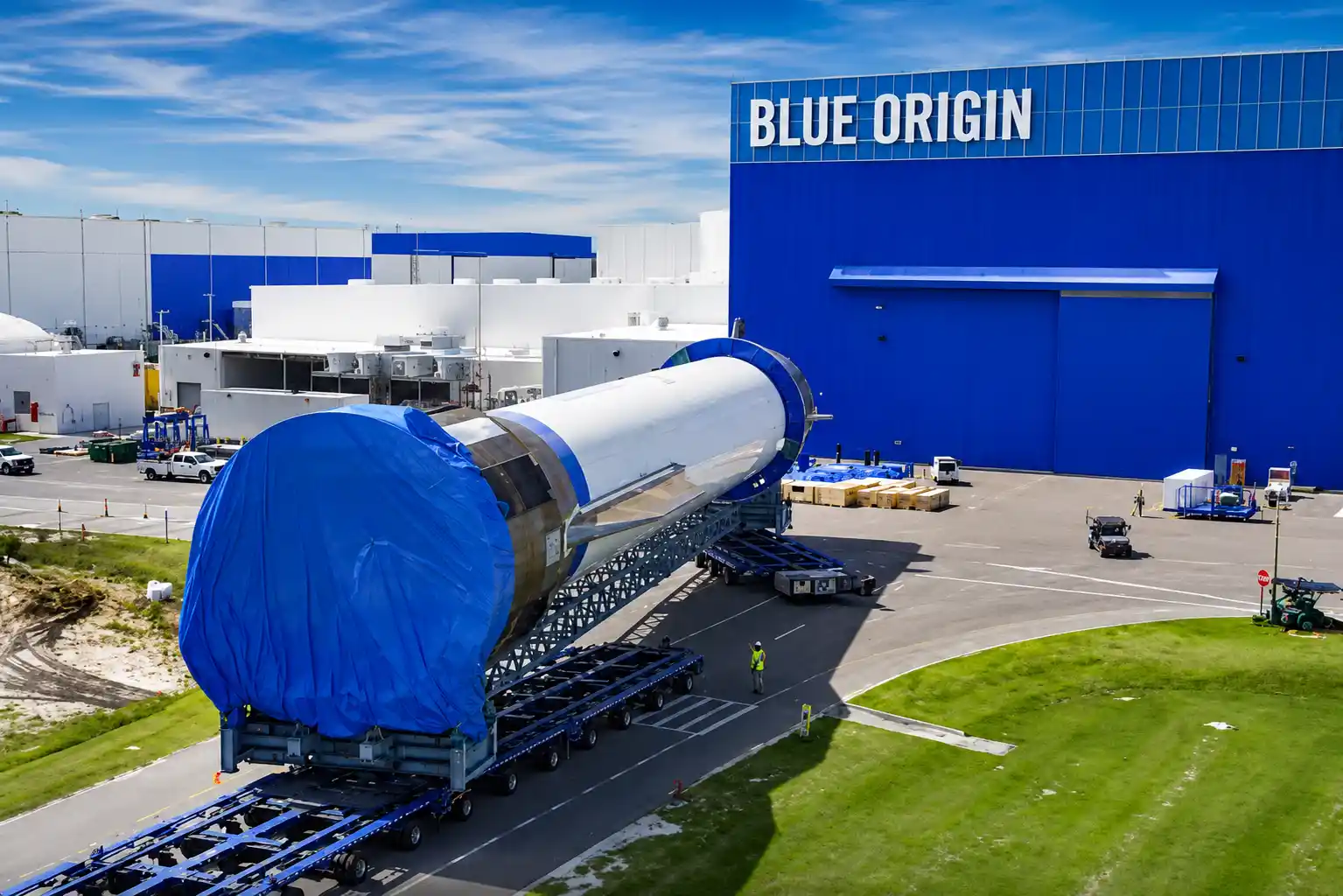
Blue Origin has also invested significantly in production capabilities, including large-scale manufacturing facilities designed to support increased launch activity over time.
The infrastructure-first approach reflects a belief that future growth in the commercial space industry will depend on scalable transportation networks rather than isolated missions. By focusing on foundational capabilities today, Blue Origin hopes to capture opportunities as demand expands across multiple segments of the space economy.
Competitive Positioning in the New Space Race
| Company | Strategic Focus | Key Strength | Long-Term Objective |
|---|---|---|---|
| Blue Origin | Space infrastructure and reusable systems | Long-term investment capacity | Enable large-scale human activity in space |
| SpaceX | Launch leadership and interplanetary missions | High launch frequency and scale | Human settlement beyond Earth |
| Rocket Lab | Small satellite launch and space systems | Operational agility | Integrated space services platform |
| ULA | Government and national security missions | Reliability and heritage | Maintain strategic launch leadership |
| Arianespace | European launch independence | Institutional partnerships | Secure European access to space |
This comparison highlights how Blue Origin occupies a distinct position. While competitors focus heavily on launch markets, the company increasingly frames itself as an infrastructure builder for future space commerce.
New Shepard, New Glenn, and Commercial Growth
Blue Origin’s growth ambitions are reflected most clearly in its flagship programs: New Shepard and New Glenn.
New Shepard serves as a reusable suborbital system designed for tourism, research missions, and technology testing. The vehicle has demonstrated the viability of repeated rocket reuse while generating valuable operational experience.
Although space tourism attracts significant media attention, New Shepard’s broader importance lies in its contribution to reusable flight systems and commercial mission operations.
The larger opportunity comes from New Glenn.
Blue Origin New Glenn is designed as a heavy-lift orbital launch vehicle capable of competing across commercial, civil, and defense markets. With reusable first-stage technology and substantial payload capacity, New Glenn represents the company’s entry into the most strategically important launch segments.
The vehicle targets several high-growth markets:
- Satellite constellation deployment
- Government launch services
- Defense missions
- Deep-space exploration support
- Commercial payload transportation
Success in these markets could significantly strengthen Blue Origin’s revenue base while enhancing its competitive position across the global launch industry.
As launch demand increases due to communications networks, Earth observation systems, and defense requirements, New Glenn may become a central component of the company’s growth strategy.
Competing in the New Space Race
The new space race has created a competitive environment unlike anything seen in aerospace history.
Private capital, technological innovation, and geopolitical priorities now drive unprecedented investment into space capabilities. Blue Origin competes with both established aerospace organizations and rapidly growing private firms.
SpaceX
SpaceX currently leads many areas of the commercial launch market. Its high launch cadence, integrated satellite ecosystem, and ambitious exploration objectives have reshaped industry expectations.
Strategic priorities focus on launch scale, Starlink expansion, and long-term Mars ambitions.
However, Blue Origin’s approach differs by emphasizing infrastructure development and diversified future economic activity rather than a singular focus on transportation and planetary settlement.
Rocket Lab
Rocket Lab has established itself as a leading provider of small-launch solutions while expanding into broader space systems services.
Its business model emphasizes flexibility, operational efficiency, and rapid innovation. Although smaller than Blue Origin, Rocket Lab remains an important competitor in emerging commercial markets.
United Launch Alliance (ULA)
ULA maintains a strong position in national security and government launch missions.
Its reputation for reliability continues to attract institutional customers. However, the company faces increasing pressure from newer entrants that offer reusable systems and lower costs.
Arianespace
Arianespace remains a major player within Europe and benefits from strong governmental support.
The organization prioritizes strategic independence for European space access. While its objectives differ from Blue Origin’s global ambitions, both companies compete for institutional and commercial contracts.
Collectively, these competitors illustrate the diversity of business models emerging across the global space sector. Blue Origin’s challenge is not merely technological; it must demonstrate that its infrastructure-centric strategy can generate sustainable competitive advantages over time.
Government Contracts, Lunar Ambitions, and Strategic Expansion
Government opportunities represent a major pillar of Blue Origin’s future growth.
National security agencies increasingly require reliable launch providers capable of supporting sensitive missions. Consequently, Blue Origin has expanded efforts to compete for defense-related contracts.
The company also participates in lunar initiatives designed to support future exploration and infrastructure development. These efforts align closely with broader governmental goals involving long-term lunar presence and scientific research.
Beyond launch services, Blue Origin aims to become a partner in future exploration architectures. This strategy could create recurring opportunities across transportation, logistics, habitat development, and resource utilization.
Such diversification reduces dependence on any single market segment and strengthens the company’s strategic resilience.
Key Opportunity Areas for Blue Origin
| Opportunity Area | Blue Origin Position | Growth Potential |
| Commercial Launch Services | Expanding through New Glenn | High |
| National Security Missions | Growing participation | High |
| Lunar Infrastructure | Active development initiatives | Very High |
| Space Tourism | Established through New Shepard | Moderate |
| Space Logistics | Early-stage positioning | Very High |
| Future Industrial Infrastructure | Long-term strategic focus | Transformational |
The breadth of these opportunities demonstrates why many investors and analysts view Blue Origin as more than a launch company. Its ambitions span multiple layers of the future space economy.
The Economics of Space Infrastructure Development
The growth of the space economy increasingly depends on infrastructure.
Historically, transportation networks unlocked economic development on Earth. Railroads, ports, highways, and telecommunications systems created the foundations for new industries. Similar dynamics may emerge in space.
Blue Origin’s investment philosophy reflects this historical pattern. Rather than focusing solely on launch revenue, the company seeks to establish capabilities that enable future markets.
Several macroeconomic trends support this strategy:
- Rising government spending on space programs
- Increasing private capital entering aerospace
- Growing demand for satellite services
- Expansion of defense-related space activities
- Long-term interest in lunar development
These forces contribute to broader space economy growth and create opportunities for companies capable of supporting large-scale activity beyond Earth.
Consequently, Blue Origin’s investments should be viewed not only through the lens of aerospace competition but also through the economics of infrastructure development.
Challenges and Opportunities Facing Blue Origin
Despite substantial resources and ambitious goals, Blue Origin faces meaningful challenges.
Competition remains intense. SpaceX continues setting operational benchmarks across launch markets, while emerging players introduce new technologies and business models.
Execution risk also remains significant. Large aerospace programs require extensive testing, regulatory approval, manufacturing coordination, and operational reliability.
Additional challenges include:
- Launch market pricing pressure
- Rapid technological change
- Government procurement complexity
- Capital-intensive development cycles
Nevertheless, opportunities remain substantial.
The future of space exploration increasingly depends on commercial participation. Governments seek partnerships, businesses require orbital services, and investors continue funding innovation-led investment opportunities.
If demand grows as many forecasts suggest, multiple successful companies could emerge rather than a single dominant winner.
Under that scenario, Blue Origin’s long-term investments may become increasingly valuable.
Unique Insight: Why Blue Origin Is Following a Different Path?
Blue Origin’s most distinctive characteristic may be its willingness to prioritize infrastructure over immediate visibility.
Many companies compete for launch frequency, headline achievements, or rapid market expansion. Blue Origin, by contrast, appears focused on building foundational systems that could support future industries.
Its strategy reflects several beliefs:
- Infrastructure creates lasting competitive advantages.
- Large economic ecosystems require transportation networks.
- Sustainable development matters more than isolated milestones.
- Long investment horizons can unlock transformational opportunities.
This infrastructure-first philosophy separates Blue Origin from many rivals.
If the future space economy depends primarily on launch services, other competitors may maintain an advantage. However, if future growth requires transportation systems, logistics networks, industrial platforms, and permanent off-world infrastructure, Blue Origin’s approach could prove highly influential.
In that sense, the company is not simply competing in today’s market. It is attempting to shape the architecture of tomorrow’s economy beyond Earth.
Conclusion
Blue Origin occupies a unique position in the evolving new space race. While competitors often focus on launch frequency, market share, or near-term milestones, the company continues pursuing a broader vision centered on infrastructure, scalability, and long-term economic development beyond Earth.
Its investments in reusable rocket technology, Blue Origin New Glenn, lunar initiatives, and manufacturing capacity reflect a strategy designed for decades rather than years. Combined with Jeff Bezos’ long-range perspective, these efforts position the company as a potential architect of future space infrastructure.
As the commercial space industry expands and the global space economy grows, Blue Origin’s emphasis on foundational systems may become increasingly important. Whether measured through launch services, lunar development, or infrastructure creation, the company is working to secure a significant role in the future of space exploration and the next phase of aerospace innovation.
Frequently Asked Questions
What is Blue Origin?
Blue Origin is a private aerospace company founded in 2000 by Jeff Bezos. It develops reusable rockets, spaceflight systems, and infrastructure intended to support long-term human activity in space.
Who owns Blue Origin?
Blue Origin is privately owned by Jeff Bezos, who continues to fund significant portions of its long-term development efforts.
What is Blue Origin’s strategy in the new space race?
The Blue Origin strategy focuses on reusable rocket technology, infrastructure development, government partnerships, and enabling future economic activity beyond Earth.
How does Blue Origin compete with SpaceX?
Blue Origin competes through reusable launch systems, heavy-lift capabilities, government contracts, and long-term infrastructure investments. Its strategic focus is broader than launch services alone.
What is the purpose of New Glenn?
New Glenn is Blue Origin’s heavy-lift orbital rocket designed to serve commercial, government, defense, and exploration missions.
How does Blue Origin make money?
The company generates revenue through launch services, research missions, government contracts, and commercial aerospace activities.
Is Blue Origin involved in lunar exploration?
Yes. Blue Origin participates in lunar development initiatives and supports programs aimed at future Moon-based infrastructure and exploration.
What role does Blue Origin play in the commercial space industry?
Blue Origin contributes to the commercial space industry through launch services, reusable technologies, infrastructure investments, and future exploration systems.
Why is Jeff Bezos investing so heavily in Blue Origin?
Jeff Bezos believes long-term economic growth and human expansion will increasingly depend on access to space. His investments support that vision.
What is the future outlook for Blue Origin?
The outlook for Blue Origin depends on successful execution of New Glenn, expansion into government markets, and continued progress toward becoming a key infrastructure provider in the future space economy.