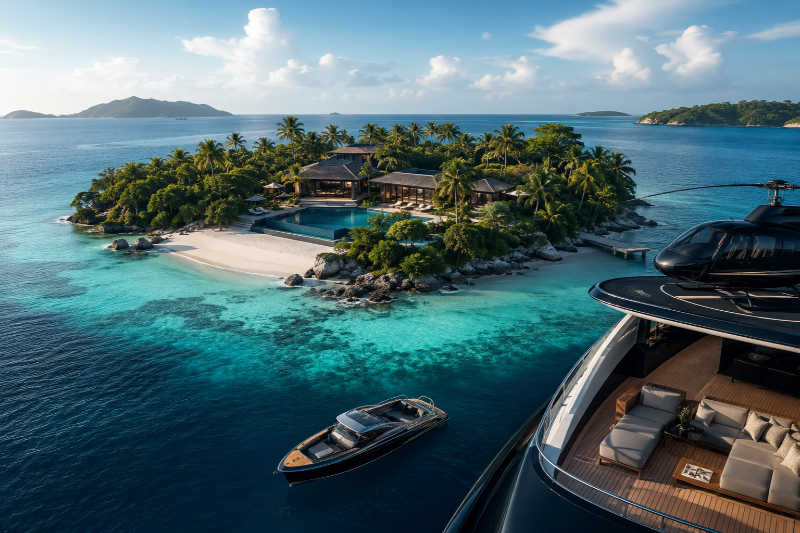
Throughout history, people have pursued exclusive land ownership as a symbol of power, influence, and social standing. From royal estates and sprawling ranches to penthouses overlooking global financial centers, luxury real estate has long reflected personal success. However, the modern era has introduced a new pinnacle of prestige: private islands.
As billionaire culture has expanded and global wealth creation has accelerated, affluent individuals increasingly seek assets that offer more than comfort alone. They desire privacy, autonomy, rarity, and long-term value. Consequently, private island ownership has emerged as one of the most coveted achievements within the luxury asset hierarchy.
Today, the market for private islands for sale attracts entrepreneurs, celebrities, royalty, investors, and family offices seeking exceptional opportunities. Moreover, luxury private islands and exclusive island properties are increasingly viewed as both lifestyle acquisitions and strategic wealth preservation assets. Against the backdrop of evolving luxury property trends 2026, islands occupy a unique position that few other assets can rival.
Unlike mansions, yachts, or private jets, islands combine complete geographic control, extraordinary scarcity, and enduring prestige. Therefore, they have become globally recognized symbols of ultimate wealth and exclusivity.
What Makes Private Island Ownership Different From Other Luxury Assets?
Most luxury assets offer comfort, convenience, or status. However, islands deliver something far more powerful: complete environmental ownership.
When someone purchases a luxury mansion, they still share roads, utilities, and neighboring properties. Meanwhile, yacht owners remain dependent on ports, marinas, and regulations. By contrast, island owners gain control over an entire geographic ecosystem.
Several characteristics distinguish islands from traditional luxury assets:
- Complete ownership of a natural environment
- Exceptional privacy from public access
- Limited global inventory
- Freedom to create customized infrastructure
- Strong emotional and symbolic value
Moreover, island ownership provides a rare combination of lifestyle and legacy. Owners can design private resorts, conservation projects, family compounds, or hospitality ventures according to their vision.
As a result, private island ownership represents a level of exclusivity that exceeds most forms of ultra luxury real estate.
Why Did Private Islands Become the Ultimate Status Symbol?
The rise of islands as status symbols reflects broader cultural changes in how wealth is perceived.
Historically, wealth was displayed through castles, estates, luxury automobiles, and fine art collections. However, modern affluent buyers increasingly prioritize experiences, privacy, and uniqueness. Consequently, islands became highly attractive because they represent ownership of something truly irreplaceable.
Several factors accelerated this transformation:
- Growing fascination with billionaire lifestyles
- Increased media coverage of elite acquisitions
- Greater emphasis on privacy and security
- Expansion of global wealth among entrepreneurs
- Social prestige associated with rarity
Moreover, public awareness expanded as celebrities and business leaders openly invested in island properties. Each high-profile purchase reinforced the perception that islands represented the highest level of success.
Nevertheless, status alone does not explain demand. Islands also symbolize freedom from many limitations that accompany conventional luxury assets. Therefore, their prestige extends beyond simple wealth signaling.
Comparison of Major Luxury Assets
| Luxury Asset | Privacy Level | Scarcity | Prestige Factor | Ownership Control |
|---|---|---|---|---|
| Luxury Mansion | Moderate | Medium | High | Partial |
| Penthouse | Moderate | Medium | High | Limited |
| Superyacht | High | Medium | Very High | Moderate |
| Private Jet | Moderate | Low | High | Limited |
| Private Island | Extremely High | Very High | Exceptional | Complete |
How Did Billionaires and Celebrities Popularize Private Island Ownership?
Public perception changed dramatically when celebrities, entrepreneurs, and billionaires began purchasing islands on a highly visible scale.
Entertainment figures often showcased island retreats as private sanctuaries away from media attention. Meanwhile, technology founders and hedge fund managers embraced islands as symbols of entrepreneurial achievement.
Several influences contributed to growing demand:
- Celebrity ownership created aspirational appeal
- Media coverage highlighted exclusivity
- Luxury publications elevated island lifestyles
- Social media increased global visibility
- Wealth advisors promoted islands as legacy assets
Moreover, royal families and aristocratic landowners have historically maintained island estates, adding an additional layer of prestige.
As a result, island ownership evolved from a niche luxury purchase into a globally recognized status symbol associated with extraordinary wealth.
Which Regions Became the World’s Leading Private Island Markets?
Not all island markets offer the same appeal. Certain regions have emerged as dominant destinations due to climate, accessibility, legal frameworks, and infrastructure.
The Bahamas remains one of the world’s most active island markets. Its proximity to North America and favorable ownership structures continue to attract wealthy buyers.
Other leading regions include:
- Bahamas
- Caribbean
- Fiji
- Maldives
- French Polynesia
- Scotland
- Canada
The Caribbean appeals to buyers seeking tropical lifestyles and luxury tourism opportunities. Meanwhile, Fiji and French Polynesia attract investors interested in remote paradise environments.
In contrast, Scotland and Canada appeal to buyers seeking privacy, conservation opportunities, and rugged natural beauty. Therefore, the global island market now serves a wide range of lifestyle objectives.
What Psychological Appeal Drives Demand for Private Islands?
Financial logic explains only part of the attraction. The deeper motivation often stems from psychology.
Humans have historically associated land ownership with power and security. However, islands amplify these feelings because they provide complete physical separation from the outside world.
Several emotional drivers influence demand:
- Desire for control
- Need for privacy
- Exclusivity preferences
- Family legacy ambitions
- Freedom from public attention
Moreover, many wealthy individuals face constant visibility and public scrutiny. Consequently, islands become sanctuaries where personal time and family experiences remain protected.
Additionally, island ownership often fulfills legacy aspirations. Families view these properties as multi-generational assets capable of preserving memories, traditions, and wealth.
Key Benefits of Private Island Ownership
| Ownership Benefit | Lifestyle Impact | Wealth Impact | Prestige Impact |
| Privacy | Exceptional personal freedom | Indirect value | Very High |
| Scarcity | Exclusive experiences | Strong appreciation potential | High |
| Control | Full customization | Asset flexibility | High |
| Legacy Planning | Multi-generational use | Wealth transfer benefits | High |
| Investment Potential | Revenue opportunities | Long-term growth | Moderate |
How Does Private Island Ownership Function as Wealth Preservation?
Beyond lifestyle benefits, islands increasingly attract investors seeking durable stores of value.
Scarcity remains one of the strongest drivers of appreciation. Unlike traditional developments, the supply of desirable islands cannot expand significantly. Therefore, premium inventory often retains long-term value.
Several financial advantages support investment demand:
- Limited global supply
- Diversification beyond traditional assets
- Inflation resistance
- Long-term appreciation potential
- Estate planning benefits
Moreover, affluent investors increasingly seek tangible assets during periods of economic uncertainty. As a result, islands can serve as strategic wealth preservation assets alongside prime real estate, infrastructure, and collectibles.
Although ownership costs can be substantial, many buyers view these properties through a multi-decade investment lens.
Why Are Luxury Property Trends 2026 Increasing Island Demand?
Several powerful trends are reshaping global luxury markets.
Remote work and digital business models allow wealthy individuals to spend more time outside traditional urban centers. Consequently, demand for self-contained luxury environments continues to rise.
Key drivers include:
- Remote luxury lifestyles
- Increased privacy priorities
- Growth of UHNW populations
- Sustainable development initiatives
- Luxury hospitality integration
Moreover, sustainability has become increasingly important. Many island developments now incorporate renewable energy, water management systems, and environmental conservation programs.
Additionally, luxury hospitality brands continue expanding into island destinations. Therefore, buyers gain access to professional management services while maintaining ownership benefits.
These developments position islands at the center of evolving luxury property trends 2026.
When Could Private Islands Become Even More Valuable?
Future market dynamics suggest continued appreciation potential.
Global wealth creation remains concentrated among entrepreneurs, technology founders, investors, and business owners. Meanwhile, premium island inventory remains limited.
Several trends could increase value over time:
- Growing billionaire populations
- Rising demand for privacy
- Scarcity of premium locations
- Expanding luxury tourism
- Increased international investment
Furthermore, climate-conscious development and improved infrastructure may make previously inaccessible islands more attractive.
Consequently, premium islands could become even more competitive assets within global luxury markets.
Why Is Private Island Ownership Becoming More Than a Luxury Purchase?
A significant transformation is underway.
Modern buyers no longer view islands merely as vacation homes. Instead, they increasingly see them as complete lifestyle ecosystems capable of serving multiple purposes simultaneously.
Today’s island owners often use properties to:
- Create personal environments
- Build family legacies
- Preserve wealth across generations
- Develop hospitality ventures
- Enhance global social status
Unique Insight: The Rise of Personal Sovereignty Through Private Island Ownership
One of the most fascinating developments involves the concept of personal sovereignty.
For many ultra-high-net-worth individuals, private island ownership represents far more than real estate. It offers control over environment, experiences, infrastructure, and lifestyle decisions.
Moreover, islands provide an unmatched combination of exclusivity, independence, prestige, and investment potential. Therefore, they increasingly function as personal ecosystems rather than simple luxury assets.
This shift explains why islands continue attracting some of the world’s most influential individuals.
What Does the Future Hold for Private Island Ownership?
The outlook remains exceptionally strong.
Demand from ultra-high-net-worth individuals continues to expand. Meanwhile, limited inventory supports long-term exclusivity and value preservation.
Several factors will likely shape future growth:
- Continued UHNW wealth expansion
- Rising prestige associated with islands
- Increasing investor interest
- Enhanced island development opportunities
- Greater integration with luxury hospitality
Moreover, future buyers will likely prioritize sustainability, technological independence, and privacy. Consequently, islands that deliver these attributes may command substantial premiums.
Ultimately, private island ownership remains one of the world’s most powerful symbols of wealth. It combines lifestyle freedom, long-term investment potential, geographic exclusivity, and enduring prestige in ways few assets can match. As global wealth continues growing, islands are likely to remain among the most sought-after assets within the world of ultra luxury real estate.
Frequently Asked Questions?
What is private island ownership?
Private island ownership refers to the purchase and legal control of an entire island or a significant portion of one. Owners typically gain rights to develop, manage, and use the property according to local regulations.
Why do billionaires buy private islands?
Billionaires often purchase islands for privacy, exclusivity, security, prestige, and long-term wealth preservation.
How much does a private island cost?
Prices vary widely. Small undeveloped islands may cost a few hundred thousand dollars, while premium tropical islands can exceed hundreds of millions of dollars.
Are private islands good investments?
They can be attractive long-term investments due to scarcity, appreciation potential, and diversification benefits, although maintenance costs require careful consideration.
Which countries have the best private islands for sale?
Popular markets include the Bahamas, Canada, Fiji, Scotland, and several Caribbean nations.
Can foreigners own private islands?
Many countries allow foreign ownership, although regulations differ significantly by jurisdiction.
What are the costs of private island ownership?
Costs often include acquisition, infrastructure, staffing, transportation, maintenance, insurance, and environmental management.
Why are private islands considered status symbols?
They represent extraordinary exclusivity, complete privacy, limited supply, and exceptional ownership control that few other assets can provide.
What are luxury property trends 2026?
Luxury property trends 2026 include growing demand for privacy, sustainability, remote luxury living, branded residences, and experiential real estate investments.
What is the future of private island ownership?
The future appears strong as global wealth expands, premium inventory remains scarce, and affluent buyers continue prioritizing privacy, legacy planning, and unique lifestyle experiences.