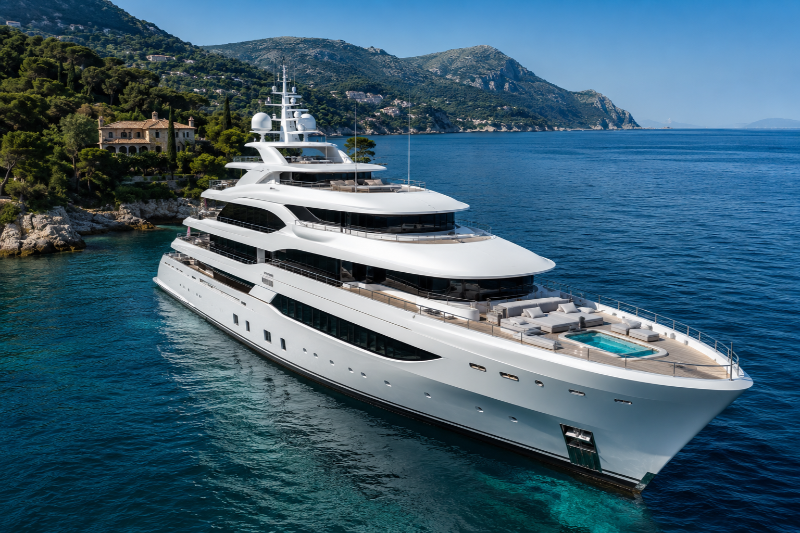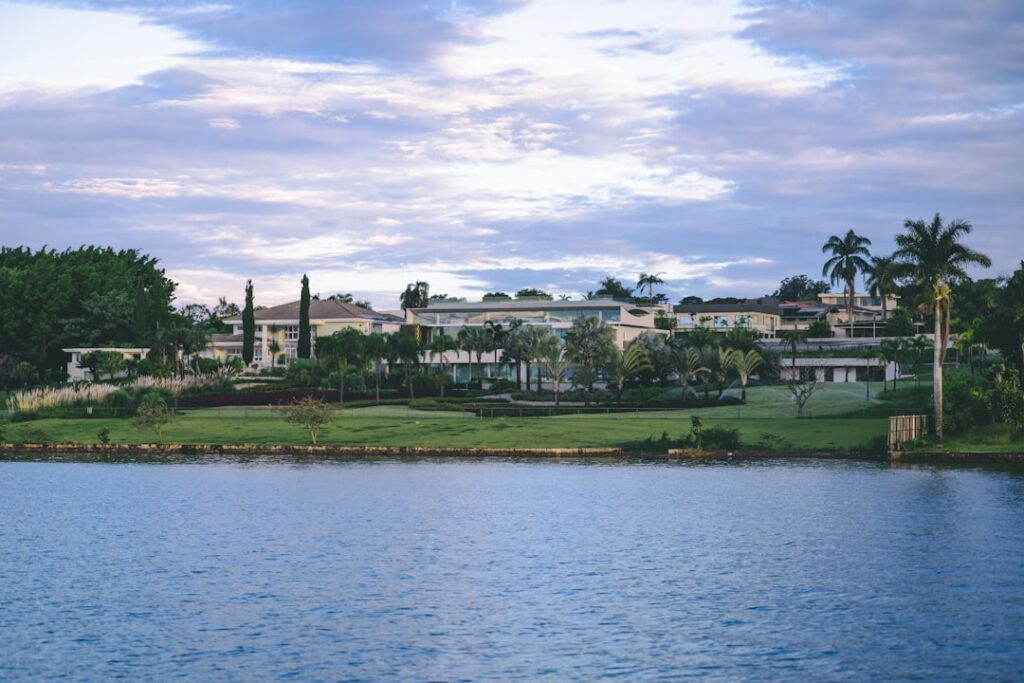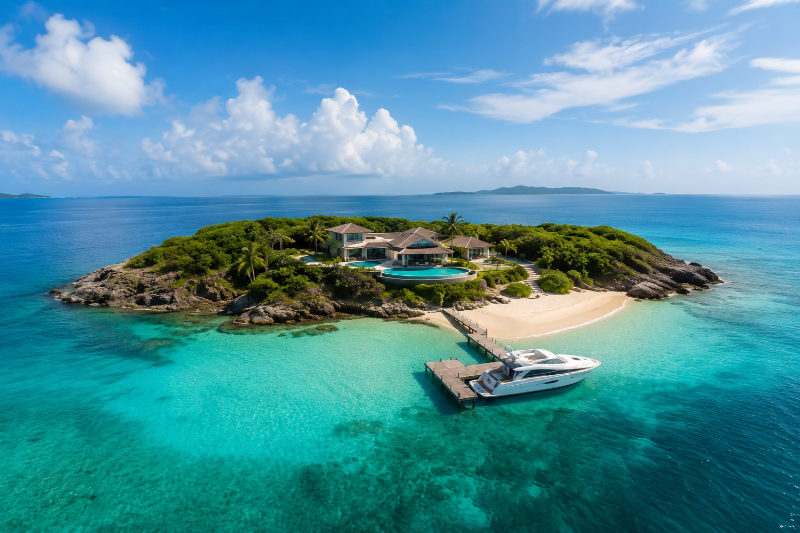
The market for private islands for sale is experiencing unprecedented demand as billionaires, celebrities, entrepreneurs, and global investors compete for some of the world’s most exclusive assets. What was once considered an extravagant luxury purchase has evolved into a strategic investment that combines privacy, security, lifestyle freedom, and long-term wealth preservation. As global wealth expands and luxury property trends 2026 continue to evolve, private islands are becoming increasingly attractive to ultra-high-net-worth individuals seeking assets that offer both prestige and practical value.
As global wealth creation accelerates and concerns about privacy continue to grow, self-contained luxury environments have become highly desirable. Consequently, interest in private islands for sale has expanded significantly across international luxury property markets. Wealthy buyers are no longer viewing islands merely as extravagant vacation homes. Instead, they see them as strategic assets that offer security, independence, lifestyle flexibility, and wealth preservation.
Moreover, the rise of luxury private islands reflects broader changes in luxury property trends 2026. Buyers increasingly prioritize control over their surroundings, exclusive experiences, and long-term asset protection. As a result, private island ownership has evolved into one of the most sought-after forms of ultra luxury real estate.
Today, exclusive island properties serve multiple purposes. They function as private retreats, family compounds, hospitality ventures, and wealth preservation assets. Therefore, understanding why demand continues to rise offers valuable insight into the future of global luxury property markets.
What Do Elite Buyers Prioritize Before Acquisition?
Privacy remains one of the most powerful motivations behind the growing demand for island acquisitions. High-profile individuals face increasing public exposure, digital surveillance, and media attention. Consequently, private islands offer a level of seclusion that traditional luxury properties simply cannot match.
Security also plays a critical role. Unlike urban luxury residences, islands provide natural boundaries that make access easier to control. Moreover, owners can implement customized security systems while maintaining complete discretion. For many wealthy families, this combination of privacy and protection is exceptionally valuable.
The post-pandemic era further accelerated demand. Many affluent buyers realized the benefits of having self-sufficient environments where family members could work, live, and relax without external disruptions. As a result, billionaire island retreats became increasingly attractive.
Key demand drivers include:
- Growing privacy concerns among wealthy individuals
- Rising geopolitical uncertainty
- Expansion of global billionaire populations
- Desire for self-contained luxury environments
- Increased focus on family security
- Demand for unique lifestyle experiences
Therefore, island ownership now represents far more than luxury consumption. It reflects a strategic lifestyle decision.
What Makes Private Island Ownership So Appealing?
Private island ownership offers an extraordinary level of personal control. Unlike conventional luxury estates, island owners can shape entire ecosystems according to their preferences. Moreover, they can create bespoke residences, hospitality experiences, and recreational amenities without neighboring development affecting their vision.
Family legacy planning has also become increasingly important. Many buyers view islands as multigenerational assets that can be passed down through future generations. Consequently, islands often serve as family gathering destinations that strengthen long-term wealth preservation strategies.
Prestige remains another powerful factor. While luxury homes are widely available in prime cities, islands are inherently scarce. Therefore, ownership carries significant status value within elite circles.
Important ownership benefits include:
- Complete privacy and autonomy
- Personalized development opportunities
- Long-term family legacy potential
- Unique hospitality possibilities
- Global prestige and recognition
Meanwhile, the emotional appeal of owning a private paradise continues to attract buyers seeking extraordinary lifestyle experiences.
Global Private Island Market Comparison
| Region | Typical Price Range | Buyer Type | Key Advantage | Investment Appeal |
|---|---|---|---|---|
| Bahamas | $1M–$100M+ | Entrepreneurs, celebrities | Proximity to North America | Strong tourism demand |
| Caribbean | $2M–$200M+ | UHNW families | Tropical lifestyle | Global prestige |
| Fiji | $3M–$50M+ | International investors | Privacy and remoteness | Emerging luxury market |
| Maldives | $10M–$150M+ | Hospitality investors | Resort potential | Premium tourism sector |
| French Polynesia | $5M–$100M+ | Global elites | Exotic exclusivity | Scarcity value |
| Scotland | $500K–$20M+ | Legacy buyers | Historical significance | Limited supply |
| Canada | $500K–$30M+ | Wealth preservation investors | Political stability | Long-term value |
| Central America | $1M–$50M+ | Lifestyle investors | Growth potential | Expanding tourism |
Which Destinations Offer the Most Desirable Private Islands for Sale?
The Bahamas remains one of the most active markets for private islands for sale. Its proximity to major U.S. cities, favorable climate, and established luxury infrastructure make it especially attractive. Moreover, buyers appreciate the region’s accessibility via private aviation.
The Caribbean continues to dominate the luxury island sector. Islands throughout Belize, the British Virgin Islands, and other Caribbean destinations attract buyers seeking tropical lifestyles combined with global prestige. Consequently, demand remains exceptionally strong.
Meanwhile, Fiji and French Polynesia appeal to buyers seeking extreme privacy. These regions offer remote environments that provide unparalleled exclusivity and natural beauty. As a result, they often attract technology entrepreneurs and international investors.
Other high-demand destinations include:
- Maldives for luxury hospitality opportunities
- Scotland for heritage and legacy ownership
- Canada for stability and natural resources
- Central America for emerging investment potential
In contrast to urban luxury markets, these regions offer unique geographic scarcity that supports long-term value appreciation.
How Do Private Islands Compare to Traditional Luxury Real Estate?
Traditional luxury real estate provides prestige and comfort. However, islands deliver an entirely different ownership experience. Owners gain control over both the residence and the surrounding environment.
Exclusivity levels differ significantly. Even the most prestigious urban penthouse still shares infrastructure with neighboring properties. By comparison, islands provide unmatched isolation and autonomy.
Development flexibility further distinguishes island ownership. Buyers often have opportunities to create custom infrastructure, hospitality facilities, renewable energy systems, and recreational amenities.
Major differences include:
- Greater privacy levels
- Enhanced development flexibility
- Increased maintenance responsibilities
- Stronger scarcity characteristics
- Unique lifestyle advantages
Nevertheless, island ownership requires sophisticated management. Therefore, buyers typically employ specialized operational teams to oversee logistics and maintenance.
What Do Billionaires Look for When Buying Private Islands?
Accessibility ranks among the most important purchasing criteria. Wealthy buyers often prioritize islands located within convenient flying distance of major global cities. Consequently, proximity to private airports can significantly increase an island’s appeal.
Infrastructure quality also influences acquisition decisions. Buyers increasingly seek islands with existing utilities, transportation facilities, communications systems, and development potential.
Sustainability has become another critical consideration. Many owners now prioritize renewable energy solutions, water independence, and environmentally responsible development.
Common acquisition priorities include:
- Airport accessibility
- Deep-water dock facilities
- Freshwater availability
- Reliable communications infrastructure
- Sustainable development potential
- Clear legal ownership structures
As a result, modern buyers often evaluate islands with the same rigor applied to institutional investment assets.
Key Island Acquisition Factors
| Island Feature | Importance Level | UHNW Preference | Long-Term Value Impact |
| Accessibility | Very High | Private aviation access | Strong |
| Infrastructure | Very High | Existing utilities | Strong |
| Freshwater Supply | High | Independent systems | Significant |
| Sustainability | High | Renewable energy | Growing |
| Privacy | Very High | Limited visibility | Strong |
| Development Potential | High | Custom expansion | Significant |
| Legal Framework | Critical | Clear ownership rights | Essential |
How Are Private Islands Becoming Wealth Preservation Assets?
Scarcity remains one of the strongest drivers of value. Unlike many asset classes, the global supply of desirable islands is inherently limited. Consequently, scarcity supports long-term appreciation potential.
Inflation protection further enhances investment appeal. Real assets often perform well during inflationary periods because replacement costs rise over time. Therefore, many investors consider islands effective wealth preservation assets.
Diversification also plays a significant role. Ultra-wealthy families increasingly allocate capital across multiple asset categories, including real estate, private equity, collectibles, and alternative investments.
Investment advantages include:
- Limited global supply
- Inflation resistance
- Portfolio diversification
- Long-term appreciation potential
- Intergenerational wealth transfer opportunities
Moreover, some islands generate income through luxury hospitality operations, creating additional value streams.
Why Are Luxury Property Trends 2026 Favoring Private Islands?
Several macroeconomic and lifestyle shifts are reshaping luxury real estate markets. Remote work flexibility, global mobility, and personalized experiences have become increasingly important to wealthy individuals.
Sustainability trends are also influencing purchasing behavior. Buyers now seek environmentally responsible developments that balance luxury with ecological stewardship. Consequently, islands featuring renewable energy infrastructure are attracting growing attention.
Growing wealth concentration further supports demand. As the number of billionaires expands worldwide, competition for rare luxury assets intensifies.
Key trends supporting growth include:
- Remote lifestyle preferences
- Sustainability initiatives
- Luxury hospitality integration
- Rising global wealth creation
- Demand for unique experiences
Therefore, luxury property trends 2026 increasingly favor assets that combine exclusivity, functionality, and scarcity.
When Could Private Island Demand Reach New Highs?
Demand could accelerate further as new wealth emerges across technology, finance, healthcare, and artificial intelligence sectors. Consequently, more buyers may enter the market seeking unique lifestyle assets.
International buyer activity also continues to expand. Investors from North America, Europe, the Middle East, and Asia increasingly compete for premium island opportunities. As a result, global demand remains highly diversified.
Climate adaptation investments may further influence future market dynamics. Islands incorporating resilient infrastructure and sustainable systems could command premium valuations.
Future growth drivers include:
- Expansion of billionaire populations
- International capital flows
- Tourism sector growth
- Climate-resilient development
- Increased luxury hospitality demand
Therefore, market fundamentals suggest continued long-term interest in exclusive island properties.
Why Are Private Islands Becoming the Ultimate Status Symbol?
Luxury markets have always rewarded rarity. However, few assets rival the exclusivity of island ownership. While luxury residences can be replicated, each island possesses unique geographic characteristics.
Global prestige further enhances their appeal. Ownership signals extraordinary financial capability while demonstrating access to one of the world’s rarest asset categories.
Additionally, islands provide a form of lifestyle differentiation unavailable through conventional real estate investments. Consequently, they have become powerful symbols of personal achievement.
Status factors include:
- Extreme rarity
- International prestige
- Lifestyle distinction
- Global recognition
- Symbolic wealth expression
As a result, islands increasingly represent the pinnacle of luxury ownership.
Why Are Private Islands for Sale Becoming More Than Luxury Real Estate?
Today’s private islands for sale serve functions far beyond vacation use. Increasingly, owners view them as integrated lifestyle ecosystems that combine residential, hospitality, recreational, and investment capabilities.
Moreover, these properties operate as wealth preservation assets within broader portfolio strategies. They provide tangible ownership, geographic diversification, and long-term scarcity benefits.
Many islands also support family governance objectives by creating centralized destinations for future generations. Consequently, they strengthen both lifestyle and legacy planning goals.
Modern island ownership now delivers:
- Private ecosystems
- Wealth preservation assets
- Unmatched privacy
- Family legacy planning
- Hospitality and investment opportunities
Therefore, the structure of island ownership continues to evolve far beyond traditional luxury real estate models.
What Does the Future Hold for Private Island Ownership?
The outlook for private island ownership remains exceptionally strong. Rising global wealth, increasing privacy concerns, and growing demand for rare assets continue to support market expansion.
Moreover, scarcity-driven appreciation is likely to remain a defining characteristic of the sector. As premium inventory becomes increasingly limited, competition among buyers may intensify.
Luxury developers, hospitality brands, and private investors are expected to expand island-focused projects in strategic global destinations. Consequently, private islands for sale will likely remain among the world’s most exclusive asset classes.
For ultra-high-net-worth individuals seeking privacy, prestige, diversification, and long-term value, island ownership represents a unique convergence of lifestyle and investment objectives. As luxury property trends 2026 continue to evolve, private islands are positioned to remain one of the most coveted assets in global real estate.
Frequently Asked Questions
What are private islands for sale?
Private islands for sale are privately owned island properties available for purchase by individuals, families, corporations, or investment groups. They range from undeveloped tropical islands to fully developed luxury estates and resort destinations.
Why are billionaires buying private islands?
Billionaires value islands for privacy, security, exclusivity, lifestyle freedom, and long-term asset preservation. Additionally, islands provide unique prestige and investment diversification opportunities.
How much does a private island cost?
Prices vary significantly based on location, infrastructure, size, and development potential. Costs can range from several hundred thousand dollars to hundreds of millions of dollars.
Are private islands a good investment?
Many investors consider islands attractive due to scarcity, diversification benefits, inflation protection, and long-term appreciation potential. However, investment outcomes depend on market conditions and property quality.
Which countries have the best private islands for sale?
Popular markets include The Bahamas, Belize, Canada, Fiji, the Maldives, French Polynesia, and Scotland. Each destination offers unique advantages and buyer appeal.
Can foreigners buy private islands?
In many jurisdictions, foreigners can purchase islands. However, ownership regulations vary by country, making legal due diligence essential.
What are the costs of private island ownership?
Owners typically incur expenses related to maintenance, staffing, transportation, utilities, infrastructure, insurance, and environmental management.
Are private islands environmentally sustainable?
Increasingly, yes. Many modern developments incorporate renewable energy, water conservation systems, and environmentally responsible construction practices.
What are luxury property trends 2026?
Luxury property trends 2026 emphasize privacy, sustainability, wellness, remote living, unique experiences, and ownership of scarce assets with long-term value potential.
What is the future of private islands for sale?
The future appears strong due to expanding global wealth, increasing scarcity, rising demand for privacy, and growing interest in alternative luxury investments.