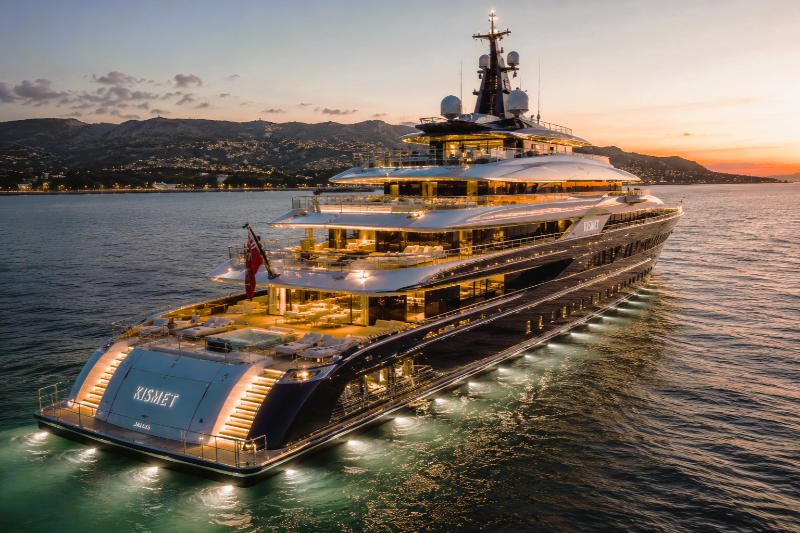
The global superyacht industry is entering a transformative era. While private superyachts have long represented the pinnacle of luxury travel, the next wave of private superyachts is redefining what ownership means in an increasingly technology-driven and sustainability-conscious world. Today’s ultra-high-net-worth individuals (UHNWIs) are seeking far more than impressive dimensions and lavish interiors. Instead, they want intelligent vessels that seamlessly combine luxury living, advanced engineering, environmental responsibility, and personalized experiences.
Over the past decade, the global superyacht fleet has expanded steadily, driven by growing wealth creation across North America, Europe, the Middle East, and Asia. Moreover, billionaire buyers are increasingly commissioning bespoke projects that function as floating residences, wellness retreats, remote offices, and adventure platforms. As a result, shipyards and designers are responding with ambitious concepts that push the boundaries of naval architecture and marine technology.
AI integration onboard is becoming increasingly sophisticated. Meanwhile, sustainability initiatives are accelerating the development of hybrid propulsion systems, hydrogen-powered concepts, and energy-efficient designs. Furthermore, wellness-centered living spaces, explorer yacht capabilities, and unprecedented levels of customization are reshaping expectations throughout the industry.
The future of luxury yachting is no longer defined solely by size or prestige. Instead, the next generation of superyachts represents a convergence of technology, lifestyle, mobility, and environmental innovation that will shape ultra-luxury marine travel for decades to come.
The Evolution of the Modern Superyacht
The superyacht market has evolved dramatically from its origins as a niche luxury sector focused primarily on status and exclusivity. Today, owners increasingly view yachts as versatile lifestyle platforms capable of supporting extended travel, business operations, family gatherings, and wellness experiences.
Moreover, advances in engineering have enabled shipyards to construct vessels that are larger, more complex, and more technologically sophisticated than ever before. Features once considered futuristic—including dynamic positioning systems, integrated smart controls, and hybrid propulsion technologies are rapidly becoming industry standards.
Changing ownership patterns are also driving innovation. Many owners now use their vessels year-round rather than seasonally. Consequently, demand has grown for explorer yachts capable of operating in remote environments ranging from Arctic regions to tropical archipelagos. In contrast to previous generations that emphasized formal luxury, modern yachts increasingly prioritize flexibility, functionality, and personalized experiences.
The result is a new category of next generation superyachts that blend residential comfort, cutting-edge technology, and global mobility into a single platform.
Leading Shipyards Shaping the Future
Lürssen
Germany’s Lürssen remains one of the most influential names in luxury yacht construction. Known for delivering some of the world’s largest luxury yachts, the shipyard has consistently demonstrated engineering excellence through highly customized megayacht projects.
Moreover, Lürssen’s approach focuses on integrating advanced systems, complex architecture, and bespoke owner requirements. Flagship projects continue to showcase innovative solutions in propulsion, efficiency, and onboard technology.
Its clientele largely consists of UHNW individuals seeking highly individualized vessels that combine technical sophistication with exceptional luxury.
Feadship
Dutch builder Feadship has become synonymous with bespoke yacht craftsmanship and innovation. The company has invested heavily in sustainability initiatives and hybrid technology development.
Additionally, Feadship’s future-focused projects emphasize reduced environmental impact without compromising luxury. Its design philosophy increasingly incorporates energy efficiency, alternative fuels, and smart vessel management systems.
The shipyard’s concept studies provide valuable insight into where future yacht technology is heading.
Oceanco
Oceanco has established itself as a leader in radical yacht concepts and forward-thinking engineering. Through collaborations with renowned designers and naval architects, the company consistently introduces ideas that challenge conventional yacht design.
Furthermore, Oceanco’s sustainability ambitions have positioned the shipyard at the forefront of industry discussions surrounding alternative energy systems and emissions reduction strategies.
Projects such as Project Zero highlight Oceanco’s commitment to long-term innovation.
Benetti
Italy’s Benetti combines traditional craftsmanship with modern technology. The shipyard continues to expand its global presence while responding to evolving owner expectations.
Moreover, Benetti has embraced digital systems, energy-efficient technologies, and custom yacht development programs that appeal to an increasingly international clientele.
Its portfolio demonstrates how heritage shipyards can successfully adapt to emerging market trends.
Royal Huisman
Royal Huisman remains a benchmark in sailing superyacht construction. The Dutch shipyard is recognized for advanced materials, performance-focused engineering, and bespoke craftsmanship.
Additionally, Royal Huisman’s projects often incorporate lightweight construction techniques that enhance efficiency while maintaining exceptional sailing capabilities.
As interest grows in sustainable marine travel, the shipyard’s expertise in high-performance sailing vessels positions it well for future market developments.
Shipyard Innovation Overview
| Shipyard | Country | Specialty | Notable Innovation | Market Position |
|---|---|---|---|---|
| Lürssen | Germany | Custom megayachts | Complex engineering integration | Ultra-premium leader |
| Feadship | Netherlands | Bespoke luxury yachts | Hybrid and sustainable systems | Innovation-focused |
| Oceanco | Netherlands | Concept-driven superyachts | Project Zero initiative | Future-oriented pioneer |
| Benetti | Italy | Luxury motor yachts | Digital and smart systems | Global luxury brand |
| Royal Huisman | Netherlands | Sailing superyachts | Advanced lightweight construction | Performance specialist |
The Rise of AI-Powered Superyachts
Artificial intelligence is becoming one of the most influential forces in the future superyachts 2026 landscape. While automation has existed onboard for years, AI introduces a fundamentally different level of operational intelligence.
Predictive maintenance systems can continuously monitor machinery performance and identify potential issues before failures occur. Consequently, owners benefit from reduced downtime, lower maintenance costs, and increased reliability.
AI-assisted navigation is also transforming vessel operations. These systems analyze weather patterns, sea conditions, fuel consumption, and route efficiency simultaneously. As a result, captains can make more informed decisions while optimizing safety and performance.
Guest experiences are evolving as well. Intelligent onboard ecosystems can adjust lighting, climate, entertainment preferences, and dining schedules based on individual guest profiles.
Key AI applications include:
- Predictive maintenance monitoring
- Smart energy management
- AI-assisted navigation
- Personalized guest experiences
- Operational efficiency optimization
Therefore, AI-powered yachts are becoming increasingly attractive to owners seeking convenience, efficiency, and enhanced luxury experiences.
Sustainability and Green Yacht Innovation
Environmental responsibility is rapidly becoming a central consideration in superyacht design trends. While luxury and sustainability were once viewed as competing priorities, modern yacht builders increasingly treat them as complementary objectives.
Hybrid propulsion systems are among the most significant developments. These technologies allow vessels to switch between conventional engines and electric power depending on operational requirements. Consequently, fuel consumption and emissions can be substantially reduced.
Hydrogen fuel concepts are attracting growing attention across the industry. Although large-scale implementation remains in development, several projects demonstrate the potential for zero-emission yachting.
Furthermore, shipyards are exploring:
- Sustainable interior materials
- Advanced battery technologies
- Energy recovery systems
- Solar integration
- Low-emission propulsion solutions
The transition toward sustainable superyachts reflects broader shifts occurring throughout luxury mobility sectors, including aviation and automotive industries.
Groundbreaking Superyacht Concepts and Projects
Several visionary projects offer valuable insight into the next wave of private superyachts.
Oceanco’s Project Zero has emerged as one of the industry’s most discussed concepts. Designed around hydrogen fuel cell technology and zero-emission operation, the project challenges traditional assumptions regarding yacht propulsion and environmental impact.
Meanwhile, Feadship continues developing future concepts focused on alternative energy integration, enhanced efficiency, and advanced digital systems. These projects often serve as laboratories for technologies that may eventually enter mainstream production.
Explorer yacht innovations are also influencing future design directions. Builders are creating vessels capable of extended autonomous operation in remote regions while maintaining luxury accommodations equivalent to traditional superyachts.
Hydrogen-powered concepts reveal several emerging priorities:
- Reduced environmental impact
- Enhanced energy efficiency
- Greater operational flexibility
- Long-term regulatory compliance
- Advanced technology integration
Collectively, these initiatives indicate that future yacht development will increasingly prioritize sustainability alongside luxury and performance.
Innovation Driving Future Yacht Technology
| Innovation Area | Current Technology | Future Development | Luxury Benefit | Sustainability Impact |
|---|---|---|---|---|
| Propulsion | Hybrid systems | Hydrogen fuel cells | Quiet operation | Lower emissions |
| Navigation | Smart navigation | AI autonomy | Safer voyages | Efficient routing |
| Energy | Battery storage | Integrated renewable systems | Greater comfort | Reduced fuel use |
| Guest Experience | Smart cabins | AI personalization | Customized luxury | Energy optimization |
| Connectivity | Satellite internet | Seamless global networks | Remote work capability | Efficient operations |
Wellness and Lifestyle at Sea
Luxury yacht design increasingly reflects broader wellness trends influencing high-end hospitality and residential development. Owners now prioritize physical health, mental well-being, and lifestyle flexibility as much as traditional luxury amenities.
Consequently, onboard spas, medical suites, cryotherapy facilities, and fitness centers are becoming common features on newly commissioned vessels. Moreover, designers are creating wellness-centered layouts that maximize natural light, ocean views, and connections to the surrounding environment.
Beach clubs have evolved into expansive social hubs. Meanwhile, fold-out platforms and floating recreation spaces provide direct access to the water while enhancing the onboard experience.
Modern yachts increasingly feature:
- Dedicated wellness facilities
- Advanced entertainment systems
- Remote work environments
- High-speed global connectivity
- Personalized lifestyle spaces
These developments demonstrate how luxury expectations continue shifting toward holistic experiences rather than purely material displays of wealth.
The Rise of Explorer Superyachts
Explorer yachts represent one of the fastest-growing segments within the luxury yacht market. Unlike traditional vessels designed primarily for Mediterranean or Caribbean cruising, explorer yachts emphasize long-range capability and operational versatility.
Owners increasingly seek access to remote destinations including Antarctica, Greenland, the Northwest Passage, and isolated Pacific regions. Therefore, shipyards are investing heavily in expedition-capable platforms equipped for challenging environments.
Self-sufficiency has become a major selling point. Many explorer yachts feature expanded fuel capacity, advanced storage systems, research facilities, and helicopter capabilities.
Several factors are driving demand:
- Interest in experiential travel
- Access to remote destinations
- Greater privacy
- Extended cruising capability
- Adventure-oriented lifestyles
As a result, explorer vessels have become central to evolving private yacht trends.
How Billionaire Preferences Are Changing?
The preferences of today’s yacht owners differ significantly from those of previous generations. Privacy remains essential; however, sustainability, wellness, and personalization have become equally important.
Many owners now commission yachts designed specifically for family use and multigenerational travel. Consequently, layouts increasingly emphasize flexible accommodation arrangements and diverse activity spaces.
Environmental awareness is also influencing purchasing decisions. Owners increasingly expect shipyards to incorporate sustainable technologies and responsible construction practices.
Furthermore, personalization has reached unprecedented levels. Bespoke interiors, customized operational systems, and tailored guest experiences allow owners to create vessels that reflect individual lifestyles and priorities.
In contrast to earlier eras focused primarily on prestige, modern ownership often emphasizes meaningful experiences and long-term usability.
Unique Insight: Superyachts as Luxury Mobility Ecosystems
Perhaps the most significant transformation occurring within the industry is conceptual rather than technological. The next wave of private superyachts represents a fundamental shift from luxury vessels to fully integrated mobility ecosystems. Rather than serving solely as symbols of wealth, the next wave of private superyachts is being designed as multifunctional platforms that combine travel, residence, wellness, entertainment, and advanced technology.
Modern yachts increasingly integrate residential living, global mobility, wellness infrastructure, immersive entertainment, remote work capabilities, and intelligent onboard systems within a single environment. Moreover, the next wave of private superyachts is leveraging AI-powered technologies to manage complex operations, optimize energy usage, and deliver highly personalized guest experiences.
As a result, the next wave of private superyachts is evolving into a network of floating technology ecosystems capable of supporting highly personalized lifestyles across multiple continents and destinations.
The Future of Private Superyachts Beyond 2030
Looking beyond 2030, the convergence of technology, sustainability, and luxury mobility is likely to accelerate. The next wave of private superyachts will likely introduce capabilities that today exist only as concept studies or prototype technologies.
Autonomous navigation technologies will continue advancing. Although fully autonomous vessels remain unlikely in the immediate future, the next wave of private superyachts will increasingly rely on AI-managed onboard ecosystems that assist crews, optimize routing, enhance safety, and improve operational efficiency.
Hydrogen-powered fleets may become commercially viable as supporting infrastructure expands. Consequently, future iterations of the next wave of private superyachts could achieve near-zero-emission operation while maintaining the performance and luxury standards expected by ultra-high-net-worth owners.
Floating luxury residences may also emerge as a major category, blending yacht ownership with premium waterfront living concepts. Furthermore, the next wave of private superyachts is expected to integrate seamlessly with private aviation ecosystems, smart mobility networks, and global concierge platforms, creating an unprecedented level of connectivity and convenience.
The future of ultra luxury marine travel will therefore extend beyond traditional yachting and into broader luxury lifestyle management.
Frequently Asked Questions
What are the next-generation superyachts?
Next-generation superyachts combine advanced technology, AI systems, sustainability features, wellness amenities, and highly personalized design to create integrated luxury lifestyle platforms.
Which shipyards build the world’s best superyachts?
Leading builders include Lürssen, Feadship, Oceanco, Benetti, and Royal Huisman, each recognized for innovation, craftsmanship, and bespoke construction.
Are future superyachts becoming more sustainable?
Yes. Hybrid propulsion, hydrogen concepts, energy-efficient systems, and sustainable materials are becoming increasingly important throughout the industry.
What is an AI-powered yacht?
An AI-powered yacht uses artificial intelligence for predictive maintenance, navigation assistance, energy management, and personalized guest experiences.
What is Project Zero in yachting?
Project Zero is Oceanco’s visionary concept focused on achieving zero-emission yacht operation through hydrogen fuel cell technology and advanced sustainability systems.
Are hydrogen-powered yachts being developed?
Yes. Several shipyards and design firms are actively exploring hydrogen-powered yacht concepts as part of broader sustainability initiatives.
What is an explorer superyacht?
An explorer superyacht is designed for long-range voyages, remote destinations, and self-sufficient operation while maintaining luxury accommodations.
How much do modern superyachts cost?
Costs vary widely, ranging from several million dollars for smaller vessels to hundreds of millions for fully custom megayachts.
What technologies are shaping future yachts?
AI systems, hybrid propulsion, hydrogen fuel technology, advanced connectivity, smart vessel management, and sustainable materials are among the most influential innovations.
What will superyachts look like in 2030?
Superyachts in 2030 are expected to feature greater automation, advanced sustainability systems, AI-managed operations, enhanced wellness facilities, and seamless integration with broader luxury mobility networks.