New York City’s Luxury Property Market Is Still One of the World’s Most Compelling
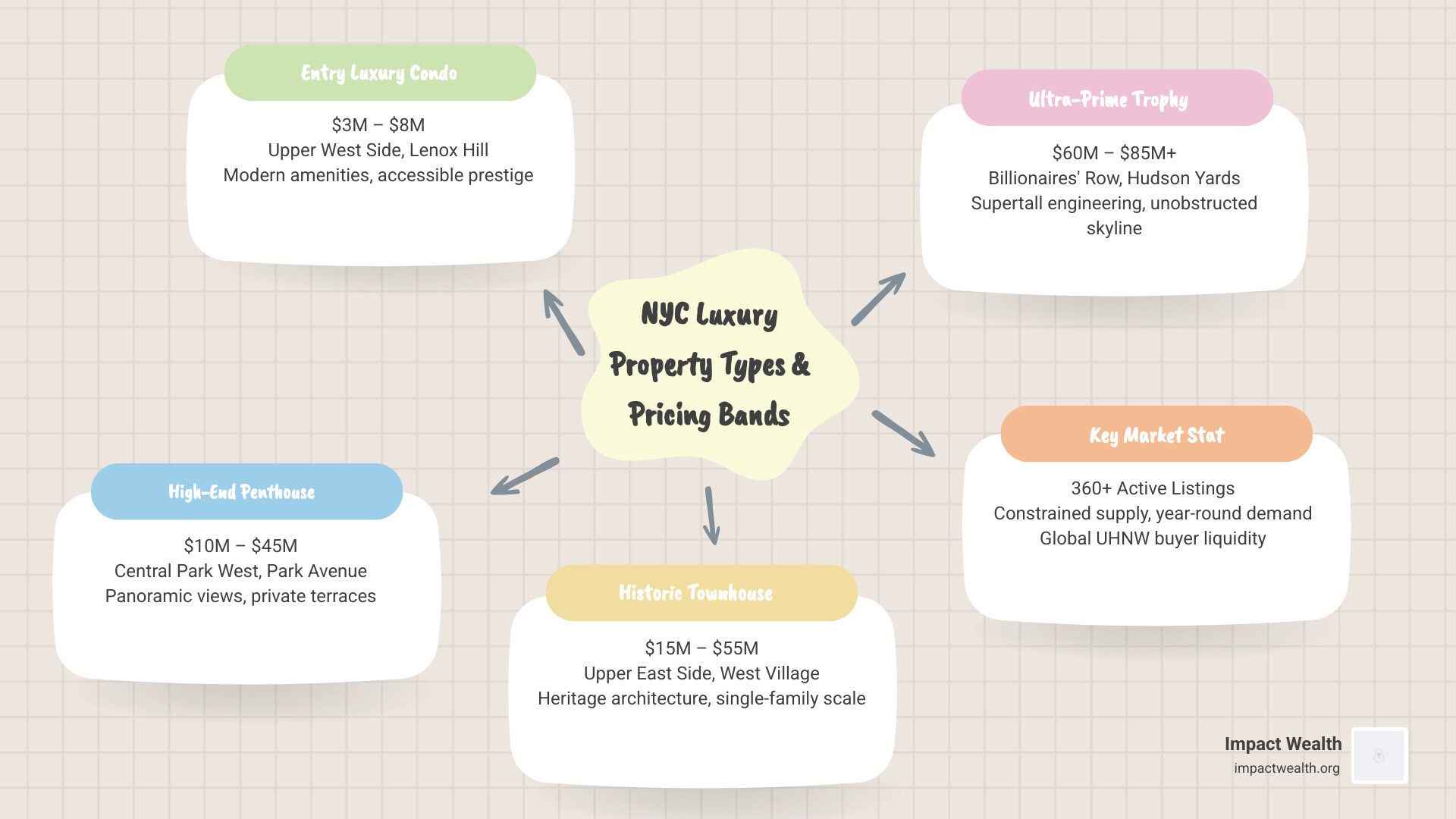
If you’re looking at a luxury house for sale in New York City, here’s what the market looks like right now:
| Property Type | Price Range (USD) | Key Neighborhoods |
|---|---|---|
| Entry luxury condo | $3M – $8M | Upper West Side, Lenox Hill |
| High-end penthouse | $10M – $45M | Central Park West, Park Avenue |
| Historic townhouse | $15M – $55M | Upper East Side, West Village |
| Ultra-prime / trophy | $60M – $85M+ | Billionaires’ Row, Hudson Yards |
There are over 360 active high-end listings in New York City right now. That number tells a story. This is not a market that pauses.
Unlike many global luxury hubs, New York runs at full speed twelve months a year. International buyers, family offices, and private wealth move through this market continuously. Supply stays constrained. Demand doesn’t disappear.
The range here is genuinely striking. You can buy a pre-war Park Avenue classic. You can buy a 17,000-square-foot double-wide brownstone on the Upper East Side’s Gold Coast. You can buy a glass penthouse above Central Park with views that stretch to the horizon. No other city gives you that vertical range in a single zip code.
For ultra-high-net-worth buyers, NYC offers something rare: a liquid, legally stable, internationally recognized store of value — in a city that actually functions at the highest level.
This guide breaks down where the real value sits, which neighborhoods are winning in 2026, and what separates a $10M listing from an $80M one.
Luxury House for Sale in New York City: What the Market Looks Like in 2026
As we navigate the landscape of May 2026, the New York City luxury market remains the global benchmark for stability and prestige. While other markets might fluctuate with seasonal whims, Manhattan operates on its own internal clock. The sheer volume of wealth concentrated on this small island creates a unique ecosystem where liquidity is high and supply is perpetually limited by geography.
The “walkability” of New York is often cited as its greatest luxury. With a Walk Score of 88, the city allows high-net-worth individuals to transition seamlessly from a private residence to a Michelin-starred dinner or a world-class gallery without ever needing a car. This urban intimacy, paired with a robust legal framework that protects foreign ownership, ensures that a luxury house for sale in New York City is more than just a home—it is a secure financial fortress.
Current pricing for a luxury house for sale in New York City
In the current 2026 market, “entry-level” luxury typically starts around the $3 million mark, but for the true ultra-prime segment, we are looking at an average market price closer to $5.4 million across the broader high-end spectrum. At the top of the pyramid, properties frequently exceed $80 million.
When calculating your investment, it is vital to account for the NYC “Mansion Tax”—a progressive tax on sales over $1 million—and the various closing costs that can add a significant percentage to the final price. Price per square foot remains the primary metric, with prime Manhattan real estate often commanding between $2,500 and $5,000 per square foot, depending on the view and building prestige.
Why New York stays liquid when other trophy markets slow
New York City is arguably the most liquid real estate market in the world. Unlike London or Hong Kong, which have seen shifts in buyer sentiment due to geopolitical changes, New York treats international buyers with the same legal protections as domestic ones. This transparency, combined with the city’s status as a global financial hub connected by three major airports, keeps the capital flowing.
Even when the global economy experiences a “hiccup,” Manhattan real estate tends to hold its ground. This is due to institutional capital and private wealth viewing NYC as a “safe haven” asset. Understanding what really makes a property appreciate over time is key here; in New York, it is the combination of limited land and infinite global demand.
What counts as “luxury” in NYC right now
The definition of luxury has evolved. In 2026, it isn’t just about marble countertops; it’s about the “vertical range.” This includes:
- Townhouses: Historic single-family homes offering total privacy.
- Penthouses: The “crown jewels” of the skyline, often featuring private outdoor space.
- Sponsor Units: New-to-market apartments in historic buildings that bypass the usual co-op board rigmarole.
- Supertalls: Engineering marvels on Billionaires’ Row that offer views from 1,000 feet in the air.
7 Neighborhoods Defining High-End Demand
Upper East Side and Upper West Side: classic prestige and family appeal
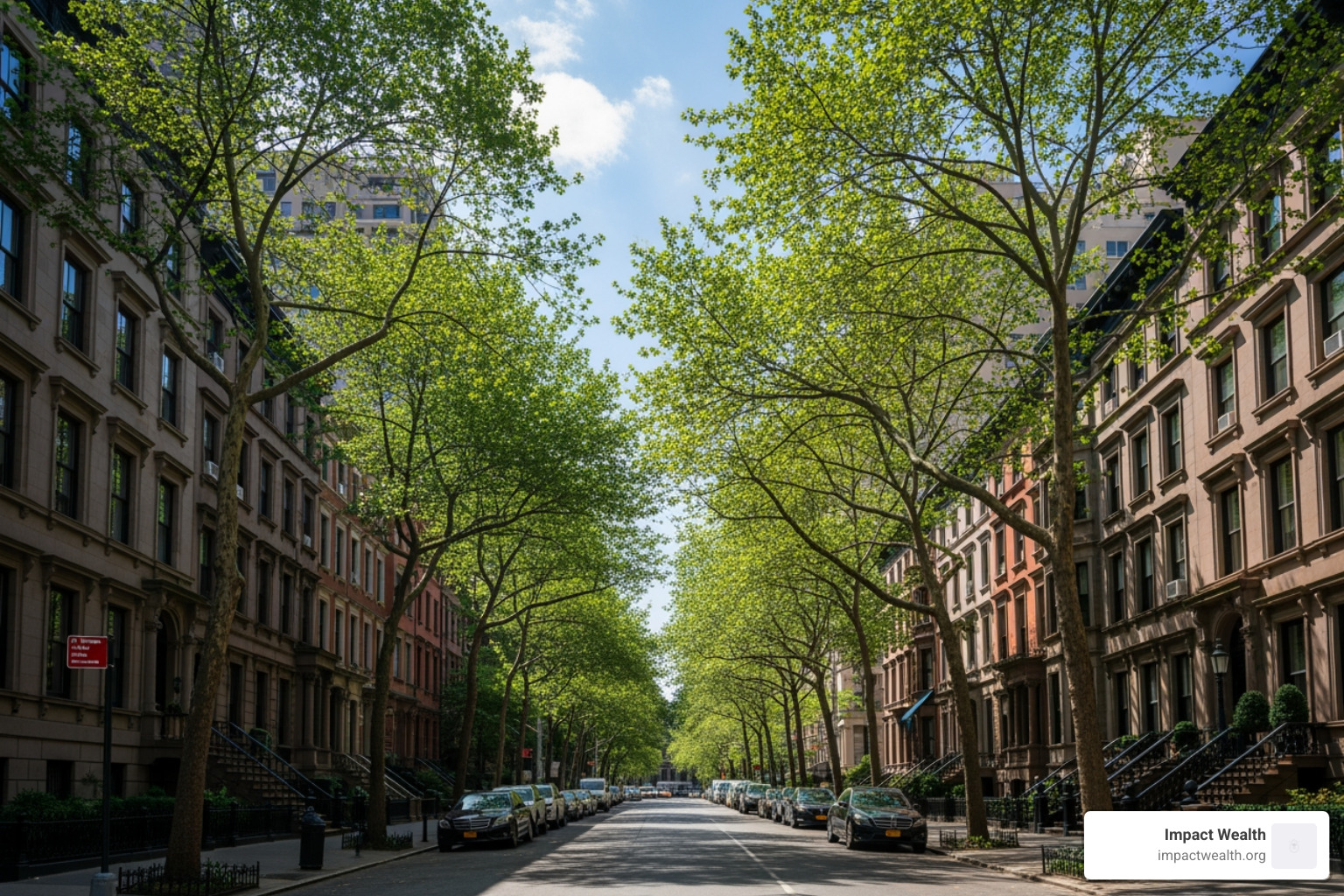
The Upper East Side remains the global gold standard for established residential luxury. This is the land of “Museum Mile,” elite private schools, and the “Gold Coast”—the blocks between Fifth Avenue and Park Avenue. Here, you find the legacy properties that families hold for generations.
Conversely, the Upper West Side offers a slightly more relaxed but equally prestigious lifestyle. A prime example is 48 West 85th Street, a triple-mint townhouse just steps from Central Park. These neighborhoods are preferred by those who value proximity to the park and the city’s most storied cultural institutions.
Tribeca, SoHo, and West Village: character, scale, and architectural cachet
For those who find the uptown avenues too formal, the downtown “trio” offers a different kind of prestige. Tribeca is the preferred choice for those wanting Manhattan intensity paired with massive loft-style floor plans. SoHo remains the king of cast-iron architecture, while the West Village offers a human scale that feels almost European with its winding, cobblestone streets. These areas are characterized by historic districts where new development is strictly limited, ensuring that supply stays low and values stay high.
Hudson Yards and Billionaires’ Row: the future-facing luxury skyline
If you want to see where the city is going, look up. Hudson Yards is the most deliberate statement about the future of urban luxury, functioning as a “city within a city” with its own shopping, dining, and office towers. Meanwhile, Billionaires’ Row (57th Street) continues to push the boundaries of vertical density. These supertall developments use modern engineering to provide unobstructed views that were once thought impossible.

Penthouse Condo vs. Historic Townhouse: Which Luxury Lifestyle Fits Best?
Choosing between a penthouse and a townhouse is less about the price and more about how you want to live.
| Feature | Penthouse Condo | Historic Townhouse |
|---|---|---|
| Privacy | High (Keyed elevators) | Absolute (No shared hallways) |
| Amenities | Full-service (Gym, Pool, Concierge) | Private (Wine cellar, Gym, Garden) |
| Maintenance | Managed by building staff | Owner’s responsibility |
| Outdoor Space | Terraces with views | Private gardens and roof decks |
| Resale Value | Driven by views and building brand | Driven by land and historical rarity |
Luxury house for sale in New York City buyers choosing a penthouse
The penthouse buyer is often looking for a “lock-and-leave” lifestyle. They want the security of a 24-hour doorman, a managed fitness center, and a spa just an elevator ride away. Modern penthouses, such as those at 455 Central Park West, offer floor-to-ceiling glass and seamless indoor-outdoor flow that makes the skyline feel like an extension of the living room.
Luxury house for sale in New York City buyers choosing a townhouse
The townhouse buyer craves autonomy. They want to walk through their own front door, sit in their own private garden, and perhaps even excavate a basement to create a subterranean wellness suite. Listings like the double-wide mansion at 38-40 East 76th Street represent the pinnacle of this asset class—17,000 square feet of “museum-quality” living space that a condo simply cannot replicate.
Which property type tends to hold value better
Both asset classes have incredible staying power, but they react differently to market shifts. Townhouses are finite; they aren’t making any more 19th-century brownstones. This scarcity often leads to better long-term appreciation of the land itself. Condos, however, offer more flexibility for international investors and are easier to rent out. It is worth noting that some prestige homes struggle to sell if they are overly customized or located in co-ops with restrictive boards, which is why many modern buyers gravitate toward condos or single-family townhouses.
What Actually Drives a $10M, $30M, or $80M Valuation in Manhattan
The premium for floor height and unobstructed Central Park views
In New York, height is money. It is a documented phenomenon: two identical units in the same building can have a price difference of millions simply because one is twenty floors higher. An unobstructed view of Central Park is the “North Star” of NYC real estate. Once a view is “protected”—meaning no one can build in front of you—the valuation of the property enters a different stratosphere.
Amenities buyers now expect in multi-million-dollar listings
In 2026, a “luxury” label requires more than just a concierge. Standard amenities in the $10M+ range now include:
- Private Keyed Elevators: For enhanced security and exclusivity.
- Wellness Suites: Including steam rooms, saunas, and cold plunge pools.
- Advanced Security: Bulletproof street-facing windows and automated security shutters are becoming common in high-profile townhouses.
- Climate-Controlled Wine Cellars: Essential for the serious collector.
- Redundant Power: Rooftop generators to ensure the home stays functional during city-wide outages.
Architecture matters: old-world craftsmanship vs modern engineering
There is a constant tension between the Renaissance Revival and Queen Anne styles of the late 19th century and the glass-and-steel supertalls of today. While modern engineering allows for carbon-fiber dampers that prevent sway in 1,000-foot towers, the hand-carved stone and 12-foot ceilings of a pre-war classic offer a “soul” that many buyers find irreplaceable.
6 Standout Luxury Listings That Show the Full NYC Spectrum
Central Park-adjacent townhouse for turnkey family living
Located on a tree-lined block, 48 West 85th Street is a 8,000-square-foot masterpiece. It features a finished roof deck, a private elevator to all floors, and an excavated basement with a gym and wine cellar. It is the definition of “triple-mint” luxury on the Upper West Side.
Upper East Side legacy mansion with rare scale
For those seeking the ultimate trophy, 38-40 E 76th St is a double-wide residence reimagined as a living work of art. With 17,000 square feet, a rooftop basketball court, and a saltwater pool, it redefines the possibilities of Manhattan living.
Lenox Hill townhouse option for buyers prioritizing school proximity
Proximity to elite education is a major driver for the East 65th Street market. This area provides a quiet, residential feel while being minutes away from the city’s most prestigious private schools.
Central Park West penthouse for skyline-driven living
The penthouses at 455 Central Park West offer a unique architectural heritage, often converted from landmarked buildings to provide massive ceiling heights (up to 19 feet) and panoramic park views that are simply breathtaking.
Frequently Asked Questions About Luxury House for Sale in New York City
What is the current average cost of a luxury property in New York City?
While “luxury” is subjective, the market average for high-end listings in 2026 sits around $5.3 million. However, in prime neighborhoods like the Upper East Side or Tribeca, you should expect to start your search at $10 million for a family-sized residence.
Which NYC neighborhoods are most sought-after by high-end buyers in 2026?
The “Big Five” remain the Upper East Side, Tribeca, the West Village, Hudson Yards, and SoHo. Each offers a distinct flavor—from the historic prestige of the UES to the modern, vertical luxury of Hudson Yards.
Why do international investors still treat NYC as a safe luxury real estate market?
The combination of the U.S. legal system, the liquidity of the dollar, and the sheer scarcity of Manhattan land makes it one of the safest places on earth to park capital. Unlike other global hubs, New York has a centuries-long track record of value retention.
Conclusion
At Impact Wealth, we understand that finding a luxury house for sale in New York City is about more than just square footage—it’s about finding a property that matches your lifestyle and investment goals. Whether you are drawn to the “vertical range” of a Midtown supertall or the “human scale” of a West Village brownstone, New York remains the ultimate destination for the world’s most discerning buyers.
The market in 2026 continues to reward those who understand the nuances of neighborhood, architecture, and view protection. As you look toward your next acquisition, in New York, you aren’t just buying a home; you’re buying a piece of the world’s most resilient skyline. For more insights on the current market, explore our deep dive into the South Florida real estate boom to see how the two markets compare.