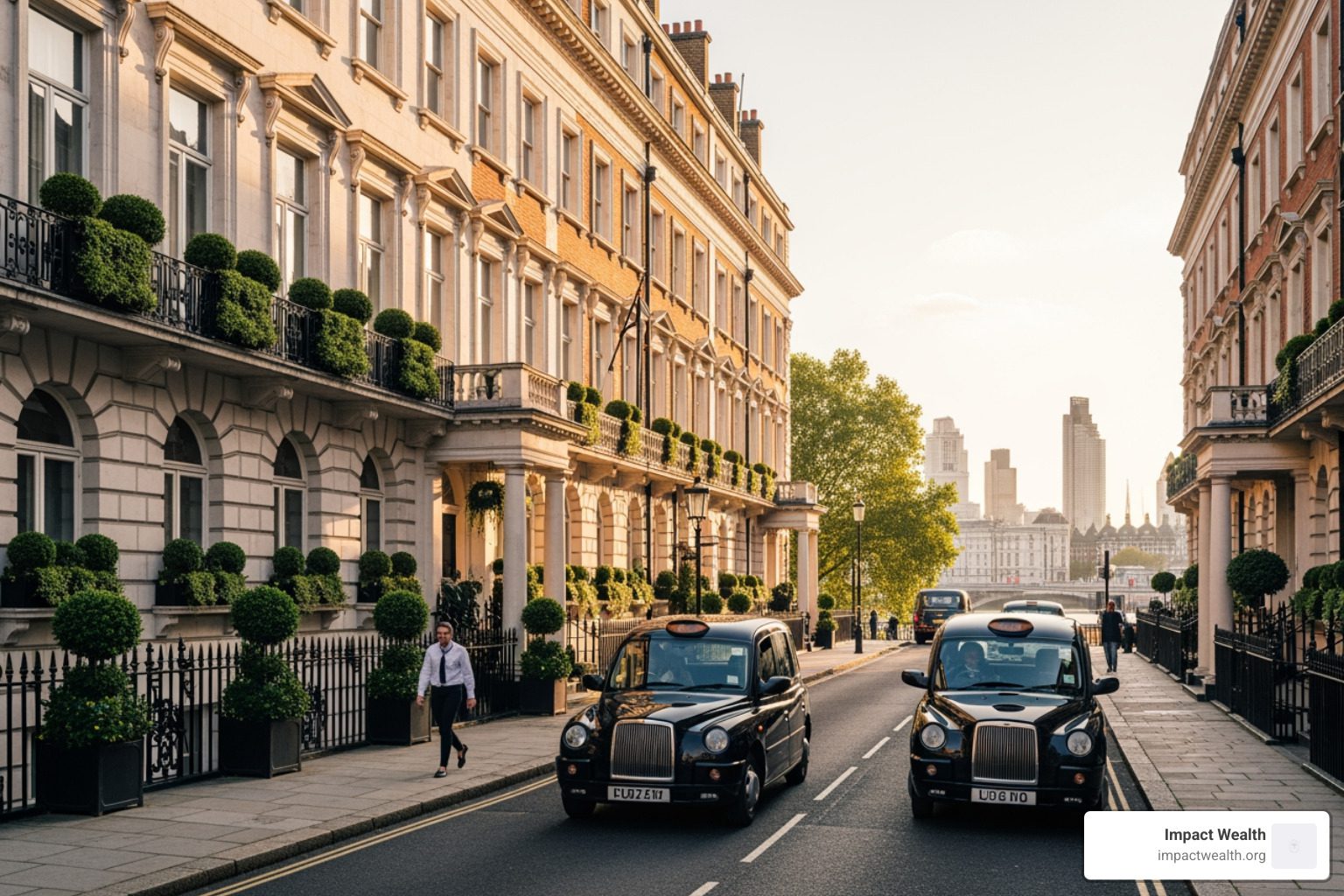
10 Best Luxury Real Estate London Properties Compared
London’s Ultra-Prime Property Market in 2026: What You Need to Know
Luxury real estate in London sits at the very top of the global property hierarchy — and in 2026, the market is more complex, more competitive, and more compelling than ever.
Here is a quick overview of what the London luxury market looks like right now:
| Category | Key Facts |
|---|---|
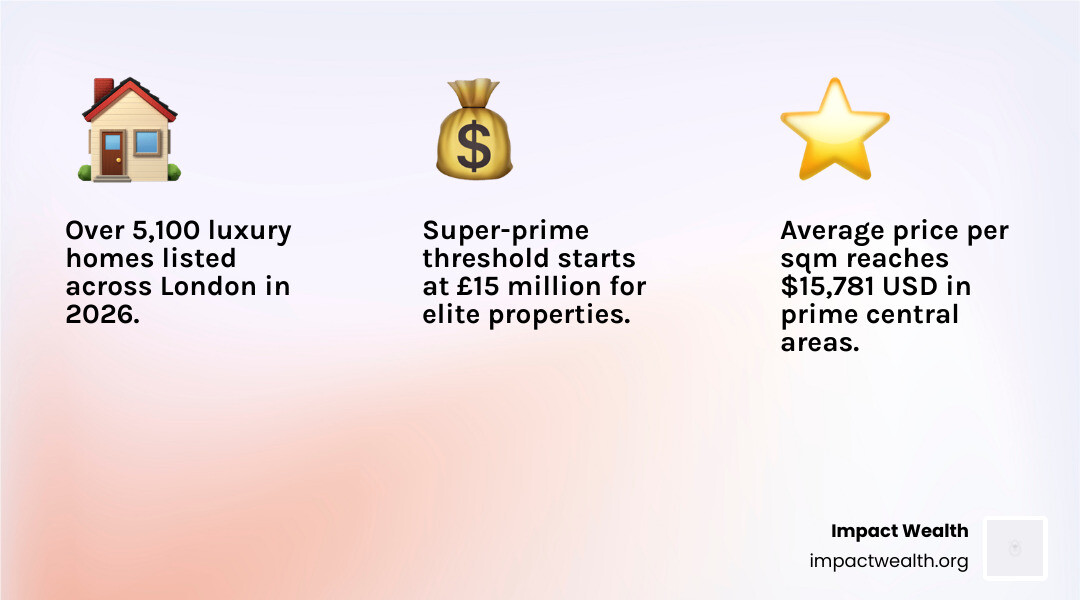
| Total luxury listings | 5,100+ homes across London |
| Average listing price | ~$2.3M USD (ranging up to $233M+) |
| Price per sqm | ~$15,781 USD/sqm |
| Most expensive listing | ~$202M USD penthouse (18,000 sqm) |
| Top neighbourhoods | Mayfair, Belgravia, Knightsbridge, Chelsea, Kensington |
| Super-prime threshold | £15 million and above |
| 2026 price forecast | Softening 2-3% — a buyer’s opportunity |
| Who is buying | Younger international buyers, family offices, US and Middle Eastern capital |
London has always attracted serious wealth. But 2025 shifted the market in a meaningful way. Around 65% of sellers in the £15M+ bracket were non-domiciled residents relocating to lower-tax cities like Dubai, Milan, and Geneva. That wave of supply — paired with steady global demand — has created a rare window for buyers seeking best-in-class assets at negotiated prices.
The city’s fundamentals remain unchanged: world-class schools, cultural institutions, rule of law, and a time zone that bridges East and West. What has changed is who is buying, and what they expect when they arrive.
This guide compares 10 of the best luxury properties and developments in London — so you can identify the right fit for your lifestyle, portfolio, and long-term strategy.
What Defines Luxury Real Estate London in 2026?
In 2026, luxury real estate London usually means far more than a high price tag. At the top end of the market, buyers are paying for a combination of address, scarcity, architecture, service, privacy, and long-term status.
In practical terms, luxury homes in London tend to sit in Prime Central London locations such as Mayfair, Belgravia, Knightsbridge, Chelsea, Kensington, Holland Park, South Kensington, and St John’s Wood. They often include period townhouses, garden-square residences, branded apartments, landmark redevelopments, and penthouses with hotel-style services.
The upper tiers break down roughly like this:
- Prime luxury: often starts around £5 million
- Super-prime: typically £15 million and above
- Trophy assets: can run into eight or even nine figures
What makes these homes stand out is not just square footage. It is the total package:
- Blue-chip address
- Heritage architecture or design pedigree
- Turnkey finish
- 24-hour concierge or porterage
- Strong security and privacy
- Wellness amenities
- Scarcity of comparable stock
- Better long-term value retention
How luxury real estate london differs from standard properties
Standard London property can still be expensive. But luxury property operates on a different level.
A luxury flat in Mayfair may include private lift access, a dedicated concierge team, valet services, wellness facilities, and interiors created by globally known designers. A standard apartment, even in a good area, usually does not.
Other key differences include:
- Address premium: A Grosvenor Square or Hyde Park address carries a pricing layer all its own.
- Ownership structure: Freehold houses are rare and prized; long leaseholds in elite buildings can also command exceptional values.
- Design: Bespoke joinery, stone finishes, custom lighting, and museum-quality materials are common.
- Service: Branded residences and managed estates now compete on hospitality, not just bricks and mortar.
- Privacy: Separate staff access, resident-only amenities, discreet arrival points, and high-grade security matter more than ever.
The pricing benchmarks behind luxury real estate london
Current listing data shows more than 5,100 luxury homes for sale in London, with an average listing price around $2.3 million USD and an average value of roughly $15,781 USD per square meter. At the very top, the market stretches above $200 million USD.
That broad average needs context, of course. The true ultra-prime market in Mayfair, Belgravia, and Knightsbridge sits much higher than citywide averages. Super-prime buyers are also increasingly focused on move-in-ready homes, especially those with wellness, concierge, and security built in.

The 10 Best Luxury Real Estate London Properties Compared
Below, we compare the most compelling categories and developments for 2026 buyers. Some are named residences, while others are highly sought-after property types in elite neighborhoods.
| Property or Category | Area | Typical Price Positioning | Setting | Standout Amenities | Best For |
|---|---|---|---|---|---|
| Chelsea Barracks | Belgravia/Chelsea edge | Ultra-prime | Masterplanned estate | Club facilities, gardens, wellness | Families wanting managed luxury |
| No.1 Grosvenor Square | Mayfair | Ultra-prime | Historic redevelopment | 25m pool, cinema, service | Heritage-led prestige buyers |
| 1 Mayfair | Mayfair | Ultra-prime | Branded residence | 20m pool, private lifts, hotel-style service | Buyers prioritizing service |
| Princes Gate townhouse | South Kensington | Around £17M example | Classic townhouse | Spa level, wine cellar, scale | Trophy home buyers |
| One Hyde Park-style penthouses | Knightsbridge | Super-prime to trophy | Landmark apartment living | Security, branded living, views | Global-profile buyers |
| Holland Park villas | West London | Prime to super-prime | Architect-led family homes | Gardens, wellness rooms, craftsmanship | Design-focused families |
| Belgravia townhouses | Belgravia | Super-prime | Garden-square living | Freehold appeal, quiet streets | Legacy ownership |
| Chelsea river and village homes | Chelsea | Prime to super-prime | Lifestyle-led | Thames access, village feel | Lifestyle buyers |
| St John’s Wood mansions | St John’s Wood | Super-prime | Large plots, privacy | Gated security, parking, gardens | Space-seeking families |
| Nine Elms luxury towers | Nine Elms | Prime luxury | Modern skyline towers | Spa, concierge, gyms | Amenity-first buyers and investors |
1) Chelsea Barracks: best for masterplanned luxury living
Chelsea Barracks residences stand out because they offer something London rarely does well at this level: a genuinely masterplanned luxury neighborhood.
Positioned on the Belgravia side of Chelsea, the development combines elegant architecture with major shared amenities. The estate includes seven garden squares across five acres, plus substantial resident facilities split across wellness, sports, and club spaces. Research points to more than 51,000 square feet of exclusive club amenities, over 32,000 square feet of sports facilities, and another large leisure component.
Why we rate it so highly:
- Strong family appeal
- Rare open landscaped space in central London
- Estate-style living with service
- New-build convenience without sacrificing prestige
- Better sense of community than a standalone townhouse
For buyers who want a London home to feel less like a lock-and-leave box and more like a private members’ estate, Chelsea Barracks is unusually convincing.
2) No.1 Grosvenor Square: best for heritage-led Mayfair prestige
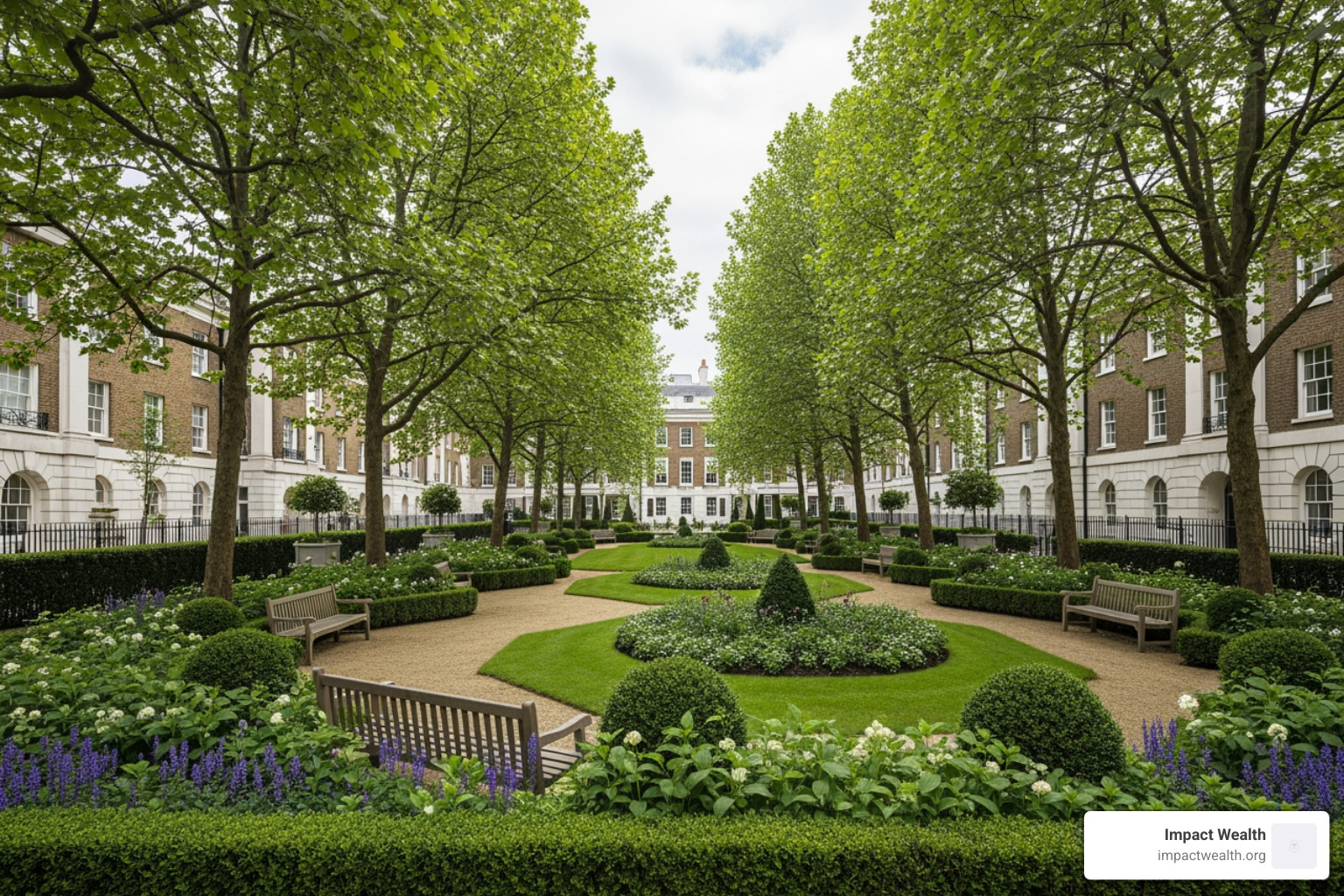
No. 1 Grosvenor Square residences are about provenance as much as luxury.
This address faces one of Mayfair’s grandest squares and redevelops a building with major diplomatic history into private residences. The scheme includes 44 homes and a serious amenity package, including a 25-meter pool, spa, gym, yoga and movement spaces, and private cinema.
What makes it special:
- True Mayfair prestige
- Historic significance that international buyers immediately understand
- Large-scale amenities uncommon in heritage-led central London buildings
- Strong blend of classical setting and modern infrastructure
If your ideal London home needs to impress before the front door even opens, this is one of the city’s clearest examples.
3) 1 Mayfair: best for hotel-style service and design pedigree
1 Mayfair residences target buyers who want service levels closer to a five-star hotel than a conventional apartment block.
The project includes 29 residences, with private lifts, a 20-meter pool, spa, gym, cinema, valet-style convenience, and architecture designed to fit Mayfair’s historic streetscape through Georgian-inspired Portland stone detailing.
Why buyers pay attention:
- Hotel-grade hospitality model
- Small number of residences, which helps exclusivity
- Excellent position near Mount Street and Hyde Park
- Strong design story from facade to interiors
For international buyers who split time between London, Miami, the Middle East, and Europe, this kind of managed luxury is especially attractive. It removes friction, and at this price point, friction is the one thing nobody wants.
4) Princes Gate townhouse: best for classic trophy-home scale
A Princes Gate townhouse is a useful benchmark for what a classic London trophy townhouse can deliver.
This type of home can be marketed around £17 million, span more than 7,000 square feet, and include five bedrooms, six bathrooms, large reception space, an east-facing garden outlook, and a leisure level with cinema, wine cellar, pool, and spa.
Its appeal is clear:
- Prime South Kensington address
- Moments from Hyde Park, Knightsbridge, and museums
- Proper townhouse scale rather than “large by apartment standards”
- Rare leisure floor in a period-format home
For buyers who want grand stairs, reception rooms, and the sort of floor plan that makes guests say “well, this escalated quickly,” this category still defines classic London luxury.
5) One Hyde Park-style penthouse stock: best for global-name recognition
Knightsbridge penthouses in landmark branded buildings remain among London’s most internationally recognizable luxury assets.
The attraction here is not just the address near Hyde Park and top retail. It is the combination of:
- Lateral layouts
- Hotel-style service
- Institutional-grade security
- Immediate international cachet
- Strong lock-and-leave usability
This category tends to appeal to global buyers who value convenience, discretion, and a name that travels well across family offices and wealth networks.
6) Holland Park design-led villas: best for architect-led family homes
Holland Park has become a favorite for buyers who want beauty without sacrificing livability. In this pocket of West London, design-led houses often combine listed architecture, private gardens, and highly refined renovations.
The area is well suited to:
- Families wanting greenery and quieter streets
- Buyers who care deeply about interiors and craftsmanship
- Owners who prefer a home with personality over a branded tower
Research on luxury West London homes highlights strong demand for architect-designed houses, wellness rooms, and beautifully restored period stock. That makes Holland Park one of London’s most appealing “have taste, not just budget” markets.
7) Belgravia garden-square townhouses: best for old-money London appeal
Belgravia remains one of the purest expressions of traditional London wealth.
Think stucco facades, diplomatic neighbors, garden-square outlooks, and a sense of calm that feels almost suspiciously peaceful for central London. Freehold appeal is especially important here, because truly prime houses are limited and ownership often stays within the same hands for long periods.
Why this category works:
- Enduring status
- Strong scarcity value
- Architectural consistency
- Close to Mayfair, Hyde Park, and top schools
If Mayfair is flashier prestige, Belgravia is quieter confidence.
8) Chelsea river and village homes: best for lifestyle buyers
Chelsea attracts buyers who want prestige with more everyday charm. The village atmosphere, proximity to the Thames, boutique retail, and strong dining scene make it ideal for lifestyle-led purchases.
These homes often appeal to:
- International families
- Buyers seeking a less corporate atmosphere than Mayfair
- Owners who actually plan to use the neighborhood, not just list the postcode on stationery
Chelsea is especially strong for elegant houses and apartments that combine luxury with warmth. It is not always the most theatrical market in London, but it is one of the most livable.
9) St John’s Wood mansions: best for space and privacy
For buyers who need more space, larger plots, and stronger privacy, St John’s Wood is one of London’s standout districts.
It offers:
- Gated homes
- Wider streets
- Ambassadorial-scale houses
- Better parking and gardens than Prime Central London core districts
- Access to Regent’s Park and excellent schools
This is a favorite with family offices and buyers relocating with children, staff, and security needs. It is less about showing off and more about operational ease.
10) Nine Elms and newer luxury towers: best for modern amenity packages
Nine Elms represents the modern face of London luxury: new-build towers, skyline views, branded services, and extensive resident facilities.
This segment suits buyers who want:
- New infrastructure
- Gym, spa, concierge, and resident lounges in one building
- Lower maintenance than a period house
- Investment-friendly stock with broad international appeal
It may not carry the same historic cachet as Mayfair or Belgravia, but for some buyers the trade-off is worth it. Sometimes the best luxury is simply not having to renovate a Georgian townhouse for three years.
Most Prestigious Neighborhoods for Luxury Homes in London
The most prestigious London areas remain remarkably consistent in 2026. The key districts are:
- Mayfair
- Belgravia
- Knightsbridge
- Chelsea
- Kensington
- Holland Park
- St John’s Wood
- South Kensington
- Regent’s Park
Best areas for old-world prestige and historic significance
Mayfair and Belgravia lead here.
Mayfair offers grand squares, elite retail, private clubs, luxury hotels, and some of the most globally recognized addresses in the UK. Belgravia offers architectural uniformity, aristocratic history, embassies, and garden-square elegance.
These areas command premiums because they combine:
- Historic significance
- Exceptional walkability to cultural and retail landmarks
- Strictly limited supply
- International brand value
Grosvenor Square, Park Lane, and streets near Hyde Park especially carry outsized pricing power.
Best areas for modern luxury, privacy, and family living
Chelsea, Holland Park, and St John’s Wood tend to perform best for buyers prioritizing day-to-day livability.
Chelsea offers charm and convenience. Holland Park brings design credibility and gardens. St John’s Wood delivers scale and privacy. South Kensington sits slightly between worlds, mixing grand architecture with strong cultural and educational access.
For many family buyers, these areas are the sweet spot because they combine status with practicality.
Amenities, Architecture, and History That Drive Value
In London luxury property, value is often created by three forces working together:
- Amenities
- Architecture
- Provenance
A home with only one of these can still be expensive. A home with all three can become truly irreplaceable.
Standard features in top-tier London luxury homes
At the upper end, buyers now expect many features to be standard rather than optional:
- Air-conditioning
- High-grade security
- Concierge or porter
- Gym or wellness access
- Garden, terrace, or balcony
- Parking or valet arrangement
- Smart-home technology
- Strong building management
For a broader look at what high-end buyers now expect, see Luxury Living Apartments Premium Amenities and Modern Comfort.
Exceptional features that justify eight- and nine-figure pricing
The biggest premiums show up when properties offer features that are still genuinely rare in central London, such as:
- Private leisure floors
- Indoor pools within private homes
- 25-meter resident pool
- Private lifts to each residence
- Private cinema
- Wine cellar
- Porte cochere arrival
- Club-level wellness and medical support
- Landmark redevelopment with historic provenance
These features matter because London’s historic building stock makes them difficult and expensive to create. Scarcity is the whole game.
Why location, architecture, and provenance matter so much
A square-facing apartment in Mayfair, a townhouse overlooking a Belgravia garden, or a residence with embassy history carries an extra premium because buyers are purchasing a story as well as a home.
Hyde Park adjacency, Grosvenor Square views, Portland stone facades, and listed architecture all influence value because they cannot be mass-produced. In a world full of glossy towers, authenticity still wins.
London vs New York, Dubai, and Miami: How the Luxury Market Compares
London remains one of the world’s core wealth cities, but buyers in 2026 are comparing it more directly with New York, Dubai, and Miami.
Where London wins on prestige, stability, and cultural capital
London’s advantages are structural:
- Rule of law
- Deep liquidity
- Global education appeal
- Museums, theater, and culture
- Strong international connectivity
- Time zone bridging US, Europe, and the Middle East
- Long history as a safe store of wealth
For buyers comparing trophy assets globally, London often feels like the most balanced choice. It may not always have the fastest short-term upside, but it has deep legacy appeal.
Where other cities can outperform on tax or growth
Dubai has captured capital thanks to lower-tax appeal and recent momentum. Miami remains highly attractive for tax efficiency, lifestyle, and growth narratives, especially for buyers comparing global second-home strategies. New York still competes strongly in vertical luxury and iconic skyline living.
We have also seen research showing London-based wealth increasingly weighing Miami and Gulf opportunities alongside London purchases. For readers exploring cross-market allocation, compare our coverage of Miami Real Estate Investment and Diversifying Your Investment Portfolio with Abu Dhabi Real Estate.
Our view is simple:
- Choose London for prestige, heritage, and long-term stability
- Choose Dubai or Miami for tax advantages or sharper momentum
- Choose New York for scale, density, and iconic vertical living
Many UHNW buyers now do not pick one city. They build a portfolio of cities.
Buying Luxury Real Estate London: Taxes, Financing, Agencies, and 2026 Market Trends
Buying at this level requires more than taste. It requires structure.
2026 market snapshot for luxury real estate london
The 2026 picture is unusually interesting:
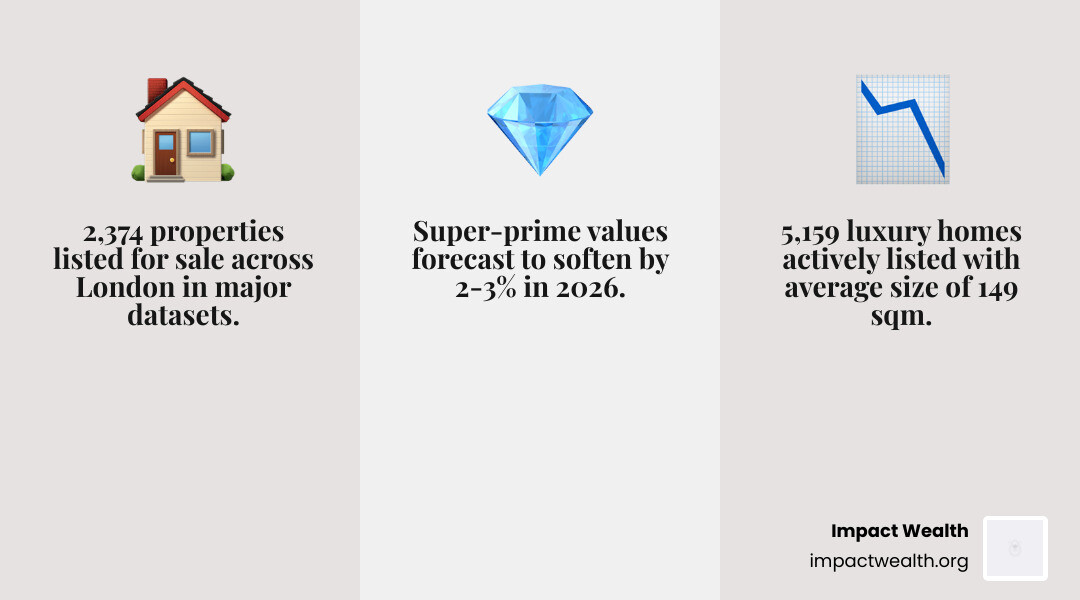
- Around 2,374 properties are listed for sale across London in one major search dataset
- Roughly 5,159 luxury homes are actively listed in another luxury-focused dataset
- Apartments account for the largest share of stock
- Average home size in one dataset is about 149 square meters
- Super-prime values are forecast to soften by 2% to 3%
- Demand remains strongest for turnkey homes and amenity-rich developments
- Younger international buyers are replacing part of the older non-dom demand base
- Pied-a-terre demand in the £7 million to £10 million band remains notable
This is why we see 2026 as a negotiation market, not a panic market.
What buyers should check before making an offer
Before committing, buyers should review:
- Freehold vs leasehold structure
- Remaining lease length
- Service charges and reserve funds
- Building management quality
- Security arrangements
- Privacy and visibility
- Refurbishment quality
- Planning constraints, especially on listed homes
- EPC and mechanical systems
- Exit strategy and resale audience
For long-range perspective, we recommend reading Real Estate as a Long-Term Wealth Strategy. And if you are not planning to be in London full-time, The Benefits of Outsourcing Property Management for Busy Investors is especially relevant.
Which specialists matter in a successful acquisition
At this level, the right advisory team matters almost as much as the property itself.
We suggest buyers work with:
- Buying agents with ultra-prime local access
- Property lawyers experienced in complex title and leasehold review
- Tax advisers for UK and cross-border structuring
- Surveyors familiar with period and new-build luxury stock
- Private banks for tailored financing
- Building or concierge teams who can support post-completion ownership
Developer quality also matters enormously in new schemes. A beautiful brochure is lovely. Competent long-term delivery is lovelier.
Frequently Asked Questions about Luxury Real Estate London
What is the average price of a luxury home in London?
Current research points to an average listing price around $2.3 million USD, with prices ranging from roughly $500,000 to more than $233 million USD. Average pricing is about $15,781 USD per square meter, though Prime Central London often runs far higher.
Which London area is best for ultra-luxury property?
Mayfair, Belgravia, and Knightsbridge are the clearest answers for ultra-luxury. Mayfair is strongest for global prestige and service-led apartment living. Belgravia is ideal for classic townhouse ownership. Knightsbridge excels in branded, security-led, internationally recognized luxury.
Is London luxury property still a good investment in 2026?
Yes, in our view, if buyers focus on best-in-class assets, prime addresses, and a long holding period. Short-term growth may be muted, but London’s scarcity, legal stability, and lasting international demand continue to support value retention. That makes it a strong fit within a broader wealth strategy.
Conclusion
The best luxury real estate London opportunities in 2026 are not simply the biggest or most expensive homes. They are the properties that match buyer intent: managed convenience in Mayfair, heritage prestige on Grosvenor Square, family-scale luxury in Chelsea Barracks, or classic trophy ownership in South Kensington and Belgravia.
For sophisticated buyers, this market rewards clarity. Know whether you want legacy value, lifestyle ease, privacy, rental flexibility, or a hedge within a broader international portfolio. Then negotiate hard, because 2026 is giving buyers more room than London usually does.
At Impact Wealth, we view London as one of the world’s essential wealth cities: not always the loudest, but almost always one of the smartest. For more on elite London living, see our feature on the Peninsula London luxury hotel.