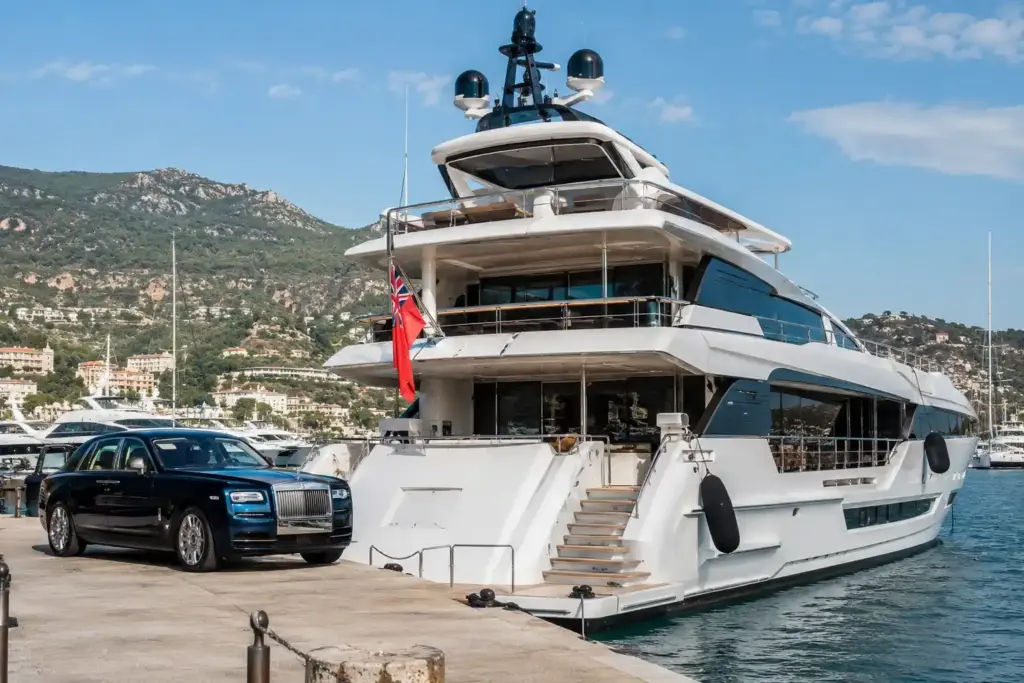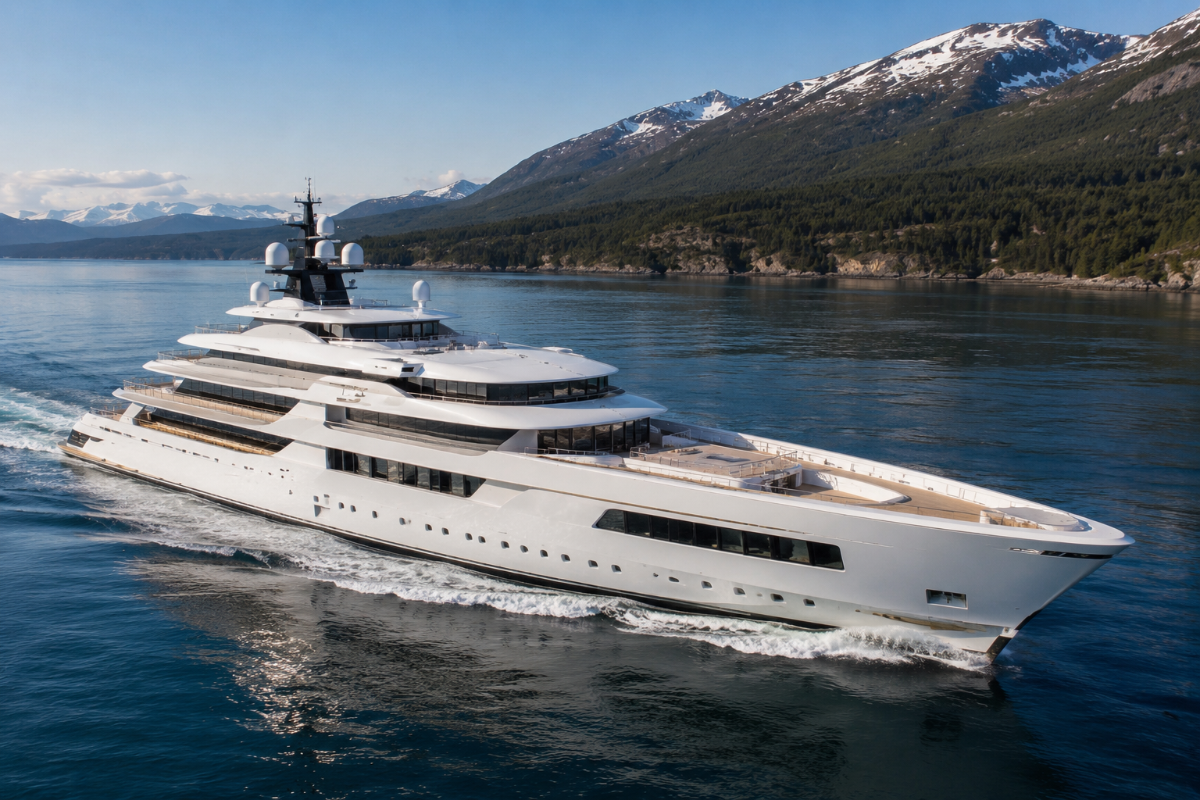
The Future of Superyachting is no longer a distant concept hidden inside futuristic yacht renders or experimental marine engineering labs. In 2026, that future is already floating in open water through the arrival of Breakthrough, one of the most technologically advanced yachts ever constructed. Built by Dutch shipbuilder Feadship, Breakthrough has rapidly become the defining symbol of how billionaire mobility, sustainability innovation, and luxury marine engineering are evolving simultaneously.
At approximately 118.8 meters in length, Breakthrough represents far more than another ultra-expensive billionaire toy. The vessel has become a global case study in hydrogen fuel-cell systems, hybrid-electric propulsion, smart onboard energy management, and next-generation marine sustainability. Consequently, the yacht industry now views Breakthrough as one of the clearest indicators of where the Future of Superyachting is heading over the next decade. Unlike many “green yacht” concepts that exist only as speculative designs, Breakthrough is a real operational vessel pushing commercially relevant innovation into the global marine market.
Moreover, the yacht arrives during a period of massive transformation inside the billionaire yacht market. Wealthy owners increasingly demand privacy, operational autonomy, quieter propulsion systems, lower-emission technologies, and flexible long-range travel capabilities. Therefore, shipbuilders are under growing pressure to combine sustainability with luxury without compromising performance or prestige. Breakthrough sits directly at the center of this transition, representing how luxury mobility is evolving into floating private infrastructure powered by advanced marine technology.
Future of Superyachting: Why Breakthrough Is Changing the Industry
The Future of Superyachting is being reshaped because billionaire expectations have fundamentally changed. Traditional mega yachts focused heavily on visual extravagance, entertainment spaces, and oversized luxury amenities. However, the modern ultra-high-net-worth buyer increasingly prioritizes operational intelligence, sustainability, and long-range mobility. Consequently, yachts like Breakthrough are redefining what luxury means in the marine sector.
Breakthrough immediately drew worldwide attention because it integrates hydrogen fuel-cell technology into a fully operational superyacht platform. While hybrid propulsion systems already exist in many modern yachts, hydrogen integration represents a far more ambitious engineering challenge. Therefore, the yacht is widely viewed as a breakthrough not just in branding, but in practical marine innovation itself.
Several factors explain why Breakthrough became so influential in the yacht industry:
- Hydrogen fuel-cell integration
- Hybrid-electric propulsion architecture
- Advanced energy recovery systems
- Reduced operational emissions
- Near-silent cruising capability
- Smart onboard power management
- Sustainable engineering experimentation
- Long-range luxury mobility design
Moreover, billionaire yacht ownership is becoming increasingly strategic rather than purely recreational. Wealthy individuals now view yachts as private infrastructure capable of supporting travel, executive networking, family mobility, and secure living environments globally. Consequently, vessels are expected to function like mobile estates with enterprise-level technology integration.
However, innovation at this scale comes with enormous complexity. Hydrogen systems remain extremely expensive and require advanced engineering expertise rarely available in conventional yacht construction. Therefore, Breakthrough represents both the opportunity and the challenge facing the Future of Superyachting in 2026.
Hybrid Propulsion, Hydrogen & Sustainable Marine Innovation
One of the most important aspects of Breakthrough is its combination of hydrogen fuel cells with hybrid-electric propulsion systems. This dual-technology approach allows the yacht to reduce emissions while improving operational efficiency and onboard comfort. Unlike traditional diesel-powered mega yachts, hybrid systems can operate more quietly and optimize energy consumption across multiple onboard systems.
Hydrogen fuel cells generate electricity by combining hydrogen and oxygen, producing water vapor rather than direct carbon-heavy exhaust emissions. In theory, this technology offers a cleaner long-term pathway for luxury marine travel. Consequently, many yacht builders and marine engineering firms see hydrogen as a potential future solution for sustainable superyachts.
Key technologies integrated into Breakthrough reportedly include:
- Hydrogen fuel-cell systems
- Hybrid-electric propulsion
- Battery energy storage technology
- Advanced heat recovery systems
- Smart energy optimization software
- Low-noise propulsion engineering
- Sustainable operational architecture
- Integrated digital monitoring systems
However, important limitations remain. Hydrogen storage is technically difficult because liquid hydrogen must be maintained at approximately -253°C. This requires complex cryogenic systems and specialized fuel infrastructure that remains extremely limited worldwide. Therefore, hydrogen-powered yachts are still far from mainstream commercial adoption.
In practical terms, hybrid-electric propulsion is currently far more commercially realistic than full hydrogen dependency. Hybrid systems are already appearing across production-ready luxury yachts because they provide measurable operational benefits without requiring entirely new fuel ecosystems. Consequently, most marine analysts view hybrid propulsion as the immediate future while hydrogen develops gradually over the coming decade.
Moreover, sustainable marine innovation is no longer driven only by environmental concerns. Shipbuilders increasingly market hybrid and low-emission systems as luxury-enhancing technologies because quieter cruising, smoother energy delivery, and lower onboard vibration significantly improve guest experience. Therefore, sustainability and comfort are becoming strategically interconnected inside modern yacht engineering.
Traditional Superyachts vs Breakthrough-Style Future Yachts
| Feature | Traditional Superyachts | Breakthrough-Style Future Yachts |
|---|---|---|
| Propulsion | Diesel engines | Hybrid + hydrogen systems |
| Sustainability | Limited efficiency focus | Lower-emission engineering |
| Energy Management | Conventional power systems | Smart integrated optimization |
| Noise Levels | Higher engine noise | Near-silent cruising |
| Technology | Basic automation | AI-integrated operations |
| Fuel Efficiency | Lower efficiency | Improved operational optimization |
| Engineering Complexity | Conventional systems | Advanced marine innovation |
| Market Position | Prestige-focused | Sustainability + technology focus |
The Rise of Explorer Yachts & Long-Range Luxury Travel
Breakthrough also reflects a broader shift toward explorer-style luxury mobility. Billionaires increasingly want vessels capable of traveling globally while maintaining privacy, security, and operational independence. Consequently, the Future of Superyachting is moving away from short-range leisure cruising and toward long-range autonomous luxury travel.
Explorer yachts and future-focused vessels prioritize endurance, onboard infrastructure, and operational resilience rather than only entertainment capacity. This trend accelerated significantly after wealthy individuals began reevaluating privacy, mobility, and personal security strategies during periods of geopolitical instability and global travel disruption.
Several major trends are driving this transformation:
- Demand for private global mobility
- Interest in remote destinations
- Growth of expedition-style luxury travel
- Desire for long-range operational autonomy
- Reduced interest in crowded luxury hubs
- Increased privacy expectations
- Expansion of onboard wellness systems
- Multi-season cruising capability
Moreover, billionaire buyers increasingly favor quieter luxury rather than highly visible extravagance. This “quiet luxury” movement emphasizes sophistication, engineering quality, and functional excellence instead of overt status display. Consequently, vessels like Breakthrough appeal strongly to buyers who value advanced technology and operational flexibility over excessive public attention.
However, long-range future yachts involve substantial operational challenges. Larger fuel reserves, complex engineering systems, and expedition-grade construction significantly increase both build costs and maintenance requirements. Therefore, the market for these vessels remains limited to the ultra-wealthy segment capable of supporting such sophisticated marine infrastructure.
AI, Smart Systems & the Digital Yacht Experience
Artificial intelligence and smart automation are becoming essential elements within the Future of Superyachting. Breakthrough reportedly incorporates advanced digital monitoring systems designed to optimize energy distribution, operational efficiency, and onboard performance management. Consequently, modern yachts increasingly function like floating smart cities rather than conventional luxury vessels.
AI-assisted navigation systems can analyze weather conditions, fuel consumption patterns, maritime traffic, and route efficiency in real time. This allows captains and operators to improve both safety and sustainability simultaneously. Therefore, AI integration is rapidly becoming one of the most commercially practical innovations in luxury marine engineering.
Key digital systems shaping future yachts include:
- AI-assisted navigation
- Smart energy management
- Predictive maintenance monitoring
- Cybersecurity protection systems
- Automated climate optimization
- Digital guest personalization
- Remote vessel diagnostics
- Intelligent power allocation software
Cybersecurity is also becoming increasingly important. Billionaire yachts now contain highly sensitive communication systems, business infrastructure, and personal digital ecosystems. Consequently, shipbuilders are integrating enterprise-grade cybersecurity directly into vessel architecture to protect owners from growing digital threats.
Moreover, onboard wellness technology is expanding rapidly throughout the yacht market. Air purification systems, circadian lighting controls, health monitoring environments, and noise-reduction engineering are becoming core design priorities. Therefore, luxury is evolving from visual opulence toward personalized physical comfort and operational intelligence.
Nevertheless, increased automation creates new technical dependencies. Future yachts require highly specialized crews capable of managing complex digital systems and advanced propulsion technologies. As a result, crew training and technical support infrastructure are becoming increasingly important within the global yacht industry.
Next-Generation Yacht Technologies
| Technology | Purpose | Benefit | Limitation | Adoption Level |
|---|---|---|---|---|
| Hydrogen Fuel Cells | Alternative clean energy | Lower emissions potential | Limited infrastructure | Experimental |
| Hybrid Propulsion | Fuel optimization | Improved efficiency | High installation cost | Commercially active |
| AI Navigation | Route optimization | Safety + fuel savings | Requires monitoring | Rapidly growing |
| Smart Energy Systems | Power management | Better operational efficiency | Complex maintenance | Widely adopted |
| Sustainable Materials | Lower environmental impact | Eco-conscious branding | Expensive sourcing | Increasing |
| Predictive Maintenance AI | Equipment monitoring | Reduced downtime | Software dependency | Expanding |
Why Billionaires Are Redefining Yacht Luxury?
The billionaire yacht market is undergoing major philosophical change. Wealthy buyers increasingly want assets that combine mobility, privacy, sustainability, and operational flexibility instead of functioning purely as status symbols. Consequently, the Future of Superyachting reflects broader shifts occurring throughout ultra-high-net-worth lifestyles globally.
Breakthrough perfectly illustrates this transformation because the yacht emphasizes technological sophistication and engineering innovation rather than excessive decorative extravagance. Quiet propulsion systems, sustainability architecture, and intelligent operational systems are now viewed as luxury features themselves.
Several billionaire lifestyle trends are reshaping yacht design:
- Wellness-centered onboard environments
- Flexible global mobility
- Reduced public visibility
- Sustainable engineering preference
- Smart infrastructure integration
- Family-focused private travel
- Quiet luxury aesthetics
- Operational independence
Moreover, billionaires increasingly view yachts as floating private infrastructure rather than seasonal leisure products. These vessels support secure communication, remote work capability, executive networking, and family mobility simultaneously. Therefore, the yacht industry is evolving toward infrastructure-grade engineering rather than pure hospitality-focused design.
This shift also explains growing demand for support vessels, helicopter integration, onboard medical systems, and advanced cybersecurity ecosystems. Modern yacht owners want self-contained operational environments capable of functioning independently across global regions for extended periods.
Challenges Facing the Future of Superyachting
Despite its innovation, Breakthrough also highlights the enormous challenges facing the Future of Superyachting. Hydrogen fuel systems remain extremely expensive and technically demanding. Infrastructure for hydrogen fueling is limited globally, making operational logistics highly complex even for billionaires.
Environmental criticism also continues pressuring the marine luxury industry. While hybrid and hydrogen systems reduce emissions, mega yachts still face scrutiny regarding energy consumption and wealth symbolism. Consequently, yacht builders must balance sustainability progress with ongoing public perception challenges.
Major industry challenges include:
- Limited hydrogen infrastructure
- Extremely high construction costs
- Complex maintenance requirements
- Regulatory uncertainty
- Rising marina expenses
- Cybersecurity threats
- Skilled labor shortages
- Global operational compliance
Operating costs remain another major issue. Large future yachts require highly specialized crews, advanced engineering maintenance, insurance coverage, and technical support systems. Therefore, ownership economics continue limiting the market primarily to ultra-high-net-worth individuals.
However, despite these challenges, the global yacht industry continues accelerating innovation because billionaire demand for autonomous luxury mobility remains exceptionally strong. Consequently, vessels like Breakthrough are likely to influence marine engineering trends throughout the next decade.
2026 Trends Defining the Future of Superyachting
Several key trends are defining the Future of Superyachting in 2026, and Breakthrough sits directly at the center of many of them. Hybrid propulsion systems are becoming mainstream across new yacht builds as shipyards prioritize fuel efficiency and sustainability integration.
Explorer yachts and long-range vessels continue dominating demand because wealthy owners increasingly prioritize operational independence and remote travel capability. At the same time, AI-driven yacht management systems are transforming how vessels optimize energy, maintenance, navigation, and guest experience.
Major 2026 yacht trends include:
- Expansion of hybrid propulsion
- Hydrogen fuel experimentation
- Growth of explorer yachts
- AI-assisted operational systems
- Sustainable interior materials
- Smart energy optimization
- Quiet luxury design philosophy
- Increased cybersecurity integration
Ultimately, Breakthrough represents more than a single superyacht project. It symbolizes how luxury marine travel is evolving into intelligent floating infrastructure designed around autonomy, sustainability, privacy, and advanced technology. The vessel demonstrates that the Future of Superyachting is no longer theoretical — it is already operating in real-world conditions today.
FAQs
What is Breakthrough yacht?
Breakthrough is a hydrogen-powered hybrid superyacht built by Feadship and considered one of the most advanced future yachts in the world.
Why is Breakthrough important?
The yacht represents a major step toward sustainable marine luxury and advanced propulsion innovation.
Is Breakthrough fully hydrogen-powered?
No. It combines hydrogen fuel cells with hybrid-electric propulsion systems rather than operating solely on hydrogen.
Who built Breakthrough?
Breakthrough was built by Dutch luxury yacht shipyard Feadship.
How big is Breakthrough yacht?
The yacht is approximately 118.8 meters long.
Are hydrogen-powered yachts realistic?
Hydrogen systems are technically possible, but infrastructure and storage limitations currently restrict widespread adoption.
What technologies are shaping future yachts?
Hybrid propulsion, AI navigation, smart energy systems, cybersecurity, and sustainable materials are shaping future yachts.
Why are billionaires buying future yachts?
Wealthy buyers increasingly prioritize privacy, sustainability, operational autonomy, and advanced onboard technology.
What are the biggest yacht trends in 2026?
Hybrid propulsion, explorer yachts, AI integration, and sustainable engineering are major yacht trends in 2026.
Is the superyacht industry changing?
Yes. The industry is shifting toward sustainability, smart technology, and mobility-focused luxury infrastructure.