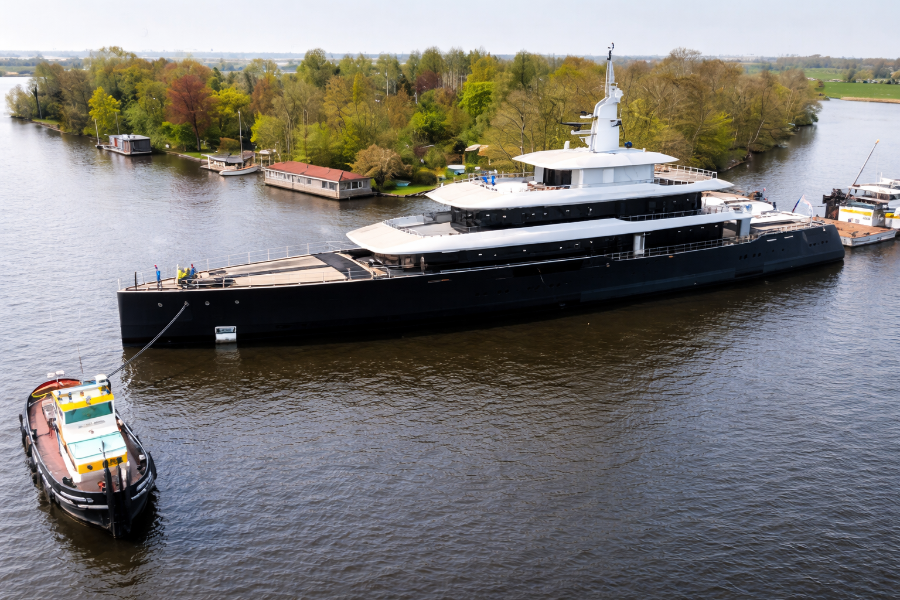
The launch of Feadship Project 826 marks one of the most significant moments in the 2026 superyacht calendar, signaling a bold shift in how luxury vessels are conceived, engineered, and experienced. Measuring 80 meters (262 feet), this newly unveiled yacht represents a departure from traditional superyacht norms, blending the elegance of sailing yachts with the scale and comfort of modern motor yachts. The result is a vessel that challenges long-standing assumptions about form, proportion, and onboard living.
At the core of Feadship Project 826 is a sailing-inspired design philosophy that prioritizes openness, efficiency, and visual harmony. With exterior styling led by Malcolm McKeon, a designer known for high-performance sailing yachts, the vessel introduces a refined, low-profile silhouette rarely seen in yachts of this size. This approach is complemented by advanced naval architecture from De Voogt Naval Architects and sophisticated interiors by m²atelier, creating a cohesive and forward-thinking design language.
Moreover, the yacht internally known as Project Thalassa reflects broader shifts within the luxury yacht industry. Owners are increasingly demanding vessels that offer seamless connections to the sea, multifunctional living spaces, and architectural clarity rather than sheer volume. Consequently, Feadship Project 826 is not just a new launch; it represents a new direction for the future of superyacht design.
Overview of Feadship Project 826
Feadship Project 826 stands as a testament to the shipyard’s reputation for precision engineering and bespoke craftsmanship. As one of the world’s leading custom superyacht builders, Feadship has consistently delivered vessels that combine technical innovation with timeless design, as seen in Feadship Project Solent. However, Project 826 takes this legacy further by embracing a radically different aesthetic and structural philosophy.
The yacht measures 80 meters in length, placing it firmly within the upper tier of custom superyachts. Despite its size, the vessel avoids the bulky appearance typically associated with yachts in this category. Instead, its proportions have been carefully refined to create a sleek, elongated profile that emphasizes horizontal lines and visual lightness. This is achieved through reduced freeboard, minimized superstructure mass, and a disciplined approach to deck layering.
Internally referred to as Project Thalassa, the yacht integrates contributions from multiple industry leaders. Malcolm McKeon’s exterior design brings sailing yacht sensibilities to a motor yacht platform, while De Voogt Naval Architects ensure performance efficiency and hydrodynamic optimization. Meanwhile, m²atelier delivers interiors that prioritize natural light, spatial continuity, and understated luxury.
Sailing-Inspired Design Philosophy
The defining characteristic of Feadship Project 826 is its sailing-inspired design, which fundamentally rethinks the visual and functional identity of a motor yacht. Unlike traditional superyachts that emphasize height and volume, this vessel adopts a low-profile silhouette that reduces visual weight and enhances aerodynamic efficiency. The result is a yacht that appears both faster and more refined, even at rest.
One of the most notable features is the sharply defined plumb bow, which contributes to reduced hydrodynamic resistance and improved fuel efficiency. This is paired with a widening aft hull, allowing for greater interior volume without compromising the vessel’s streamlined appearance. Consequently, the yacht achieves a balance between performance and livability that is rarely seen in this segment.
Additionally, the design incorporates only two decks above the main deck, a deliberate decision to maintain a clean and uncluttered profile. This contrasts sharply with traditional superyachts, which often stack multiple decks to maximize interior space. By limiting vertical expansion, Feadship Project 826 emphasizes horizontal flow, creating a more cohesive and visually appealing structure.
Key design elements include:
- Reduced freeboard for a lower, sleeker profile
- Minimalist superstructure with clean lines
- Elongated hull proportions inspired by sailing yachts
- Strategic use of glass to enhance openness
- Integration of outdoor and indoor spaces
Feadship Project 826 Key Specifications
| Specification | Details |
|---|---|
| Length | 80 meters (262 feet) |
| Designers | Malcolm McKeon, m²atelier |
| Naval Architecture | De Voogt Naval Architects |
| Interior Design | m²atelier |
| Range | Approx. 5,500 nautical miles at 12 knots |
| Deck Structure | Two decks above main deck |
| Key Features | Beach club, glass pool, helipad, wellness |
Revolutionary Beach Club Concept
One of the most groundbreaking aspects of Feadship Project 826 is its expansive beach club, which sets a new benchmark for the shipyard. Spanning approximately 165 square meters, this area is the largest beach club ever created by Feadship, redefining how lower-deck spaces are utilized in luxury yachts.
The beach club features a two-level layout that seamlessly integrates relaxation, entertainment, and wellness. The lower level is positioned just 700 millimeters above the waterline, creating an unprecedented sense of proximity to the ocean. This design choice enhances the sensory experience, allowing guests to feel directly connected to the surrounding environment.
Moreover, the space is equipped with fold-out terraces that open on multiple sides, creating near 180-degree sea views. These terraces eliminate traditional barriers between the yacht and the ocean, transforming the beach club into a fully immersive waterfront environment. The absence of structural pillars further enhances this openness, made possible by advanced engineering solutions.
Key features of the beach club include:
- 165 sqm total
- Two-level design for versatility
- Fold-out terraces with panoramic views
- Lounge, bar, and wellness zones
- Direct water access with minimal elevation
Onboard Lifestyle & Luxury Features
Feadship Project 826 is designed to deliver a holistic onboard experience that blends luxury, wellness, and functionality. Every space has been carefully curated to maximize usability while maintaining a sense of openness and flow. This approach reflects evolving owner preferences, which prioritize lifestyle integration over compartmentalized design.
A standout feature is the glass-bottom swimming pool, measuring approximately 6.3 meters in length. Positioned above the beach club, the pool allows natural light to filter into the space below, creating a dynamic interplay of light and water. This not only enhances the aesthetic appeal but also contributes to a more inviting atmosphere.
The yacht also includes a winter garden with retractable glass panels, enabling year-round use regardless of weather conditions. This space acts as a transitional zone between indoor and outdoor environments, reinforcing the yacht’s emphasis on flexibility and adaptability.
Additional onboard amenities include:
- Fully equipped gym and yoga studio
- Dedicated massage and wellness rooms
- Walkaround decks for uninterrupted circulation
- Helipad that doubles as a pickleball court
- Open-plan social areas with panoramic views
Performance & Engineering Innovation
Beyond its striking design, Feadship Project 826 incorporates advanced engineering solutions that enhance both performance and efficiency. The yacht is powered by twin MTU engines, each producing approximately 2,467 horsepower. This propulsion system enables a range of around 5,500 nautical miles at a cruising speed of 12 knots, making it suitable for long-distance voyages.
Furthermore, the yacht features sophisticated structural engineering that conceals mechanical systems without compromising accessibility. This allows for cleaner interior and exterior spaces, free from visual clutter. Consequently, the vessel maintains its minimalist aesthetic while still meeting the technical demands of a modern superyacht.
Key engineering highlights:
- Twin MTU engines with high efficiency
- Reduced drag hull for improved performance
- Long-range capability for global cruising
- Hidden mechanical systems for clean design
- Advanced structural integrity for open spaces
Feadship Project 826 vs Traditional Superyachts
| Feature | Project 826 | Traditional Superyachts |
|---|---|---|
| Design Style | Sailing-inspired, minimalist | Bulky, volume-focused |
| Profile Height | Low-profile | Multi-deck, tall structures |
| Beach Club Size | 165 sqm (largest by Feadship) | Smaller, enclosed |
| Openness | Highly open, panoramic views | Compartmentalized spaces |
| Lifestyle Experience | Integrated, flexible | Segmented, formal |
Why This Launch Matters for the Industry?
The launch of Feadship Project 826 marks a pivotal moment for the superyacht industry. It shows that even top shipyards now challenge old design rules because client needs are changing. Moreover, this shift reflects a clear move toward more modern and flexible yacht design.
In addition, Feadship continues to push innovation with each new project. The shipyard actively responds to a market that is becoming more competitive and design-driven. As a result, Project 826 stands out as a clear example of this new direction.
Consequently, designers now focus more on comfort and experience than pure size. Feadship Project 826 clearly reflects this change in priorities.
Additionally, the yacht combines sailing yacht ideas with a motor yacht platform. This mix creates a fresh design approach that improves both style and efficiency. Therefore, Feadship Project 826 sets a strong example for future yacht builds and encourages more creative thinking in the industry.
2026 Superyacht Trends Highlighted
Feadship Project 826 reflects several key trends shaping the superyacht industry in 2026. These trends come from changing customer tastes and fast progress in design and technology.
Notable trends include:
- More focus on outdoor living spaces
- Multi-use areas such as helipads that support sports
- Simple, clean design with fewer visual blocks
- Increased use of glass for open views
- Better communication systems replacing older radar domes
Moreover, these trends show a clear move toward more flexible and experience-driven yachts. Designers now build spaces based on how people use them, not just how large they are.
As a result, modern yachts feel more open, practical, and connected to the sea than ever before.
Limitations & Considerations
Despite its innovation, Feadship Project 826 also brings some challenges. Its advanced design and engineering naturally increase build costs. Therefore, only a very small group of buyers can afford such yachts.
In addition, the fully custom nature of the yacht limits large-scale production. Each part is specially made, which increases both build time and maintenance needs. This can create challenges for owners who prefer simple operation and lower long-term costs.
Other key considerations include:
- High maintenance needs for advanced systems
- Smaller resale market due to its unique design
- Dependence on expert technical support
- Possible operational complexity for crew and owners
FAQs
What makes Feadship Project 826 unique?
It uses a sailing-inspired design, a low-profile shape, and a large open beach club that sets it apart from traditional superyachts.
How big is the yacht?
Feadship Project 826 measures 80 meters (262 feet) in length.
What is the beach club concept?
It is a two-level, 165 sqm open space with fold-out terraces and direct access to the sea.
Who designed Project 826?
Malcolm McKeon designed the exterior, De Voogt handled naval architecture, and m²atelier created the interiors.
What trends does it represent in 2026?
It reflects open layouts, multi-use spaces, minimalist design, and sailing-inspired efficiency.