In today’s automotive landscape, Premium Luxury Car Features go far beyond polished chrome and plush leather. They represent a fusion of precision engineering, cutting-edge technology, bespoke craftsmanship, and elevated ownership experiences. Modern luxury vehicles are no longer defined solely by brand reputation or price tags; rather, they are measured by how seamlessly they integrate performance, comfort, intelligence, and sustainability.
From meticulously crafted interiors to AI-driven driving systems, the contemporary premium luxury car is both a technological powerhouse and a sanctuary on wheels. Furthermore, the transition toward electrification has redefined what performance and refinement mean in the luxury segment.
Let’s explore the defining elements shaping premium luxury cars today.
What Defines a Premium Luxury Car in Today’s Market?
A premium luxury car today is distinguished by a multi-dimensional identity:
-
Advanced engineering sophistication
-
Exceptional material quality
-
Seamless technology integration
-
Superior ride comfort
-
Elevated safety systems
-
Brand heritage and exclusivity
Models such as the Mercedes-Benz S-Class and the BMW 7 Series exemplify this philosophy. They do not simply transport passengers; they curate experiences.
However, prestige alone no longer guarantees relevance. Consumers now demand sustainability, connectivity, and intuitive intelligence. Consequently, luxury automakers have transformed their vehicles into digital ecosystems, personalized retreats, and high-performance machines all in one.
Advanced Performance Engineering and Powertrain Options
Performance remains foundational to Premium Luxury Car Features. Yet, refinement has replaced raw aggression as the ultimate benchmark.
1. Precision-Tuned Powertrains
Luxury vehicles now offer a spectrum of advanced propulsion systems:
-
Turbocharged inline-six engines
-
Twin-turbo V8 and V12 configurations
-
Plug-in hybrid systems
-
Fully electric drivetrains
For example, the Rolls-Royce Phantom delivers near-silent V12 power engineered for effortless acceleration, while the Porsche Taycan redefines electric performance with instant torque and low center-of-gravity dynamics.
Moreover, adaptive air suspension systems scan road surfaces in real time, adjusting damping for supreme ride comfort. Active rear-wheel steering enhances agility, particularly in urban environments.
2. Electric and Hybrid Excellence
The emergence of electric luxury vehicles has elevated expectations. The Tesla Model S and the Lucid Air showcase how electric platforms deliver:
-
Instant acceleration
-
Whisper-quiet cabins
-
Advanced battery management systems
-
Over-the-air software updates
Consequently, electrification is no longer an alternative it is central to modern premium engineering.
Interior Craftsmanship and Bespoke Materials
If performance defines capability, craftsmanship defines identity.
1. Handcrafted Excellence
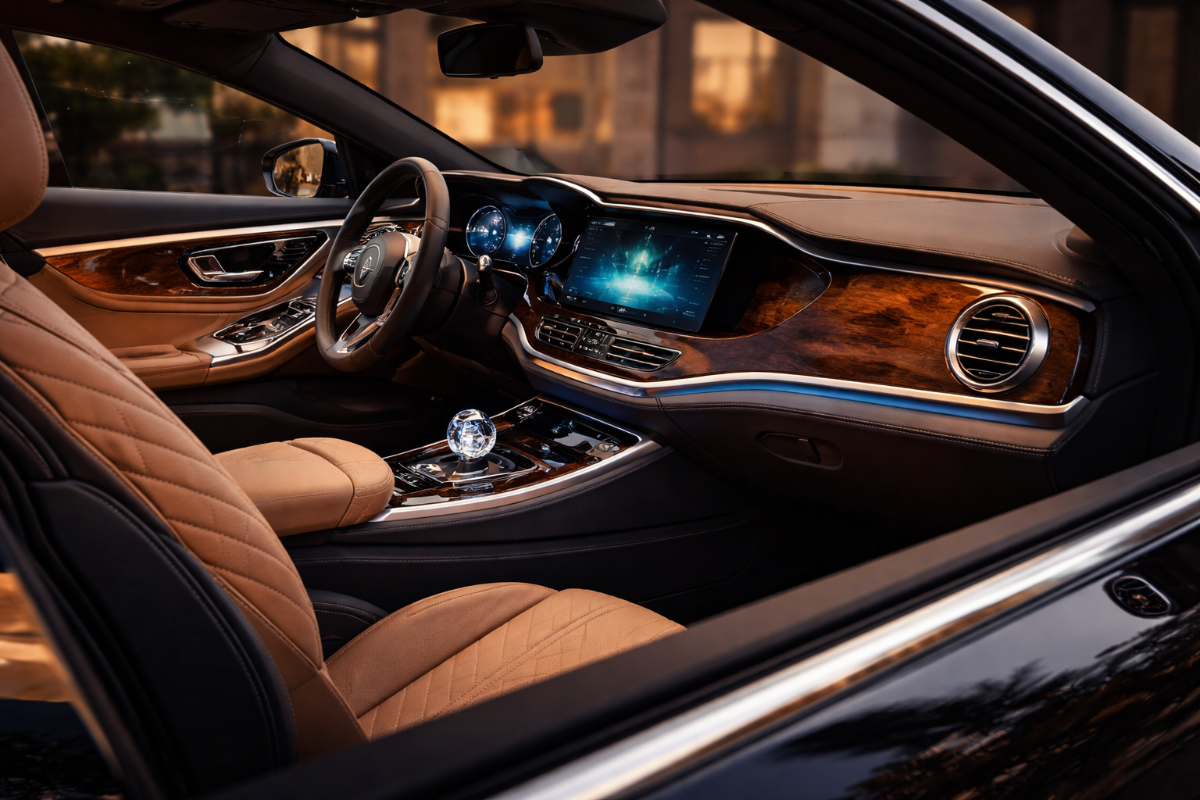
Premium luxury interiors incorporate:
-
Full-grain Nappa leather
-
Open-pore wood veneers
-
Polished aluminum trim
-
Carbon fiber inlays
-
Sustainable textile alternatives
The Bentley Flying Spur offers hand-stitched leather with hundreds of individual embroidery options. Such detailing reflects not automation, but artisan mastery.
2. Bespoke Customization
Buyers increasingly expect personalization. Therefore, automakers offer:
-
Custom paint palettes
-
Tailored interior stitching patterns
-
Personalized ambient lighting themes
-
Individualized seat configurations
This level of customization transforms ownership into a curated experience.
Cutting-Edge Technology and AI-Driven Systems
Technology is arguably the most transformative element among Premium Luxury Car Features.
1. Intelligent Infotainment
Modern systems include:
-
Curved OLED displays
-
Augmented reality head-up displays
-
AI voice assistants
-
Gesture control interfaces
Unlike earlier generations of infotainment systems, today’s interfaces learn driver preferences. Climate settings, navigation routes, and seat adjustments adapt automatically.
Moreover, over-the-air updates ensure vehicles evolve long after purchase.
2. Digital Cockpits and Connectivity
Fully digital dashboards now replace traditional gauges. High-speed connectivity enables:
-
Real-time traffic optimization
-
Cloud-based navigation
-
Smart home integration
-
Remote vehicle monitoring
Consequently, the premium luxury vehicle operates as a connected digital companion.
Safety Innovations and Driver Assistance Features
Safety innovation is central to modern luxury differentiation.
Advanced Driver Assistance Systems (ADAS) include:
-
Adaptive cruise control with stop-and-go
-
Lane centering assist
-
Automated lane changes
-
Traffic jam pilot systems
-
360-degree camera monitoring
Many premium vehicles now offer semi-autonomous driving under specific conditions. However, luxury brands prioritize smoothness and predictability over abrupt intervention.
Furthermore, structural integrity, reinforced frames, and multi-stage airbag systems ensure passenger protection remains uncompromised.
Comfort, Personalization, and Passenger Experience
Luxury today prioritizes holistic comfort.
1. Advanced Seating Systems
Premium seats offer:
-
Multi-contour adjustments
-
Heating, ventilation, and massage functions
-
Memory presets for multiple users
-
Rear executive lounge configurations
In vehicles such as the Range Rover, rear passengers enjoy reclining seats with powered footrests, elevating SUV luxury standards.
2. Cabin Acoustics and Climate
Acoustic laminated glass, active noise cancellation, and precision insulation create serene environments.
Four-zone or even five-zone climate systems ensure individualized comfort. Moreover, integrated air purification systems monitor and filter particulate matter in real time.
Sustainability and Electrification Trends
Luxury and sustainability now coexist.
1. Eco-Conscious Materials
Premium manufacturers incorporate:
-
Recycled aluminum
-
Vegan leather alternatives
-
Sustainably sourced wood
-
Carbon-neutral production processes
Consequently, environmental responsibility enhances brand prestige rather than diminishing it.
2Electric Flagships
Electric luxury models prioritize:
-
Long-range battery systems
-
Rapid charging capability
-
Silent operation
-
Lower lifecycle emissions
In addition, electric powertrains allow more interior space due to flexible platform architecture. Therefore, designers can reimagine cabin layouts with greater openness.
Brand Prestige and Ownership Experience
Ownership extends beyond the vehicle itself.
Premium luxury car buyers expect:
-
Concierge-style service
-
Priority maintenance scheduling
-
Exclusive events and brand experiences
-
Comprehensive warranty coverage
Brand heritage remains critical. Automakers with decades—or even centuries—of craftsmanship history leverage legacy to reinforce exclusivity.
However, prestige must now be supported by technological leadership. Consequently, brands that fail to innovate risk losing relevance.
Standard vs Premium Luxury Features
| Feature Category | Standard Vehicle | Premium Luxury Vehicle |
|---|---|---|
| Interior Materials | Synthetic leather, plastic trim | Full-grain leather, wood veneers, metal accents |
| Suspension | Basic coil suspension | Adaptive air suspension with predictive scanning |
| Infotainment | Touchscreen with basic navigation | Curved OLED displays, AR HUD, AI voice assistant |
| Safety | Basic airbags, ABS | Semi-autonomous driving, 360° cameras, predictive braking |
| Seating | Manual adjustment | Multi-contour, heated, ventilated, massage seats |
| Sound System | 6–8 speakers | Premium 15–30 speaker surround systems |
| Customization | Limited color choices | Bespoke interior/exterior personalization |
| Ownership | Standard dealership service | Concierge service and exclusive brand experiences |
ICE vs Electric Premium Luxury Models
| Category | ICE Premium Luxury | Electric Premium Luxury |
|---|---|---|
| Power Delivery | Gradual torque curve | Instant torque response |
| Cabin Noise | Engine refinement required | Near-silent operation |
| Maintenance | Oil changes, mechanical servicing | Fewer moving parts, lower routine maintenance |
| Environmental Impact | Higher emissions | Lower emissions, especially with renewable energy |
| Platform Design | Traditional engine layout | Flat battery floor, spacious cabin |
| Driving Feel | Mechanical engagement | Smooth, seamless acceleration |
| Refueling/Charging | 3–5 minutes refueling | 20–40 minute fast charging (varies) |
The Evolving Definition of Premium
Today, Premium Luxury Car Features combine performance, comfort, smart technology, eco-friendliness, and tradition into one complete package. Customers also expect more from their cars. They want vehicles that:
-
Think smart
-
Adjust easily
-
Drive smoothly
-
Keep people safe
-
Care for the environment
So, a modern luxury car is not about having too many extras—it is about careful design and smart choices.
Final Thoughts
Premium Luxury Car Features balance skill and engineering. They bring together strong performance, hand-made interiors, smart digital systems, and eco-friendly design into one smooth experience. As electric and AI technology improve, luxury cars will keep getting better. Still, one thing stays true: real luxury feels effortless.
In the end, a premium luxury car today is not just made—it is designed, built carefully, and meant to be experienced.
Frequently Asked Questions (FAQs)
What are the most important Premium Luxury Car Features today?
The most important features include advanced driver assistance systems, high-quality interior materials, AI-driven infotainment systems, adaptive suspension, and electrified powertrains. Additionally, these features ensure both comfort and performance.
Are electric cars considered true premium luxury vehicles?
Yes. Electric luxury models provide instant torque, quiet cabins, advanced technology integration, and sustainability benefits that strongly align with modern luxury expectations.
How do premium luxury cars differ from entry-level luxury models?
Premium luxury vehicles offer superior materials, deeper customization, semi-autonomous driving capabilities, more powerful engines, and enhanced ownership experiences. Consequently, they provide a more refined and personalized experience.
Is brand prestige still important in defining luxury?
Absolutely. Heritage and reputation influence perceived exclusivity. However, technological innovation and sustainability now play equally crucial roles.
Are Premium Luxury Car Features worth the higher price?
For buyers seeking comfort, refined performance, advanced safety, and tailored ownership experiences, the value extends beyond transportation. In fact, it becomes a fully experiential investment.