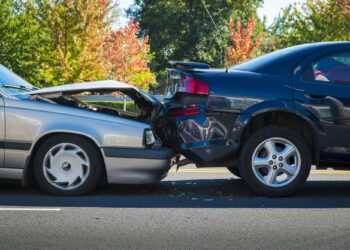
Driving safely requires more than knowing traffic laws and operating vehicle controls. Experience helps drivers recognize developing hazards, judge gaps, adjust speed, manage distractions, and respond to unfamiliar conditions. New drivers have had fewer opportunities to build those skills across different roads, weather conditions, traffic patterns, and times of day.
For someone evaluating a collision with an auto accident attorney in Skokie, inexperience may become relevant when the evidence shows that a driver misjudged a hazard, failed to yield, followed too closely, or made another preventable error. Illinois uses a Graduated Driver Licensing program specifically to give young drivers more supervised practice and gradually expose them to more complex driving situations.
1. Difficulty Recognizing Hazards Early
Experienced drivers often identify problems before they become immediate emergencies. They may notice a pedestrian approaching a crosswalk, brake lights ahead, or a vehicle preparing to turn from a side street.
The National Highway Traffic Safety Administration explains that inexperienced drivers can have difficulty recognizing risky situations and reacting appropriately. Its guidance on hazard-perception training also notes that novice drivers perform worse than experienced drivers on hazard-perception tests. This matters because early recognition gives a driver more time to slow, change position, or prepare for another road user’s movement.
After a crash, video, witness accounts, vehicle data, and roadway evidence may help show whether a hazard was visible before the driver reacted.
2. Misjudging Following Distance and Stopping Needs
A new driver may understand that following too closely is dangerous without having developed a reliable sense of how much space a particular situation requires. Speed, traffic density, weather, road grade, and vehicle condition can all affect how much room is available to stop.
Inexperience can become especially important when traffic slows suddenly. A driver who notices brake lights late or leaves too little space may have few options once the vehicle ahead decelerates.
Illinois’ licensing system requires substantial supervised practice before a driver under 18 can receive a graduated license. State law requires at least 50 hours of behind-the-wheel practice, including at least 10 hours at night. The purpose of the program is expressly tied to developing safe driving habits among young, inexperienced drivers.
3. Choosing a Speed That Does Not Fit the Conditions
Drivers also need to adjust speed to surrounding conditions. Heavy traffic, rain, darkness, construction, curves, and limited sight distance may require more cautious speed selection.
NHTSA identifies speeding as a recurring problem among inexperienced teen drivers and notes that higher speeds reduce the reaction time available to avoid a collision. The issue is not limited to intentional aggressive driving. A novice driver may simply lack experience judging how quickly conditions can change or how much room is needed to respond.
Crash reconstruction, event data, surveillance video, and physical evidence can help establish vehicle speed and whether it was appropriate for the circumstances.
4. Handling Intersections and Right-of-Way Decisions
Intersections require drivers to process several things at once: signals, approaching traffic, pedestrians, turning gaps, and vehicles entering from different directions.
Limited experience can make those decisions more difficult. NHTSA describes young drivers as less experienced in recognizing potentially risky situations and reacting appropriately. A late decision at an intersection can lead to an unsafe turn, failure to yield, abrupt braking, or a conflict with a pedestrian or cyclist.
When fault is disputed, investigators may examine traffic controls, signal timing, vehicle positions, sight lines, witness accounts, and video rather than relying only on each driver’s description.
5. Driving at Night With Limited Experience
Night driving changes the visual environment. Drivers see less beyond the reach of their headlights, and pedestrians, road edges, signs, and other hazards can be harder to detect.
Illinois restricts nighttime driving for many drivers under 18. The current rules generally prohibit driving from 10 p.m. to 6 a.m. Sunday through Thursday and from 11 p.m. to 6 a.m. on weekend nights, subject to statutory exceptions. The Illinois Secretary of State also requires part of a learner’s supervised practice to occur at night.
These rules reflect the additional demands nighttime driving places on less experienced drivers. Lighting, headlight use, visibility, and the time of the crash may all become relevant evidence.
6. Managing Passengers and Other Distractions
Driving already requires continuous attention, and inexperienced drivers may have fewer mental resources available for conversations, phones, navigation, or other distractions. NHTSA explains that the mechanics of driving require more attention from inexperienced drivers, leaving less capacity for other tasks.
Illinois addresses this problem through its graduated licensing rules. For the first 12 months of licensing, or until the driver turns 18, a graduated-license holder generally may not carry more than one passenger under age 20 unless an exception applies for specified family members. Illinois also prohibits wireless-phone use, including hands-free use, for drivers under 19 except in specified emergencies.
Passenger statements, phone records, video, and device data may help determine whether distraction contributed to a collision.
Inexperience Does Not Automatically Establish Negligence
A driver’s age or limited time behind the wheel does not by itself prove fault. The legal question remains what the driver did and whether that conduct contributed to the crash. An experienced driver can make the same errors, while a new driver may respond appropriately.
Evidence can show whether the driver failed to recognize a visible hazard, chose an unsafe speed, misjudged an intersection, became distracted, or violated a traffic rule. Illinois’ graduated licensing system recognizes that safe driving develops through supervised practice and gradual exposure to more demanding conditions.
Experience Builds Skills That Rules Alone Cannot Supply
Traffic laws provide a framework, but safe driving also depends on judgment developed through repeated practice. Recognizing hazards early, maintaining space, selecting an appropriate speed, navigating intersections, driving at night, and managing distractions all become easier as drivers gain experience across varied conditions.
When a collision involves a newer driver, an investigation can examine those issues without assuming that inexperience alone caused the crash. Vehicle data, video, witnesses, traffic controls, phone records, and physical evidence can help determine whether a specific driving error occurred and how that error contributed to the resulting injuries.