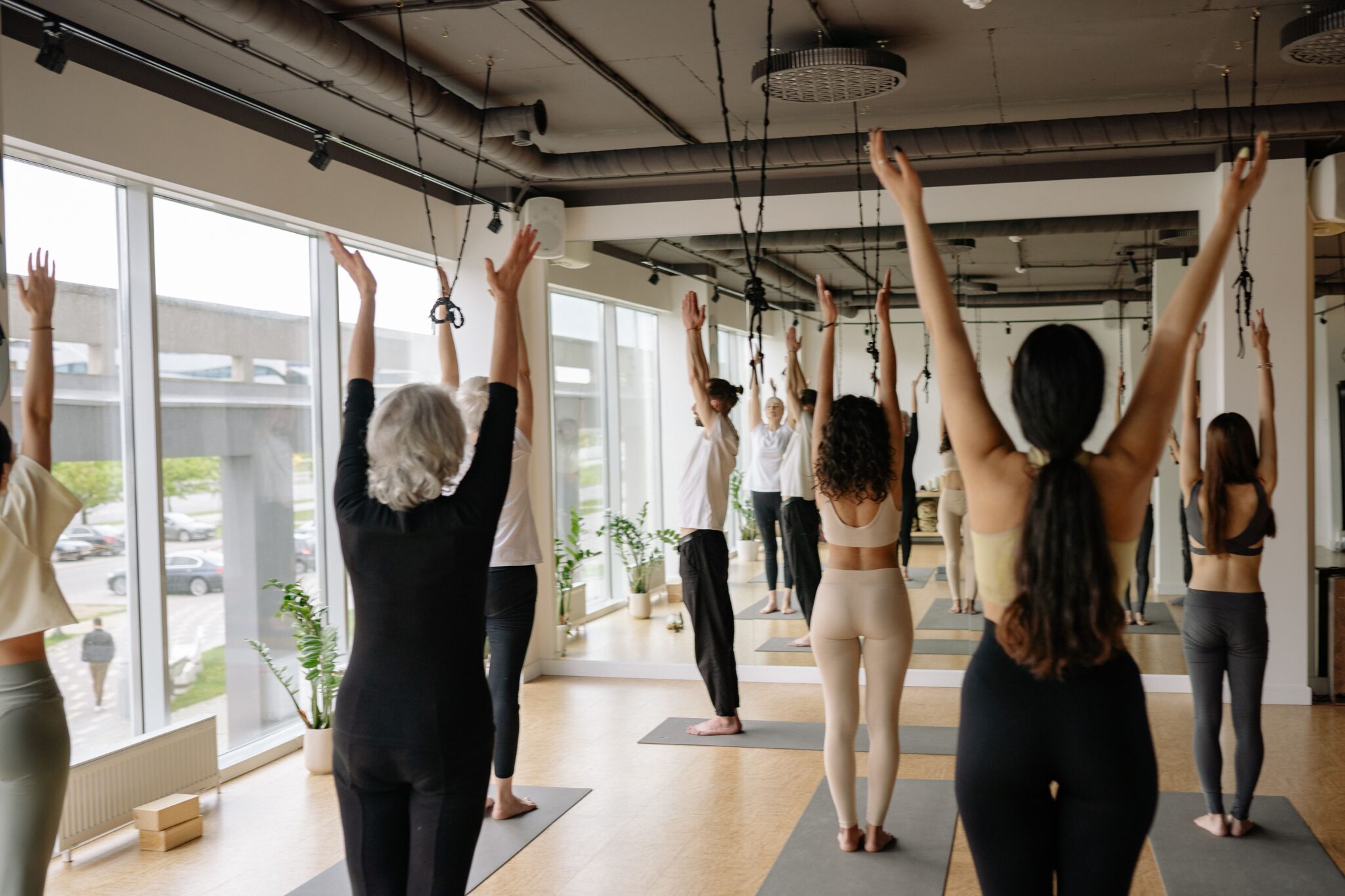
Gyrotonic classes in Palo Alto are attracting attention from people who want to move more freely, build functional strength, and feel less restricted by the stiffness that often comes with desk work, repetitive exercise, or simply spending too much time sitting.
Instead of relying on rigid, linear exercises, the Gyrotonic Method uses flowing, circular, and three-dimensional movements that encourage the spine and joints to move through a wider, more natural range.
For people curious about how this approach may relate to everyday discomfort, this overview of Gyrotonic classes palo alto offers additional context on back and neck mobility.
What makes the practice especially interesting is that it combines physical training with focused breathing and body awareness, creating a workout that can feel both challenging and restorative.
Why Mobility Has Become a Bigger Priority
For years, fitness conversations were dominated by numbers: how much weight you could lift, how fast you could run, or how many calories you could burn.
Today, more people are asking a different question: How well can my body actually move?
Consider someone who works at a laptop for eight or nine hours, drives home, and then spends another hour scrolling on the couch.
Even if that person exercises three times a week, the shoulders may gradually round forward, the hips can begin to feel tight, and rotating through the upper back may become surprisingly difficult.
Mobility training addresses these limitations by encouraging joints to move comfortably through their available range while the surrounding muscles provide control and support.
That is one reason movement systems centered on spinal articulation, coordination, and joint mobility are finding an audience among people who want fitness to improve everyday movement rather than simply make them tired.
What Makes the Gyrotonic Method Different?
The Gyrotonic Method does not look quite like conventional strength training, yoga, or Pilates, although someone watching a session may notice elements that seem familiar.
Exercises are often performed using specialized equipment with pulleys, weighted resistance, rotating discs, and adjustable components designed to support continuous movement.
Rather than pushing resistance along a single fixed path, participants may reach, spiral, arch, curl, rotate, and coordinate several parts of the body at once.
The result is movement that feels less mechanical and more three-dimensional.
Circular Movement Instead of Straight-Line Repetition
Many gym exercises happen primarily in one plane.
A leg press moves forward and backward, a biceps curl moves up and down, and a traditional crunch repeatedly flexes the torso.
Daily life is rarely that predictable.
You twist to grab a bag from the back seat, rotate while reaching into a cabinet, bend to pick up groceries, and shift your weight while walking around another person on a crowded sidewalk.
Gyrotonic exercises use circular and spiraling movement patterns that can challenge the body to coordinate multiple joints simultaneously.
This approach can be particularly appealing to dancers, recreational athletes, active older adults, and anyone who feels strong in the gym but surprisingly stiff outside it.
The Spine Takes Center Stage
One of the defining features of Gyrotonic exercise is its emphasis on spinal movement.
Instead of treating the torso as something that should always remain rigid, exercises may explore flexion, extension, rotation, side bending, and combinations of those patterns.
Imagine someone who regularly feels stiff after sitting through back-to-back meetings.
Their instinct might be to stretch the lower back for a few seconds, but the restriction could involve several areas, including the hips, thoracic spine, shoulders, and breathing mechanics.
A whole-body movement approach looks at how these areas work together rather than focusing exclusively on the place that feels tight.
Mobility Still Requires Control
Greater range of motion is not automatically useful if the body cannot control it.
This distinction separates mobility from simple flexibility.
Flexibility describes how far tissues and joints can move, while mobility generally involves actively controlling movement through that range.
Gyrotonic training combines resistance with movement, giving muscles something to work against while the joints travel through coordinated patterns.
Someone reaching into a deeper spinal rotation, for example, is not merely dropping into a passive stretch but learning to organize the torso, pelvis, shoulders, and breath throughout the motion.
Mindful Movement Without Standing Still
Mindfulness in exercise is sometimes associated with slow stretches or quiet meditation, but awareness can also be developed while moving.
During a Gyrotonic session, breathing is coordinated with specific movement patterns, encouraging participants to pay attention to timing, posture, rhythm, and muscular effort.
That concentration can reveal habits people barely notice during the day.
A person may discover that they constantly elevate one shoulder while reaching, hold their breath during difficult movements, or shift more weight onto one leg whenever they stand.
Recognizing those patterns does not instantly correct them, but awareness creates an opportunity to practice movement differently.
Why Desk Workers May Find the Approach Appealing
Palo Alto and the surrounding Silicon Valley area have a large population of professionals whose workdays involve significant screen time.
Hours spent typing, sitting in meetings, or looking down at devices can create a familiar combination of tight hips, stiff shoulders, limited upper-back rotation, and general fatigue.
Exercise cannot erase the effects of prolonged sitting by itself, but a movement practice that deliberately explores extension, rotation, reaching, and spinal articulation can provide a useful contrast to a largely stationary workday.
Picture someone finishing a long afternoon of video calls and realizing that turning their head while backing out of a parking space feels more restricted than it used to.
That small moment illustrates why mobility matters outside a fitness studio.
Strength Without Chasing Heavy Weights
Building strength does not always require progressively loading a barbell.
Resistance can also be used to improve muscular control, coordination, endurance, and stability throughout movement.
The pulley-based equipment used in the Gyrotonic Method provides adjustable resistance while allowing the body to continue moving through curved pathways.
That can create an interesting challenge because participants must control both the movement itself and the transition between positions.
Instead of finishing one repetition, stopping, and resetting, exercises can flow into the next phase.
This continuous quality asks the nervous system and muscles to coordinate rather than simply produce force.
How Gyrotonic Training Relates to Pilates
Gyrotonic and Pilates are sometimes grouped together because both can use specialized equipment and emphasize controlled movement, alignment, and body awareness.
The experience, however, can be noticeably different.
Pilates often places significant emphasis on core control, stability, and precise movement patterns, while Gyrotonic exercise tends to feature more spiraling, circular, and expansive motions.
Someone who enjoys Pilates but wants to explore more rotation and three-dimensional movement may therefore find Gyrotonic training an interesting complement rather than a replacement.
The best choice depends on individual goals, movement history, preferences, and any physical limitations to consider.
What a Beginner Can Expect
Walking into a specialized movement studio for the first time can be intimidating because the equipment does not resemble a standard treadmill or cable machine.
Beginners aren’t expected to understand it immediately.
Early sessions generally involve learning fundamental movement patterns, breathing techniques, equipment setup, and how to coordinate different parts of the body.
The first challenge may actually be coordination rather than muscular intensity.
A movement that looks effortless when demonstrated can require considerable concentration when you try to synchronize your spine, arms, pelvis, and breath.
Over time, those unfamiliar patterns can become smoother as the nervous system learns the sequence.
Progress Can Show Up in Everyday Moments
Not every sign of progress needs to be dramatic.
Someone may notice that reaching overhead feels easier, sitting upright requires less effort, or turning while driving feels smoother.
Another person might simply realize that they are less rigid after a long day at a desk.
These subtle changes can matter because mobility is ultimately useful when it improves how comfortably and confidently the body handles everyday tasks.
Who Might Consider Gyrotonic Classes Palo Alto?
The practice can appeal to a surprisingly broad range of people because resistance and movement patterns can be adjusted according to individual ability.
A recreational runner may use it to explore hip and spinal mobility, while a dancer may appreciate the rotational control and fluid transitions.
Someone focused on healthy aging might value maintaining coordinated movement and usable range of motion, while a desk worker may simply want a structured way to move beyond the positions they repeat all week.
People recovering from injuries or dealing with persistent pain should discuss exercise choices with an appropriate healthcare professional and work with a qualified instructor who understands their limitations.
No movement method should be treated as a universal solution for pain or injury.
Choosing Movement You Can Actually Maintain
The most sophisticated exercise program has limited value if you dislike it enough to stop after three weeks.
Consistency matters, and enjoyment often plays a bigger role in consistency than people admit.
Some people love the measurable progression of traditional strength training, while others prefer running, Pilates, yoga, swimming, or movement practices that demand more coordination.
Gyrotonic training occupies an interesting space for people who enjoy learning how their bodies move rather than simply completing repetitions.
It encourages strength and mobility to develop together while breathing and attention remain part of the process.
Moving Better Is a Practical Goal
Fitness does not have to revolve around lifting the heaviest weight or completing the hardest workout.
Being able to rotate comfortably, reach overhead, bend, walk, breathe deeply, and move confidently through daily life is valuable in its own right.
That helps explain why mobility-focused training is becoming increasingly relevant to people whose modern routines involve long periods of sitting and repetitive movement.
Gyrotonic classes offer one way to explore strength, spinal mobility, coordination, breathing, and body awareness within the same practice.
For people who want exercise to leave them feeling more capable in their bodies rather than simply exhausted, that combination can make mindful movement worth exploring.