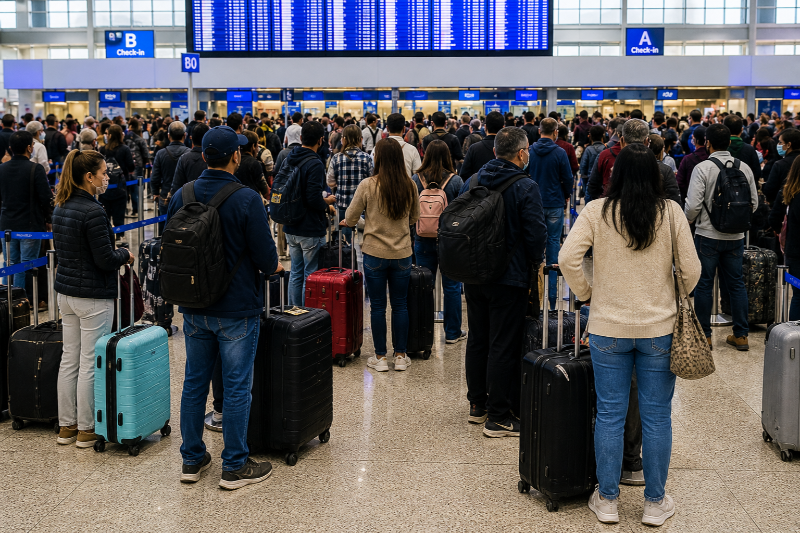
The phrase Airline Collapse Global Investors is no longer just a headline—it has become a defining signal of systemic fragility in the global economy. In 2026, a single airline failure is not an isolated corporate event; it is a multi-layered financial shock that reverberates across continents, industries, and capital markets. Aviation sits at the intersection of global mobility, trade, and economic sentiment, making it one of the most sensitive sectors to macroeconomic disruptions.
A modern airline collapse can trigger billions in losses across aircraft leasing firms, global banks, fuel suppliers, and equity markets. Investors are increasingly recognizing that airline bankruptcies expose structural weaknesses far beyond aviation itself. The industry’s reliance on debt-heavy expansion, volatile demand cycles, and unpredictable operating costs has made it a high-risk arena where shocks propagate rapidly.
Moreover, global investors are now treating airline failures as early warning indicators. These events reveal cracks in consumer demand, liquidity conditions, and geopolitical stability. As financial markets grow more interconnected, the collapse of a single airline can signal broader systemic risks, forcing investors to reassess exposure across multiple sectors.
Airline Collapse Global Investors: What Happened and Why It Matters?
The concept of Airline Collapse Global Investors gained prominence following recent airline failures that exposed how quickly liquidity crises can escalate in aviation. A typical collapse scenario begins with declining passenger yields, rising fuel costs, and tightening credit conditions. Airlines operating on thin margins struggle to absorb these shocks, leading to cascading financial stress.
Airlines are structurally vulnerable due to their high fixed costs. Aircraft leasing payments, maintenance expenses, and labor contracts remain constant regardless of demand fluctuations. When revenue declines even slightly—profitability can collapse rapidly. Consequently, a temporary disruption can evolve into a full-scale insolvency event within months.
Moreover, airlines are highly sensitive to external variables such as fuel prices, currency fluctuations, and geopolitical tensions. A spike in oil prices or disruption in key air routes can significantly increase operational costs. At the same time, weakening currencies can inflate dollar-denominated liabilities, further straining balance sheets.
From an investor perspective, airline failures serve as leading indicators of broader economic stress. When airlines collapse, it often reflects declining consumer confidence, reduced travel demand, and tightening financial conditions. Therefore, these events are not isolated they are signals of deeper systemic shifts.
Financial Fragility of the Airline Industry
The airline industry is paradoxical: it generates massive revenues yet consistently struggles with profitability. Airlines operate on razor-thin margins, often below 5%, making them highly susceptible to even minor cost increases or demand shocks. This structural fragility is a key reason why airline bankruptcies occur with regularity.
A major factor contributing to this fragility is the industry’s reliance on debt. Airlines frequently finance fleet expansion through loans and leasing agreements, creating long-term financial obligations. While this allows for rapid growth, it also increases vulnerability during downturns when cash flow declines.
Fuel costs represent another critical risk factor. Aviation fuel can account for up to 30% of operating expenses, and price volatility can significantly impact profitability. Although some airlines use hedging strategies to mitigate risk, these instruments can backfire if market conditions shift unexpectedly.
Load factor dependency further complicates the financial model. Airlines must maintain high seat occupancy rates to remain profitable. However, fluctuations in demand—due to economic downturns or external shocks can quickly reduce load factors, leading to revenue shortfalls.
Airline Financial Risk Breakdown
| Risk Factor | Impact Level | Description |
|---|---|---|
| Cost Structure | High | Fixed costs dominate, limiting flexibility |
| Debt Levels | High | Heavy borrowing increases financial pressure |
| Fuel Exposure | Very High | Volatility directly impacts profitability |
| Load Factor Sensitivity | High | Revenue depends on occupancy rates |
| Profit Margins | Low | Thin margins increase collapse risk |
| Bankruptcy Risk | Elevated | Frequent industry insolvencies |
Investor Exposure: Who Takes the Biggest Hit?
When an airline collapses, the financial damage extends far beyond shareholders. The Airline Collapse Global Investors phenomenon highlights how interconnected the aviation ecosystem has become. Multiple stakeholders face significant exposure, often simultaneously.
Airline shareholders and bondholders are typically the first to incur losses. Equity values can drop to zero, while bondholders may face restructuring or default scenarios. However, the impact does not stop there. Aircraft leasing companies, which own a significant portion of global fleets, are also heavily exposed.
Banks and financial institutions play a crucial role in financing airline operations. Loan defaults can lead to substantial write-downs, affecting balance sheets and potentially tightening credit conditions across other sectors. Airports and infrastructure operators may also experience reduced revenue due to decreased traffic.
Suppliers, including fuel companies and maintenance providers, face delayed payments or contract cancellations. This ripple effect spreads across the global supply chain, amplifying the economic impact.
Key Stakeholders Affected:
- Airline shareholders and institutional investors
- Aircraft leasing firms and asset managers
- Global banks and financial institutions
- Airports and aviation infrastructure operators
- Fuel suppliers and maintenance companies
Read also: Global Economy Nears Stagflation as Inflation Becomes Embedded
Why Airline Collapses Signal Broader Economic Risk?
Airline failures are closely correlated with economic downturns. As discretionary spending declines, travel demand often drops first, making aviation a leading indicator of economic health. Consequently, airline collapses can signal broader market stress before it becomes visible in other sectors.
Tourism and business travel are particularly sensitive to economic conditions. A decline in these segments can impact entire economies, especially those reliant on international visitors. Therefore, an airline collapse can have far-reaching consequences beyond the aviation sector.
Consumer demand plays a central role in this dynamic. Airlines rely heavily on passenger volumes, which are directly influenced by income levels and economic confidence. When demand weakens, it reflects underlying economic challenges that may soon affect other industries.
Global interconnectedness further amplifies these effects. Aviation is integral to trade and logistics, meaning disruptions can impact supply chains and global commerce. As a result, airline collapses often serve as a “canary in the coal mine” for financial markets.
Airline Collapse Impact on Global Markets
| Sector | Impact Type | Outcome |
|---|---|---|
| Investors | Financial Loss | Equity and bond declines |
| Banks | Credit Risk | Loan defaults and tightening |
| Leasing Firms | Asset Risk | Aircraft repossession challenges |
| Tourism Industry | Demand Shock | Reduced travel revenue |
| Supply Chain | Disruption | Logistics delays |
| Stock Market | Volatility | Sector-wide sell-offs |
Airline Industry Risk Factors in 2026
In 2026, multiple risk factors are converging simultaneously, increasing the likelihood of airline failures. Rising fuel prices, driven by geopolitical tensions, continue to pressure operating costs. At the same time, interest rate hikes are increasing the cost of servicing debt, further straining financial stability.
Post-pandemic demand volatility remains a significant challenge. While travel demand has recovered in some regions, it remains uneven globally. This inconsistency makes revenue forecasting difficult and increases operational risk.
Competition from low-cost carriers adds another layer of complexity. These airlines often operate with aggressive pricing strategies, putting pressure on traditional carriers. As margins shrink, financial resilience becomes increasingly important.
Regulatory and environmental pressures are also shaping the industry. Airlines are facing stricter emissions requirements and sustainability targets, which may require significant investment. These additional costs can further weaken already fragile balance sheets.
Read also: Forefront Tech Completes $100M Nasdaq IPO Amid Strong Tech IPO Momentum
Airline Collapse Global Investors: Strategic Lessons for Investors
The Airline Collapse Global Investors narrative provides valuable insights for investors seeking to navigate volatile markets. One key lesson is the importance of diversification. Concentrated exposure to high-risk sectors like aviation can lead to significant losses during downturns.
Investors must also focus on balance sheet analysis. Airlines with high debt levels and weak liquidity are more vulnerable to collapse. Evaluating financial resilience is critical in identifying sustainable investment opportunities.
Monitoring macroeconomic indicators is equally important. Factors such as fuel prices, interest rates, and consumer demand can provide early warning signals of potential industry stress. By tracking these variables, investors can make more informed decisions.
Evaluating business models is another crucial aspect. Legacy carriers, low-cost airlines, and hybrid models each have unique risk profiles. Understanding these differences can help investors assess long-term viability.
Market Reaction & Capital Flight Trends
Financial markets tend to react swiftly to airline bankruptcies. Stock prices often decline sharply, not only for the affected airline but across the entire aviation sector. This contagion effect can extend to related industries, including tourism and hospitality.
Capital flight is a common response during aviation crises. Investors may shift funds դեպի safer assets such as government bonds or commodities. This movement reflects a broader risk-off sentiment in the market.
Institutional investors play a significant role in shaping these trends. Large-scale portfolio adjustments can amplify market volatility, particularly in emerging markets where liquidity may be limited. Consequently, airline collapses can trigger widespread financial instability.
Developed markets may absorb shocks more effectively due to stronger financial systems. However, the interconnected nature of global markets means that no region is entirely immune. Therefore, airline failures can have global implications.
Limitations & Trade-Offs
While airline collapses are significant, they do not always indicate systemic crises. Some failures are the result of company-specific issues rather than broader economic conditions. Therefore, it is important to analyze each case individually.
Government interventions can also distort market signals. Bailouts and financial support may prevent collapses, masking underlying weaknesses. This can create a false sense of stability in the industry.
On the other hand, strong airlines may benefit from reduced competition following a collapse. Market consolidation can lead to increased pricing power and improved profitability for surviving carriers.
Short-term impacts may differ from long-term outcomes. While initial market reactions can be severe, recovery may occur as the industry adjusts. Investors must consider both perspectives when evaluating risks.
2026 Aviation & Investment Trends
The aviation industry is undergoing significant transformation in 2026. Consolidation is becoming more common as weaker players exit the market. This trend is reshaping competitive dynamics and influencing investment strategies.
There is also a growing focus on financial resilience. Airlines are prioritizing liquidity management and cost control to withstand future shocks. This shift reflects lessons learned from past crises.
Asset-light models are gaining traction, with airlines relying more on leasing rather than ownership. While this reduces capital expenditure, it also introduces new risks related to leasing obligations.
Data analytics is playing an increasingly important role in risk prediction. Advanced models are helping investors and airlines identify potential vulnerabilities before they escalate.
Ultimately, Airline Collapse Global Investors represents the intersection of high-risk industry dynamics and global financial interdependence. Investors are moving away from growth-focused strategies toward risk-adjusted approaches, emphasizing stability and resilience.
FAQs
What is Airline Collapse Global Investors?
It refers to the impact of airline failures on global investors, highlighting financial risks and market implications.
Why do airlines collapse financially?
High debt, volatile costs, and fluctuating demand make airlines financially vulnerable.
How do airline bankruptcies affect investors?
Investors may face losses in equity, bonds, and related assets across the aviation ecosystem.
Which stakeholders lose the most in airline failures?
Shareholders, leasing firms, banks, and suppliers are among the most affected.
Are airline stocks risky investments?
Yes, due to low margins, high costs, and sensitivity to external factors.
How does fuel price impact airline profitability?
Fuel is a major cost, and price increases can significantly reduce margins.
What happens to leased aircraft after collapse?
Leasing companies may repossess and redeploy aircraft to other airlines.
Do airline collapses affect global markets?
Yes, they can trigger broader economic and financial market reactions.
How can investors protect themselves from aviation risks?
Diversification and careful financial analysis are key strategies.
Is the airline industry stable in 2026?
The industry remains volatile due to multiple converging risk factors.