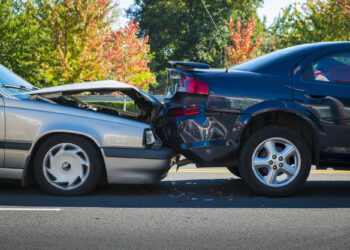
Your percentage of fault can directly affect how much accident compensation you receive. If you are partly responsible for an accident, your compensation may be reduced based on your share of the blame. The exact effect depends on the state where the accident happened and the rules that apply to your case.
After an accident, it is important to understand how fault can affect your claim before accepting an insurance offer. Understanding comparative negligence can help you see why even a partial share of responsibility may change the amount you can recover.
What Is Comparative Negligence?
Comparative negligence is a legal rule used to determine how responsibility is divided when more than one person contributed to an accident.
For example, imagine that your total accident-related damages are $100,000. If you are found to be 20% at fault, your potential compensation could be reduced by 20%, leaving $80,000 under a pure comparative negligence system.
The rules are different from one state to another. Some states follow pure comparative negligence, while others limit or completely prevent recovery once a person’s share of fault reaches a certain percentage.
How Is Your Percentage of Fault Determined?
Fault is usually based on evidence showing what happened before and during the accident.
Evidence may include:
- Police reports
- Photographs and videos
- Statements from witnesses
- Traffic camera footage
- Vehicle damage
- Medical records
- Driver statements
- Accident reconstruction reports
- Cellphone or electronic records when relevant
Insurance companies may review this information when deciding how much responsibility to assign to each person.
If the case goes to court, a judge or jury may also consider the evidence when determining fault.
Even a Small Percentage Can Matter
It is easy to think that being 10% or 20% responsible will not make much difference. However, the financial impact can be significant when the damages are large.
Suppose your damages total $250,000 and you are found 10% responsible. A 10% reduction would amount to $25,000, leaving $225,000 before considering other factors that may affect the final recovery.
That is why the percentage of fault can become an important part of an accident claim.
Insurance Companies May Try to Increase Your Share of Fault
Insurance companies have a financial reason to limit the amount they pay.
An insurer may argue that your actions contributed to the accident. It might claim that you were speeding, following too closely, distracted, or failed to take reasonable steps to avoid the collision.
That does not mean the insurer’s assessment is automatically correct.
You can challenge an allegation of fault by providing evidence that supports your account of the accident. In some cases, the evidence may show that another driver or party was primarily responsible.
Your Own Actions Can Be Examined
Your behavior before an accident can become part of the claim.
For example, if you were driving above the speed limit but another driver suddenly ran a red light, both actions could potentially be considered when determining responsibility.
However, making one mistake does not necessarily mean you caused the entire accident.
The circumstances matter. Investigators and courts may consider what each person did, whether those actions contributed to the collision, and how significant each person’s contribution was.
Multiple People Can Share Fault
Some accidents involve more than two parties.
A chain-reaction crash, for example, could involve several drivers. A defective vehicle part, poor road conditions, or negligent maintenance could also raise questions about whether another party contributed to the accident.
When several parties are involved, responsibility may be divided among them according to the evidence and applicable state law.
This can make the claim more complicated than a straightforward two-car accident.
Comparative Negligence Can Affect Settlement Negotiations
Fault matters even when a case never reaches trial.
An insurance company may use your alleged percentage of fault when calculating a settlement offer. If the insurer claims you were 30% responsible, for example, it may reduce the value of your claim accordingly.
Your attorney can challenge that position if the evidence supports a different allocation of fault.
The strength of your evidence can therefore have a direct impact on settlement negotiations.
State Law Makes a Difference
The law governing your accident is important because states do not all use the same comparative negligence rules.
For example, California follows a pure comparative negligence approach. California Civil Code § 1431.2 also contains rules concerning the allocation of certain damages among defendants in personal injury and property damage cases.
Other states use modified comparative negligence rules, which may prevent an injured person from recovering damages after reaching a particular percentage of fault.
Because these rules vary, the location of the accident can significantly affect your claim.
Key Takeaways
- Your percentage of fault can reduce the compensation you may receive.
- Comparative negligence determines how responsibility is divided in many accident cases.
- Even a small percentage of fault can have a significant financial effect.
- Insurance companies may try to assign part of the blame to you.
- Evidence is important when determining who caused an accident.
- More than one driver or party can share responsibility.
- Comparative negligence rules vary by state.
- Fault can affect settlement negotiations even when a case does not go to trial.
- Preserve photographs, medical records, witness information, and other evidence.
- Avoid accepting blame before you have a clear understanding of what caused the accident.