Udated posts 2026
Enjoyed the Last Twelve Years? You’re Going to Hate the Next SiX: Global equities, bonds, cryptocurrencies, NFTs, and other asset classes have existed in a fake and unnatural market environment for so many years that investors have become lulled into believing the environment is actually normal.
Global markets have been engineered by the invisible hand of global central banks in the form of an unprecedented $25 Trillion of liquidity infusion into markets over the past dozen years. $9 Trillion of this infusion coming since the start of COVID just two years ago. To emphasize, this is unprecedented in the history of markets. These actions cannot be undertaken without collateral effect. Given the fact that central bankers cannot predict the impact of their actions, I refer to this as the “grand experiment”. Central bankers waded into this unchartered territory for reasons no less noble than to rescue the global financial system stemming from the events of 2008. Central banks have managed not only to keep the patient alive, they’ve kept him dancing. Even during a bad bout of COVID, the central banks came to the rescue to keep the party going. We are now at the early stage of paying the piper.
The Evidence of Excess
Anyone interested in paying a government to hold your money? Well, at a point, $18 Trillion of sovereign debt was trading at negative nominal yields. This means you pay for the privilege of lending your money out. Don’t worry, in Germany it only cost you 71 bps at one point to give them your money. German 10-year Bunds traded as low as -0.71%. Fortunately, if an investor wasn’t satisfied paying 71 bps, there was the option of earning 0.11% on US 2-year notes. If one didn’t want to mess with bonds these past years (because bonds are really boring, aren’t they), an investor could buy Health Equity, The Greenbrier Companies, Chewy or Tesla with P/E ratios of 6,759, 4,565, 3,273 and 1,401 respectively. Tesla looks really cheap when compared to the others! For investors who are into companies that don’t have any revenues at all, there was a rare chance to buy Nikola at a $24 Billion valuation nearly the same as 118-year old Ford Motor Company. Of course, there were many other choices to deploy the massive amount of liquidity if one simply needed to “get rid of it”. One of my personal favorites would have been to acquire the NFT done by the artist Beeple for $69 Million.
These examples are all different stripes of the same Zebra. The Zebra being the ocean of liquidity in the system. Pick your favorite stripe as each is a similarly bad deal. These examples are not the product of a freely traded market. They are the product of a market that has been heavily influenced by an 800 pound gorilla that has wildly distorted free market pricing.
Collateral Effects
The grand experiment was bound to have unintended consequences and collateral effects, and it has. The initial collateral effect of the massive liquidity injections was material asset price inflation with some examples cited above. One may argue that this was actually an intended consequence and not an unintended consequence. A second collateral effect of this grand experiment has recently awoken after 40 years of dormancy. Of course, I am referring to consumer price inflation. If you live on this planet, you can feel the impact of consumer price inflation. Prices are up for labor, food, energy, used cars, and nearly everything else. Within the US, the Bureau of Labor Statistics is indicating that consumer price inflation is running at just under 8% per annum which is a level not seen since the 1970s and very early 1980s. Consumer price inflation is unloved by all. It is certainly an unintended consequence and a collateral effect that must be dealt with before it continues to spiral out of control.
It is worth noting that others read the same decade differently. A competing account holds that inflation arrived mainly through supply shocks, with shuttered factories, congested ports, and an energy market upended by war, rather than through the money supply, and points out that Japan ran aggressive easing for two decades without producing the price pressures this thesis predicts. Nor does everyone agree that removing liquidity must take years rather than quarters. These are the standard objections, and the argument below proceeds despite them.
What Will Central Banks Due Now?
In response to consumer price inflation, central bankers must reverse the root cause of the inflation which is too much liquidity in the system. Central bankers will cease their bond buying activity (otherwise known as Quantitative Easing), possibly engage in Quantitative Tightening whereby they sell bonds to the market, and, certainly raise interest rates materially. Currently, the US has market interest rates that are yielding roughly -6% in real terms. There is no question yields will rise, and materially so. In short, central banks must make a 180 degree turn in an effort to stem the swell of inflation and inflationary expectations. They must move from a posture of adding liquidity to extracting liquidity from the markets. This effort will surely have a major impact upon asset prices.
What Do We Think Will Happen?
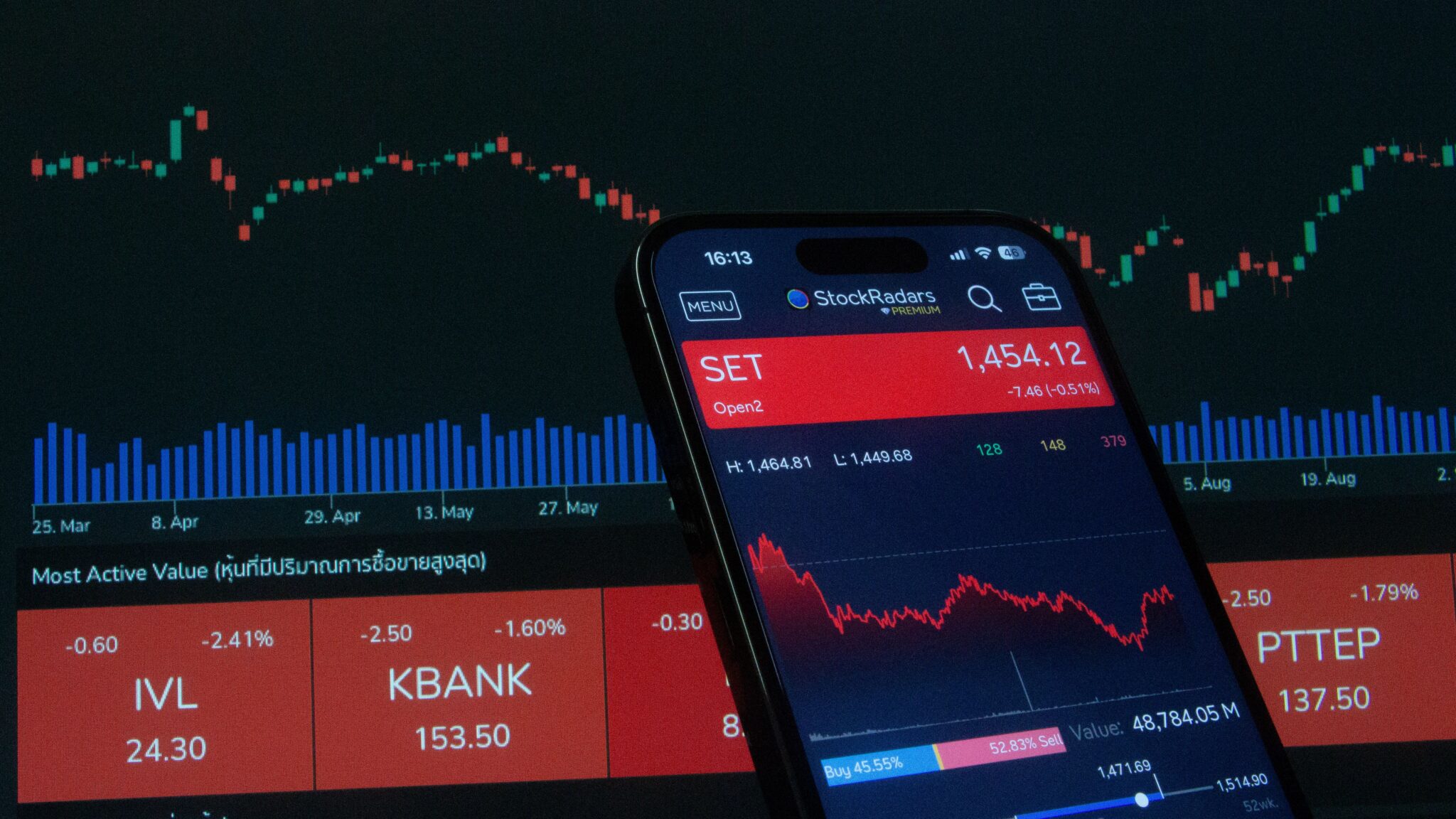
We believe that asset prices have just begun a multi-year process of re-rating downward due to this global central bank regime change toward a more restrictive liquidity environment. There will be an inevitable, sustained, and material negative impact upon security prices for the foreseeable horizon as this abrupt monetary policy adjustment commences and starts to take hold. Bonds, stocks, and other asset prices that have enjoyed a massive runup as a result of the liquidity injections will now decline substantially as liquidity is drained from the market. Although ultimately we will see a mirror image of what we’ve experienced over the past dozen years or so, we believe the move down will be faster than the move up. There is an adage that states, the market takes the stairs up and the elevator down. The price action of markets thus far in early 2022, supports this view with both bonds and stocks falling. Bonds have had their worst quarterly performance in decades. We are simply at the beginning of this inevitably painful adjustment. Investors should prepare for years and not weeks or months of market declines as the world rebalances to a more normalized liquidity posture stemming insidious inflationary pressures.
What Are We Doing About It?
Eagle’s View has created a unique and much-needed solution that is expected to hedge bond and stock market beta exposure by providing material returns during market downturns while seeking to avoid substantial losses during more robust market environments. The Firm will seek to take advantage of our belief that asset prices will begin a multi-year process of re-rating downward due to a regime change by global central banks toward a more restrictive liquidity environment. The solution is not a tail hedge strategy that bleeds theta decay daily, and, it is not an outright short selling strategy of individual equities. Interested parties should feel free to reach out to discuss further.
Neal Berger
Founder/CIO
Eagle’s View Capital Management, LLC
Neal Berger is the Founder/CIO of Eagle’s View Capital Management, LLC and award-winning alternative investment manager.