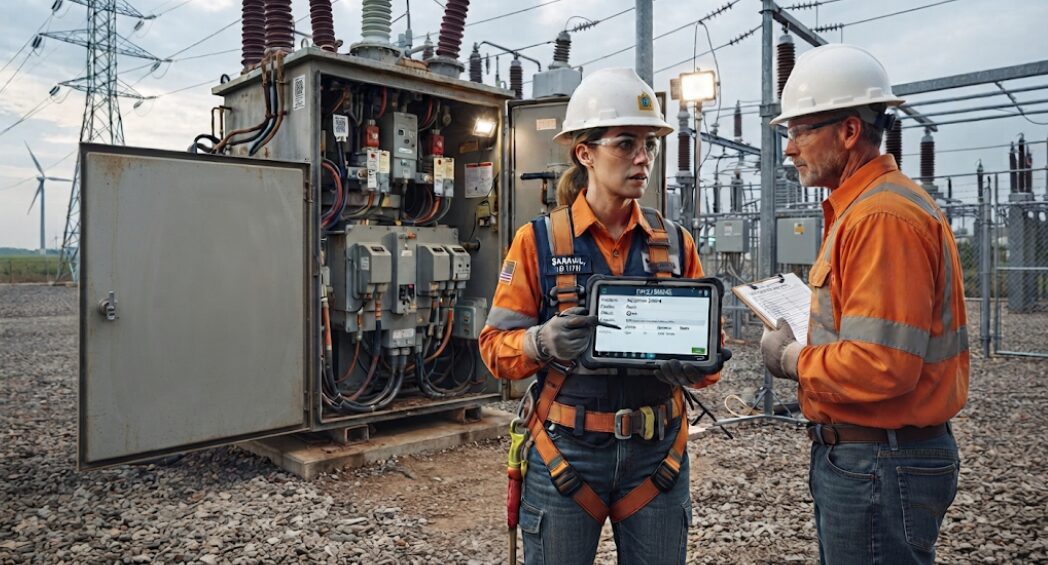
In energy and utility operations, incidents are never just isolated events. A tripped breaker, a gas odor complaint, a contractor injury, or a near miss at a substation can carry regulatory, financial, and reputational consequences that unfold over months. When regulators, insurers, or internal auditors ask what happened, the organization needs more than a brief summary. It needs a complete, verifiable story: who reported the event, what was found, who reviewed the findings, which corrective actions were assigned, and whether those actions were actually completed.
For many companies, that story is scattered across emails, shared drives, spreadsheets, and paper forms. Reports are revised without a record of what changed. Corrective actions are assigned in meetings and forgotten. Information sent from operations to safety or compliance arrives incomplete or late.
Traceable incident reporting solves these problems by treating every incident as a structured, accountable record from the first report to final closure.
Why Traceability Matters
Utilities operate under close scrutiny from agencies such as OSHA, NERC, PHMSA, and state public utility commissions. Each expects timely reporting and clear evidence of follow through. Common gaps that undermine traceability include:
- Inconsistent intake, where incidents are reported through different channels and formats
- Untracked revisions, as investigation reports change without a visible history
- Lost actions, when corrective measures have no owner or deadline
- Departmental silos, with operations, engineering, safety, and legal each holding part of the picture
- Weak evidence, such as missing photos, readings, or witness statements
When these gaps exist, organizations struggle to prove compliance and, more importantly, struggle to learn from what went wrong.
Designing the Core Workflow
A practical incident process moves through a predictable sequence: logging, initial assessment, investigation, document review, corrective action, verification, and closure. Defining each stage clearly, along with who owns it and what information it requires, is the foundation of reliable incident reporting workflows that hold up under regulatory review.
Organizations modernizing this process often consult partners experienced in energy and utilities software, and seasoned builders usually begin with accountability rather than screens. As a solution architect at SoftDoes said, “An incident system earns trust when anyone can open a record a year later and understand exactly what happened, who decided what, and why.”
Incident Logging
Reporting must be easy, or people will avoid it. Field crews should be able to log incidents from a mobile device with photos, location, time, and a short description. Structured categories, such as injury, equipment failure, environmental release, or near miss, enable consistent analysis later. Severity ratings should trigger the right notifications automatically.
Document Review
Investigation reports, witness statements, photos, and technical analyses should be attached to the incident record rather than stored separately. Effective utility documentation management means reviewers see every relevant file in one place, along with its current status and approval history.
Corrective Action Tracking
Every corrective action needs a clear description, an owner, a due date, and a method for verifying completion. Actions should remain open until evidence confirms they were done, not simply when someone marks them complete. Overdue items should escalate automatically to supervisors.
Roles, Change Logs, and Version Control
Roles of Participants
Clear roles prevent confusion and protect sensitive information:
- Reporters, often field employees or contractors, who submit initial details
- Supervisors, who validate reports and assign investigators
- Investigators, who gather evidence and determine root causes
- Safety and compliance specialists, who review findings and manage regulatory reporting
- Action owners, responsible for implementing corrective measures
- Executives, who need visibility into trends and high severity events
Role based permissions ensure each participant can see and edit only what their responsibilities require.
The Change Log
Strong operational audit trails record every meaningful event: when an incident was created, who changed its severity, when documents were added, and who approved each stage. These logs should be read only and timestamped, so they serve as reliable evidence during audits or legal review.
Version Control
Investigation reports often go through several drafts. Version control preserves each iteration, shows what changed between versions, and identifies who made each change. Reviewers can compare drafts, and auditors can confirm that final conclusions were reached through a documented process. Analysis of how small failures can cascade across complex utility systems on Forbes shows why preserving the full reasoning behind each conclusion matters so much.
Transferring Information Between Departments
Incidents rarely belong to a single team. A transformer failure may involve operations, engineering, asset management, customer service, and regulatory affairs. The system should support structured handoffs, where each department receives exactly the information it needs, with context preserved. Automated notifications, shared dashboards, and links to related records such as work orders or asset histories help departments act without chasing information.
Collecting Requirements With Specialists
Incident reporting touches safety science, engineering, law, and regulation, so requirements must come from people who understand each area. Effective requirement gathering includes:
- Workshops with safety leaders, field supervisors, and compliance officers
- Review of current forms, regulatory templates, and recent incident files
- Mapping of mandatory reporting deadlines for each regulator
- Identification of fields required for root cause analysis and trend reporting
Walking through several real past incidents often reveals gaps that abstract discussions miss.
Assessing Readiness for Automation
Not every part of the process is ready to automate. Before development begins, assess:
- Process maturity, meaning whether steps are consistent across regions and teams
- Data quality, including whether categories and severity levels are clearly defined
- Ownership, confirming that every stage has an accountable role
- Volume and complexity, identifying where manual effort is greatest
A sensible first release often covers logging, assignment, document attachment, and corrective action tracking for one business unit, with regulatory submissions and advanced analytics added later.
How to Choose the Right Development Partner
Assess Past Case Studies and Experience
Look for vendors who have built safety, compliance, or operational systems for energy, utilities, or other regulated industries. Ask how they handled audit requirements, mobile reporting, and integration with asset or work management systems. Practical advice on vetting outsourced software partners reinforces how much prior experience with similar projects matters.
Evaluate Tech Stack Alignment
Your platform must connect with work management, asset management, document storage, and identity systems. Confirm the vendor’s experience with these tools and ask how their architecture supports secure, scalable record keeping.
Establish Communication Protocols
Agree on sprint cadence, reporting format, and decision makers early. Include safety specialists and field supervisors in demos so the system reflects how incidents are actually reported and investigated.
Ensure Cost and Process Transparency
Request phased estimates with clear assumptions and a documented process for pricing changes. Transparency helps leadership align the project with budget cycles and regulatory deadlines.
Plan for Maintenance After Launch
Regulations evolve, categories change, and new sites come online. Define support response times, security updates, monitoring responsibilities, and a roadmap for improvements based on investigator and user feedback.
Turning Incidents Into Institutional Learning
Traceable incident reporting does more than satisfy regulators. It helps energy and utility companies understand why problems occur and confirm that fixes actually work. With clear roles, reliable change logs, disciplined version control, smooth handoffs between departments, and the right technical partner, every incident becomes a documented opportunity to operate more safely and reliably.