The Best Private Airplanes has become a critical reference point for executives, multinational corporations, and ultra-high-net-worth travelers navigating global mobility in 2026. Private aviation is no longer defined purely by luxury; instead, it is driven by efficiency, reach, and the ability to operate seamlessly across continents without delays. Aircraft selection today reflects strategic decision-making rather than lifestyle preference alone.
Modern business jets are engineered around performance metrics such as range, speed, and cabin productivity. With typical cruise speeds between Mach 0.85 and Mach 0.92, these aircraft significantly compress travel time while offering fully functional work environments at 40,000 feet. As a result, executives can conduct meetings, rest, and prepare for negotiations mid-flight without sacrificing productivity.
Moreover, private jets enable nonstop global travel, eliminating the inefficiencies of commercial aviation. From New York to Hong Kong or London to Singapore, ultra-long-range aircraft redefine what is possible in a single flight. Consequently, the Best Private Airplanes is ultimately about strategic mobility, enabling faster decisions, broader reach, and sustained competitive advantage.
What Defines the Best Private Airplanes?
Range remains the single most critical factor when evaluating the best private airplanes in 2026. Aircraft capable of flying 7,000 nautical miles or more eliminate the need for refueling stops, reducing total travel time and minimizing operational disruptions. Consequently, long-range capability directly impacts executive efficiency and mission success in global business environments.
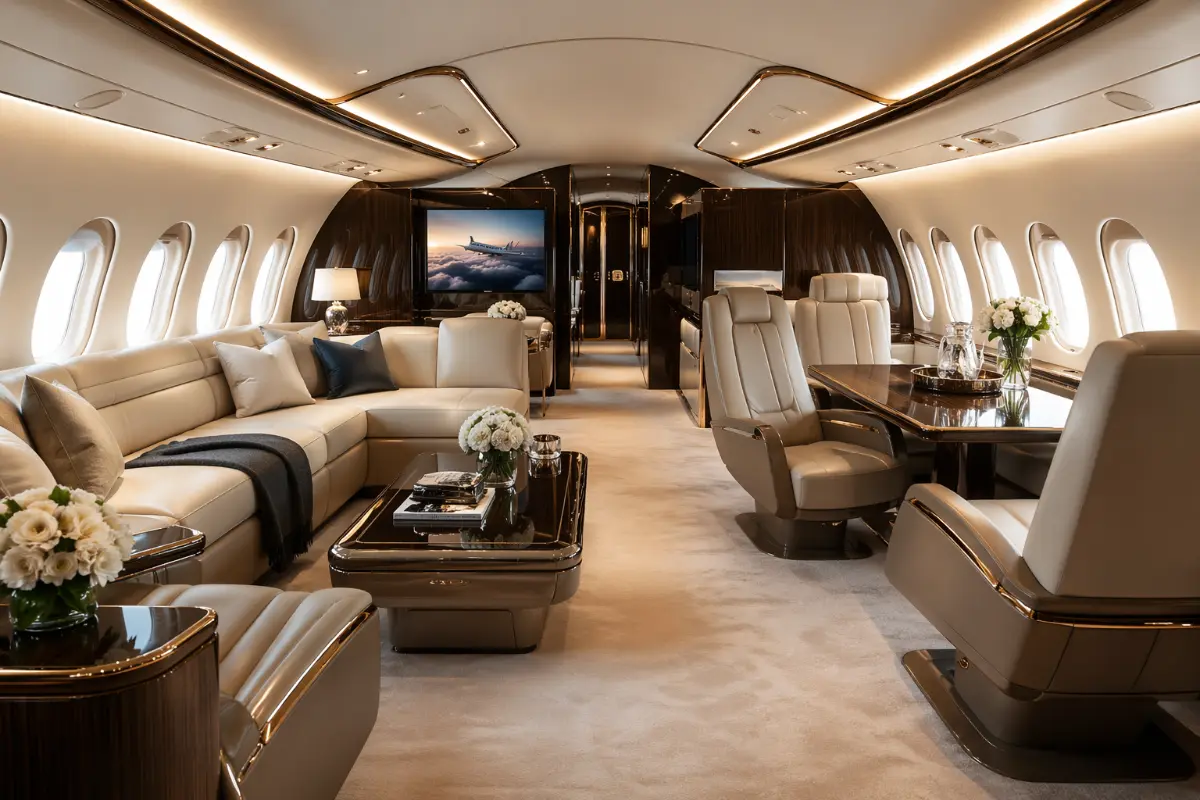
Cabin configuration is equally important, particularly for long-haul flights. The best aircraft feature multiple cabin zones, including conference areas, private suites, and rest spaces. These configurations allow passengers to transition seamlessly between work, meetings, and relaxation, effectively transforming the aircraft into a mobile headquarters.
Speed and efficiency also play a defining role. Jets cruising at high subsonic speeds optimize both time savings and fuel consumption. Moreover, passenger capacity and flexibility determine how well an aircraft can adapt to different mission profiles, from small executive teams to larger corporate groups.
Key defining factors include:
- Range (nautical miles) for nonstop capability
- Cabin zones for work and rest
- Cruise speed (Mach 0.85–0.92)
- Passenger capacity and mission adaptability
Ultimately, aircraft are selected based on mission requirements rather than luxury alone. A CEO flying intercontinental routes requires a vastly different jet than a regional executive, making performance alignment the primary decision driver.
Private Jet Categories & Ranges
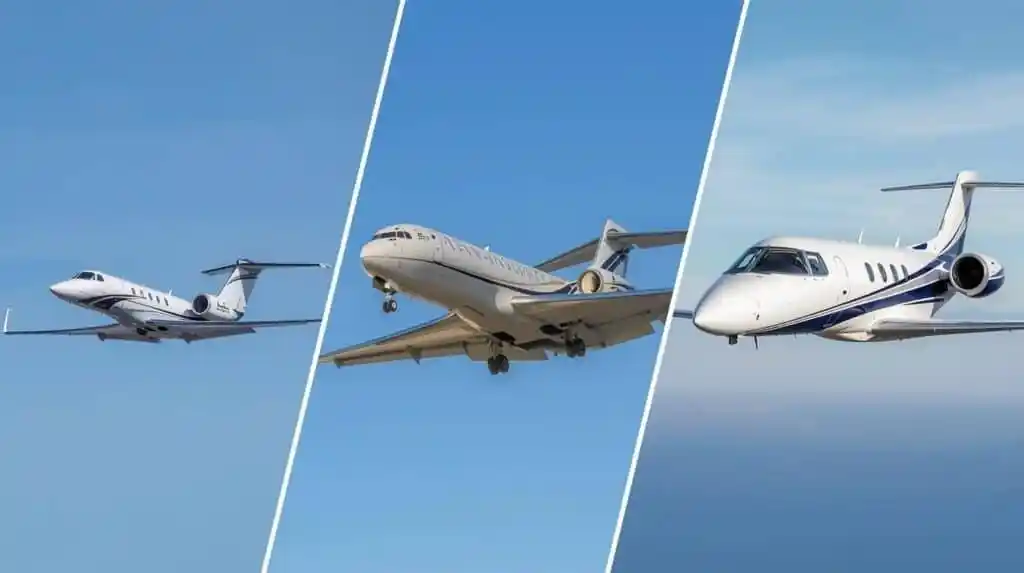
Private jets are categorized based on range, size, and mission capability. Light jets typically offer ranges between 1,500 and 2,000 nautical miles, making them ideal for short regional travel. These aircraft are cost-effective and efficient for quick business trips but lack the endurance for long-haul missions.
Midsize jets extend range capabilities to approximately 2,500–3,500 nautical miles. They provide more cabin space and improved comfort while maintaining operational efficiency. These jets are commonly used for cross-country travel and medium-distance international routes.
Super-midsize jets push the range further to around 3,500–4,000 nautical miles. They balance performance and cost, offering transcontinental capability along with enhanced cabin configurations. These aircraft are often preferred by corporations needing flexibility without stepping into ultra-long-range pricing.
Ultra-long-range jets dominate the top tier, with ranges exceeding 7,000 nautical miles. These aircraft enable nonstop intercontinental travel and feature advanced cabins designed for extended missions. They represent the pinnacle of private aviation performance.
Private Jet Categories & Range Comparison (2026)
| Category | Range (nm) | Passenger Capacity | Speed | Best Use Case |
|---|---|---|---|---|
| Light Jets | 1,500–2,000 | 4–8 | Mach 0.70–0.75 | Regional business travel |
| Midsize Jets | 2,500–3,500 | 6–9 | Mach 0.75–0.80 | Cross-country routes |
| Super-Midsize Jets | 3,500–4,000 | 8–12 | Mach 0.80–0.85 | Transcontinental missions |
| Ultra-Long-Range | 7,000–8,000+ | 10–19 | Mach 0.85–0.92 | Intercontinental nonstop travel |
Top Business Jets (2026)
The current market leaders define the benchmark for performance, comfort, and innovation. The Gulfstream G700 offers a range of approximately 7,500 nautical miles, combining speed with one of the largest cabins in its class. It is designed for long-haul missions where productivity and comfort are equally critical.
The Bombardier Global 7500 remains a dominant force with a range of around 7,700 nautical miles. It is widely regarded for its smooth ride and advanced cabin design, making it a preferred choice for executives requiring consistent long-distance travel. Its successor, the Global 8000, extends the range to approximately 8,000 nautical miles, setting a new standard for ultra-long-range capability.
Dassault’s Falcon 10X introduces a wide-body cabin concept with a range of about 7,500 nautical miles. It emphasizes efficiency and advanced aerodynamics while offering a spacious and highly customizable interior. Meanwhile, the Cessna Citation Longitude targets the super-midsize segment, offering strong performance for shorter routes with lower operating costs.
Top aircraft highlights:
- Gulfstream G700: ~7,500 nm range
- Bombardier Global 7500: ~7,700 nm
- Bombardier Global 8000: ~8,000 nm
- Dassault Falcon 10X: ~7,500 nm
- Cessna Citation Longitude: ~3,500 nm
These jets dominate corporate aviation by aligning performance with real-world business needs.
Ultra-Long-Range Jets: Global Connectivity
Ultra-long-range jets redefine global connectivity by enabling nonstop intercontinental routes. Flights such as New York to Hong Kong or London to Singapore are now routine, eliminating the inefficiencies associated with fuel stops and layovers. This capability directly enhances time management and operational continuity.
These aircraft feature multiple cabin zones, including executive suites, conference areas, and private bedrooms. As a result, passengers can maintain productivity throughout the flight while also ensuring adequate rest. The integration of advanced connectivity systems allows real-time communication and decision-making.
Moreover, these jets are preferred by CEOs and multinational corporations due to their ability to support high-stakes travel. Time-sensitive meetings, global negotiations, and rapid deployment across markets all benefit from the capabilities of ultra-long-range aircraft.
Read also: Top Private Jets for Corporate Executives
Largest & Longest-Range Private Aircraft
At the top of the market, business airliners such as the Boeing Business Jet 777X and Boeing Business Jet 787 redefine luxury and capability. The BBJ 777X offers an estimated range exceeding 11,500 nautical miles, making it the longest-range private aircraft available.
The BBJ 787 follows with a range of approximately 9,900 nautical miles. These aircraft function as flying mansions or corporate headquarters, offering unmatched space and customization. Interiors often include boardrooms, private suites, lounges, and even wellness areas.
Key characteristics:
- Extreme range exceeding standard business jets
- Massive cabin space for full customization
- Ability to operate as airborne corporate HQs
These aircraft cater to heads of state, billionaires, and global enterprises requiring maximum capability.
Cabin Experience: The Flying Office
Modern private jets are designed as fully functional flying offices. Conference rooms with advanced communication systems allow in-flight meetings, while executive seating ensures comfort during long sessions. This environment supports continuous productivity, even on ultra-long-haul flights.
Private bedrooms and showers provide a level of comfort comparable to luxury hotels. These features are essential for maintaining performance after long flights, particularly when traveling across multiple time zones. Consequently, passengers arrive refreshed and ready for critical engagements.
Low cabin altitude is another key advantage. By reducing fatigue and improving oxygen levels, it enhances overall well-being during extended flights. Combined with quiet cabins and advanced climate control, these features create an optimal environment for both work and rest.
Ultra-Long-Range vs Midsize Jets Comparison
| Feature | Ultra-Long-Range Jets | Midsize Jets |
|---|---|---|
| Range | 7,000–8,000+ nm | 2,500–3,500 nm |
| Cost | $70M–$80M+ | $15M–$30M |
| Comfort | Multi-zone luxury cabins | Moderate cabin space |
| Productivity | Full office functionality | Limited workspace |
| Ideal Use Case | Global nonstop travel | Regional/cross-country |
Why Range Matters More Than Ever?
Range has become the defining metric in private aviation because it directly impacts efficiency. Nonstop capability eliminates delays associated with refueling and reduces total travel time. This advantage is particularly important for executives operating on tight schedules.
Moreover, extended range expands global reach. Companies can access emerging markets, attend international meetings, and respond to opportunities without logistical constraints. This flexibility enhances competitiveness in a fast-paced global economy.
Consequently, range influences return on investment. Faster travel and reduced downtime lead to better decision-making and improved operational outcomes. In this context, aircraft selection becomes a strategic investment rather than a luxury purchase.
Costs & Investment Insights
The cost of private jets varies significantly based on size and capability. Ultra-long-range jets typically range between $70 million and $80 million or more. These aircraft represent the highest level of performance and comfort in the business aviation sector.
Business airliners such as BBJs can exceed $200 million to $400 million, depending on customization. These aircraft are designed for clients requiring maximum space and range, often serving as airborne residences or corporate headquarters.
Operating costs also vary by mission. Factors such as fuel consumption, crew salaries, maintenance, and airport fees all contribute to overall expenses. Generally, higher range and larger aircraft correlate with increased operating costs.
Limitations & Considerations
Despite their advantages, private jets come with certain limitations. High acquisition and operating costs remain the most significant barrier, restricting access to corporations and ultra-wealthy individuals.
Airport and runway limitations can also impact operations. Larger aircraft require longer runways and specialized infrastructure, limiting accessibility in some regions. This factor must be considered when planning missions.
Additional considerations include:
- Crew requirements and training
- Maintenance and regulatory compliance
- Environmental impact and emissions
These factors highlight the importance of aligning aircraft choice with operational needs.
2026 Trends in Private Aviation
The private aviation industry continues to evolve, with several key trends shaping the market. Demand for ultra-long-range jets is increasing as global business becomes more interconnected. Companies are prioritizing aircraft that enable seamless international travel.
Fuel efficiency is another major focus. Manufacturers are investing in advanced aerodynamics and engine technology to reduce environmental impact while maintaining performance. This shift reflects growing regulatory and corporate sustainability pressures.
Furthermore, corporate reliance on private aviation is expanding. Businesses are recognizing the strategic advantages of private travel, particularly in terms of time savings and operational flexibility. Advanced cabin technology, including high-speed connectivity, is also enhancing the in-flight experience.
FAQs
What is the best private airplane in 2026?
The best aircraft depends on mission needs, but ultra-long-range jets like the Global 8000 and G700 lead in performance and capability.
Which private jet has the longest range?
The Boeing Business Jet 777X offers the longest range, exceeding 11,500 nautical miles.
How far can a private jet fly without stopping?
Ultra-long-range jets can fly between 7,000 and 8,000+ nautical miles nonstop, depending on the model.
What is the most popular business jet?
The Bombardier Global 7500 remains one of the most widely used long-range business jets globally.
How much do top private jets cost?
Prices range from $70 million for ultra-long-range jets to over $400 million for customized business airliners.