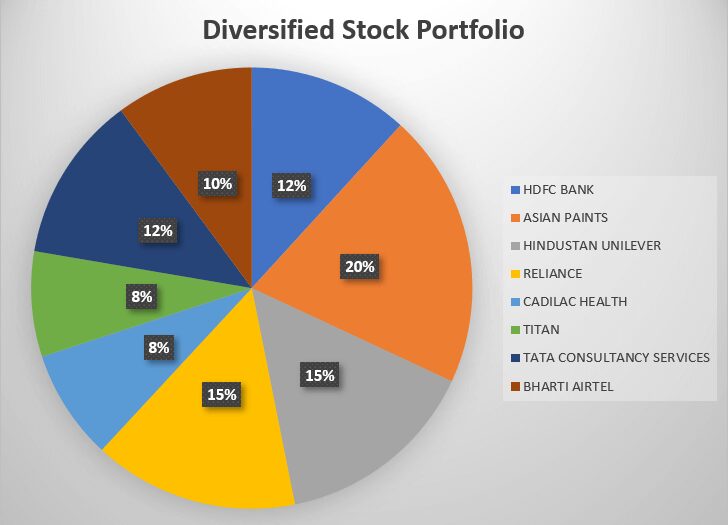
Family Office Asset Allocation has become one of the most dynamic and closely watched areas in modern wealth management. Unlike institutional funds or retail investors, family offices operate with a unique blend of flexibility, long-term vision, and generational responsibility. Consequently, their asset allocation decisions often reflect deeper strategic thinking, broader diversification, and a higher tolerance for illiquidity when aligned with multigenerational goals.
In recent years, shifting macroeconomic conditions, inflationary pressures, rising interest rates, and geopolitical uncertainty have reshaped how family offices deploy capital. Moreover, technological innovation and access to private markets have expanded their investment toolkit significantly. As a result, family office portfolios today look markedly different from traditional balanced portfolios of the past.
This article explores what family office asset allocation means today, how it evolved, current trends across asset classes, and the strategic forces driving change.
What Family Office Asset Allocation Means in Modern Wealth Management?
At its core, Family Office Asset Allocation refers to how a family office distributes its capital across various asset classes to achieve long-term wealth preservation, growth, and intergenerational continuity.
However, unlike conventional portfolio management frameworks that rely on rigid percentage splits between equities and bonds, family offices typically operate with:
-
Longer time horizons (often multi-generational)
-
Greater flexibility in illiquid investments
-
Direct investment capabilities
-
Customized risk management frameworks
-
Tax-optimized structures
Therefore, allocation decisions are not merely about optimizing returns. They are also about governance, legacy planning, risk control, and alignment with family values.
Historical Allocation Models vs Modern Strategies
Traditional Allocation Framework
Historically, portfolio construction was heavily influenced by Modern Portfolio Theory (MPT). The typical model revolved around diversification between equities and fixed income.
The classic example: the 60/40 portfolio 60% public equities and 40% bonds. This model was widely adopted by institutions and high-net-worth investors for decades.
However, family offices have increasingly moved beyond this simplified framework.
Modern Family Office Allocation
Today’s family office portfolios incorporate broader exposure to private markets, real assets, and alternatives. The emphasis has shifted toward capital appreciation, inflation protection, and uncorrelated return streams.
Below is a comparison:
| Feature | Traditional Portfolio Model | Modern Family Office Allocation |
|---|---|---|
| Time Horizon | Medium-term (5–10 years) | Multi-generational |
| Core Assets | Public equities & bonds | Public + private markets |
| Liquidity Preference | High liquidity | Balanced with illiquidity tolerance |
| Alternatives | Minimal | Significant allocation |
| Direct Investments | Rare | Increasingly common |
| ESG Integration | Limited | Growing priority |
| Geographic Scope | Domestic-focused | Globally diversified |
Consequently, the modern approach reflects strategic autonomy and broader opportunity capture.
Current Allocation Trends Across Asset Classes
Family offices today are deploying capital across diverse asset categories, carefully balancing growth, income, and risk mitigation.
1. Public Equities
Public equities remain foundational. However, allocations have become more selective, focusing on:
-
Global diversification
-
Sector-specific exposure (technology, healthcare, energy transition)
-
Active management or concentrated portfolios
Moreover, many family offices are reducing passive index exposure in favor of active strategies and thematic investments.
2. Private Equity
Private equity is one of the most significant areas of expansion in family office asset allocation. The appeal includes:
-
Higher return potential
-
Control opportunities
-
Alignment with entrepreneurial backgrounds
Family offices often invest through funds, co-investments, or direct acquisitions. Consequently, private equity allocations frequently exceed those seen in traditional institutional portfolios.
3. Venture Capital
Venture capital has gained popularity, particularly among second- and third-generation family members. Exposure to innovation ecosystems offers:
-
High growth potential
-
Early-stage access to disruptive industries
-
Strategic networking opportunities
However, this segment introduces higher volatility and longer lock-up periods.
4. Real Estate
Real estate remains a core component due to its income generation and inflation-hedging characteristics. Allocations typically include:
-
Core commercial properties
-
Residential portfolios
-
Logistics and industrial assets
-
Real estate development projects
Moreover, real estate offers tangible asset security, which many families value highly.
5. Hedge Funds
Hedge funds are used selectively for:
-
Downside protection
-
Absolute return strategies
-
Tactical market positioning
However, performance dispersion has led some family offices to reduce exposure or negotiate more favorable fee structures.
6. Fixed Income
Fixed income allocations have evolved significantly, particularly in response to rising interest rates. Instead of relying solely on government bonds, family offices now explore:
-
Private credit
-
Structured debt
-
Opportunistic credit strategies
Consequently, fixed income has shifted from capital preservation alone to a yield-enhancing strategy.
7. Alternatives
Alternative investments now form a meaningful portion of many portfolios. These may include:
-
Infrastructure
-
Commodities
-
Digital assets
-
Natural resources
Alternatives help reduce correlation with traditional markets, therefore improving risk-adjusted returns.
Typical Allocation Breakdown by Asset Class
While allocations vary widely, the following table reflects common ranges observed in modern family offices:
| Asset Class | Typical Allocation Range |
|---|---|
| Public Equities | 20% – 40% |
| Private Equity | 15% – 30% |
| Venture Capital | 5% – 15% |
| Real Estate | 10% – 25% |
| Hedge Funds | 5% – 15% |
| Fixed Income | 10% – 25% |
| Alternatives | 5% – 20% |
| Cash & Liquidity | 5% – 10% |
These allocations are highly customized; however, the trend toward private markets is unmistakable.
Growing Interest in Direct Investments
One of the most defining features of modern family office asset allocation is the rise of direct investing.
Rather than committing exclusively to fund managers, family offices are increasingly:
-
Acquiring controlling stakes in businesses
-
Participating in co-investments
-
Establishing in-house investment teams
This approach reduces fees and increases control. However, it also requires operational expertise and governance structures.
Consequently, only well-resourced family offices typically pursue large-scale direct investment programs.
Geographic Diversification Strategies
Global diversification has become central to asset allocation decisions.
Family offices allocate across:
-
North America
-
Europe
-
Asia-Pacific
-
Emerging markets
Diversification reduces country-specific risk and enhances exposure to growth regions. Moreover, geopolitical instability has encouraged broader geographic distribution to safeguard capital.
Currency exposure management has also become increasingly sophisticated, particularly during periods of dollar strength or volatility.
Risk Management and Liquidity Considerations
Risk management frameworks within family offices are highly customized. Unlike institutional funds constrained by quarterly reporting, family offices prioritize:
-
Capital preservation
-
Liquidity buffers
-
Intergenerational stability
Liquidity management is particularly critical due to the higher allocation to private assets. Therefore, many family offices maintain strategic cash reserves or short-duration instruments to fund capital calls and operational expenses.
Stress testing portfolios against economic downturns, inflation spikes, and interest rate shocks has become standard practice.
Impact of Inflation, Interest Rates, and Macroeconomic Cycles
Macroeconomic conditions heavily influence Family Office Asset Allocation decisions.
Inflation
High inflation environments push family offices toward:
-
Real assets (real estate, infrastructure)
-
Commodities
-
Inflation-linked securities
These assets provide purchasing power protection.
Interest Rates
Rising interest rates affect:
-
Bond valuations
-
Leveraged investments
-
Real estate financing
Consequently, asset allocation shifts toward short-duration bonds, floating-rate credit, and less leveraged assets.
Economic Cycles
During expansion phases, allocations may tilt toward growth equities and private markets. However, in contractionary periods, defensive sectors and cash buffers become more prominent.
ESG and Impact Investing Integration
Environmental, Social, and Governance (ESG) considerations are increasingly embedded into asset allocation frameworks.
Many family offices now:
-
Screen investments based on sustainability criteria
-
Allocate capital to renewable energy
-
Pursue measurable impact strategies
Moreover, younger generations often drive this shift, aligning investment portfolios with family values.
Impact investing is no longer seen as a trade-off against returns. Instead, it is integrated into risk assessment and long-term opportunity identification.
Generational Influence on Allocation Shifts
Intergenerational wealth transfer significantly influences allocation strategies.
First-generation wealth creators often favor:
-
Tangible assets
-
Concentrated business ownership
-
Conservative risk profiles
In contrast, next-generation leaders frequently advocate for:
-
Venture capital exposure
-
Technology investments
-
ESG alignment
-
Digital asset exploration
Therefore, governance structures play a crucial role in balancing traditional capital preservation with innovation-driven growth.
The Strategic Evolution of Family Office Asset Allocation
The evolution of Family Office Asset Allocation reflects broader structural changes in global finance. Family offices are no longer passive capital allocators. Instead, they are active participants in private markets, strategic partners in entrepreneurial ventures, and sophisticated managers of global, diversified portfolios.
Moreover, technological access, data analytics, and institutional-grade advisory networks have elevated their capabilities. Consequently, allocation decisions today resemble those of large endowments or sovereign funds, yet remain uniquely tailored to family-specific objectives.
Frequently Asked Questions
1. What is Family Office Asset Allocation?
Family Office Asset Allocation refers to the strategic distribution of a family office’s capital across various asset classes to achieve long-term wealth preservation and growth.
2. Why do family offices invest heavily in private markets?
Private markets offer higher return potential, control opportunities, and diversification benefits aligned with long-term investment horizons.
3. How does inflation impact family office portfolios?
Inflation typically increases allocations to real assets, commodities, and inflation-protected securities to preserve purchasing power.
4. Are family offices more risk-tolerant than institutions?
Often yes, due to longer time horizons and fewer regulatory constraints. However, risk tolerance varies depending on generational priorities.
5. What role does ESG play in asset allocation?
ESG integration is increasingly central, especially among younger generations, influencing capital deployment toward sustainable and impact-focused investments.