There is a point at which the familiar promises of luxury travel lose their meaning. A better suite cannot change the weather. A private aircraft cannot make every runway usable. At the South Pole, the most consequential service decision can be to stay exactly where you are.
That is also part of its appeal. For travelers accustomed to arranging their surroundings, a journey to 90° South offers an encounter with a place that resists arrangement. Comfort matters, but the expedition succeeds on the terms of the continent.
Antarctica already has an established tourism industry. The Antarctic Treaty Secretariat describes annual tourism of more than 100,000 passengers, with the majority traveling by ship to the Antarctic Peninsula. It identifies deep-field and air-based travel as a much smaller, growing segment.
IAATO’s published figures for the 2025–26 season put deep-field visitors at 1,106. That category extends beyond South Pole journeys; it should never be read as a count of people who reached the Pole. Even so, it gives a useful perspective on the scale of interior travel.
The distinction matters more than any claim that Antarctica is the destination of the moment. The coast and the interior answer different desires. One offers a maritime expedition; the other puts the destination itself, a precise point on the globe, at the center of the journey.
The South Pole’s claim to luxury rests on that specificity. Whether the experience deserves its place on a travel calendar depends on what someone hopes to find there.
The interior changes the proposition
A South Pole itinerary deserves its own conversation at the planning stage. It cannot be understood as a shore excursion added to a yacht charter, however capable the yacht or experienced its crew.
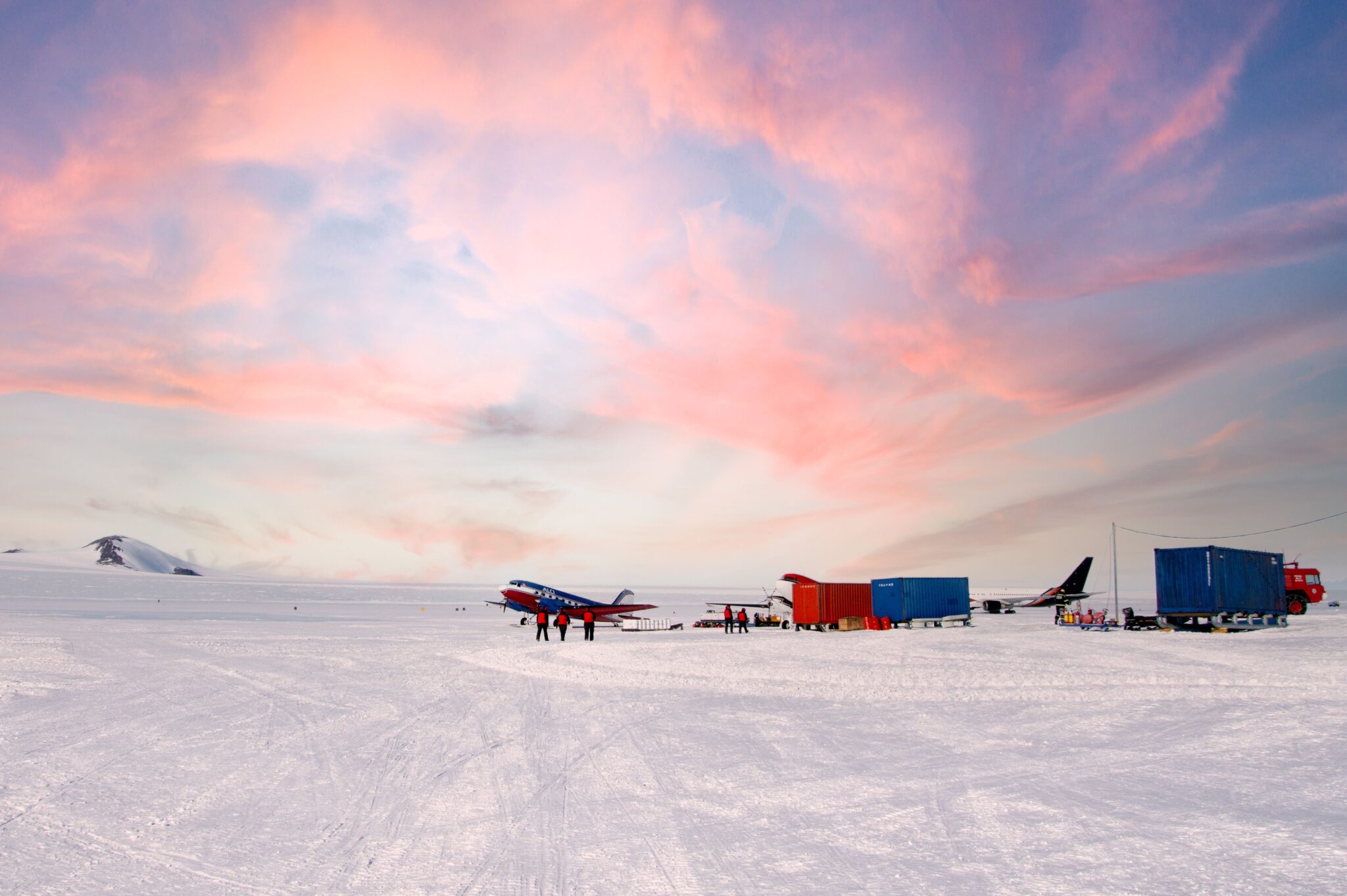
EYOS describes a typical route through Punta Arenas in Chile, followed by a specialized aircraft flight to Union Glacier and an onward journey by ski-equipped plane to the Geographic South Pole. Its destination guidance identifies December and January as generally favorable months, while making clear that weather requires flexibility.
That sequence changes the practical meaning of access. There are separate flight stages to coordinate and conditions to assess. The distance traveled is only one consideration; the ability to proceed at each stage matters just as much.
Antarctic Logistics & Expeditions, an established interior logistics provider, makes the point through its published South Pole Flights itinerary. Within a nominal six-day program, the South Pole flight has a flexible day rather than a fixed calendar position.
For an executive or family office arranging the trip, that is a useful planning signal. Schedule flexibility belongs in the original brief. It should influence onward commitments and the conversation about what happens if the expedition takes longer than expected.
There is an emotional adjustment as well. A traveler who measures value by how many activities fit into a day can struggle with waiting. Someone interested in how the expedition works has another way to engage: understanding why the team has chosen to hold, and what conditions would allow it to move.
The itinerary should make room for that experience before anyone leaves home.
What luxury buys at 90° South
The word luxury needs a more exact definition here. Consider the difference between a carefully supported stay in extreme conditions and the expectations associated with a destination hotel.
ALE describes heated, double-walled sleeping tents at its South Pole camp, with cots and mattresses, and meals in a heated dining tent. It also specifies that there are no showers. Those details give a clearer picture of camp life than a string of superlatives.
Travelers considering luxury South Pole expeditions from EYOS should ask how the proposed journey matches their interests and tolerance for discomfort. EYOS says it can arrange private interior expeditions and, depending on the itinerary, an overnight camp stay at the Pole.
The distinction between a visit and an overnight stay deserves attention. More time at the destination changes the experience, but it also changes the commitment to cold and altitude. The right choice depends on the guest.
ALE places the camp’s physiological altitude at roughly 3,300 meters and warns of effects such as breathlessness and headache. Its guidance is a necessary counterweight to the appeal of a comfortable camp.
Before committing, a prospective guest should get clear answers to a few practical questions:
- What medical screening does the proposed journey require?
- What happens if the onward flight cannot operate?
- Which costs and arrangements apply during delays?
- What communications and evacuation provisions are included?
These questions help establish what the expedition actually provides. A polished proposal should make the answers easy to understand.
A frontier with obligations
There is another reason to be careful with the language of discovery. The South Pole is already a place of scientific work, with rules governing how visitors behave.
ALE identifies it as Antarctic Specially Managed Area No. 5 and explains that its management plan protects environmental, scientific, and historical values. The company also says guests at its South Pole camp have no internet access to avoid interference with nearby scientific work.
That is a useful corrective to the idea that remoteness means freedom to do anything. Private arrangements remain subject to the requirements of the place. The Antarctic Treaty Secretariat states that visitor guidelines aim to prevent harm to the continent’s environmental, scientific, and aesthetic values.
For travelers interested in impact as well as access, the appropriate response is scrutiny. Ask the organizer to explain environmental procedures and the applicable authorization process. A small guest party alone cannot answer questions about the consequences of a journey.
So is the South Pole the next frontier in luxury travel? It has a persuasive claim for a particular traveler: someone who values a precise destination enough to accept the demands of reaching it.
Its appeal weakens when sold as another effortless escape. The better proposition is a carefully organized expedition whose rewards require participation and patience.
Before choosing dates, decide whether the goal is to stand at the Pole or to spend meaningful time in the Antarctic interior. That decision gives the expedition planner something more useful than a request for the most exclusive trip available.