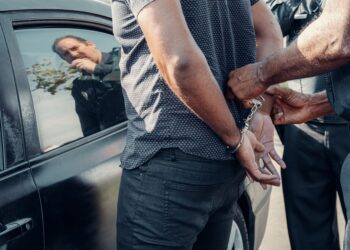
Search-and-seizure questions can shape a Florida criminal case before trial begins. Evidence found in a vehicle, home, pocket, bag, or digital device may become central to the prosecution, but the government still has to show that officers acted within constitutional limits. An unlawful search or seizure can create grounds for suppression.
Florida’s Constitution protects people against unreasonable searches and seizures and requires warrants to be supported by probable cause and particularity. Because Florida construes this protection in conformity with the Fourth Amendment as interpreted by the U.S. Supreme Court, both state and federal principles can matter. Six issues frequently deserve close review.
1. Whether the Initial Stop Was Lawful
A search issue can begin before officers ever touch a person’s property. If police stop a pedestrian or vehicle without sufficient legal justification, evidence obtained afterward may be challenged as the product of an unlawful detention.
Florida’s Stop and Frisk Law permits a temporary detention when circumstances reasonably indicate that a person has committed, is committing, or is about to commit a crime. The statute also limits the detention to the time reasonably necessary to investigate those circumstances.
In a traffic case, dash-camera footage, body-camera video, dispatch records, officer observations, and the alleged violation can help determine whether the stop had a lawful basis and remained within proper limits.
2. Whether Consent to Search Was Actually Voluntary
Officers sometimes ask for permission to search when they do not have a warrant. A consent search can be lawful, but consent must be voluntary rather than the product of coercion. The U.S. Supreme Court’s decision in Schneckloth v. Bustamonte evaluates voluntariness from the totality of the surrounding circumstances.
Courts may examine the setting, officer conduct, statements made before consent, and whether the person’s movement was already restricted. A signature on a consent form does not necessarily answer every question about how permission was obtained.
Scope matters too. Permission to look in one location does not automatically authorize an unlimited search of every container, device, or area. What the person reasonably allowed officers to search can become a separate issue.
3. Whether Police Had a Valid Basis to Search a Vehicle
Vehicles receive different treatment from homes under Fourth Amendment law, but that does not mean officers may search any vehicle simply because it has been stopped.
Florida appellate authority recognizes the automobile exception, which can permit a warrantless vehicle search when officers have probable cause to believe the vehicle contains evidence or contraband. The scope depends on what officers have probable cause to find and where that item could reasonably be located.
Someone consulting a local attorney who handles criminal cases in Gainesville may therefore need to examine exactly what officers observed before opening a console, bag, trunk, or other compartment. Information learned only after the search cannot retroactively create probable cause for it.
4. Whether a Search Incident to Arrest Went Too Far
A lawful arrest can permit officers to conduct a limited warrantless search, but the arrest does not create unlimited authority to search everything nearby.
Florida Statute § 901.21 allows officers to search the arrested person and the area within that person’s immediate presence for purposes such as officer protection, preventing escape, and discovering the fruits of a crime. The statute also authorizes seizure of certain items found during that lawful search.
The legality of the arrest and the location of the item can both matter. A search of something outside the arrestee’s immediate reach may require a different legal justification. Vehicle searches incident to arrest are also subject to constitutional limitations when the arrested person has already been secured.
5. Whether the Warrant Was Specific Enough
A warrant does not end the search-and-seizure inquiry. Florida’s Constitution requires a warrant to particularly describe the place to be searched and the person, thing, communication, or evidence to be seized.
That requirement keeps a warrant from becoming a general license to search wherever officers choose. A defense review may compare the warrant, supporting affidavit, inventory of seized property, photographs, and body-camera footage to determine whether officers stayed within the authorized scope.
Florida criminal procedure recognizes challenges involving a warrant that is insufficient on its face, property not described in the warrant, lack of probable cause for issuance, or illegal execution. These issues can matter when officers search additional rooms, containers, vehicles, or devices not clearly covered by the warrant.
6. Whether Officers Searched Digital Information Without Proper Authority
Cell phones can contain messages, photographs, location data, browsing history, account information, and years of personal records. Their digital contents raise search issues that differ from the physical inspection of an ordinary object.
In Riley v. California, the U.S. Supreme Court held that police generally must obtain a warrant before searching digital information on a cell phone seized from an arrested person. The Court distinguished the phone itself from the large amount of private digital information stored on it.
A digital-search dispute may focus on whether officers had a warrant, whether an exception applied, whether consent extended to the device, and whether forensic examination exceeded the warrant’s scope. The wording of the warrant can be especially important when investigators extract large amounts of stored data.
Suppression Can Change the Evidence Available to Prosecutors
Florida Rule of Criminal Procedure 3.190 allows a defendant to move to suppress evidence obtained through an allegedly unlawful search or seizure. A legally sufficient motion identifies the evidence being challenged, the reason suppression is requested, and the supporting facts.
A suppression hearing determines whether particular evidence may be used. If disputed drugs, firearms, digital records, or other physical evidence are excluded, the prosecution may have to proceed without material it originally expected to rely on.
Search-and-Seizure Analysis Depends on the Sequence of Events
Search cases often turn on timing and detail. Important questions can include why the encounter began, what officers knew at each stage, whether consent was limited, when probable cause developed, what the warrant authorized, and where the seized item was found.
Body-camera footage, dispatch records, warrants, affidavits, photographs, search inventories, and witness testimony can help reconstruct that sequence. Looking at each step separately can reveal whether police authority expanded lawfully as the investigation developed or whether evidence came from a search that crossed constitutional limits.