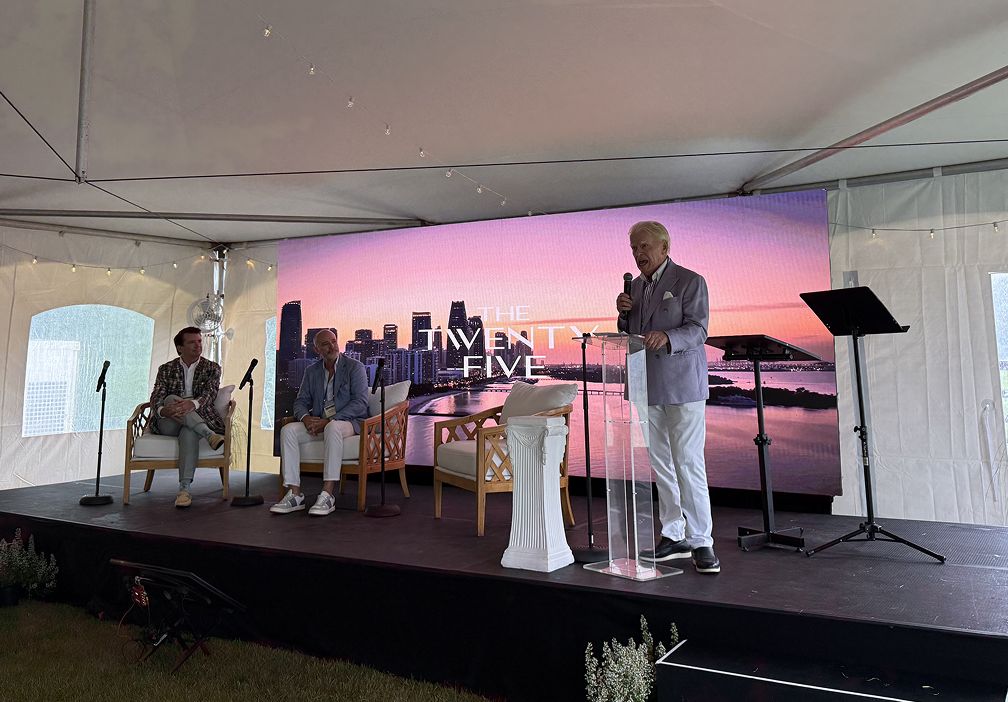
For many travelers, the greatest luxury of all is time. That idea was especially relevant at the 1640 Society Family Office Conference in the Hamptons this August, where family offices, investors and global business leaders gathered from around the world. It was a fitting setting for The Twenty Five to present its vision for a new era of coastal transportation.
The company is developing a members-only network powered by REGENT’s all-electric Seagliders, with plans to connect destinations including Manhattan and the Hamptons, Miami and Palm Beach, and Boston and Nantucket. For an audience focused on innovation, investment and the future of wealth, the presentation offered a compelling look at how emerging technology could reshape both the way people travel and the value they place on time.
Private jets and helicopter transfers have become increasingly familiar within this world, yet certain journeys remain surprisingly inefficient. That is particularly true in places like New York and South Florida, where relatively short distances can still require considerable time and planning. A Friday afternoon drive from Manhattan to the Hamptons can stretch for hours, while traveling between Miami and Palm Beach often means scheduling around traffic. Even private aviation comes with transfers, terminals and logistics that can diminish some of the time saved in the air.
The Twenty Five believes there is another way.
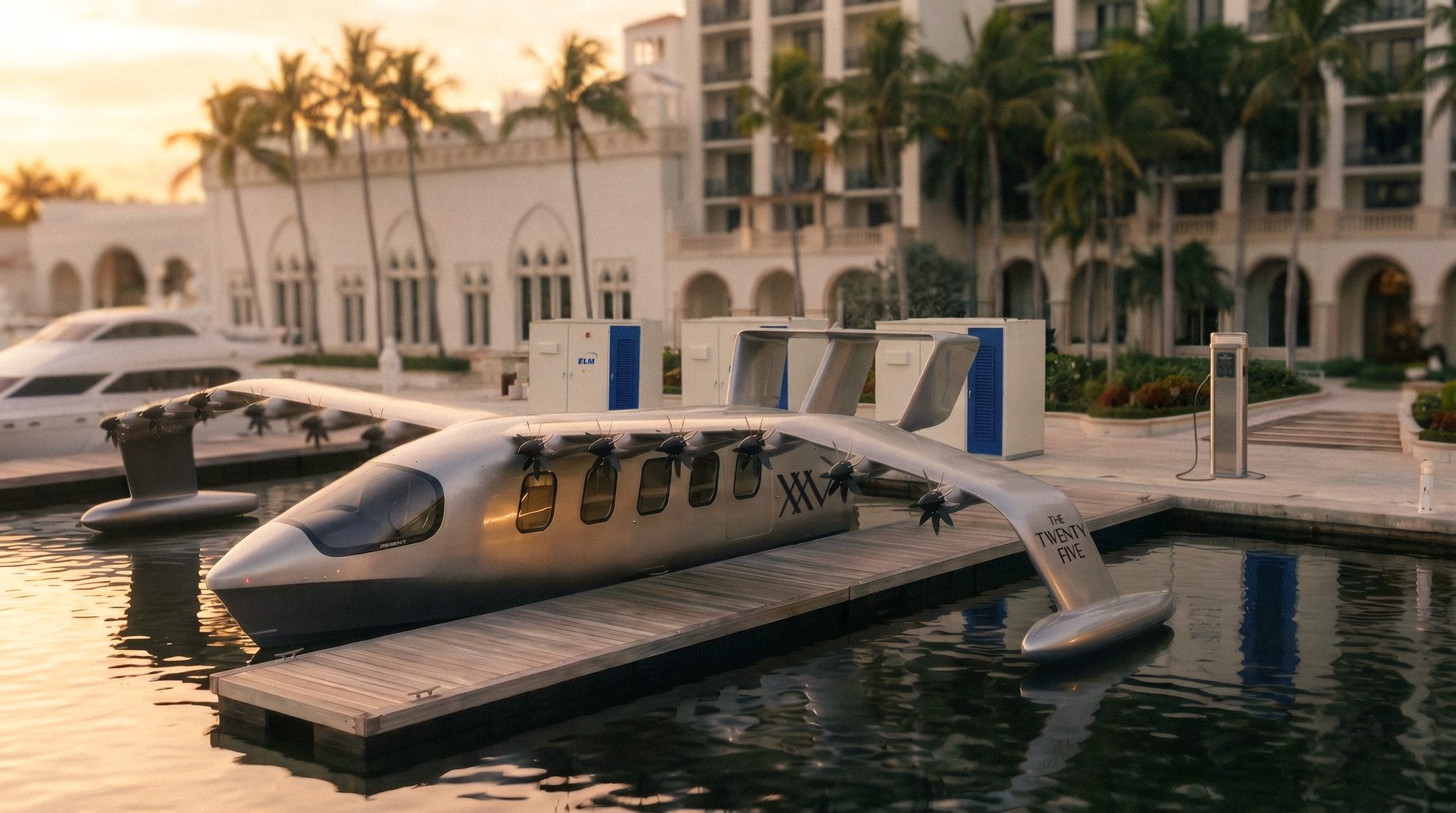
Founded by Neill Etheridge and Jamie Petty, the company is developing a members-only coastal transportation network centered around REGENT’s all-electric Viceroy Seaglider. Its vision is to connect major coastal communities directly from the waterfront, pairing emerging transportation technology with the level of service and convenience expected by a luxury clientele.
It is an ambitious proposition, rooted in a simple question: Why should traveling between destinations separated largely by water still be so difficult?
The Twenty Five is Reimagining the Coastal Commute
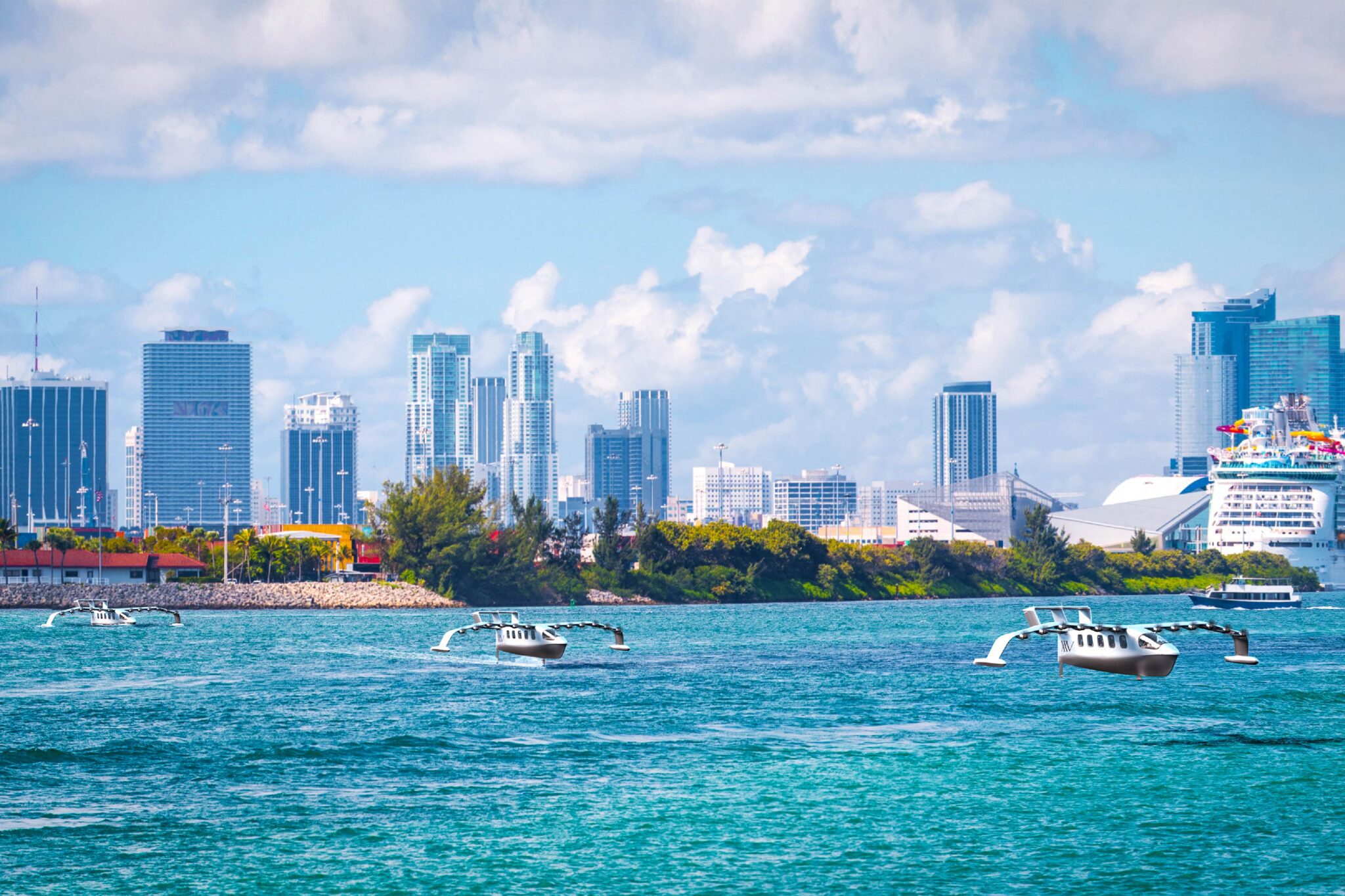
The company is initially focused on routes where geography, wealth and lifestyle already intersect. Think Manhattan and the Hamptons. Miami and Palm Beach. Boston and Nantucket.
These are journeys regularly made by executives, entrepreneurs, investors and families whose schedules place an extraordinary premium on getting to their destination efficiently. They are also routes where conventional transportation often feels disproportionately complicated relative to the actual distance traveled. The Twenty Five hopes to remove much of that friction by moving the point of departure closer to where its members already are: the waterfront.
Passengers would board from a marina or dock and travel aboard an electric craft capable of transitioning from the water to flight just above its surface. The experience is being designed to feel seamless, private and hospitality-driven from departure through arrival.
A Different Kind of Aircraft, That Is Technically a Boat
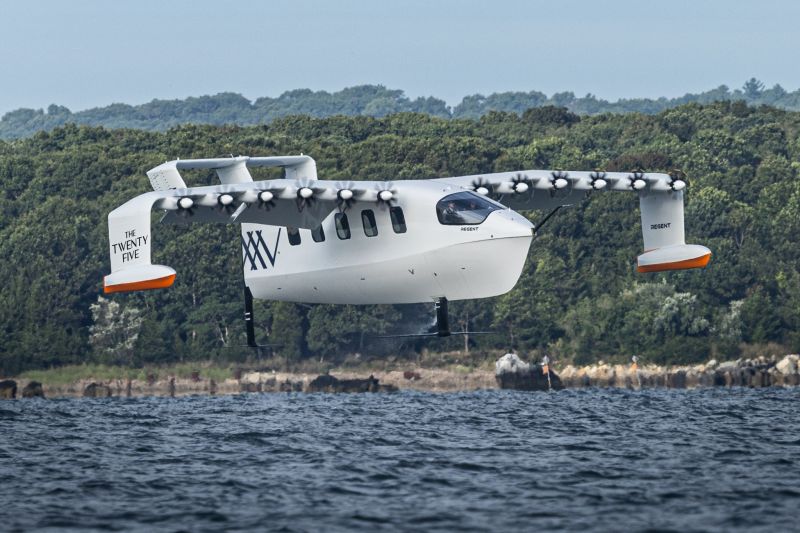
At the center of the concept is REGENT’s Viceroy Seaglider.
The technology occupies an unusual space between aviation and maritime transportation. The craft begins its journey operating like a conventional vessel before lifting onto hydrofoils. Once it reaches open water, it transitions into what is known as ground-effect flight, traveling close above the surface where aerodynamic forces allow it to operate efficiently at high speed.
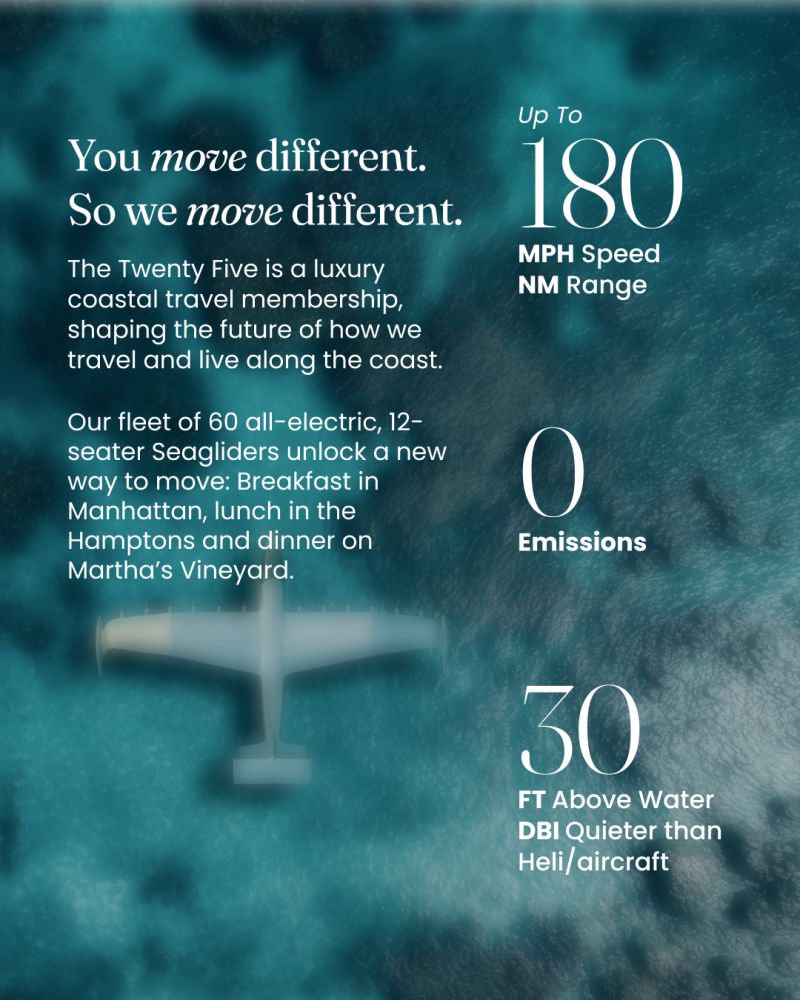
The 12-passenger Viceroy is being designed to reach speeds of approximately 180 miles per hour while remaining fully electric.
Despite its wings and ability to fly, the Seaglider is categorized and regulated as a maritime vessel. Passengers embark from docks, a characteristic that makes the technology particularly intriguing for coastal markets. Its interior is also being developed with passenger comfort in mind, with a full-height cabin, large windows and configurations suited to premium travel.
For communities accustomed to helicopters, private aircraft and high-speed boats, the Seaglider presents a compelling new option: fast transportation with waterfront access, lower direct emissions and a quieter operating profile.
The Twenty Five’s larger idea extends well beyond the vehicle itself. A transportation service that can materially shorten the journey between a primary residence and a weekend destination offers more than speed. It can fundamentally change how a destination fits into daily life. A home in the Hamptons becomes easier to reach for dinner instead of requiring the better part of an afternoon in transit. A meeting in Palm Beach does not necessarily consume an entire day for someone based in Miami. Nantucket becomes more closely connected to Boston.
That shift could influence everything from real estate to hospitality and business activity in the coastal communities served.
Building More Than a Fleet
Creating a new transportation category requires considerably more than purchasing vehicles. The Twenty Five has positioned itself as REGENT’s launch partner in the Northeast and Southeast United States and has announced plans for a fleet of as many as 60 Seagliders.
It has also partnered with Hornblower Group, whose experience operating passenger vessels provides an important piece of the operational puzzle. Infrastructure access, maritime compliance, crew operations and safety will all be essential if Seagliders are to move from technological novelty to dependable transportation.
The challenge for The Twenty Five is as much about execution as it is about vision. The company must integrate vessels, docks, charging infrastructure, crews, concierge services and scheduling into an experience that feels effortless to the passenger.
Once in operation the model could eventually extend far beyond the company’s first proposed markets. South Florida naturally opens possibilities throughout the Bahamas and Caribbean, while the Northeast contains dozens of coastal communities within the operational range of the technology.
The first Viceroy Seagliders for The Twenty Five are expected to arrive beginning in late 2027.