Memory care supports seniors with Alzheimer’s disease, dementia, and other cognitive decline through specialized supervision, predictable routines, personalized assistance, safety measures, and meaningful activities. It does not reverse dementia, but it can help residents stay safer, engaged, comfortable, and as independent as possible.
For families wondering, “Is it time for memory care?” the answer depends on how much help a senior needs to manage everyday life safely. Wandering, medication mistakes, frequent falls, poor nutrition, hygiene problems, nighttime confusion, or increasing caregiver strain can signal that more structured support is needed.
This article explains how memory care supports seniors with cognitive decline by providing specialized care, safety, structured routines, personalized assistance, and meaningful daily activities.
What Is Memory Care?
Memory care is residential senior living for people who need more cognitive and safety support than traditional assisted living may provide. Services can include supervision, medication management, meals, and personal care. Good care helps residents complete what they can while providing assistance where needed.
A Predictable Daily Routine
Cognitive decline can make changes in daily routines confusing and stressful for seniors. A consistent schedule for meals, medications, personal care, activities, and bedtime provides familiarity and reassurance. This structure can help residents feel more comfortable, reduce confusion, and navigate their day with greater confidence.
Personalized Care Plans
Effective memory care is tailored to the individual. Plans may consider
- Medical history
- Medications
- Mobility
- Fall risk
- Eating
- Hydration needs
- Communication preferences
- Hobbies
- Family priorities.
Person-centered care uses a resident’s history and preferences to make support more familiar and meaningful.
A Safer Living Environment
Memory care communities may use secured exits, controlled access, monitored areas, emergency systems, and layouts designed to reduce wandering and other hazards. Safety should still leave room for privacy, outdoor access, movement, and personal choice.
Meaningful Activities
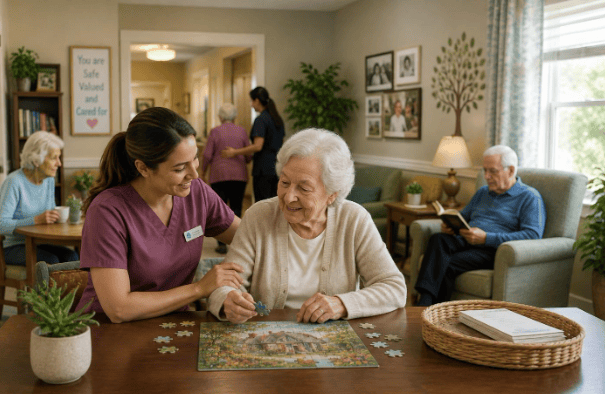
Activities can provide structure, social connection, movement, and enjoyment. Options include music, gardening, arts and crafts, gentle exercise, reminiscence, games, and outdoor time. Activities work best when they match the resident’s abilities and interests. Familiar songs, photographs, hobbies, or routines can encourage participation.
Communication Support
Long explanations can become difficult to follow. Caregivers can use short sentences, calm tones, simple choices, repetition, and reassurance. The National Institute on Aging recommends addressing people directly, presenting one idea at a time, and rephrasing rather than simply speaking louder or faster.
Family Communication and Support
Families remain important partners. Updates about appetite, behavior, sleep, mobility, medication, and activities help relatives stay involved. Families can also share information about a resident’s history, preferences, relationships, and personality.
Memory care can reduce the daily burden on relatives managing meals, medications, hygiene, supervision, and safety. The National Institute on Aging encourages caregivers to seek respite when needed.
When To Consider Memory Care
Families may want to explore memory care when a senior:
- Wanders or becomes lost.
- Repeatedly forgets medication.
- Has frequent falls.
- Cannot manage hygiene safely.
- Has nutrition or hydration concerns.
- Needs supervision during the day or night.
- Places substantial demands on an unpaid caregiver.
A sudden change should receive medical evaluation first because infection, medication effects, depression, dehydration, sleep problems, and other conditions can worsen cognitive symptoms.
Choosing the Right Community
Ask about caregiver training, nursing support, medication administration, activities, wandering prevention, outdoor access, meals, emergencies, family communication, fees, and additional care charges. Visit at different times and notice whether residents appear comfortable and staff communicate respectfully.
Supporting Familiarity
Familiar surroundings can make daily life easier for someone experiencing cognitive decline. Families can help by providing familiar photographs, favorite music, meaningful objects, or familiar routines that give residents recognizable points of connection throughout the day.
Key Takeaways
- Memory care provides specialized cognitive and safety support.
- Predictable routines can reduce confusion.
- Care should reflect individual abilities and preferences.
- Secure environments can reduce wandering risks.
- Activities should remain meaningful and personalized.
- Families should stay involved in care.
- Sudden changes should receive medical evaluation.
- Memory care is ultimately about supporting the patient.