Electrical Panel Upgrade: Costs, Signs, and Next Steps
An electrical panel upgrade increases your home’s capacity to distribute power safely. It may involve replacing the breaker box, increasing the service amperage, or completing both jobs. The right solution depends on the panel’s condition, available capacity, planned appliances, and local requirements.
Do You Need a New Electrical Panel?
You may need a new panel when your current equipment cannot safely support your household’s power use. Age alone does not always justify replacement, but visible damage, limited breaker space, or recurring power problems deserve attention.
Common warning signs include:
- A tripping breaker during normal appliance use
- Buzzing, heat, rust, or burning odors near the panel
- Flickering lights when large appliances start
- Melted insulation or discolored panel components
- Frequent reliance on extension cords
- No open spaces for new circuits
- An outdated fuse box or unsafe panel model
These conditions can indicate loose connections, overloaded wiring, or damaged circuit breakers. Ignoring them may increase the risk of an electrical fire.
What Does the Project Include?
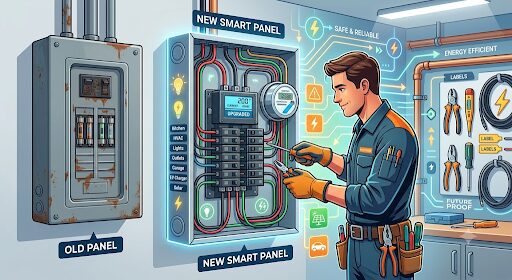
Changing an electrical panel can involve different types of work. A basic electric panel replacement swaps an old or damaged box for a new model with similar capacity. A full service change raises the available amperage and may require a new meter, service cable, grounding components, or utility connection.
Most modern homes use one of these service sizes:
| Service Size | Common Use |
| 100 amps | Smaller homes with limited electric appliances |
| 200 amps | Larger homes, EV charging, and electric appliances |
A 100-amp service may remain suitable when the house uses gas heating, gas cooking, and few high-demand devices. A 200-amp service provides additional capacity for electric heating, EV charging, workshop equipment, or central air conditioning.
The electrician should examine your home’s electrical demand rather than recommending capacity based only on square footage.
What Are the Factors for the Cost of a Project?
The final price depends on:
- Existing and proposed amperage
- Panel location and accessibility
- Condition of the service entrance
- Number of circuits
- Utility company requirements
- Permit and inspection fees
- Repairs required in older homes
A qualified Bergen County NJ electrician should provide a written estimate that separates panel labor, materials, permits, utility charges, and any potential repairs. This makes it easier to compare proposals and understand which items could change after the panel is opened.
You may reduce total costs by coordinating the project with other electrical work. For example, installing an EV charger, heat pump, induction range, or water heater during the same project may reduce repeated labor and permit expenses.
How to Upgrade an Electrical Panel
How to upgrade an electrical panel begins with an inspection and load calculation. The contractor reviews your current electrical demand, planned appliances, breaker condition, wiring, grounding, and service capacity.
The usual process includes:
- Inspecting the existing panel and service equipment.
- Calculating the expected electrical load.
- Selecting the correct panel and amperage.
- Requesting approval from the utility when needed.
- Obtaining the required permit.
- Disconnecting power and removing old equipment.
- Installing the panel, breakers, and grounding.
- Completing inspection and utility reconnection.
Upgrading electrical panel equipment often requires coordination among the electrician, utility provider, and local building department. Standard replacement may take one working day, although utility scheduling or service modifications can extend the overall timeline.
Do You Need a Permit?
Do I need a permit to upgrade my electrical panel? In most cases, yes. This type of project requires a permit in most jurisdictions because it affects the main power distribution point and must meet current safety standards.
The inspector may review:
- Panel rating and breaker compatibility
- Grounding and bonding
- Service cable size
- Working clearance around the panel
- Circuit identification
- Compliance with current electrical codes
Permit rules vary by municipality. Contact the local building department or ask your contractor to confirm the permit process before work begins.
You should hire a licensed electrician who can obtain approvals, coordinate the shutdown, complete the installation, and arrange the final inspection. Unpermitted work can create safety, insurance, and property-sale problems.
Can You Avoid a Service Increase?
Some households can upgrade their electrical capacity without increasing the main service size. The electrician may recommend load-management devices, circuit-sharing controls, a subpanel, or appliances with lower power demands.
These options may work when your current service has enough overall capacity but lacks breaker space or cannot support two large devices at the same time. For example, a circuit-sharing device can prevent an EV charger from operating while another high-demand appliance is running.
These solutions do not fix damaged or unsafe equipment. Upgrading your panel remains necessary when the enclosure, bus bars, connections, or breakers have deteriorated.
What Are the Main Benefits?
A properly sized panel can improve safety, reduce nuisance outages, and provide space for future circuits. It may also support planned home improvement projects without relying on unsafe adapters or overloaded connections.
Key benefits include:
- Safer power distribution
- More room for dedicated circuits
- Support for electric appliances
- Easier troubleshooting
- Better preparation for future demand
- Compliance with current standards
An electrical panel upgrade does not automatically lower your electricity bills. Its main purpose is to distribute available power safely and support the equipment your household uses.
How Should You Prepare?
List the appliances and projects you may add during the next several years. Include electric vehicles, heating systems, cooling equipment, kitchen appliances, outdoor features, and workshop tools.
Ask the electrician to explain whether you need only a replacement or a complete service increase. Request details about permits, outage time, inspections, utility coordination, warranties, and possible extra charges.
Grounded Electric can inspect your existing equipment, identify capacity limitations, and recommend a solution based on your home’s actual electrical demand and safety needs.