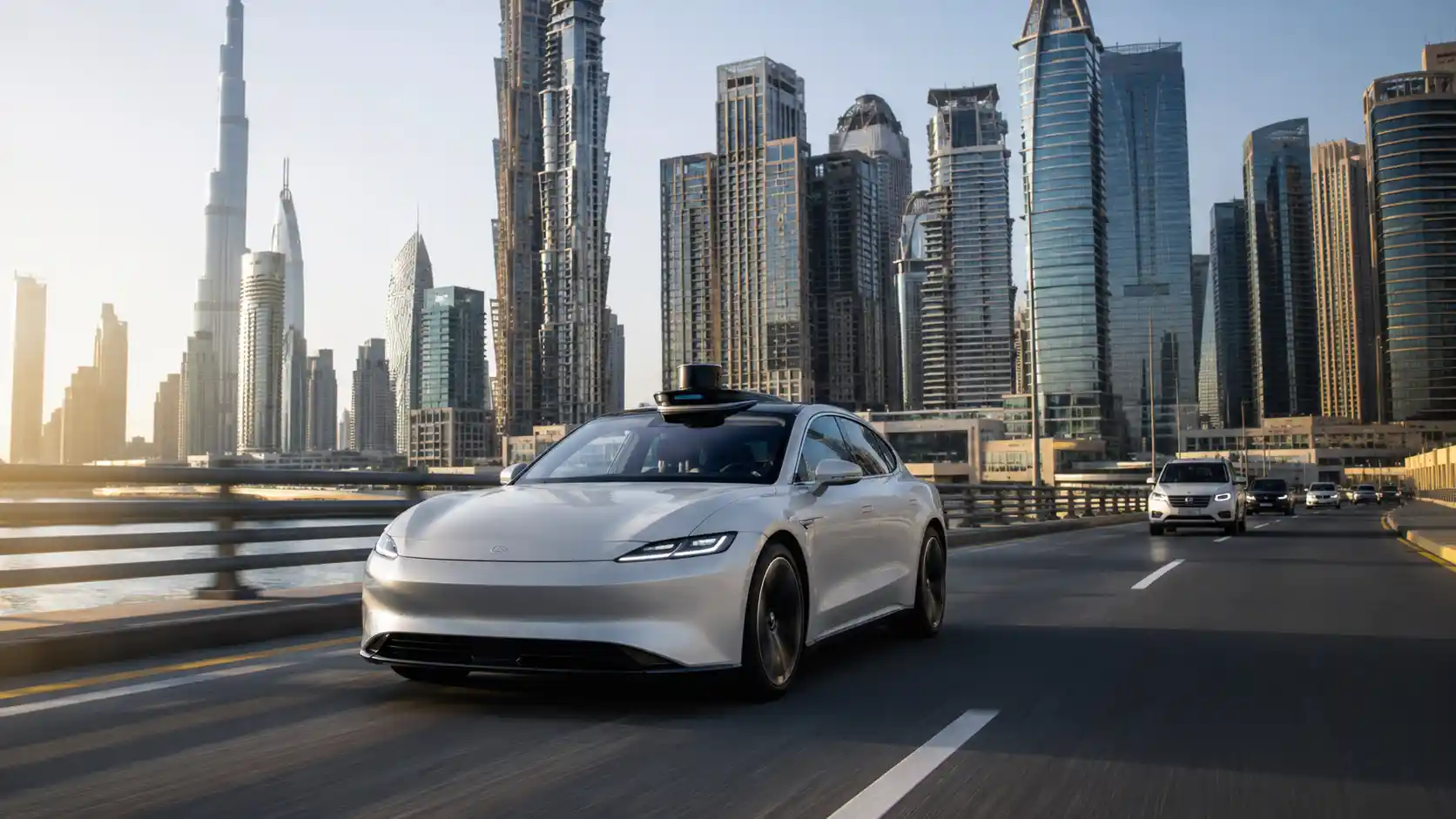
Autonomous vehicles are no longer a futuristic concept confined to research labs or technology demonstrations. In 2026, governments, automakers, and technology companies are investing billions of dollars to transform self-driving transportation into a practical reality. From commercial robotaxi fleets operating in major cities to advanced testing programs supported by artificial intelligence, the global race has become as much about economic competitiveness as it is about innovation.
A recent study by eCarsTrade provides an interesting snapshot of which countries appear most prepared for widespread autonomous driving, evaluating factors such as robotaxi deployment, infrastructure, legal frameworks, and public sentiment. While the rankings highlight current leaders, they tell only part of the story. Readiness for autonomous vehicles extends far beyond the number of vehicles on the road. It also depends on policy, digital infrastructure, AI capabilities, investment, cybersecurity, and public confidence.
As autonomous transportation moves closer to mainstream adoption, leadership in this sector has become a strategic national objective. Countries that successfully integrate technology, regulation, and infrastructure may gain significant advantages in manufacturing, mobility services, logistics, and smart city development. Understanding why certain nations are pulling ahead offers valuable insight into the future of global transportation.
Why Autonomous Vehicle Readiness Matters?
The competition surrounding autonomous vehicles reflects broader technological and economic trends rather than simply the evolution of the automotive industry. Governments increasingly view autonomous driving as a catalyst for innovation, improved road safety, and economic growth. Consequently, investments now extend well beyond vehicle manufacturers to include telecommunications providers, semiconductor companies, mapping technologies, and artificial intelligence developers.
Artificial intelligence serves as the foundation of autonomous driving. Modern vehicles continuously process enormous volumes of data from cameras, radar, lidar, GPS, and onboard sensors to interpret their surroundings and make driving decisions in real time. Rapid advances in machine learning have significantly improved perception, object recognition, route planning, and decision-making capabilities, bringing fully autonomous transportation closer to commercial reality.
Infrastructure also plays a decisive role. High-quality roads, widespread 5G connectivity, reliable digital mapping, and accessible electric vehicle charging networks enable autonomous systems to operate more safely and efficiently. Governments that prioritize digital infrastructure often create more favorable conditions for commercial deployment.
Policy is equally important. Regulatory clarity encourages investment because manufacturers and technology companies require clear legal frameworks before deploying commercial services. Countries that establish testing guidelines, liability rules, and safety standards earlier often become preferred locations for autonomous vehicle development.
Public acceptance remains another critical factor. Even the most advanced technology cannot achieve widespread adoption without consumer trust. Surveys consistently show that many people remain cautious about relinquishing control to automated systems, highlighting the importance of transparency, proven safety records, and effective public education.
Against this broader backdrop, the eCarsTrade study offers a useful starting point for understanding which countries currently possess the strongest combination of technology, infrastructure, regulation, and market readiness.
Which Countries Are Leading the Race?
According to the eCarsTrade analysis, China currently leads global autonomous vehicle readiness, followed by the United States, Singapore, Germany, and the United Arab Emirates. Rather than focusing solely on experimental testing, the study emphasizes commercial deployment, infrastructure quality, regulatory maturity, and public acceptance.
China
China’s leadership reflects years of coordinated investment across multiple sectors. Companies including Apollo Go, Pony.ai, and WeRide have expanded commercial robotaxi services in several cities, supported by extensive 5G coverage and one of the world’s largest electric vehicle charging networks. National and local governments have also created regulatory environments that encourage large-scale testing and deployment while maintaining oversight of safety standards.
United States
The United States follows closely behind thanks to its powerful innovation ecosystem. Companies such as Waymo continue to expand fully driverless commercial services in selected metropolitan areas, while major automotive manufacturers and technology firms invest heavily in autonomous driving software, sensors, artificial intelligence, and cloud computing. Although regulation varies across states, supportive policies in several jurisdictions have allowed commercial operations to mature.
Singapore
Singapore consistently ranks among global technology leaders despite its relatively small geographic size. Exceptional road infrastructure, extensive digital connectivity, and proactive government planning have made the country an ideal environment for controlled autonomous vehicle deployment. Rather than prioritizing rapid expansion, Singapore has focused on careful implementation supported by rigorous safety oversight.
Germany
Germany represents a different model of leadership. As one of the world’s automotive manufacturing centers, it has combined engineering expertise with progressive legislation permitting certain Level 4 autonomous vehicle operations under defined conditions. Strong collaboration between regulators, research institutions, and manufacturers continues to position Germany as a major innovation hub.
United Arab Emirates
Meanwhile, the United Arab Emirates has rapidly emerged as an ambitious participant in autonomous transportation. Investments in smart city initiatives, digital infrastructure, and partnerships with international technology companies demonstrate how government strategy can accelerate adoption even in relatively smaller markets.
| Country | Strength in Autonomous Vehicles | Key Competitive Advantage |
|---|---|---|
| China | Large-scale commercial robotaxi deployment | Advanced regulations, extensive 5G coverage, major AI investment |
| United States | Commercial innovation and AI development | Strong technology ecosystem and private-sector investment |
| Singapore | Smart infrastructure and urban planning | High-quality roads, digital connectivity, proactive regulation |
| Germany | Automotive engineering and legal leadership | Early Level 4 legislation and manufacturing expertise |
| United Arab Emirates | Smart city deployment | Government-backed innovation and advanced digital infrastructure |
Although these countries differ in geography, population, and economic structure, they share several common characteristics. Each combines technological innovation with supportive public policy, significant infrastructure investment, and long-term strategic planning. Importantly, success is not determined by a single breakthrough but by the ability to align multiple components of a complex mobility ecosystem.
At the same time, the rankings should not be viewed as permanent. Autonomous driving remains a rapidly evolving field, with technological progress, regulatory reforms, and infrastructure investment capable of reshaping global leadership over the coming decade.
The next question, therefore, is what broader forces enable these countries to maintain their competitive advantage beyond simply deploying more robotaxis.
The Technology, Policy, and Infrastructure Behind Success
The countries leading the autonomous vehicle race have one thing in common: they recognize that success depends on an ecosystem rather than a single technology. Autonomous driving combines artificial intelligence, telecommunications, cloud computing, advanced sensors, high-definition mapping, cybersecurity, and transportation policy into one integrated system.
Artificial intelligence sits at the center of this transformation. Modern autonomous vehicles rely on AI to detect pedestrians, recognize traffic signs, predict the behavior of nearby road users, and make split-second driving decisions. As machine learning models improve through real-world data, autonomous systems become more reliable across diverse weather, traffic, and road conditions.
Governments also play a pivotal role. Countries that establish clear testing requirements, safety standards, liability frameworks, and data governance policies provide greater certainty for automakers and technology companies. The U.S. Department of Transportation (USDOT), the National Highway Traffic Safety Administration (NHTSA), the European Commission, and similar agencies worldwide continue refining regulations that encourage innovation while prioritizing public safety.
Infrastructure is another defining advantage. Reliable 5G connectivity allows connected vehicles to communicate with cloud services and, in some cases, surrounding infrastructure with minimal latency. High-quality roads, digital traffic management systems, accurate mapping, and widespread EV charging networks further improve the operating environment for autonomous transportation.
Public-private partnerships have accelerated development across many leading markets. Technology companies contribute AI expertise, automakers provide manufacturing capabilities, telecommunications providers expand digital connectivity, and governments create regulatory certainty. This collaborative model has proven far more effective than isolated innovation.
Meanwhile, smart city initiatives increasingly incorporate autonomous transportation into broader urban planning. Cities are exploring how driverless shuttles, robotaxis, intelligent traffic management, and connected infrastructure can reduce congestion, improve accessibility, and support sustainability goals. Rather than treating autonomous vehicles as standalone products, policymakers increasingly view them as one component of future urban mobility.
The Challenges Slowing Global Adoption
Despite impressive progress, several obstacles continue to slow widespread deployment.
Safety remains the foremost concern. Autonomous vehicles must demonstrate that they can consistently perform under unpredictable real-world conditions, including severe weather, complex urban traffic, construction zones, and interactions with human drivers. Although commercial deployments have expanded significantly, regulators continue to demand extensive validation before permitting broader operations.
Cybersecurity presents another major challenge. Connected vehicles process enormous amounts of data and communicate with cloud platforms, mapping systems, and digital infrastructure. Protecting these systems against cyberattacks is essential for maintaining both operational integrity and public confidence.
Legal liability also remains complex. Determining responsibility when autonomous systems are involved in accidents raises important questions for manufacturers, software developers, fleet operators, insurers, and regulators. Different countries continue to develop legal frameworks that balance innovation with consumer protection.
Public trust cannot be overlooked. Surveys consistently show that many consumers remain hesitant about riding in fully driverless vehicles. Building confidence will require transparent safety reporting, continued technological improvements, and positive real-world experiences.
Cost represents another hurdle. Advanced sensors, computing hardware, high-definition mapping, and AI software remain expensive, making large-scale deployment financially challenging in many markets. Over time, economies of scale and technological improvements are expected to reduce these costs.
Finally, ethical considerations continue to generate debate. Policymakers, engineers, and researchers must address questions surrounding decision-making algorithms, data privacy, and fairness while ensuring that AI systems operate transparently and responsibly.
| Factor | Leading Countries | Why It Matters |
|---|---|---|
| Regulation | China, United States, Germany, Singapore | Provides legal certainty for commercial deployment |
| AI Innovation | United States, China | Improves perception, decision-making, and driving performance |
| Infrastructure | Singapore, UAE, China | Supports reliable autonomous operations |
| Industry Investment | United States, China, Germany | Accelerates research, testing, and commercialization |
| Public Readiness | Singapore, China | Encourages adoption and commercial scalability |
| Innovation Ecosystem | United States, Germany | Combines technology firms, universities, manufacturers, and regulators |
While these challenges are significant, they are not insurmountable. History shows that transformative technologies often require years of policy refinement, infrastructure investment, and public education before reaching widespread adoption.
The Future of Autonomous Mobility
Looking ahead, autonomous transportation is likely to expand gradually rather than through a sudden global rollout. Commercial robotaxis will continue growing in carefully selected urban environments before broader deployment becomes practical.
Artificial intelligence will remain the industry’s biggest catalyst. More sophisticated AI models, improved sensor fusion, edge computing, and real-time mapping will enhance safety and operational reliability. At the same time, advances in semiconductor technology and cloud computing will support increasingly complex autonomous systems.
Connected mobility will also reshape transportation networks. Autonomous vehicles are expected to integrate with public transit, logistics operations, ride-hailing platforms, and smart city infrastructure, creating more efficient and flexible mobility ecosystems.
Electric vehicles will further strengthen this transition. Because many robotaxi fleets already operate as EVs, continued growth in charging infrastructure and battery technology will directly support autonomous transportation.
International competition is also intensifying. Beyond the current leaders, countries such as Japan, South Korea, France, and several Nordic nations continue investing heavily in autonomous driving research, digital infrastructure, and AI innovation. As technologies mature and regulations evolve, the competitive landscape may shift considerably over the next decade.
Unique Insight
The global race for autonomous vehicles is often framed as a competition over technology, yet technology alone does not determine leadership. The countries making the greatest progress are those that successfully align four interconnected pillars: regulation, infrastructure, investment, and public trust.
Artificial intelligence may power autonomous driving, but AI cannot compensate for weak legal frameworks, inadequate digital infrastructure, or low public confidence. Likewise, generous investment alone cannot overcome fragmented regulations or inconsistent safety standards.
In many respects, autonomous vehicle readiness has become a measure of a nation’s broader capacity for innovation. Countries capable of coordinating government policy, private-sector investment, advanced research, and modern infrastructure are likely to influence global transportation standards for years to come. Their decisions will shape not only mobility but also urban planning, logistics, manufacturing, and the wider digital economy.
Conclusion
The global race toward autonomous vehicles extends far beyond engineering breakthroughs or robotaxi deployments. It reflects a broader competition involving artificial intelligence, transportation policy, digital infrastructure, economic strategy, and public confidence.
The eCarsTrade study provides a valuable snapshot of which countries currently lead in autonomous vehicle readiness, but the deeper story lies in why they have reached that position. Nations such as China, the United States, Singapore, Germany, and the United Arab Emirates have invested in coordinated ecosystems that combine technological innovation with supportive regulation, infrastructure development, and long-term strategic planning.
As autonomous driving technology continues to mature, leadership will increasingly depend on balancing innovation with safety, cybersecurity, transparency, and public trust. Those countries that successfully integrate these elements will not only shape the future of transportation but also set the standards for the next generation of global mobility.
Frequently Asked Questions
What are autonomous vehicles?
Autonomous vehicles are cars or other transport systems that use AI, sensors, cameras, radar, and software to perform driving tasks with limited or no human intervention.
Which countries lead autonomous vehicle development in 2026?
According to the eCarsTrade study and broader industry developments, China, the United States, Singapore, Germany, and the United Arab Emirates are among the leading countries.
What factors determine autonomous vehicle readiness?
Key factors include regulation, AI capability, road infrastructure, 5G connectivity, EV charging networks, commercial deployment, investment, and public trust.
Why is government policy important?
Government policy establishes testing standards, safety regulations, liability frameworks, and commercial deployment rules that encourage responsible innovation.
How does AI support autonomous driving?
AI enables autonomous vehicles to recognize objects, interpret road conditions, predict traffic behavior, and make real-time driving decisions.
What role does infrastructure play?
Reliable roads, high-speed connectivity, digital mapping, and charging infrastructure improve the safety and efficiency of autonomous transportation.
What are the biggest safety concerns?
Major concerns include system reliability, cybersecurity, legal liability, adverse weather performance, and maintaining public confidence.
Which companies are leading autonomous vehicle innovation?
Industry leaders include Waymo, Baidu’s Apollo Go, Pony.ai, WeRide, Mercedes-Benz, Tesla (driver-assistance technologies), Mobileye, NVIDIA, and several traditional automakers developing autonomous platforms.
How close are fully autonomous vehicles to widespread adoption?
Commercial deployments are expanding steadily in selected cities, but widespread adoption will likely occur gradually as regulations, infrastructure, and public acceptance continue to evolve.
Why is autonomous vehicle readiness becoming a measure of national competitiveness?
Because autonomous transportation combines AI, advanced manufacturing, telecommunications, digital infrastructure, and public policy, countries leading in these areas are positioned to gain long-term economic and technological advantages.