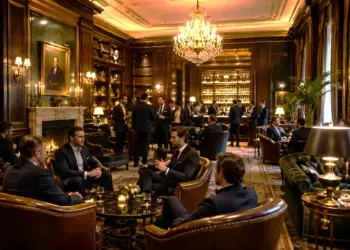
Exclusive private clubs have remained some of the most influential institutions in global wealth culture, attracting billionaires, CEOs, royalty, celebrities, and influential families who value access as much as luxury. In the modern era, exclusive private clubs represent far more than elegant dining rooms or premium amenities; they function as carefully curated environments where relationships, reputation, and opportunity intersect.
The rise of billionaire networking clubs and luxury social clubs reflects a broader shift in how wealthy individuals build influence. As global wealth becomes increasingly international, members seek communities that provide trusted connections across industries, cultures, and continents. Moreover, prestigious private clubs create a level of social access that cannot easily be replicated through digital platforms.
From historic London institutions to modern international communities, these spaces have become symbols of the global elite lifestyle. Membership often provides entry into wealthy social circles where business relationships, friendships, and cultural connections develop naturally. For many high-net-worth individuals, the value lies not only in the surroundings but in the people gathered inside.
In a world where information is abundant and access is increasingly valuable, private clubs continue to represent one of the rarest forms of luxury: belonging to a carefully selected community built on trust, influence, and shared standards.
Why Exclusive Private Clubs Still Matter?
The history of private clubs is deeply connected to the evolution of influence and social organization. For centuries, elite institutions have served as meeting places where leaders, entrepreneurs, artists, and decision-makers exchange ideas and develop relationships.
Originally, many clubs focused on shared professions, interests, or social backgrounds. Over time, they evolved into sophisticated networks where membership itself became a form of social capital. The ability to enter certain spaces signaled trust, reputation, and alignment with a particular community.
Today, exclusive private clubs remain relevant because modern wealth operates through relationships. Financial opportunities, partnerships, and cultural influence often emerge through personal connections rather than formal transactions. A conversation at the right table or introduction through a trusted member can create opportunities that public networks cannot provide.
However, the appeal of these clubs extends beyond business. They provide environments where members can interact without the pressure and visibility found in public spaces. Privacy allows conversations to happen more openly, which strengthens the value of membership.
The modern club also reflects changing expectations among wealthy individuals. Younger generations of affluent members increasingly seek communities built around experiences, creativity, and shared values. Therefore, the best clubs continue adapting while preserving the exclusivity that makes them desirable.
The lasting power of private clubs comes from their ability to combine tradition with relevance. They preserve history while creating new forms of connection for a changing global elite.
The Membership Process: Access, Scarcity, and Status
The most desirable private clubs maintain their reputation through controlled access. Unlike conventional businesses, they do not simply sell memberships to anyone willing to pay. Instead, they protect exclusivity through selection processes designed to preserve culture and trust.
Many prestigious clubs rely on invitation systems, recommendations, and member sponsorships. Prospective members may undergo reviews that consider professional achievements, reputation, and compatibility with the existing community.
Scarcity plays a major role in creating value. When membership remains limited, demand naturally increases. Waiting lists and selective admission processes reinforce the perception that membership represents something rare.
The process often includes several elements:
- Member recommendations and sponsorship
- Review of personal and professional background
- Consideration of cultural fit
- Limited membership availability
- Community reputation protection
Moreover, exclusivity is not only about restriction; it is about maintaining a certain atmosphere. Members expect discretion, respect, and shared standards from those around them.
This approach explains why invitation-only clubs continue attracting attention from global wealth circles. The difficulty of joining becomes part of the experience itself, transforming membership into a symbol of trust and recognition.
Inside the World’s Most Prestigious Private Clubs
Across the world, a small number of private clubs have achieved legendary status. Each represents a different interpretation of elite membership, from traditional British institutions to modern international communities.
Annabel’s in London remains one of the most famous examples. Known for its luxurious design, celebrity members, and cultural influence, the club represents the evolution of traditional private clubs into immersive lifestyle experiences.
Soho House offers a different model by focusing on creative industries and global communities. With locations across major cities, it has expanded the concept of private membership by connecting artists, entrepreneurs, and cultural figures.
Core Club in New York emphasizes business, innovation, and intellectual exchange. Its appeal comes from bringing together executives, investors, and leaders across different industries.
The Battery in San Francisco combines hospitality, entrepreneurship, and community. It has become closely associated with technology leaders and creative professionals.
5 Hertford Street in London maintains a highly selective atmosphere with a reputation for discretion and traditional elegance. Its appeal comes from privacy, heritage, and influential membership.
| Club | Location | Defining Advantage | Prestige Level |
|---|---|---|---|
| Annabel’s | London | Luxury lifestyle and global influence | Exceptional |
| Soho House | Global | Creative community and international network | High |
| Core Club | New York | Business connections and innovation | Exceptional |
| The Battery | San Francisco | Entrepreneurial culture and community | High |
| 5 Hertford Street | London | Privacy, tradition, and elite access | Exceptional |
These clubs demonstrate that private membership culture continues evolving. While their styles differ, they share the same foundation: creating trusted environments where influential people connect.
The modern private club succeeds because it provides something increasingly rare. It offers a physical space where relationships can develop naturally in an era dominated by digital communication.
The Business Power of Elite Networking
One of the strongest reasons wealthy individuals pursue private memberships is the opportunity to build meaningful relationships. In many industries, trust remains one of the most valuable currencies.
Elite business networking does not always happen through formal meetings. Often, important connections develop through informal conversations, shared experiences, and repeated interactions. Private clubs create the environment for these relationships to grow.
For entrepreneurs, investors, and executives, membership can provide access to potential partners, advisors, and collaborators. The value comes from being surrounded by individuals who operate at similar levels of influence.
Additionally, private clubs often attract family offices, venture investors, and business leaders who manage significant resources. This creates opportunities for partnerships and investment discussions that may never occur in public settings.