Case opening has always been a social activity for CS2 players, but Case Battles take that experience to a new level. Instead of opening cases alone and hoping for a good pull, Case Battles let players compete against friends or strangers in real time, opening identical sets of cases and comparing results to see who comes out ahead. The format combines the excitement of unboxing with the competitive thrill of head-to-head matchups, and it has quickly become one of the most popular ways for CS2 fans to enjoy case openings together. Curious how past battles have played out? Here’s a closer look at how Case Battles work and why so many players keep coming back for more.
Case Battles Overview
Before jumping into a battle, it’s worth understanding exactly how the format works and the different variations you might come across.
What Exactly Is a Case Battle?
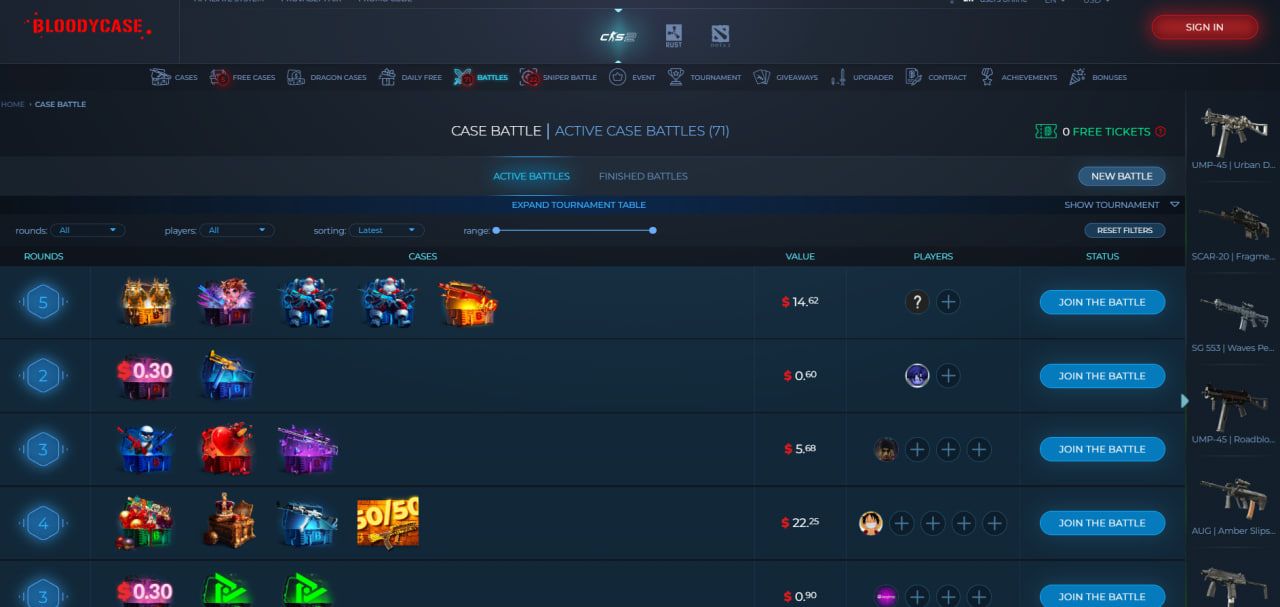
A Case Battle is a multiplayer mode where two or more participants each open the same selection of cases simultaneously. Once every case has been opened, the total value of each player’s drops is added up and compared. Depending on the battle mode, the player with the highest total value might take everything, or results might be split according to other rules set beforehand. Some formats even let players team up, combining their results against another team. In some cases, you can also review the battle history of other participants to see who won what in the past. The core appeal is simple: everyone opens the same cases under the same conditions, so the outcome comes down to luck and timing.
Popular Case Battle Modes
While the basic concept stays the same, platforms often offer several variations to keep things interesting:
- Classic Battle: The player or team with the highest total drop value wins everything.
- Team Battle: Players form teams, and combined results determine the winner.
- Crazy Mode: Random multipliers are applied to results, adding extra unpredictability.
- Jackpot-Style Battle: All entry value goes into a shared pool with one overall winner.
Each mode changes the dynamic slightly, but the shared thread is that everyone is opening the same cases at the same time, watching the results unfold side by side. That shared experience is part of what makes Case Battles feel different from solo case opening – there’s an audience, a comparison point, and a clear outcome the moment the last case is opened.
What Makes Case Battles So Appealing
Case Battles have grown popular for several reasons, and comparing them directly to solo opening helps explain why so many players are drawn to the format.
Why Case Battles Are So Popular
Case Battles tap into several things players already love about CS2’s economy. There’s the social element – opening cases with friends or watching strangers compete adds entertainment that solo opening can’t match. There’s also the competitive edge: even without a high-value pull yourself, there’s satisfaction in beating your opponent’s total. Case Battles often feel faster-paced and more dynamic, especially in modes with multipliers, keeping the outcome uncertain until the final case opens. For streamers, Case Battles also make for engaging content, since viewers can follow along and react in real time alongside the host.
Comparing Solo Opening vs. Case Battles
If you’re deciding whether to stick with solo case opening or try a battle, this quick comparison highlights the main differences.
| Feature | Solo Case Opening | Case Battle |
| Social interaction | Minimal | High – compete with others |
| Pace | Player-controlled | Synchronized with opponents |
| Outcome comparison | None | Direct, side-by-side results |
| Entertainment value | Personal | Shared and competitive |
Getting Involved in Case Battles
If you’re ready to try a battle for yourself, a little preparation and some research into past results can go a long way.
Following the Action and Past Results
One of the appealing things about Case Battles is that the results are usually easy to track and review afterward. If you’re curious about how previous battles have played out, what kinds of drops tend to appear, and how different modes compare in practice, you can check the battle history to see real outcomes from past matchups. Reviewing past results is also a useful way to get a feel for typical drop ranges before jumping into your first battle.
Getting Started With Your First Case Battle
If you’re new to Case Battles, it’s worth starting with smaller, lower-cost cases until you’re comfortable with how the format works. Pay attention to how the different modes calculate winners, since that affects strategy more than people expect – a Crazy Mode battle, for example, rewards a different mindset than a straightforward Classic Battle. Inviting friends to join is also a great way to make the experience more enjoyable, since part of the fun comes from reacting together to the results as they happen.
Should You Try a Case Battle in CS2?
Case Battles have become a staple of the CS2 case-opening scene because they turn a familiar activity into something more social, competitive, and exciting. Whether you’re battling friends for bragging rights or jumping into matchups online, the format adds a layer of fun that solo opening simply doesn’t offer. Give it a try, start small, and see why so many players consider Case Battles one of their favorite parts of the CS2 economy.