Two guests can book the same suite at the same price and leave with completely different memories. The difference is rarely the room. It is how well the stay was tailored to them.
For affluent travelers, that tailoring has become the real measure of luxury. Marble and thread count are table stakes now.
What guests truly value is the feeling of being known. This is the quiet power of personalized hospitality, and the data behind it is striking.
Key Takeaways
- Personalization, not opulence, now defines a premium stay.
- Guests will pay more for service shaped around their preferences.
- Human warmth remains the part technology cannot replace.
- The best results come from blending data with genuine care.
Why Personalization Outranks Opulence
Luxury once meant chandeliers and gold trim. Today it means a stay that feels built around one person rather than the average guest.
The shift is from material to emotional value. A spacious suite no longer impresses on its own.
Guests remember the moments between check in and checkout. A remembered name, a favorite drink waiting, a quiet table held without being asked.
What the Numbers Say
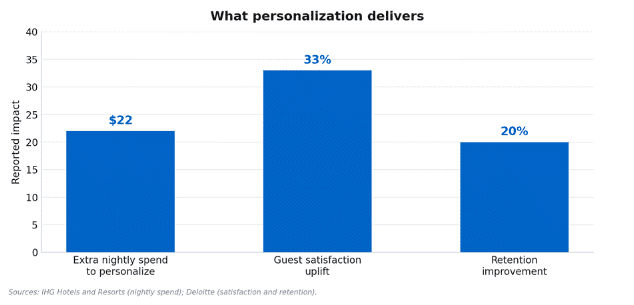
The appetite for tailored service is measurable. IHG Hotels and Resorts found that guests chose to spend about 22 dollars more per night, on average, to customize their room to their liking.
The payoff runs both ways. Deloitte research links advanced personalization to guest satisfaction gains of up to 33 percent and retention improvements of as much as 20 percent.
That is why personalization now sits at the center of luxury strategy rather than the edges. It builds loyalty that discounting never could.
The Human Element
Technology can flag a preference, but it cannot deliver warmth. The memorable part of a stay still depends on authentic human interaction.
The best properties let systems handle the transactional so staff can focus on the relational. Quiet competence behind the scenes frees people to connect.
That balance is the art. Data tells the team what a guest might want, and a trained host delivers it with sincerity.
A Case for Family Run Hospitality
Family owned groups often hold an edge here, because service is a legacy rather than a line item. Long tenured staff remember returning guests by name.
A good example sits in the Aegean. Travelers comparing the best hotels in mykonos often point to family run collections where personalized Greek hospitality has been refined across decades.
When the people who own the property also shaped its culture, care tends to feel sincere rather than scripted. That continuity is hard to copy.
How Personalized Service Compares
| Approach | Guest feeling | Loyalty impact |
| Standardized service | Comfortable but forgettable | Low repeat intent |
| Tech only personalization | Efficient yet impersonal | Moderate |
| Human led personalization | Recognized and valued | High repeat intent |
| Family run hospitality | Treated like a guest of the house | Very high |
Getting Personalization Right
Start before arrival. A short preference note lets a property prepare the room, the minibar, and the welcome with intention. It is one reason wealthy families travel differently from normal tourists.
Train and empower the team. Staff who can act on guest insights in the moment create the experiences people talk about later.
Protect the data and the trust. Discretion matters as much as attentiveness to discerning travelers.
Expert Take
Industry educators see personalization as the defining edge of modern luxury. Faculty at EHL Hospitality Business School describe a future where milestone moments are infused with a brand’s vision of sophistication and personalization.
The thread through their analysis is consistent. Tailored, emotionally intelligent service, increasingly extended into ultra-personalized wellness in luxury hotels, is what turns a property into a brand guests return to.
Frequently Asked Questions
What does personalized hospitality actually mean?
It means shaping a stay around an individual guest rather than offering a generic experience. That covers room setup, dining, service style, and anticipating needs before they are voiced.
Why do luxury travelers value it so highly?
Affluent guests can access opulence anywhere. What feels rare is being genuinely recognized, so service tailored to them carries more weight than amenities alone.
Does personalization justify a higher rate?
Often yes. Studies show guests will pay a premium for customization, and properties see stronger loyalty and repeat bookings in return.
Can technology replace human service?
No. Technology supports personalization by organizing preferences, but the warmth that guests remember still comes from skilled, attentive people.
Are family run hotels better at personalization?
They frequently excel because long serving teams and owner led culture make recognition feel natural. Continuity of staff helps returning guests feel remembered.
The Bottom Line
The future of luxury hospitality belongs to properties that make each guest feel singular. Opulence opens the door, but personalization is what guests carry home.
Blend smart use of data with sincere human care, and you create the rarest thing in travel. One that feels made for a single person.
References
TechMagic. 7 Ideas How To Implement Personalization in Hospitality (IHG nightly spend figure). https://www.techmagic.co/blog/personalization-in-hospitality-industry
Number Analytics. How Personalized Travel is Shaping Future Hospitality Trends (Deloitte satisfaction and retention figures). https://www.numberanalytics.com/blog/personalized-travel-hospitality-trends
EHL Hospitality Business School. Hospitality Industry Trends. https://insights.ehl.edu/hospitality-industry-trends
Fact Check: Personalization figures and expert commentary were verified against the cited industry sources as of June 2026. Sources are listed in the References section.