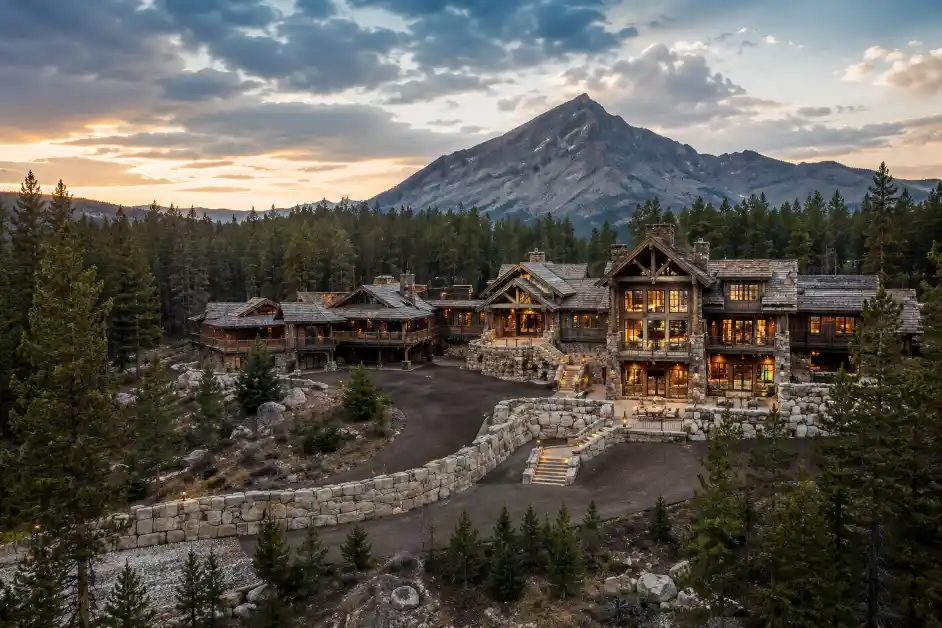
Modern luxury is no longer defined solely by five-star hotels, designer brands, or private jets. For the world’s wealthiest families, the new symbol of status is access to carefully curated environments where privacy, security, and exclusivity are guaranteed. Across the United States, a growing number of elite communities have emerged to meet this demand, yet none has captured the imagination of luxury watchers quite like Yellowstone Club.
Often described as the Yellowstone Club America billionaire playground, this private enclave in Big Sky, Montana, has become a benchmark for ultra-exclusive living. More than a ski resort or golf destination, it represents a self-contained ecosystem designed for billionaires, tech founders, celebrities, hedge fund managers, and legacy wealth families seeking refuge from the public eye.
The conversation around Yellowstone Club membership cost, the appeal of an exclusive ski and golf club Montana, and the rise of the ultra-rich private ski resort model reflects a broader shift in luxury culture. Today’s affluent buyers increasingly prefer controlled communities over crowded public destinations. Meanwhile, the modern billionaire private mountain club has become a powerful expression of hidden wealth and elite social identity.
In many ways, Yellowstone Club stands as the ultimate example of how privacy itself has become the world’s most valuable luxury asset.
What Makes Yellowstone Club America Billionaire Playground So Exclusive?
The defining feature of Yellowstone Club is that access cannot simply be purchased. Membership is tied to property ownership, and prospective buyers typically undergo extensive vetting before joining the community. Consequently, exclusivity is protected by both financial and social barriers.
Unlike public ski destinations, Yellowstone Club intentionally limits its resident and guest population. This approach reduces congestion while ensuring members enjoy private slopes, personalized services, and a highly curated social environment. Moreover, the club’s reputation depends on maintaining a close-knit community of individuals who value discretion.
Several factors reinforce the exclusivity of the Yellowstone Club America billionaire playground:
- Membership is linked to real estate ownership.
- Prospective members face approval and background review.
- Population growth is carefully managed.
- Guests enter only through member sponsorship.
- Privacy policies discourage public exposure.
Additionally, the absence of mass tourism means members rarely encounter crowds, paparazzi, or long waiting lines. Instead, they gain access to an environment designed around convenience, comfort, and trust.
Why Do Billionaires Choose Yellowstone Club Over Aspen or Vail?
Traditional luxury ski destinations such as Aspen and Vail remain globally recognized, but they also attract large numbers of visitors. For many ultra-high-net-worth individuals, that popularity reduces privacy and exclusivity.
Yellowstone Club offers an alternative. Members enjoy private ski terrain, member-only amenities, and a controlled environment where they can relax without public attention. Therefore, celebrities and business leaders often view the community as a safer and more discreet option than open-access resorts.
Another important advantage lies in the quality of networking. Residents often share similar lifestyles, business interests, and long-term investment perspectives. As a result, casual conversations on a ski lift or at a private dinner may connect founders, investors, and influential decision-makers.
Reasons wealthy families prefer Yellowstone Club include:
- Greater privacy and anonymity.
- Limited crowds and exclusive facilities.
- Strong security and controlled access.
- Access to elite peer networks.
- A fully integrated luxury lifestyle ecosystem.
| Feature | Exclusivity Factor | Member Benefit | Lifestyle Value |
|---|---|---|---|
| Private ski mountain | Member-only access | No public crowds | Maximum convenience |
| Real estate requirement | High entry barrier | Trusted community | Long-term prestige |
| Controlled guest policy | Limited outside access | Better privacy | Enhanced security |
| Curated membership | Elite peer group | Valuable networking | Social capital growth |
How Did Yellowstone Club Become the Ultimate Private Mountain Resort?
The story of Yellowstone Club is as remarkable as the community itself. Founded in the late 1990s by timber executive Tim Blixseth and Edra Blixseth, the vision was revolutionary: create the first fully private ski and golf resort in the United States where only members could access the slopes.
However, rapid expansion and the financial crisis eventually led the club into bankruptcy. The collapse attracted widespread media attention and raised questions about whether such an ambitious luxury concept could survive. Nevertheless, the property’s unique appeal remained undeniable.
A turning point came when investment firm CrossHarbor Capital Partners acquired the club and repositioned it for long-term growth. Since then, significant investments in infrastructure, amenities, and real estate have transformed Yellowstone Club into one of the world’s most prestigious private mountain communities.
Key milestones include:
- Original founding as America’s first private ski and golf club.
- Financial collapse during the global recession.
- Bankruptcy restructuring and ownership transition.
- CrossHarbor-led revitalization and expansion.
- Emergence as a symbol of modern ultra-luxury living.
Consequently, the club evolved from an ambitious experiment into an internationally recognized icon of private wealth.
Which Amenities Define Yellowstone Club as a Luxury Ecosystem?
Although skiing remains central to its identity, Yellowstone Club offers far more than winter recreation. The community functions as a year-round luxury ecosystem designed to meet virtually every aspect of members’ lifestyles.
The private ski mountain provides exclusive terrain reserved for members and their guests. Lift lines are minimal, slopes remain uncrowded, and service levels reflect the expectations of an elite clientele. Meanwhile, the championship golf course offers another signature attraction during warmer months.
Beyond sports, the club delivers a comprehensive suite of luxury amenities:
- Fine dining venues and private culinary experiences.
- Full-service spa and wellness facilities.
- Family-focused activities and children’s programs.
- Private concierge and property management services.
- Outdoor adventure experiences tailored to members.
Additionally, luxury hospitality extends into every interaction. From ski valets to customized travel arrangements, the club seeks to remove friction from daily life, creating an environment where convenience feels effortless.
Why Is Real Estate Inside Yellowstone Club So Expensive and Restricted?
Property ownership forms the foundation of membership. Unlike many clubs where dues alone secure access, Yellowstone Club requires buyers to invest directly in the community through residential real estate.
Limited inventory plays a major role in pricing. The number of available homesites, mountain residences, and luxury condominiums is intentionally constrained, preserving exclusivity while increasing long-term value. Consequently, demand frequently exceeds supply, especially as wealthy buyers seek private lifestyle destinations.
Several factors drive premium pricing:
- Mandatory property ownership for membership.
- Limited development opportunities.
- Scarcity of available inventory.
- Ongoing operational and homeowners’ association costs.
- Strong demand from global high-net-worth buyers.
Many purchasers also view ownership as a long-term investment. Beyond lifestyle benefits, the community’s reputation and limited expansion create the potential for sustained property appreciation.
| Asset Type | Price Range | Exclusivity Driver | Value Impact |
| Luxury Condominiums | Multi-million dollar range | Limited availability | Strong appreciation potential |
| Mountain Homes | High eight-figure market | Prime ski access | Prestige ownership |
| Custom Homesites | Premium land values | Build-to-suit exclusivity | Long-term scarcity |
| Ranch and Estate Properties | Ultra-luxury pricing | Privacy and acreage | Legacy asset value |
How Does Yellowstone Club Maintain Extreme Privacy and Security?
Privacy is arguably Yellowstone Club’s most valuable amenity. Unlike public resorts where tourists and media can circulate freely, this community carefully controls access through multiple layers of security.
Entry begins at gated checkpoints where only approved members, residents, staff, and authorized guests may proceed. Furthermore, private roads, dedicated security personnel, and member-only recreational zones reduce outside visibility.
Celebrity culture within the club is notably understated. High-profile residents and guests generally enjoy a shared understanding that discretion benefits everyone. Consequently, photographers, influencers, and unnecessary publicity remain largely absent.
Privacy measures include:
- Controlled access gates.
- Dedicated on-site security teams.
- Strict guest sponsorship requirements.
- Private member-only facilities.
- A culture that prioritizes confidentiality over publicity.
Therefore, members gain something increasingly rare in the digital age: the freedom to enjoy luxury without constant observation.
Why Is Big Sky, Montana Now a Billionaire Magnet?
Big Sky’s transformation into a destination for the ultra-wealthy reflects broader trends shaping luxury real estate across North America. Wealthy families increasingly seek large open spaces, lower population density, and direct access to nature.
Montana offers dramatic mountain landscapes, abundant land, and a lifestyle centered around outdoor recreation. Meanwhile, remote work and global connectivity have reduced the importance of living near traditional financial capitals. As a result, affluent buyers have become more willing to relocate or establish second homes in secluded regions.
Key factors driving migration include:
- Geographic isolation and natural beauty.
- Abundant outdoor recreation opportunities.
- Large private land holdings.
- Greater privacy than major resort towns.
- Growing demand for lifestyle-focused investments.
The success of Yellowstone Club has also helped establish Big Sky as a hub for luxury development, attracting additional investment and high-end communities.
How Does Yellowstone Club Compare to Aspen and Other Luxury Destinations?
Aspen, Vail, and several European ski resorts remain symbols of wealth and prestige. However, they operate primarily as public destinations where exclusivity is defined by accommodation choices rather than total access control.
Yellowstone Club follows a different philosophy. It limits participation from the beginning by restricting entry to members and their invited guests. In contrast, Aspen’s popularity means visitors regularly share slopes and public spaces with thousands of tourists.
Comparisons often focus on several distinctions:
- Aspen emphasizes culture and social visibility.
- Vail offers scale and public accessibility.
- European resorts combine heritage with international tourism.
- Yellowstone prioritizes privacy and community control.
- Members increasingly value curated environments over public prestige.
Consequently, the rise of private mountain clubs suggests that many affluent individuals now place greater importance on discretion than celebrity exposure.
Unique Insight: Why Privacy Has Become the Ultimate Luxury Investment
The rise of the Yellowstone Club America billionaire playground illustrates a larger transformation in global wealth culture. Increasingly, affluent individuals are investing not only in assets but also in environments that protect their time, relationships, and personal freedom.
Private mountain communities create ecosystems where trust becomes a shared currency. Members know they are surrounded by peers with similar expectations regarding discretion, security, and long-term value creation. Moreover, these curated communities reduce many of the risks associated with public luxury spaces.
In this sense, Yellowstone Club is not simply a resort—it is an investment in privacy itself, a commodity that continues to become more valuable as the world grows increasingly connected and transparent.
What Challenges Could Affect Yellowstone Club’s Future?
Despite its success, Yellowstone Club faces several long-term challenges. Rising real estate values have intensified debates about housing affordability and economic inequality in surrounding communities. Meanwhile, infrastructure demands and labor shortages create operational pressures.
Environmental concerns also shape the future of mountain developments. Climate trends, sustainability expectations, and land management policies may influence expansion strategies over the coming decades.
Potential challenges include:
- Escalating property prices.
- Environmental and sustainability scrutiny.
- Workforce and labor market pressures.
- Public debate around wealth concentration.
- Limited capacity for future expansion.
Nevertheless, the club’s emphasis on controlled growth and premium positioning may help it navigate these issues more effectively than larger public resort destinations.
What Does the Future Hold for Yellowstone Club America Billionaire Playground?
The future of Yellowstone Club appears closely tied to the evolution of global luxury itself. Wealthy families increasingly seek secure, private, and highly personalized experiences rather than traditional forms of conspicuous consumption.
The Yellowstone Club America billionaire playground is likely to remain a model for future private communities that combine luxury real estate, exclusive recreation, and carefully managed social ecosystems. Additionally, the migration of wealth toward lifestyle-driven destinations suggests continued demand for this privacy-first approach.
As ultra-high-net-worth individuals prioritize curated environments over public visibility, Yellowstone Club’s blend of controlled exclusivity, natural beauty, and world-class amenities positions it for lasting relevance. In many ways, it represents the future of hidden luxury—one where access matters more than attention.
Frequently Asked Questions
What is Yellowstone Club America billionaire playground?
Yellowstone Club America billionaire playground refers to the ultra-exclusive private ski and golf community in Big Sky, Montana, known for its billionaire membership, private amenities, and exceptional level of privacy.
How much does Yellowstone Club membership cost?
Membership costs can vary over time, but access generally requires purchasing qualifying real estate in addition to paying substantial initiation and annual membership fees.
Who owns Yellowstone Club?
The club was revitalized after bankruptcy through acquisition by CrossHarbor Capital Partners and continues to operate as a privately managed luxury community.
Why is Yellowstone Club so exclusive?
Its combination of mandatory property ownership, member vetting, limited population, and private recreational facilities creates a highly controlled environment.
Can anyone join Yellowstone Club?
No. Prospective members typically need to purchase eligible real estate and complete the club’s membership approval process.
What celebrities own homes in Yellowstone Club?
Various reports have linked prominent business leaders, entertainers, and athletes to the community, although the club’s culture strongly emphasizes discretion and privacy.
How does Yellowstone Club compare to Aspen?
Aspen is a prestigious public luxury destination, while Yellowstone Club provides a fully private, members-only experience with significantly greater control over access.
Is Yellowstone Club worth the cost?
For buyers who prioritize privacy, elite networking, and exclusive recreation, many view the investment as worthwhile beyond purely financial considerations.
Why do billionaires prefer private ski clubs?
Private ski clubs provide security, crowd-free experiences, trusted social circles, and access to luxury amenities unavailable at public resorts.
What makes Yellowstone Club different from other resorts?
Its integrated combination of private skiing, golf, luxury real estate, controlled access, and curated membership community distinguishes it from traditional destination resorts.