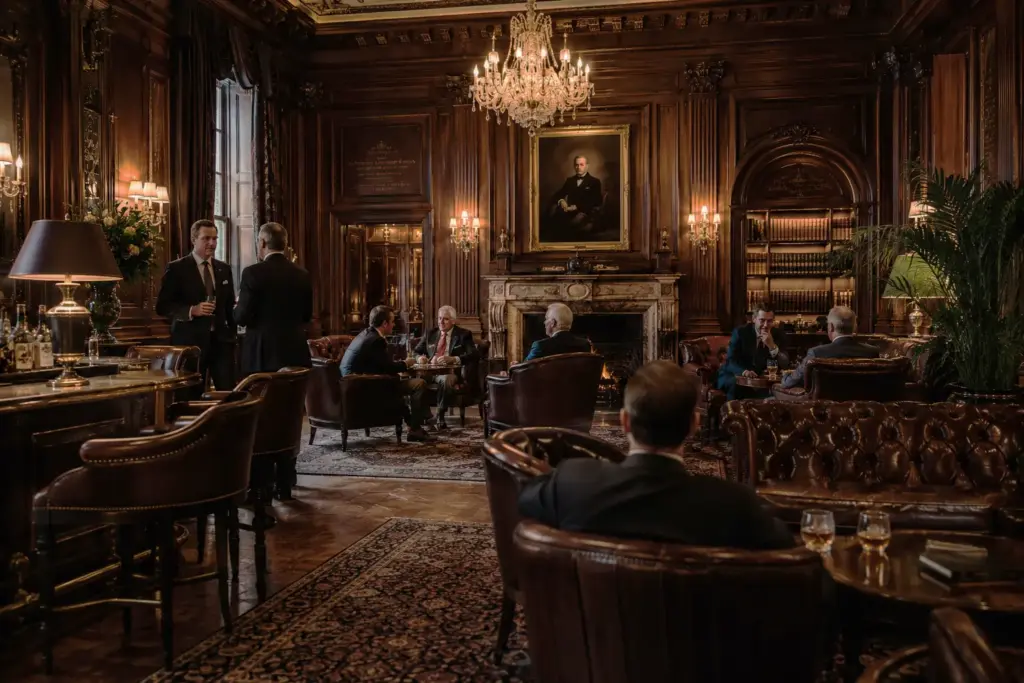
Luxury has always been associated with rarity, craftsmanship, and exceptional experiences. However, among today’s global elite, privacy has become an even more valuable commodity than material wealth. Behind unmarked entrances and discreet facades, a parallel social universe exists where billionaires, royals, celebrities, investors, and influential policymakers gather away from public scrutiny.
The rise of secretive private clubs in the world reflects a growing demand for environments where discretion, trust, and exclusivity outweigh publicity. Unlike traditional luxury venues that rely on visibility, these institutions thrive by remaining largely invisible. Their reputations are built not through advertising but through carefully guarded member networks and invitation-only communities.
Over the last century, most exclusive private clubs, have evolved from gentleman’s societies into global ecosystems connecting finance, politics, technology, art, and culture. Meanwhile, modern wealth creation has expanded the appeal of these spaces, attracting entrepreneurs and innovators alongside old-money dynasties.
Today, hidden luxury clubs function as symbols of status and influence. Access often depends not simply on financial resources but also on reputation, personal referrals, and social standing. In a world dominated by social media and constant exposure, secrecy itself has become the ultimate luxury asset.
What Makes the World’s Most Secretive Private Clubs So Exclusive?
The defining characteristic of elite clubs is that membership cannot simply be purchased. Although substantial joining fees and annual dues create a financial barrier, they are only one element of a much larger screening process.
Most of the secretive private clubs in the world operate through invitation-only systems. Existing members recommend candidates, and committees conduct extensive background evaluations to ensure applicants align with the club’s values and culture. Consequently, wealth alone rarely guarantees acceptance.
Additionally, many clubs intentionally limit their membership numbers to preserve intimacy and prestige. A smaller network increases trust while making every admission decision more significant. This scarcity reinforces the perception that access itself is a privilege.
Key factors that shape exclusivity include:
- Invitation or sponsorship from existing members.
- Rigorous reputation and background checks.
- Limited annual membership intake.
- Multi-stage approval committees.
- Strict behavioral and confidentiality standards.
Moreover, many clubs avoid public websites or detailed marketing campaigns altogether. Their mystique grows precisely because outsiders know so little about what happens inside.
Why Do Ultra-Wealthy Individuals Seek Secret Membership Clubs?
For many affluent individuals, privacy is no longer optional it is essential. Public visibility can attract unwanted attention, security risks, or intrusive media coverage. Therefore, secret membership clubs offer a controlled environment where members can interact freely.
Business networking represents another major attraction. Within these carefully curated communities, influential entrepreneurs, hedge fund managers, venture capitalists, and family office executives often meet in informal settings. As a result, partnerships and investments frequently emerge from private conversations rather than public conferences.
Furthermore, these spaces function as trusted social circles. Members know they are surrounded by peers who understand the unique challenges of managing substantial wealth, leading multinational companies, or maintaining high public profiles.
Common motivations include:
- Complete discretion and personal privacy.
- High-value networking opportunities.
- Access to influential political and financial circles.
- Prestige and social recognition.
- Trusted environments for long-term relationship building.
Nevertheless, the greatest appeal may be the sense of belonging to an elite community where access itself signals achievement and credibility.
| Club Feature | Secrecy Advantage | Member Benefit | Long-Term Value |
|---|---|---|---|
| Invitation-only entry | Protects community integrity | Trusted relationships | Stronger elite network |
| Confidentiality rules | Reduces public exposure | Greater privacy | Long-term reputation management |
| Limited membership | Maintains exclusivity | Personalized service | Lasting prestige |
| Private events | Restricts outside attention | Unique networking | Business and cultural influence |
How Do Secretive Private Clubs Maintain Absolute Privacy?
Privacy is not simply a marketing concept for these institutions—it is the foundation of their identity. Every aspect of club operations is designed to minimize information leaks and preserve member confidentiality.
Many clubs occupy discreet locations behind historic buildings, luxury hotels, or unmarked entrances. Some avoid prominent signage altogether, making them almost impossible to identify unless one already knows where to look. Meanwhile, advanced surveillance systems and private security teams ensure controlled access.
Additionally, clubs often require members and guests to comply with strict confidentiality agreements. Photography restrictions, mobile phone policies, and non-disclosure expectations create environments where high-profile individuals can speak openly without fear of exposure.
Privacy measures commonly include:
- Restricted-access entrances and hidden locations.
- Comprehensive guest verification systems.
- Strict no-photography or limited-device policies.
- Confidentiality agreements and member codes of conduct.
- Dedicated private security personnel.
For example, several prestigious London and New York clubs have developed reputations for protecting anonymity so effectively that business deals and political discussions can occur without attracting public attention.
Which Cities Host the Most Secretive Private Clubs in the World?
Although elite clubs exist globally, certain cities have become legendary for their concentration of private membership societies. These metropolitan centers combine financial power, cultural prestige, and international influence.
London remains one of the world’s most iconic club capitals. Historic establishments in areas such as St James’s and Mayfair have served aristocrats, financiers, and diplomats for generations. Their legacy, architecture, and traditions continue to define old-world exclusivity.
New York offers a different model, blending traditional institutions with modern entrepreneurial culture. Private members clubs here often attract hedge fund managers, media executives, and technology founders seeking elite networking opportunities.
Meanwhile, Paris combines heritage with artistic sophistication, while Hong Kong serves as a gateway connecting Asian and global business elites. Dubai, on the other hand, has rapidly emerged as a destination for modern luxury invitation-only clubs that cater to international investors and ultra-high-net-worth individuals.
Notable characteristics of these cities include:
- London: Historic prestige and aristocratic traditions.
- New York: Finance, media, and investment networks.
- Paris: Cultural sophistication and heritage.
- Hong Kong: International commerce and Asian influence.
- Dubai: Modern luxury and global wealth migration.
These destinations collectively shape the landscape of the world’s most exclusive clubs, creating hubs where influence and opportunity intersect.
Why Are Historic Elite Clubs Still Considered More Powerful Than Modern Ones?
Many contemporary luxury venues offer world-class amenities, yet older clubs often command greater respect. Their influence stems from generations of accumulated trust, institutional memory, and social continuity.
Legacy membership plays a significant role. Families sometimes maintain club affiliations across multiple generations, creating networks that extend beyond individual careers. Consequently, admission into these institutions often symbolizes acceptance into a long-standing social tradition rather than access to a simple leisure facility.
Moreover, historic clubs have frequently hosted influential figures from politics, diplomacy, business, and academia. Their meeting rooms and dining halls have witnessed private negotiations and relationships that helped shape industries and governments.
Factors contributing to historic prestige include:
- Multi-generational family membership.
- Long-established traditions and customs.
- Deep-rooted connections with influential institutions.
- Strong reputational capital built over decades.
- Enduring old-money social networks.
In contrast, many newer clubs focus on innovation and lifestyle, while older establishments continue to derive power from heritage and continuity.
| City | Club Culture | Exclusivity Level | Elite Influence |
| London | Aristocratic and historic | Extremely High | Global finance and diplomacy |
| New York | Business and investment | Very High | Wall Street and media |
| Paris | Cultural and intellectual | High | Arts and politics |
| Hong Kong | Commercial and international | Very High | Asian finance and trade |
| Dubai | Luxury and global entrepreneurship | High | International investment |
How Are Secretive Private Clubs Adapting to the Modern Digital Era?
The digital revolution has challenged the very concept of exclusivity. Social media encourages visibility, while technology makes information easier to access and distribute. However, elite clubs have responded by enhancing rather than abandoning their privacy standards.
Many institutions now use encrypted digital platforms for member communication and event management. Online vetting systems streamline the application process while maintaining rigorous screening standards. Additionally, biometric access controls and advanced cybersecurity measures protect sensitive member information.
Another important trend involves the changing profile of wealth itself. Technology entrepreneurs, startup founders, and digital investors increasingly join communities once dominated by inherited wealth. As a result, clubs have broadened their membership criteria without sacrificing exclusivity.
Modern adaptations include:
- Secure digital communication platforms.
- Advanced cybersecurity and data protection.
- Online referral and vetting systems.
- Global reciprocal membership partnerships.
- Services tailored to new-generation entrepreneurs.
Therefore, while the appearance of exclusivity may evolve, the underlying principles of trust and discretion remain unchanged.
Why Do Secretive Private Clubs Matter in Global Power Networks?
The significance of elite clubs extends far beyond luxury dining rooms or exclusive lounges. They often function as informal platforms where influential relationships develop and strategic decisions begin to take shape.
Business leaders frequently value face-to-face interactions conducted in confidential environments. Negotiations that might take months through formal channels can progress rapidly when participants already share trusted social circles. Consequently, these clubs become powerful engines of relationship-based commerce.
Political and cultural influence also plays a role. Diplomats, philanthropists, investors, and thought leaders often interact within these private settings, exchanging ideas and building alliances. While formal decisions occur elsewhere, the conversations that shape future collaboration frequently begin in these exclusive spaces.
Unique Insight: Why Trust Has Become the New Luxury
A defining characteristic of the secretive private clubs in the world is that they transform trust into a premium asset. In an age of information overload and public exposure, members increasingly value communities where confidentiality is assumed rather than negotiated.
Moreover, carefully curated memberships reduce uncertainty. Individuals know they are engaging with peers who have undergone extensive screening and share similar standards of conduct. As a result, these clubs create environments where long-term relationships can flourish, strengthening both business and social capital.
What Challenges Threaten the Future of Secretive Private Clubs?
Despite their resilience, elite clubs face a number of modern challenges. Public expectations around transparency and accountability continue to increase, especially when institutions appear inaccessible or socially exclusive.
Regulatory scrutiny also affects clubs that facilitate international networking and wealth management. Meanwhile, younger affluent generations often prefer flexible, experience-driven communities over rigid traditional structures. Therefore, many clubs must balance heritage with innovation.
Additional challenges include:
- Greater public demand for transparency.
- Regulatory and compliance requirements.
- Changing cultural attitudes toward exclusivity.
- Competition from luxury hospitality brands.
- Evolving expectations of younger high-net-worth members.
Nevertheless, many clubs have responded by modernizing services while preserving their core principles of privacy and selective access.
What Does the Future Hold for Secretive Private Clubs in the World?
The future of elite membership societies appears remarkably strong. As digital exposure increases, the demand for secure and private environments is likely to grow even further. Wealthy individuals increasingly recognize that trusted communities provide value that cannot be replicated online.
The secretive private clubs in the world are therefore evolving into sophisticated ecosystems that combine heritage with technology. Digital verification, global reciprocal networks, and modern luxury services enhance member experiences without compromising discretion.
Additionally, the expansion of international wealth means that cities beyond traditional financial centers may develop their own elite club cultures. Dubai, Singapore, and other emerging hubs already demonstrate how luxury invitation-only ecosystems can adapt to a globalized economy.
Ultimately, these institutions continue to thrive because they offer something increasingly rare: authentic privacy, meaningful relationships, and carefully protected access to influential communities. In a transparency-driven era, exclusivity remains one of the most powerful symbols of status, and secretive private clubs are likely to remain at the center of that world.
Frequently Asked Questions
What are secretive private clubs in the world?
Secretive private clubs in the world are invitation-based organizations that provide exclusive spaces for networking, leisure, and private interaction among carefully selected members, often including business leaders, celebrities, and wealthy individuals.
How do you join elite private members clubs?
Most elite private members clubs require sponsorship from existing members, extensive background checks, and approval from a membership committee.
Why are some private clubs so secretive?
Secrecy protects member privacy, encourages open discussion, strengthens trust, and preserves the exclusivity that defines the club’s identity.
Who can access ultra-private social clubs?
Access is typically limited to approved members and, in some cases, carefully vetted guests invited under strict club policies.
What makes hidden luxury clubs so exclusive?
Selective admissions, limited membership capacity, exceptional privacy standards, and prestigious reputations make hidden luxury clubs highly exclusive.
How much does membership cost in elite clubs?
Costs vary widely. Some clubs charge a few thousand dollars annually, while top-tier institutions may require substantial initiation fees and annual dues reaching tens of thousands of dollars.
Are secret membership clubs still relevant today?
Yes. In fact, growing concerns about privacy and meaningful networking have increased demand for secure, invitation-only communities.
Why do billionaires prefer private clubs?
Private clubs offer billionaires discreet environments for socializing, discussing investments, building partnerships, and protecting their personal privacy.
What cities have the most exclusive clubs?
London, New York, Paris, Hong Kong, and Dubai are widely recognized as leading centers for elite private club culture.
Are secretive private clubs in the world growing in popularity?
Yes. As digital exposure and public visibility increase, many affluent individuals seek curated communities that prioritize trust, confidentiality, and long-term relationships.