Preparing Next-Gen Leaders: How to Guide High Achievers Through College and Beyond
All loving parents, including ultra high net worth matriarchs and patriarchs, want their children to be happy and build a bright future. As fellow parents, we crave sound family relationships and genuine peace of mind. Driven families want to see their children grow into, contribute as, and connect as positively impactful leaders and human beings over time.
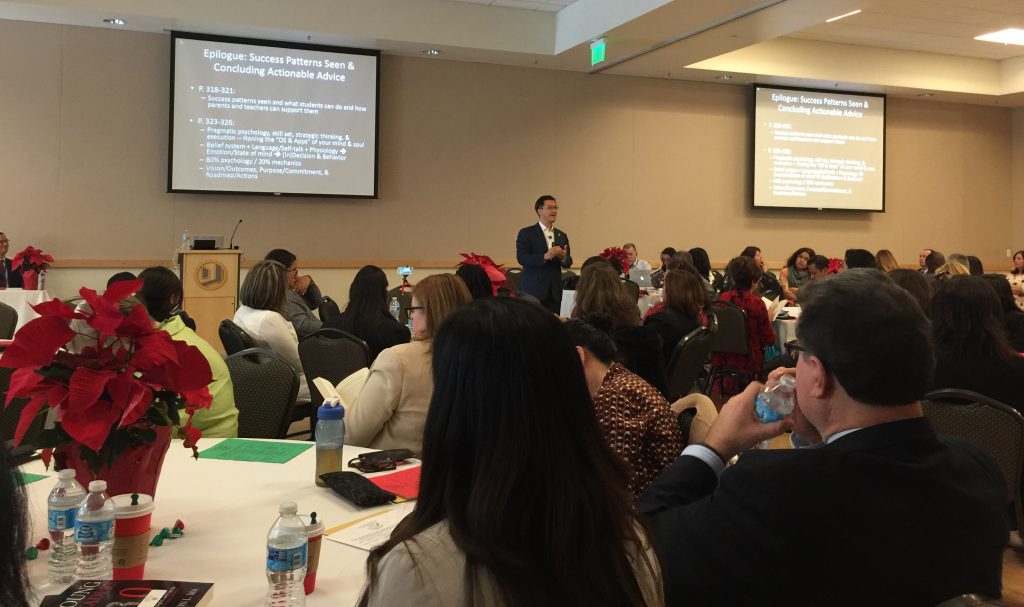
This piece offers actionable advice on what it truly takes to prepare the younger members of Gen Z, today’s high school and college transfer students, for competitive college admissions, leadership, university life, career, and personal success grounded in well-being. It draws on past talks delivered at a special event co-sponsored by alumni clubs from Harvard Business School, Harvard, Stanford GSB, Wharton, and Berkeley Haas, along with other high level gatherings. Throughout, the word college refers broadly to research universities and liberal arts colleges alike.
Seeing the Forest, Not Just the Trees
For most driven high school students and their parents, getting into a great college is typically viewed as the primary goal. After that, the focus shifts to thriving in a rewarding career and living a fulfilling life. Just as important, however, is building a strong personal operating system, soft skills, character, and direction early on, since these ultimately shape far greater life cycle impact, relationships, and peace of mind.
Having personally guided hundreds of mainly high achieving teens and young adults, including my own two Gen Z daughters, over the past fifteen years, and with thirty eight years of industry experience across education, technology, media, and investment since earning my Berkeley Engineering degree, I understand why these outcomes are so widely coveted. That said, they are genuinely difficult to achieve without thoughtful, quality preparation.
Today, most young people feel anxious or adrift, and high achievers in particular often carry significant stress. Between constant digital distraction and mounting pressure to succeed, teens are struggling to navigate an increasingly competitive landscape, one where most college applications are ultimately denied, even by highly qualified students, leaving many uncertain about their futures.
The Numbers Behind the Pressure
During the most recent college admissions cycle, Ivy League schools and other elite universities reported their lowest admission rates in history. Columbia University, for example, admitted freshmen at a hyper competitive rate of just 3.73 percent. Columbia is one of eight Ivy League institutions, alongside Brown, Cornell, Dartmouth, Harvard, Penn including Wharton, Princeton, and Yale. Admission rates at the Ivies and other elite schools, including Stanford, MIT, Berkeley Engineering, and Caltech, all fell into the single digits.
From an elite college’s perspective, book smart high schoolers with long lists of extracurricular activities, including private school students, are common. Unfortunately, schools like the Ivies, Stanford, MIT, and Berkeley Engineering can only accept a small fraction of their highly qualified applicants, with Harvard’s most recent freshman admit rate falling under 4 percent. I have personally, and uncomfortably, watched remarkable students, valedictorians with perfect SAT or ACT scores, flawless GPAs, rigorous course loads, and impressive honors, get flatly rejected by a top Ivy or Stanford. These institutions hold complete discretion to make that call.

But Surely Students Who Get In Are Fine, Right?
In reality, many students attending Ivy League and other highly competitive colleges face significant stress and anxiety once enrolled. Some struggle with depression, and a smaller number face even more serious challenges. Back in high school, many of these same students and their parents had narrowly focused on elite college admissions, sometimes influenced by media narratives or by counselors and consultants operating from their own limiting beliefs. Emotional, social, and leadership intelligence often went underdeveloped. Families, understandably, missed the forest for the trees. The result, for some, is a lingering sense of imposter syndrome that persists well into college.
College is not your child’s destination. It is part of their journey. It is essential to think long term through college, not narrowly at college. College functions as a stepping stone toward decades of career and personal growth still to come.
So What Actually Leads to Success?
Success comes down to the quality of a student’s academic and personal story, character, and storytelling, and how authentically that story aligns with a target school’s mission and values. Gaining admission to fiercely competitive elite colleges is genuinely difficult, given the sheer number of high achieving students with strong grades, impressive test scores, and meaningful activities all competing for the same limited spots. In this landscape, what students truly need is trusted, third party, high quality guidance capable of helping them unlock their full potential and pursue their best outcomes without sacrificing well-being.
Once children reach their tween or early teen years, they naturally begin to listen less closely to their parents, and many parents, however accomplished in their own careers, simply lack the specialized skills needed to guide them through this specific process. With more than 20,000 hours of coaching, mentoring, writing, speaking, and applied research experience, I have observed clear, recurring patterns behind both success and failure. Beyond academic performance and standardized testing, several key ingredients consistently separate successful outcomes from missed opportunities.
Start Early With Trusted, Expert Guidance
One of the most common and costly mistakes families make is starting too late, operating under the assumption that a student’s existing academic record, extracurricular involvement, or private school attendance will be sufficient on its own.
What many families don’t realize is that most school and independent counselors, including former elite admissions officers, often have limited real world sophistication when it comes to guiding an individual student’s development. This applies to private school counselors and, just as often, to overloaded public school counselors. By the time families reach the college application season of senior year, a student’s practical emotional, social, and leadership intelligence, along with their personal story and soft skills, often simply isn’t strong, differentiated, or competitive enough. The disconnect becomes painfully clear at exactly the wrong moment.
Once families recognize just how complex, competitive, and demanding the elite admissions process truly is, real stress sets in, along with a sense of lost opportunity. Unfortunately, a student’s history cannot be rewritten. I have seen this same pattern play out repeatedly, even among wealthy families who were never my own clients.
Build Good Habits and a Growth and Contribution Mindset
Truly successful, high achieving students share a foundation of sound habits paired with a growth and contribution mindset, a deeper and more useful orientation than growth mindset alone. Similarly, practical emotional, social, and leadership intelligence runs deeper than conventional emotional intelligence. Humility, the willingness to keep learning and improving, remains essential for both students and parents alike.
I place real value on integrity, contribution, growth, connection, and a genuine passion for excellence, and work to instill these qualities in my students. Beyond strong time management and an ability to stay focused despite constant online distraction, successful students tend to develop a handful of sustained, authentic interests they pursue consistently throughout high school. They build real character, a personal operating system, soft skills, and a clear sense of direction, qualities that add value to and inspire the communities around them, in high school, college, and well beyond.
Find an Inner Voice and Express It Powerfully
My most successful students share three traits: they are coachable, committed, and decisive, and we work closely with them to sharpen how they listen and express themselves authentically. That includes writing clear, compelling college application essays, cultivating genuine relationships with mentors and teachers, and earning outstanding recommendation letters. Essays and recommendation letters remain among the most important opportunities a student has to communicate their values, attitudes, and goals.
These materials give an applicant personality and help admissions staff identify the students they genuinely want to admit. Producing authentic, high quality writing that stands out requires real life experience, deep reflection, emotional maturity, and considerable practice thinking critically and communicating both in writing and aloud, ideally with thoughtful support along the way.
Applying to ten or more colleges has become the norm. High school seniors, along with college transfer applicants, often end up writing dozens of essays alongside detailed application forms, all while navigating private school interviews during application season. So stressful is a phrase I hear constantly from underprepared applicants, particularly those who start building their story and skills late, all while also managing a demanding senior year course load, AP or IB exam preparation, meaningful extracurricular commitments, and, if not already complete, SAT or ACT prep.
High achieving teens must learn to access their most authentic self while navigating an admissions process that is often stressful and hypercompetitive by design. College should be understood as an integral part of a much longer journey. Families are best served by thinking through college, with an eye toward short and long term life cycle gains, rather than narrowly at college. Helping kids understand both themselves and the wider world, express their individuality and passions in writing and speech, and develop their mindset, soft skills, character, and personal operating system early on remains essential.
A Story of Real Impact
“I got admitted to Columbia, Mr. Ma. I am extremely happy. Couldn’t sleep all night. I am incredibly grateful for all your guidance and believing in me from the start. I’ll never forget that. Thousand thanks to you and Team ThreeEQ.”
This is an excerpt from a message sent by a dear student. The daughter of a successful CEO, she was accepted into Columbia with an imperfect transcript, no traditional institutional hooks, and no SAT or ACT scores, an unusual profile even among high achievers. Yet Columbia recognized in her an exceptionally strong fit.
How was I able to contribute to outcomes like hers, and countless others like it? I have spent years refining the underlying approach to mentoring and coaching teen and young adult achievers toward meaningful success grounded in well-being. Our work focuses specifically on strengthening growth and contribution mindset, strategy, soft skills, and execution, driving greater short and long term impact, even among a student’s most driven peers.
The goal is always to help students build an attractive, authentic story, develop genuine storytelling ability, and present highly competitive, compelling applications that maximize their chances of admission to their dream schools, all while minimizing stress, confusion, and anxiety along the way.
The 4S and 3EQ Framework
My personalized, one on one coaching and mentoring approach centers on two interconnected frameworks.
The 4S framework includes a visionary story, encompassing character as the sum of all habits and choices, emotional and mental state of mind, strategy across academics, activities, test preparation, and the broader college process, soft skills alongside hard skills and talent, and disciplined execution.
The 3EQ framework centers on pragmatic emotional, social, and leadership intelligence.
Strengthening the 4S and 3EQ in my students empowers them toward greater life cycle impact, stronger relationships, and lasting peace of mind, across family, high school, college, community, and future workplaces or ventures, while helping them mitigate the risk of painful missed opportunities in an increasingly turbulent, ever changing world. Hard skills can become obsolete over time. Soft skills stay with you for life.
A Long-Term Investment, Not a Quick Fix
In my experience, personalized one on one coaching and mentoring proves far more effective and lasting than group coaching or mass market webinars and training products. Within ultra high net worth families, this work also tends to ease succession planning, grounded in sound family values rather than the usual stress, anxiety, and sleepless nights that so often accompany it.
Building genuinely strong character, a compelling story, and a well rounded skill set takes years. It cannot be conjured just in time during senior year of high school. Learning to think, speak, and write effectively is a slow, deliberate process, not something that can be rushed.
Wisely supporting your children means starting early, reducing unnecessary stress and anxiety, and helping them achieve real success grounded in well-being, ideally alongside a trusted, third party, top tier mentor by their side, and by yours. You and your children can absolutely do this.
Jason Ma is Founder and CEO of his family business, ThreeEQ, a premier education, career, global business, and family office advisory firm helping client families, companies, and individuals succeed at the next level through pragmatic emotional, social, and leadership intelligence. ThreeEQ is widely recognized as a preeminent college admissions, life, leadership, career, and executive coaching practice for high achievers, from Gen Z high school and college students to Gen X CEOs, and Jason is a sought after speaker on the topic.
Jason has personally counseled students who went on to gain admission to all eight Ivy League institutions, Stanford, MIT, Caltech, UChicago, Duke, UC Berkeley, Georgetown, and other elite universities and liberal arts colleges throughout the United States, as well as Oxford, Cambridge, and Imperial College in the UK, helping them succeed with genuine well-being rather than the stress and anxiety so often associated with the process. Jason is recognized as the inspiring Chief Mentor of Next Gen Leaders across The CEO Magazine, Impact Wealth Magazine, Family Office Magazine, and Fashion 4 Development’s League of Gentlemen, and is a regular presence at family office summits and CEO circles.
Jason is the author of the critically acclaimed book Young Leaders 3.0: Stories, Insights, and Tips for Next Generation Achievers. He previously served as a Forbes contributor covering mentoring young leaders for elite college admissions, higher education, leadership, and entrepreneurship success. Jason is a member of the B20, the official G20 business arm representing the global private sector, where he serves on the Future of Work and Education Taskforce.