The discussion surrounding the Djokovic French Open future has intensified following Novak Djokovic’s shocking exit from Roland Garros 2026. For nearly two decades, Djokovic has remained one of the defining figures in men’s tennis, consistently competing for Grand Slam titles while setting records that many believed would stand for generations. However, his latest defeat in Paris has created fresh uncertainty around what comes next.
Roland Garros holds special significance in Djokovic’s legacy. Although the French Open was historically his most difficult Grand Slam due to the dominance of Rafael Nadal on clay, Djokovic eventually transformed the tournament into one of his greatest achievements. Consequently, any setback in Paris carries symbolic importance beyond a single tournament result.
Meanwhile, men’s tennis is experiencing a dramatic generational shift. Younger players are arriving with greater athleticism, aggressive baseline games, and fewer psychological barriers when facing established legends. As a result, elite veterans increasingly face challenges maintaining dominance across long Grand Slam campaigns.
Moreover, physical demands continue to rise across professional tennis. Recovery windows have narrowed, match intensity has increased, and competition has become deeper than ever. Therefore, Djokovic’s French Open exit has sparked serious conversations regarding retirement speculation, reduced scheduling, and the next phase of his remarkable career.
The defeat does not diminish his legacy. Nevertheless, it raises important questions about how long he can continue competing at the highest level and what role he may play in the evolving landscape of men’s tennis.
What Happened at the French Open 2026?
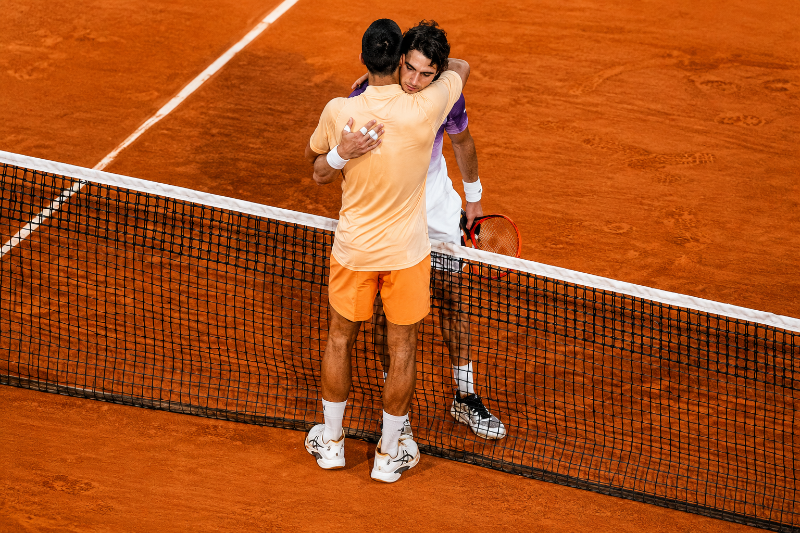
The defining moment of Roland Garros 2026 arrived when 19-year-old Brazilian star João Fonseca stunned Novak Djokovic in a dramatic five-set third-round battle. After nearly five hours on Court Philippe-Chatrier, Fonseca completed an extraordinary comeback from two sets down to win 4-6, 4-6, 6-3, 7-5, 7-5.
Initially, Djokovic appeared in control. He secured the opening two sets and seemed positioned for another deep Grand Slam run. However, Fonseca’s relentless aggression, powerful shot-making, and growing confidence gradually shifted the momentum. Consequently, the Serbian star struggled to contain the younger player’s intensity during the latter stages of the match.
The significance of the defeat extends beyond the scoreline. Djokovic entered the tournament as one of the leading contenders, particularly after early exits and injuries involving several major rivals. Therefore, many analysts viewed Roland Garros as one of his strongest opportunities to pursue a record 25th Grand Slam title.
Key reasons the loss became a major story include:
- Defeat against a 19-year-old emerging star
- Collapse after leading by two sets
- Earliest major Roland Garros exit in years
- Increased retirement discussion afterward
- Symbolic generational shift moment
As a result, the match immediately became one of the defining stories of the 2026 tennis season.
Why Djokovic’s French Open Future Is Now Uncertain?
Age remains the most obvious factor influencing the Djokovic career future discussion. At 39 years old, Djokovic continues competing against players nearly half his age. While his fitness standards remain exceptional, maintaining elite physical performance becomes increasingly difficult every season.
Moreover, Grand Slam tennis demands sustained excellence across two weeks of competition. Players must recover quickly, maintain focus, and withstand physically exhausting matches. Consequently, even minor declines in recovery speed can produce significant performance impacts.
Injury management also plays an important role. Although Djokovic has repeatedly demonstrated extraordinary resilience throughout his career, modern tennis places enormous strain on the body. Therefore, scheduling decisions become increasingly critical.
Adding to the uncertainty, Djokovic himself admitted after the loss that he was unsure whether he would return to Roland Garros in 2027. That statement immediately intensified speculation regarding his long-term future.
Factors Affecting Djokovic’s Future
| Factor | Djokovic Strength | Current Challenge | Impact on Future | Tennis Trend |
|---|---|---|---|---|
| Experience | Elite | Younger rivals improving | Moderate | Increasing youth influence |
| Physical Fitness | Excellent | Recovery demands | Significant | Higher athletic standards |
| Mental Strength | Historic advantage | Stronger young competitors | Moderate | Greater confidence among newcomers |
| Motivation | Strong legacy goals | Career completion questions | Significant | Veteran schedule reductions |
| Grand Slam Ability | Proven champion | Longer matches | High | More physical tournaments |
Therefore, uncertainty exists not because Djokovic lacks quality, but because the sport itself continues evolving rapidly.
The Rise of a New Generation in Men’s Tennis
The emergence of young players represents one of the biggest themes in men’s tennis 2026.
João Fonseca’s victory over Djokovic symbolizes a broader movement occurring across the ATP Tour. Younger athletes increasingly arrive prepared to challenge established stars immediately. Unlike previous generations, many show little hesitation when competing against legends.
Moreover, modern training systems develop players earlier. Advanced analytics, professional coaching structures, and improved athletic preparation allow younger competitors to reach elite levels more quickly.
Players such as Fonseca, Jakub Mensik, Rafael Jodar, and others represent a wave of talent reshaping the competitive landscape. Consequently, the traditional gap between veterans and emerging stars continues shrinking.
Several factors define the new generation:
- Greater physical intensity
- Aggressive baseline tennis
- Enhanced athletic movement
- Strong mental confidence
- Earlier professional development
As a result, generational transitions are occurring faster than in previous eras.
Physical Demands of Modern Grand Slam Tennis
Modern Grand Slam tennis places extraordinary demands on players.
Matches frequently exceed four hours, especially during later tournament rounds. Meanwhile, rallies have become faster and more physically demanding due to improvements in athletic conditioning and shot production.
For younger players, recovery remains manageable. However, older athletes face additional challenges. Consequently, sustaining elite performance across consecutive matches becomes increasingly difficult with age.
Training expectations have also changed dramatically. Modern players dedicate extensive time to conditioning, injury prevention, nutrition, and recovery science. Therefore, maintaining competitiveness requires constant adaptation.
Table 2: Evolution of Tennis Demands
| Era | Playing Style | Physical Demand | Career Longevity | Competitive Level |
| 1990s | Mixed styles | Moderate | Longer | Strong |
| Early 2000s | Baseline growth | High | Moderate | Strong |
| 2010s | Physical dominance | Very High | Moderate | Elite |
| 2020s | Maximum intensity | Extreme | More difficult | Extremely Deep |
In contrast to earlier periods, today’s players face deeper fields and greater athletic pressure across every round.
Djokovic’s Legacy at Roland Garros
Regardless of future results, Djokovic’s legacy at Roland Garros remains secure.
Throughout his career, the French Open represented both his greatest challenge and one of his greatest achievements. Competing during Rafael Nadal’s historic clay-court dominance forced Djokovic to elevate his level repeatedly.
Moreover, his victories in Paris carry enormous historical value. Winning multiple French Open titles while competing against Nadal on clay strengthened his case in the all-time greatness debate.
Several moments define his Roland Garros legacy:
- Multiple French Open championships
- Historic rivalry with Nadal
- Career Grand Slam achievements
- Record-setting longevity
- Memorable five-set victories
Additionally, Djokovic consistently demonstrated adaptability. Unlike many great players, he successfully reinvented aspects of his game throughout different stages of his career.
Consequently, his French Open legacy extends beyond trophies alone.
What Could Djokovic Do Next?
Several realistic pathways exist for Djokovic moving forward.
One possibility involves reducing his ATP Tour schedule while focusing primarily on Grand Slam events. Many veteran players adopt this strategy to preserve physical energy and maximize performance at major tournaments.
Meanwhile, selective participation could allow Djokovic to remain competitive without enduring the physical burden of a full calendar. Consequently, Wimbledon and the US Open may become larger priorities.
Another possibility involves gradually transitioning toward mentorship, exhibition events, or ambassador roles within tennis. However, retirement does not appear inevitable at this stage.
Potential next steps include:
- Reduced ATP schedule
- Grand Slam-focused calendar
- Strategic tournament selection
- Increased recovery periods
- Eventual retirement planning
Therefore, the conversation may shift toward sustainability rather than immediate retirement.
Impact on Men’s Tennis Landscape
Djokovic’s exit affects more than his personal career.
The result significantly altered the Roland Garros 2026 narrative by opening the draw for younger contenders. Moreover, it reinforced the perception that men’s tennis is entering a new competitive era.
Fans, sponsors, broadcasters, and tournament organizers all pay close attention to these transitions. Established stars drive audience engagement, yet emerging players create excitement regarding the future.
Meanwhile, rivalries are evolving. The sport increasingly depends on new personalities capable of attracting global audiences. Consequently, rising stars receive greater attention than ever before.
The broader implications include:
- More unpredictable Grand Slam tournaments
- Increased attention on younger players
- New rivalry development
- Commercial transition opportunities
- Expanded competitive balance
As a result, the ATP Tour appears poised for significant transformation.
The Future of Djokovic French Open Legacy
The future of the Djokovic French Open future conversation ultimately centers on legacy preservation.
Every legendary athlete eventually reaches a stage where maintaining dominance becomes more difficult. However, legacy depends not only on victories but also on how athletes adapt to changing circumstances.
Djokovic’s achievements already place him among the greatest players in tennis history. Therefore, future tournaments will likely shape perception around longevity and competitiveness rather than fundamentally altering his historical standing.
Moreover, potential final appearances at Roland Garros would carry significant emotional importance. Fans increasingly recognize that opportunities to watch legendary champions become rarer with each passing season.
Consequently, every future French Open appearance may hold added significance regardless of tournament outcome.
Unique Insight: Djokovic’s Situation Reflects a Larger Tennis Transformation
The Djokovic French Open future debate reflects a broader transformation occurring throughout professional tennis.
Elite sports careers are becoming increasingly difficult to sustain because physical intensity continues rising. Moreover, younger athletes now enter professional competition with unprecedented preparation and confidence.
As a result, generational transitions occur faster than before. Dominance no longer depends solely on skill or experience. Instead, adaptability has become equally important.
Additionally, emerging players are redefining expectations regarding movement, endurance, and baseline aggression. Therefore, even the greatest champions face growing pressure from younger competitors.
This reality does not diminish Djokovic’s achievements. Rather, it highlights the natural evolution of elite sports.
The sport is entering a new competitive era where succession arrives more rapidly, competition grows deeper, and maintaining dominance becomes increasingly difficult. Djokovic’s current situation symbolizes that transition perfectly.
No era lasts forever. However, true greatness often becomes most visible during periods of change.
Conclusion
Novak Djokovic’s shock Roland Garros exit represents one of the defining moments of the 2026 tennis season.
His defeat against João Fonseca highlighted both the rise of a powerful new generation and the increasing challenges facing veteran champions. Moreover, his post-match uncertainty regarding future French Open participation has intensified discussion about the next chapter of his career.
Nevertheless, Djokovic remains one of the greatest players in tennis history. His achievements, records, and influence extend far beyond a single tournament result.
The real question is no longer whether he belongs among the sport’s legends. Instead, attention has shifted toward how he adapts to the final phase of an extraordinary career.
Ultimately, the Djokovic French Open future discussion reflects the natural evolution of elite tennis—where every generation eventually passes the spotlight to the next.
FAQs
What happened to Djokovic at the French Open 2026?
Djokovic lost in the third round to 19-year-old Brazilian João Fonseca after leading by two sets.
Is Djokovic retiring after his French Open exit?
He has not announced retirement, although speculation increased following the defeat.
Why is Djokovic’s future uncertain?
Age, physical demands, scheduling decisions, and rising competition contribute to uncertainty.
How many French Open titles does Djokovic have?
Djokovic has won multiple French Open titles and remains one of the tournament’s most successful champions.
Who defeated Djokovic at Roland Garros 2026?
Brazilian teenager João Fonseca defeated Djokovic in five sets.
Is Djokovic still competitive at Grand Slam level?
Yes. Despite the loss, he remains capable of competing with the world’s best players.
What are Djokovic’s plans for 2026?
No final decision has been announced, although selective scheduling remains possible.
How does age affect tennis performance?
Recovery slows, endurance becomes harder to maintain, and physical stress increases.
Who are the rising stars in men’s tennis?
João Fonseca, Jakub Mensik, Rafael Jodar, and several other young players are emerging rapidly.
What is Djokovic’s legacy in tennis?
He is widely regarded as one of the greatest players in tennis history due to his records, longevity, and Grand Slam success.