Your Most Prized Possessions Could Be Your Most Powerful Financial Tool
Luxury asset financing lets you borrow against the things you’d never sell — your Patek Philippe, your Basquiat, your 1965 Ferrari — without giving them up or triggering a taxable event.
Here’s the quick answer for anyone who wants it fast:
What is luxury asset financing?
- You pledge a high-value physical asset (art, watches, cars, jewelry, yachts, wine) as collateral
- A lender — typically a non-bank specialist, private bank, or auction house — advances you a loan
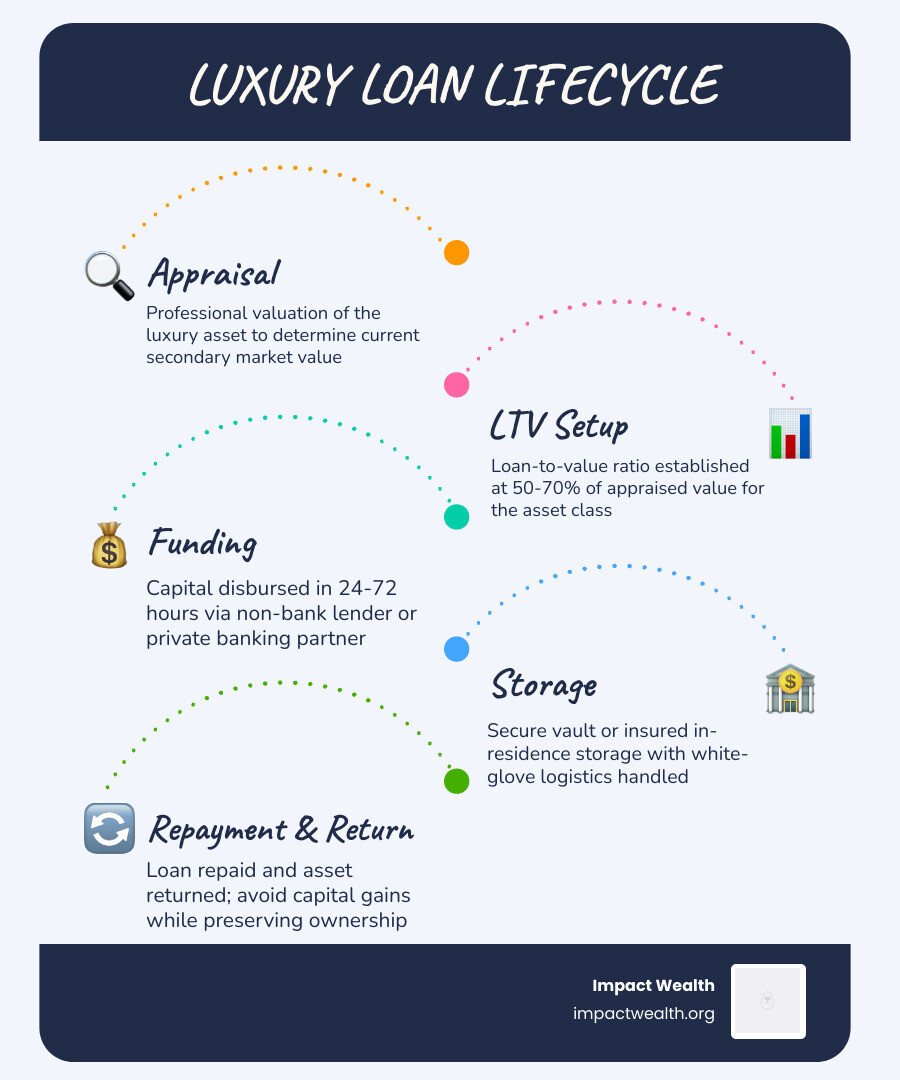
- Loan-to-value (LTV) ratios typically range from 50% to 70% of the asset’s current secondary market value
- Interest rates generally run 2% to 4% per month, depending on asset type and loan size
- Funds can arrive in as little as 24 to 72 hours
- No credit check, no income verification, no public record in most cases
- Your asset is returned when the loan is repaid
It’s a strategy that has quietly moved from niche to mainstream among ultra-high-net-worth individuals. Sotheby’s Financial Services alone has originated more than $12 billion in loans since its launch, with individual loans ranging from $1 million to $250 million. Meanwhile, specialist non-bank lenders have funded tens of thousands of smaller transactions across every asset class imaginable.
The core appeal is simple: your best assets are already working hard as stores of value — why not put them to work as sources of capital too?
Whether you need short-term liquidity, want to fund a new acquisition without selling existing holdings, or need to cover an estate tax bill without a forced sale, luxury asset financing offers a discreet and flexible path.
The Strategic Power of Luxury Asset Financing

In the current landscape of May 2026, wealth is no longer just about what you have in the bank; it is about how efficiently you use what you own. For many of us, our wealth is tied up in “passion assets”—collections that have taken decades to curate. Selling them to raise capital is often the least attractive option, especially when those items are Alternative Investments that continue to outperform the S&P 500.
Luxury asset financing serves as a strategic bridge. By using these items as collateral, we can access non-recourse debt. This means the loan is secured solely by the asset; if things go sideways, the lender takes the car or the painting, but they don’t come after your other holdings or your home in Bal Harbour. This structure provides a layer of financial protection that traditional “full-recourse” bank loans simply cannot match.
Furthermore, borrowing against an asset allows you to avoid “triggering a taxable event.” If you sell a 1950s Mercedes that has appreciated by $2 million, you’re looking at a massive capital gains tax bill. By financing it instead, you get the cash you need while the asset stays in your portfolio, potentially continuing to appreciate.
Unlocking Liquidity through Luxury asset financing
Liquidity is the lifeblood of opportunity. We’ve seen many clients use a Luxury Asset Line of Credit to manage cash flow during lean months or to pivot quickly when a new business venture arises. Instead of waiting months for a traditional bank to verify income and run credit checks, Smart Investments can be funded in days.
This type of financing allows for debt-to-equity optimization. Why keep $5 million in “dead capital” sitting in a climate-controlled garage when you could borrow $3 million against it to fund a Private Equity play? It’s about making every dollar—and every asset—work for you.
Strategic Borrowing for Estate and Tax Planning
One of the most powerful use cases for luxury asset financing is in the realm of estate planning. When a high-net-worth individual passes away, the IRS often demands estate taxes within nine months. If the estate consists of a massive art collection but limited cash, the heirs might be forced into a “fire sale” to meet the deadline.
By using Portfolio Diversification strategies that include asset-backed lending, heirs can borrow against the collection to pay the taxes. This buys them time to wait for the right auction season or to keep the collection intact for the next generation, maintaining the “step-up in basis” and preserving family legacy.
High-Value Collateral: What Can You Finance?

The world of luxury collateral is far broader than most people realize. While fine art and classic cars are the “big two,” lenders have become incredibly sophisticated in valuing a wide array of high-end goods.
Commonly accepted assets include:
- Fine Art: Blue-chip contemporary, impressionist, and modern works (e.g., Warhol, Basquiat, Richter).
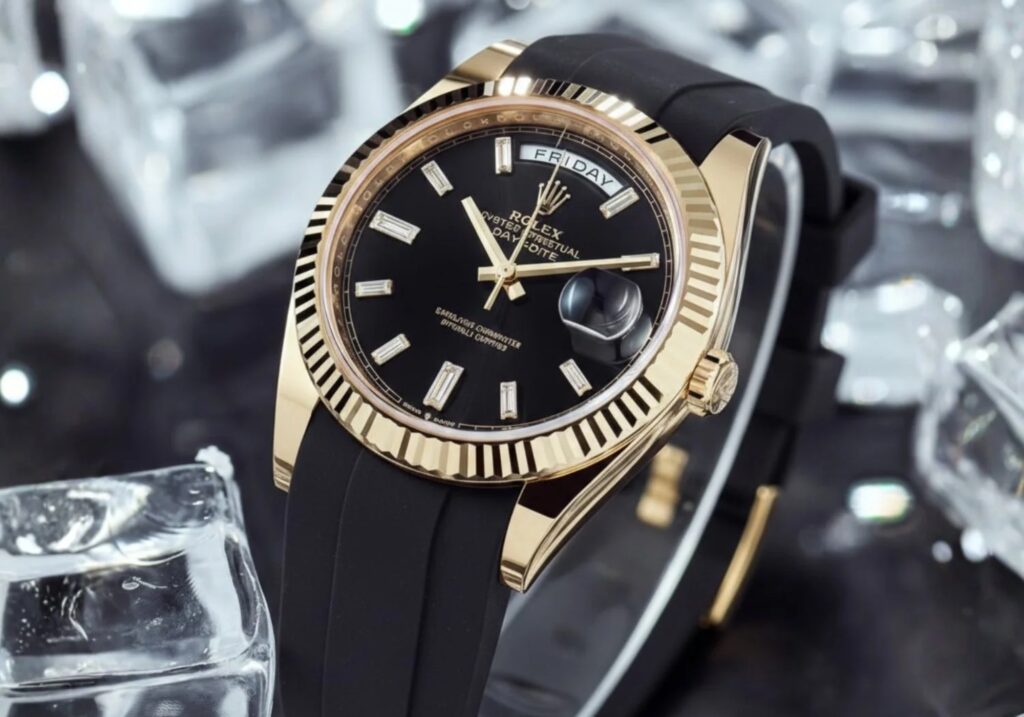
- Watches: Haute horlogerie from Patek Philippe, Rolex, Audemars Piguet, and Richard Mille.
- Classic Cars: Rare Ferraris, Porsches, and pre-war classics with documented provenance.
- Jewelry & Diamonds: Large GIA-certified stones and signed pieces from Cartier, Van Cleef & Arpels, or Graff.
- Yachts & Jets: Though these involve more complex technical documentation and registration hurdles.
- Fine Wine & Whisky: Pristine collections with impeccable storage records.
Provenance and the Appraisal Process
You can’t just walk in with a painting and walk out with a check. The appraisal process is rigorous. Lenders look for Investment Stability by verifying the “Three P’s”: Provenance, Pedigree, and Presence.
Specialist underwriters will examine the chain of ownership and the physical condition of the item. For a car, this means matching numbers and original parts; for art, it means inclusion in a catalogue raisonné. Because these loans are asset-based, the lender’s only security is the item itself, so they must be 100% certain of its secondary market value. Sotheby’s Financial Services and other major players often use their own internal experts to ensure the valuation is “institutional grade.”
Specialized Assets: From Rare Violins to Designer Handbags
In recent years, the market has expanded to include niche categories. High-value musical instruments (Stradivarius, anyone?) and even pristine designer handbags (Hermès Birkins and Kellys) are now viable collateral.
For those holding precious metals, Gold as a Strategic Investment remains one of the easiest assets to finance, often commanding the highest LTV ratios (up to 70%) because of its inherent liquidity and stability.
Understanding LTV Ratios and Interest Rates
The “Loan-to-Value” (LTV) ratio is the percentage of the asset’s value that the lender is willing to give you. Because luxury markets can be fickle, lenders rarely go above 70%. They need a “buffer” in case the market for, say, vintage Rolex Daytonas takes a dip.
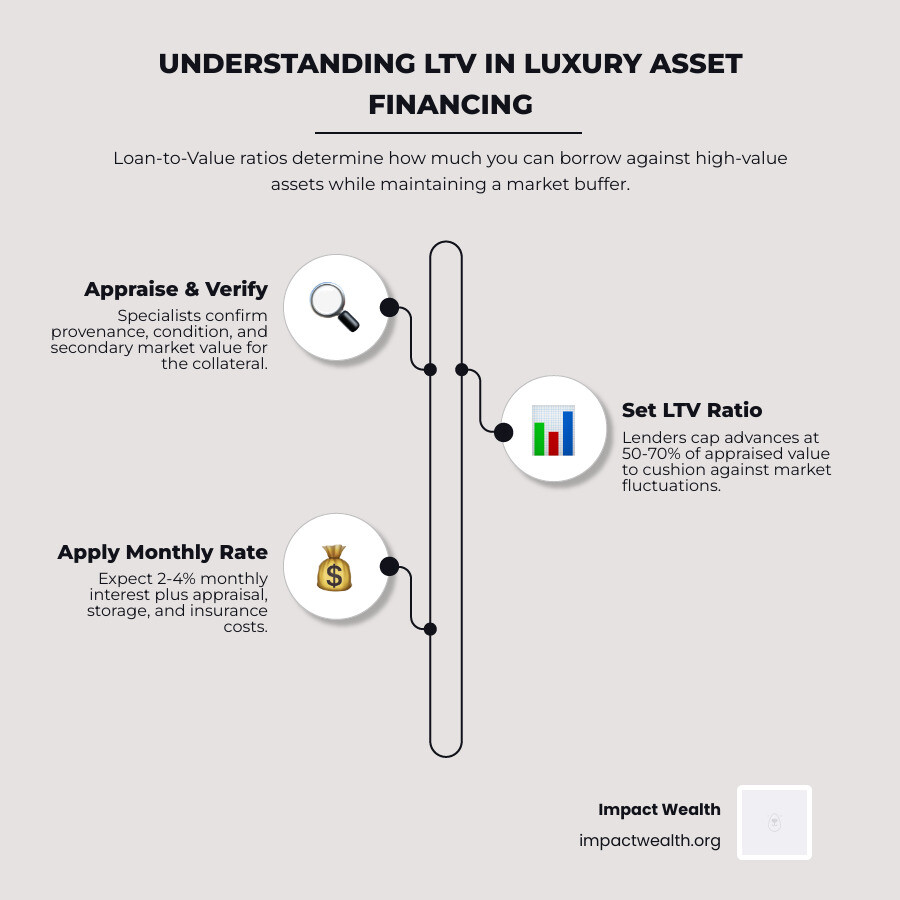
Interest rates in the non-bank sector typically range from 2% to 4% per month. While this is higher than a traditional mortgage, you are paying for speed, privacy, and the lack of personal liability. There are also associated costs to consider:
- Appraisal Fees: Paying for the expert to verify your asset.
- Storage Costs: Most lenders require the asset to be kept in a secure, third-party vault.
- Insurance: The asset must be fully insured for its replacement value during the loan term.
In High Inflation Periods, these loans can actually be quite attractive, as the appreciation of the asset might offset a significant portion of the interest cost.
Managing Market Volatility in Luxury asset financing
The biggest risk in this space is a “margin call” or a sudden drop in market value. If you borrow $1 million against a $2 million painting, and a similar painting sells at auction for $1.2 million, your LTV has suddenly spiked. The lender may ask you to pledge more collateral or pay down a portion of the loan.
To avoid The Top 5 Mistakes Beginners Make When Investing in this space, always ensure you have a liquidity cushion. Don’t borrow the absolute maximum if you don’t have the means to cover a market fluctuation.
Choosing the Right Lender: Private Banks vs. Boutique Firms
Where you get your loan depends on your needs.
- Private Banks: Banks like HSBC or specialized arms of major institutions offer the lowest rates but the most “red tape.” They will often look at your entire balance sheet and may require you to move your investment portfolio to them.
- Auction Houses: Sotheby’s Financial Services is the titan here. They understand the assets better than anyone and offer loans from $1 million to $250 million, often to help collectors buy more at their own auctions.
- Boutique Non-Bank Lenders: Companies like Luxury Asset Capital or Finspire focus on speed. They can often fund a loan in 24 hours with zero credit checks. This is the ultimate “discreet” option.
The Difference Between One-Time Loans and Revolving Lines
A one-time collateral loan is simple: you give them the asset, they give you a lump sum, you pay it back in 6–12 months.
A Luxury Asset Line of Credit is more like a HELOC for your toys. You leave your assets in the lender’s vault, and you can draw funds whenever you want, only paying interest on what you use. This is becoming incredibly popular for Family Offices who want to be ready when a New Investment Opportunity—like a stake in a sports franchise—suddenly becomes available.
Logistics: Storage, Insurance, and Global Shipping
When you finance a luxury asset, you usually have to part with it physically. Lenders use “white-glove” transit services to move your asset to a secure, bonded warehouse or a high-security vault in cities like New York, Los Angeles, or London.
However, for very high-value art collections, some lenders (like Sotheby’s) may offer “in-residence” collateral options, where the art stays on your walls but the lender takes a legal lien against it. This requires specialized insurance riders and legal filings (UCC-1 in the States), but it allows you to keep enjoying your collection.
Frequently Asked Questions about Luxury Asset Loans
How quickly can I access funds through luxury asset financing?
For boutique lenders, the process is incredibly fast. Once the asset is physically inspected and appraised, funds are typically wired within 24 to 72 hours. If you are an existing client with assets already in a lender’s vault, you can sometimes access funds in as little as one hour.
Will I be able to keep my assets on display during the loan term?
In most cases, no. The lender needs “possession” to secure their interest. Your assets will be stored in a secure, climate-controlled facility. However, for elite art collections or large-scale assets, “in-residence” agreements can be negotiated, though they involve more complex legal and insurance requirements.
Are these loans reported to credit bureaus or public records?
Generally, no. Most non-bank luxury asset financing providers do not report to credit bureaus like Experian or TransUnion. The loan is private and based solely on the asset. This makes it a favorite for those who value absolute discretion or who don’t want to impact their personal credit score for a short-term business move.
Conclusion
At Impact Wealth, we believe that true wealth is about flexibility. Whether you are in Bal Harbour, Beverly Hills, or the Middle East, your luxury collection is more than just a hobby—it is a sophisticated financial reserve. By understanding the nuances of luxury asset financing, you can maintain your lifestyle and your legacy while ensuring you always have the capital to seize the next big opportunity.
For more insights on managing high-value portfolios and More info about family office services, stay tuned to our latest investment guides.