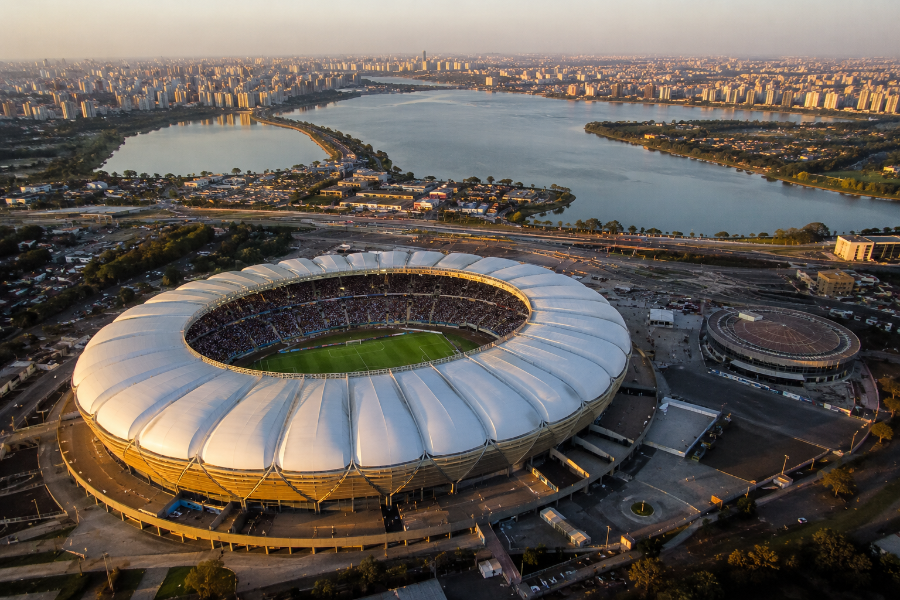
The Cost of Hosting a FIFA Tournament has increased dramatically over the last two decades. Modern FIFA World Cups are no longer limited to football stadiums and match operations. Instead, they have evolved into massive economic projects that reshape transportation systems, urban infrastructure, tourism industries, digital broadcasting networks, and national branding strategies. As a result, hosting a FIFA tournament now requires billions of dollars in long-term investment planning.
Countries continue bidding aggressively for FIFA tournaments despite rising expenses. Moreover, governments often view the World Cup as an opportunity to accelerate infrastructure projects that might otherwise take decades to complete. Stadiums, airports, rail systems, hotels, and telecommunications networks frequently receive rapid upgrades during preparation phases. Consequently, the tournament becomes part sports event and part national development initiative.
However, the financial debate surrounding FIFA tournaments has also intensified. Critics point to budget overruns, underused stadiums, and public spending pressures after tournaments conclude. On the other hand, supporters argue that tourism growth, global visibility, investment attraction, and infrastructure modernization can generate benefits over many years. The economic outcome therefore depends heavily on long-term planning quality rather than tournament-month revenues alone.
Recent tournaments highlight the scale of modern investment. 2022 FIFA World Cup demonstrated how infrastructure-heavy hosting has become, while 2026 FIFA World Cup represents a more distributed hosting model using existing stadium infrastructure. These contrasting approaches reveal how the economics of FIFA tournaments continue to evolve.
Why Hosting a FIFA Tournament Is So Expensive?
The primary reason behind the high Cost of Hosting a FIFA Tournament is infrastructure development. FIFA requires world-class stadiums, training facilities, transportation systems, accommodation capacity, media infrastructure, and security operations. Moreover, host nations often expand projects beyond FIFA’s minimum standards to maximize international prestige and long-term urban development goals.
Stadium construction and renovation typically absorb a major share of tournament budgets. Modern venues must include advanced broadcasting technology, hospitality suites, sustainability systems, and strict safety compliance. Consequently, even countries with existing football infrastructure frequently invest heavily in upgrades. For example, large-scale renovations can cost hundreds of millions of dollars per venue.
Transportation investment also plays a central role. Airports, highways, rail networks, and urban transit systems often require expansion to handle millions of international visitors. Meanwhile, governments frequently accelerate public transport modernization to improve mobility between host cities. These projects may provide long-term economic value, yet they substantially increase upfront tournament spending.
Several additional cost factors continue driving expenses upward:
- Advanced security and surveillance systems
- Digital broadcasting infrastructure upgrades
- Hospitality and hotel capacity expansion
- Sustainability and environmental compliance
- Fan zone construction and urban beautification
Furthermore, FIFA tournaments now operate within a highly commercialized global media environment. Broadcasters expect cutting-edge production capabilities, while sponsors demand premium hospitality and advertising integration. As a result, tournament operations increasingly resemble global corporate entertainment platforms rather than traditional sporting competitions.
Breakdown of the Cost of Hosting a FIFA Tournament
Understanding the Cost of Hosting a FIFA Tournament requires separating direct infrastructure spending from operational expenses. Infrastructure projects often dominate total investment figures, especially in developing or rapidly urbanizing economies. However, tournament operations themselves also require enormous financial coordination.
Direct infrastructure spending usually includes stadiums, transportation systems, telecommunications upgrades, airport modernization, and accommodation expansion. Additionally, governments often fund surrounding urban redevelopment projects linked to host venues. These improvements may support long-term economic growth, although their benefits vary significantly between countries.
Operational tournament costs represent another major category. Security personnel, event logistics, volunteer management, healthcare systems, traffic coordination, and emergency services create substantial short-term expenses. Consequently, tournament-month spending can rise quickly even after infrastructure projects finish.
Marketing and international promotion also consume meaningful portions of FIFA tournament budgets. Host nations invest heavily in tourism campaigns, cultural events, branding initiatives, and diplomatic engagement. Moreover, contingency reserves are necessary because mega-events frequently experience construction delays, inflation pressures, and logistical surprises.
Estimated Cost Components of Hosting a FIFA Tournament
| Cost Category | Description | Share of Total Budget | Economic Impact | Long-Term Value |
|---|---|---|---|---|
| Stadium Infrastructure | Construction and renovation of venues | High | Construction jobs and tourism | Mixed depending on usage |
| Transportation Systems | Airports, rail, roads, public transit | Very High | Urban mobility improvement | Strong long-term value |
| Security & Logistics | Policing, surveillance, operations | Medium | Event safety and organization | Limited direct legacy |
| Hospitality Expansion | Hotels, tourism facilities | Medium | Tourism sector growth | Moderate to strong |
| Technology & Broadcasting | Media infrastructure and connectivity | Medium | Digital economy integration | Increasingly valuable |
| Urban Development | Public spaces and city upgrades | Medium | Real estate and investment growth | Long-term urban impact |
The distribution of expenses varies by host nation. Countries with mature infrastructure networks usually spend less on transportation and stadium construction. In contrast, emerging economies may undertake broader modernization projects linked to tournament hosting ambitions.
How Host Countries Finance FIFA Tournaments?
Financing structures strongly influence the economic sustainability of FIFA tournaments. Some governments rely heavily on public funding, while others use mixed investment models combining private capital, sovereign wealth, infrastructure bonds, and commercial partnerships.
Public-private partnerships have become increasingly common. Governments often finance transportation systems and public infrastructure, whereas private investors participate in hotel development, entertainment districts, and commercial real estate projects. Consequently, financial risk becomes more distributed across sectors.
FIFA itself contributes operational support and shares portions of tournament-related revenues. However, host nations still carry most infrastructure responsibilities. Broadcast rights, sponsorship agreements, and ticketing revenues primarily support FIFA’s global business model rather than fully offsetting national investment costs.
Several financing approaches are commonly used:
- Government infrastructure budgets
- Sovereign wealth fund investments
- Private stadium development partnerships
- International investment participation
- Municipal and infrastructure bond financing
Meanwhile, countries increasingly integrate World Cup planning into broader economic development agendas. Rather than treating tournament costs as isolated spending, governments position them within long-term urban modernization strategies. This approach can improve long-term returns if infrastructure continues generating economic activity after the event concludes.
Economic Benefits of Hosting a FIFA Tournament
The economic benefits associated with the Cost of Hosting a FIFA Tournament extend far beyond match-day revenues. Tourism growth, infrastructure modernization, international branding exposure, and investment attraction represent major motivations behind hosting bids.
Tourism frequently experiences significant short-term expansion during FIFA tournaments. Millions of international visitors generate demand across airlines, hotels, restaurants, retail, and entertainment industries. Additionally, global media exposure can strengthen long-term tourism branding for host nations. Countries often leverage this visibility to reposition themselves within international travel markets.
Job creation also becomes substantial during preparation phases. Construction workers, engineers, hospitality staff, transportation employees, and technology specialists all benefit from increased economic activity. As a result, tournaments can stimulate employment across multiple industries simultaneously.
However, long-term returns remain uncertain in some cases. Stadium utilization challenges frequently emerge after tournaments conclude, particularly when local football markets cannot support large venues. Moreover, regional economic benefits may remain uneven if investment concentrates heavily in selected host cities.
Key potential benefits include:
- Tourism revenue growth
- Urban infrastructure modernization
- Increased foreign investment interest
- International branding enhancement
- Employment creation during development phases
Nevertheless, economists increasingly emphasize that success depends on post-event planning quality. Infrastructure with strong long-term utility tends to generate more sustainable economic value than highly specialized tournament-only facilities.
Cost vs Revenue in Major FIFA World Cups
| Tournament | Estimated Cost | Revenue Generated | Net Economic Outcome | Key Drivers |
|---|---|---|---|---|
| Germany 2006 | Moderate | High | Positive international perception | Existing infrastructure |
| South Africa 2010 | High | Moderate | Mixed long-term impact | Stadium investment |
| Brazil 2014 | Very High | Strong tourism gains | Mixed financial outcome | Infrastructure expansion |
| Russia 2018 | Very High | High | Strategic regional development | Transport modernization |
| Qatar 2022 | Extremely High | Significant global branding | Long-term evaluation ongoing | Massive infrastructure buildout |
| USA 2026 | Lower relative infrastructure cost | Expected very high revenues | Potentially favorable | Existing stadium network |
The comparison shows that tournament economics depend heavily on infrastructure readiness before hosting begins. Countries with established stadium networks and transportation systems often face lower relative costs. Consequently, co-hosting models and distributed tournament structures may become increasingly attractive in future FIFA events.
Why Costs Continue to Rise in Modern Tournaments?
Several structural factors explain why the FIFA World Cup hosting costs continue increasing. FIFA infrastructure standards have become more demanding, while global audiences expect premium event experiences supported by advanced technology and security systems.
Security complexity has expanded significantly in modern mega-events. Governments must coordinate cybersecurity, counterterrorism operations, crowd management, emergency response systems, and international intelligence collaboration. Therefore, security spending now represents a much larger portion of tournament budgets than in previous decades.
Sustainability requirements also contribute to rising costs. FIFA increasingly emphasizes environmentally responsible construction, renewable energy integration, public transit usage, and carbon reduction initiatives. Although these investments may provide long-term environmental benefits, they increase short-term project expenses.
Additionally, tournament expansion influences spending levels. The 48-team format introduced for future competitions requires more venues, larger logistics operations, expanded accommodation capacity, and broader transportation coordination. As a result, operational complexity rises substantially.
Inflation further intensifies mega-event economics. Construction materials, labor, energy, and technology costs have increased globally. Consequently, modern tournaments require much larger budgets even when project scopes remain similar.
Risks and Financial Challenges for Host Nations
Despite potential opportunities, hosting FIFA tournaments involves substantial financial risks. Budget overruns remain common in global sports mega-events because infrastructure projects frequently encounter delays, inflation pressures, and design changes.
Underutilized stadiums create another major challenge. Some host nations struggle to maintain large venues after tournaments conclude, particularly when domestic sports demand remains limited. Consequently, maintenance costs can continue affecting public finances for years.
Debt burden risks also require careful management. Governments sometimes increase borrowing to finance large-scale infrastructure programs tied to tournaments. If projected tourism growth or economic expansion fails to materialize, financial pressure may intensify after the event.
Other common risks include:
- Construction delays and escalating costs
- Weak post-event stadium utilization
- Uneven regional economic development
- Public criticism over spending priorities
- Economic downturns affecting tourism projections
However, outcomes vary significantly between countries. Nations that integrate tournament infrastructure into long-term urban planning strategies often manage risks more effectively than those focused primarily on short-term prestige.
Long-Term Legacy: What Remains After the Tournament
The long-term legacy of FIFA tournaments often determines whether the original investment generates sustainable value. Transportation systems, airport expansions, telecommunications networks, and urban redevelopment projects can continue benefiting economies for decades.
Successful hosts usually prioritize multi-purpose infrastructure planning. Stadiums may be converted into entertainment venues, conference centers, or smaller football facilities after tournaments conclude. Meanwhile, public transportation improvements can strengthen urban productivity and connectivity long after fans depart.
Tourism branding effects also influence legacy outcomes. FIFA tournaments provide enormous global visibility through broadcasting and digital media exposure. Consequently, some nations experience lasting tourism growth linked to enhanced international recognition.
Urban development acceleration represents another important factor. Governments often use tournament deadlines to fast-track infrastructure modernization projects that might otherwise face bureaucratic delays. Therefore, FIFA tournaments sometimes function as catalysts for broader economic transformation initiatives.
Nevertheless, legacy outcomes remain mixed globally. Infrastructure quality, long-term demand, governance efficiency, and post-event planning all shape whether tournament investments continue producing economic returns over time.
Why Countries Still Compete to Host FIFA Tournaments?
Despite the enormous host country expenses World Cup projects require, nations continue competing intensely for hosting rights. Global prestige, tourism promotion, infrastructure acceleration, and geopolitical branding opportunities remain highly attractive incentives.
Hosting a FIFA tournament delivers unmatched international visibility. Billions of viewers watch World Cup broadcasts worldwide, creating powerful branding opportunities for host nations. Moreover, governments often view the tournament as a platform to showcase economic modernization, cultural identity, and global influence.
Infrastructure acceleration also motivates bidding interest. Tournament deadlines create political momentum for completing transportation projects, urban redevelopment plans, and tourism investments. Consequently, governments sometimes treat FIFA tournaments as strategic development tools rather than standalone sports events.
Additionally, global sports events increasingly connect with soft power strategies. Countries use mega-events to strengthen diplomatic relationships, attract foreign investment, and improve international reputation. Therefore, the economic rationale behind hosting extends beyond direct financial returns.
Future of FIFA Tournament Economics
The future of global sporting event economics will likely involve even greater commercialization, technological integration, and strategic infrastructure planning. Broadcast rights, digital streaming platforms, sponsorship ecosystems, and international tourism networks continue expanding the financial scale of FIFA tournaments.
Hybrid hosting models may become more common. Co-hosting arrangements can distribute infrastructure burdens across multiple countries while maximizing regional economic cooperation. Meanwhile, existing stadium utilization strategies may reduce unnecessary construction costs.
Sustainability-focused infrastructure planning will also become increasingly important. Governments and organizers face growing pressure to ensure that stadiums, transportation systems, and urban developments maintain long-term utility after tournaments conclude.
Digital commercialization represents another major shift. Revenue generation increasingly depends on global media rights, streaming partnerships, digital advertising, and international sponsorship integration. As a result, the economic value of FIFA tournaments now extends far beyond ticket sales and local tourism.
Ultimately, the Cost of Hosting a FIFA Tournament is not simply a financial figure. It represents a long-term strategic investment decision involving infrastructure, tourism, urban development, international branding, and economic positioning. Successful host nations typically approach the World Cup as a 10–20 year development strategy rather than a one-month sporting event.
FAQs
How much does it cost to host a FIFA tournament?
The cost can range from several billion dollars to over $200 billion depending on infrastructure needs, stadium construction, transportation projects, and urban development plans.
Why is the FIFA World Cup so expensive to host?
Modern tournaments require advanced stadiums, transportation systems, security operations, broadcasting technology, and large-scale hospitality infrastructure.
Do host countries make money from the World Cup?
Some countries gain long-term economic benefits through tourism, infrastructure, and branding. However, direct financial profits vary widely between tournaments.
What are the biggest expenses in FIFA tournaments?
Stadium infrastructure, transportation upgrades, security operations, and urban redevelopment projects are usually the largest expenses.
How is FIFA World Cup funding structured?
Funding typically combines government spending, private investment, FIFA operational contributions, sponsorship partnerships, and infrastructure financing models.
Which country spent the most hosting the World Cup?
2022 FIFA World Cup is widely considered the most expensive FIFA World Cup due to extensive infrastructure and urban development investment.
What are the long-term benefits of hosting FIFA?
Potential benefits include tourism growth, transportation modernization, urban development, international branding, and increased foreign investment interest.
Why do countries still want to host the World Cup?
Countries pursue hosting opportunities for prestige, tourism promotion, infrastructure acceleration, and geopolitical visibility.
What happens to stadiums after the tournament?
Some stadiums become successful multi-purpose venues, while others face underutilization challenges depending on local demand and planning quality.
Is hosting a FIFA tournament worth it economically?
The answer depends on long-term infrastructure usage, tourism growth, urban planning success, and broader economic strategy rather than short-term tournament profits alone.