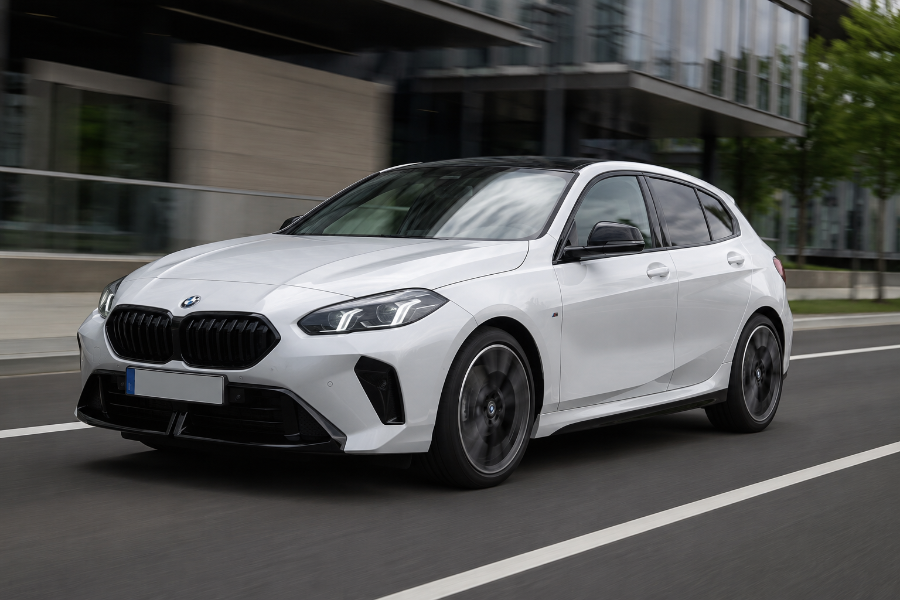
The BMW 1 Series continues to play a unique role in the premium automotive market by offering compact dimensions paired with the driving character traditionally associated with BMW engineering. In an era where SUVs dominate global sales charts, the BMW 1 Series Compact Luxury formula remains relevant because it targets urban buyers who still value agile handling, efficient packaging, and premium brand identity in a smaller footprint. Rather than competing directly with midsize executive sedans, the 1 Series operates as an entry point into BMW ownership while maintaining many of the design and technology characteristics found in larger models.
The BMW 1 Series Compact Luxury concept is particularly important in 2026 because younger professionals increasingly prioritize maneuverability, connectivity, and efficiency over sheer vehicle size. Dense urban environments across Europe and Asia continue to favor compact vehicles that can navigate tight parking spaces and crowded streets without sacrificing comfort or digital sophistication. Consequently, BMW has refined the 1 Series into a hatchback that balances everyday practicality with the brand’s performance-oriented DNA.
Moreover, the premium hatchback segment still holds strategic value despite crossover growth. Buyers seeking a lower driving position, sharper steering feel, and more efficient dimensions often prefer hatchbacks over compact SUVs. The BMW 1 Series 2026 therefore represents more than simply an entry-level BMW. It acts as a gateway model that introduces consumers to BMW’s engineering philosophy while delivering usable cargo flexibility, modern infotainment technology, and respectable turbocharged performance in a city-friendly package.
BMW 1 Series Compact Luxury: Why It Defines Premium Urban Performance?
The BMW 1 Series Compact Luxury identity is built around accessibility without fully abandoning the brand’s traditional performance character. Positioned below larger BMW sedans and SUVs, the 1 Series allows younger buyers to enter the premium segment at a lower price point while still receiving recognizable BMW styling, chassis tuning, and interior technology. This positioning is critical in 2026 as automakers compete aggressively for first-time luxury customers.
BMW designed the 1 Series primarily for urban professionals who need practicality during daily commuting but still value responsive driving behavior. The hatchback body style offers improved cargo access compared with compact sedans, while its shorter overall dimensions improve maneuverability in city traffic. Meanwhile, the vehicle’s premium branding appeals to buyers seeking aspirational ownership without stepping into significantly more expensive luxury models.
However, maintaining BMW identity in a smaller front-wheel-drive platform presents engineering challenges. Earlier BMW compact cars relied heavily on rear-wheel-drive dynamics, but the current 1 Series uses BMW’s UKL platform architecture shared with other compact vehicles within the BMW Group. Although some enthusiasts criticize the move away from rear-wheel drive, BMW has attempted to preserve steering precision and cornering composure through suspension tuning and electronic traction management systems.
Nevertheless, the strategy has proven commercially effective. The 1 Series competes directly with the Audi A3 and Mercedes-Benz A-Class in the premium compact car category. All three manufacturers recognize growing demand for luxury hatchbacks that deliver technology, efficiency, and brand prestige within compact dimensions. As a result, the BMW performance hatchback remains an important contributor to BMW’s broader entry luxury segment strategy.
Driving Dynamics Behind BMW 1 Series Compact Luxury
One of the defining strengths of the BMW 1 Series Compact Luxury platform is its balance between efficiency-focused engineering and engaging driving behavior. BMW offers a range of turbocharged three-cylinder and four-cylinder engines depending on market specification. Lower-output variants prioritize fuel economy and urban usability, while performance-oriented trims provide stronger acceleration and improved highway capability.
The smaller turbocharged engines reflect broader industry trends toward downsizing and emissions efficiency. Modern turbocharging technology allows BMW to maintain respectable torque delivery even in lower-displacement engines. Consequently, drivers experience responsive low-speed acceleration suitable for urban traffic conditions without requiring large naturally aspirated powertrains. However, actual straight-line performance remains moderate compared with higher-tier BMW performance models.
The front-wheel-drive UKL architecture fundamentally changes the vehicle’s dynamics compared with older rear-wheel-drive BMW hatchbacks. Front-wheel drive improves packaging efficiency by freeing additional interior space and reducing drivetrain complexity. Moreover, it enhances traction during poor weather conditions for everyday drivers. Nevertheless, aggressive cornering behavior differs from traditional rear-drive BMW models, especially regarding steering feedback and weight transfer characteristics.
BMW also offers xDrive all-wheel-drive configurations in selected higher-performance variants. The xDrive system improves traction during wet or snowy conditions while enhancing stability under acceleration. However, the additional drivetrain hardware slightly increases vehicle weight and fuel consumption. Therefore, buyers choosing between front-wheel drive and xDrive must balance performance confidence with efficiency priorities.
Meanwhile, chassis tuning remains a critical area where BMW attempts to preserve its driving identity. The steering calibration is intentionally sharper than many mainstream compact hatchbacks, and suspension tuning favors controlled body movement over soft ride isolation. Consequently, the BMW hatchback performance experience feels more engaging than typical economy-focused compact cars, even if ride comfort occasionally becomes firmer on rough urban roads.
BMW 1 Series vs Key Compact Luxury Rivals (2026)
| Model | Driving Feel | Interior Quality | Tech Features | Practicality | Price Positioning |
|---|---|---|---|---|---|
| BMW 1 Series | Sporty and responsive | Premium but compact | Strong digital integration | Excellent hatch flexibility | Mid-premium |
| Audi A3 | Refined and stable | Minimalist luxury | Advanced infotainment | Good rear space | Slightly premium |
| Mercedes A-Class | Comfort-focused | Highly stylish cabin | Large display ecosystem | Moderate cargo flexibility | Premium-oriented |
| Volkswagen Golf GTI | Performance-focused | Practical and durable | Good but less luxurious | Strong everyday usability | Lower premium |
| Lexus CT successor models | Comfort and efficiency | High material quality | Hybrid-focused systems | Urban-friendly | Competitive |
Interior Experience and Digital Innovation in BMW 1 Series
The interior of the BMW 1 Series 2026 demonstrates how digital technology increasingly compensates for compact cabin dimensions. BMW integrates its curved display architecture into the dashboard, combining digital instrumentation with a central infotainment interface. This design approach visually modernizes the cabin while reducing physical button clutter.
BMW’s infotainment ecosystem supports wireless smartphone integration, voice controls, navigation intelligence, and over-the-air software updates. Moreover, the digital cockpit experience mirrors larger BMW models, helping reinforce the perception of premium ownership despite the 1 Series being an entry-level BMW. Consequently, buyers receive many of the same software capabilities found in higher-priced vehicles.
Material quality remains competitive within the premium hatchback market, although some cost-conscious design decisions are noticeable compared with larger BMW products. Soft-touch materials dominate primary contact points, while certain lower cabin areas utilize harder plastics. Nevertheless, overall fit and finish remain strong, supporting BMW’s luxury positioning in the compact segment.
The driver-focused dashboard layout continues BMW’s longstanding ergonomic philosophy. Controls angle slightly toward the driver, reinforcing the sense of engagement behind the wheel. Meanwhile, configurable digital displays allow users to prioritize navigation, media, or performance-related information according to preference. This personalization capability has become increasingly important as software-defined automotive experiences grow in relevance.
However, compact dimensions inevitably limit rear-seat space compared with larger sedans or SUVs. Taller passengers may experience reduced legroom during extended trips. Therefore, the BMW 1 Series Compact Luxury experience works best for singles, couples, or smaller families prioritizing urban usability over maximum passenger capacity.
Why BMW 1 Series Appeals to Urban Luxury Buyers?
Urban environments strongly influence the appeal of the BMW 1 Series Compact Luxury platform. Compact exterior dimensions make parking significantly easier in crowded city centers where larger SUVs often become inconvenient. Moreover, tight turning radiuses and responsive steering contribute to reduced driver stress during daily commuting.
The lower entry cost into BMW ownership also expands its appeal. Many buyers view the 1 Series as an attainable introduction to premium automotive brands without committing to executive-level pricing. Leasing programs and financing packages further strengthen accessibility, particularly among younger professionals entering higher-income demographics.
Image and aspirational ownership remain important factors as well. Even though the 1 Series occupies BMW’s lower price tiers, it still carries the prestige associated with German compact luxury cars. Consequently, the vehicle functions not only as transportation but also as a lifestyle marker reflecting professional ambition and urban sophistication.
Meanwhile, hatchback practicality offers advantages often overlooked in premium segments dominated by sedans and crossovers. Folding rear seats and wide cargo openings improve usability for shopping, luggage, and everyday transport needs. Therefore, the BMW performance hatchback delivers functional versatility alongside premium branding.
Performance vs Practicality: Real-World Ownership Experience
Real-world ownership of the BMW 1 Series Compact Luxury involves balancing sporty character with practical daily usability. Fuel efficiency remains one of the vehicle’s strongest advantages, especially with smaller turbocharged engines optimized for urban commuting. Downsized powertrains help reduce operating costs while still delivering sufficient acceleration for most driving situations.
Ride comfort, however, reflects BMW’s performance-oriented tuning priorities. Sport suspension setups provide improved cornering stability and steering response, yet rough pavement can feel firmer than in comfort-focused competitors. Consequently, buyers prioritizing maximum ride softness may prefer alternative luxury hatchbacks with more relaxed suspension calibrations.
Cargo flexibility remains a meaningful advantage of the hatchback layout. The rear opening allows easier loading of larger items compared with compact sedans. Moreover, split-folding rear seats increase versatility for weekend travel or recreational equipment transport. Nevertheless, total cargo capacity still trails many compact crossovers.
Highway performance is another area where the BMW 1 Series performs effectively. Despite compact proportions, aerodynamic stability and chassis control contribute to confident high-speed cruising. Meanwhile, urban agility remains one of its defining strengths. The vehicle transitions comfortably between highway travel and city commuting, although road noise levels may become more noticeable than in larger luxury sedans.
Compact Luxury Hatchback vs Entry Luxury Sedan
| Category | Compact Luxury Hatchback | Entry Luxury Sedan |
|---|---|---|
| Driving Fun | Agile and responsive | Stable and refined |
| Passenger Space | Moderate | Slightly improved rear comfort |
| Prestige Perception | Youthful and sporty | More executive-oriented |
| Efficiency | Generally stronger | Moderate |
| Urban Use | Excellent maneuverability | Less practical in tight cities |
| Cost of Ownership | Lower overall | Slightly higher |
Market Position: Why BMW 1 Series Remains Relevant in 2026
Despite shrinking global demand for traditional hatchbacks in some regions, the BMW 1 Series remains strategically important in 2026. Europe continues to support strong premium compact car demand because urban density favors smaller vehicles with efficient packaging. Meanwhile, several Asian markets also prioritize compact luxury mobility due to traffic congestion and limited parking availability.
BMW’s entry-level strategy relies heavily on introducing younger consumers to the brand ecosystem through accessible premium products. The 1 Series often becomes a stepping stone toward larger BMW vehicles later in ownership cycles. Consequently, the model serves both immediate sales objectives and long-term brand loyalty development.
Competition remains intense. The Mercedes A-Class emphasizes interior luxury and digital presentation, while the Audi A3 focuses on balanced refinement and technology integration. BMW differentiates itself primarily through sharper driving dynamics and a more driver-centric character. However, actual differences between competitors have narrowed as all manufacturers pursue similar efficiency and technology goals.
Moreover, hatchbacks remain relevant because they provide an alternative to oversized urban vehicles. While crossovers dominate globally, some buyers still prefer lower ride heights, lighter vehicle weight, and more direct handling characteristics. Therefore, the BMW 1 Series Compact Luxury model continues supporting BMW’s presence in the premium hatchback market despite broader SUV growth.
Challenges Facing BMW 1 Series Compact Luxury Segment
The premium compact hatchback category faces multiple challenges entering the late 2020s. SUV dominance continues reducing demand for traditional hatchbacks, particularly in North America and emerging markets where consumers increasingly prefer elevated seating positions and larger interiors.
Rising vehicle costs also affect the segment. Advanced safety systems, digital displays, emissions compliance technologies, and electrification investments have increased manufacturing expenses. Consequently, compact luxury cars now approach pricing levels once associated with midsize premium vehicles.
Another challenge involves perception gaps within the BMW lineup itself. Some buyers still associate “true BMW” identity with rear-wheel-drive sedans or larger performance vehicles. Therefore, the front-wheel-drive 1 Series occasionally faces skepticism among traditional enthusiasts despite its engineering improvements.
Competition from electric hatchbacks presents additional pressure. EV-focused models increasingly deliver strong acceleration, lower operating costs, and advanced software integration. Meanwhile, family buyers may still find compact hatchbacks restrictive regarding rear-seat space and cargo practicality compared with crossovers.
Nevertheless, the BMW 1 Series Compact Luxury platform continues offering a distinctive blend of manageable dimensions, premium branding, and engaging driving behavior that remains attractive to specific urban-focused buyers.
Future of Compact Luxury Performance Hatchbacks
The future of compact luxury cars will likely involve deeper electrification and software integration. BMW is expected to continue evolving its compact lineup with hybrid systems and fully electric alternatives designed around urban efficiency and connected mobility.
Software-defined driving experiences will also become increasingly influential. Adaptive driver assistance systems, predictive navigation intelligence, and AI-supported cabin personalization are already reshaping expectations in the premium compact car segment. Consequently, future BMW hatchback performance models may rely as much on digital capability as mechanical engineering.
Hybrid and EV technologies will further alter performance characteristics. Electric torque delivery can improve urban acceleration and responsiveness, although battery weight introduces new chassis challenges. Therefore, BMW must balance efficiency improvements with the engaging driving feel traditionally associated with the brand.
Meanwhile, crossover-style vehicles may gradually replace conventional hatchbacks in certain markets. However, compact luxury hatchbacks still appeal to buyers seeking lower driving positions, lighter handling characteristics, and efficient packaging. The BMW 1 Series Compact Luxury model therefore represents an evolving form of “accessible performance identity” allowing consumers to experience BMW driving DNA without full-size luxury pricing.
Its dual identity remains central to its market relevance. The 1 Series functions simultaneously as a performance entry point, an urban practicality solution, a gateway into BMW ownership, and a lifestyle-oriented premium product. That combination ensures continued relevance even as automotive market trends shift toward electrification and crossover dominance.
FAQs
Is the BMW 1 Series a real luxury car?
Yes, the BMW 1 Series qualifies as a premium compact luxury vehicle because it combines advanced technology, refined interior materials, and BMW brand positioning with compact practicality.
How fast is the BMW 1 Series 2026?
Performance varies by engine choice, but higher-output trims deliver strong acceleration suitable for sporty urban and highway driving without reaching full BMW M-car performance levels.
Is the BMW 1 Series front-wheel drive?
Most modern 1 Series variants use a front-wheel-drive platform, although selected models also offer xDrive all-wheel-drive systems.
How does it compare to Audi A3?
The BMW 1 Series generally emphasizes sharper handling, while the Audi A3 focuses more heavily on refinement and balanced ride comfort.
Is the BMW 1 Series good for city driving?
Yes, compact dimensions, responsive steering, and efficient engines make it highly suitable for urban commuting and tight parking environments.
What engines are available in the 1 Series?
BMW offers turbocharged three-cylinder and four-cylinder petrol and diesel engines depending on regional market specifications.
Is the BMW 1 Series expensive to maintain?
Maintenance costs are typically higher than mainstream compact cars but competitive within the premium compact segment.
Does the 1 Series feel like a true BMW?
While front-wheel drive changes its dynamics compared with older BMWs, the 1 Series still delivers responsive steering and sporty chassis tuning associated with the brand.
Is the BMW 1 Series practical for daily use?
Yes, the hatchback design, flexible cargo space, and efficient dimensions make it practical for commuting and everyday ownership.
Is the BMW 1 Series worth it in 2026?
For buyers seeking compact luxury, urban agility, and premium branding with engaging driving characteristics, the BMW 1 Series remains a strong option in 2026.