The Mercedes-Benz E-Class continues to occupy one of the most important positions in the global luxury car market. Positioned between the compact-oriented C-Class and the flagship S-Class, the E-Class has long represented the practical center of premium executive transportation. In 2026, despite rapid SUV growth and the increasing popularity of electric crossovers, the Mercedes-Benz E-Class Executive Luxury identity remains highly relevant among professionals, corporate fleets, and chauffeur-driven buyers.
For decades, the E-Class formula has focused on balance rather than excess. It combines understated prestige, refined ride comfort, advanced technology, and long-distance usability without moving into ultra-luxury pricing territory. Consequently, it appeals to executives who value comfort and professionalism more than aggressive styling or overt performance. In many markets across Europe, the Middle East, and Asia, the E-Class still represents the “default executive car” for board members, hotel transport fleets, and premium mobility services.
Moreover, the 2026 luxury midsize sedan segment continues evolving toward hybrid efficiency and digital cabin experiences. Buyers now expect seamless infotainment systems, advanced driver assistance, and lower operating costs alongside traditional luxury. Nevertheless, the Mercedes-Benz E-Class Executive Luxury approach remains grounded in effortless travel quality. Instead of chasing extreme sportiness or oversized SUV proportions, it prioritizes quietness, smoothness, and executive usability for daily professional life.
Mercedes-Benz E-Class Executive Luxury: Why It Still Defines the Segment
The E-Class has historically served as the benchmark for the executive sedan luxury category because it consistently balances comfort, technology, prestige, and usability better than many competitors. Unlike entry-level luxury sedans that prioritize affordability or flagship sedans that emphasize extravagance, the E-Class occupies a middle ground that appeals to both owner-drivers and rear-seat passengers. This positioning has helped it maintain relevance across multiple generations and shifting automotive trends.
In 2026, the global luxury car market continues moving toward SUVs and electrification. However, executive sedans still retain importance among buyers who prioritize road manners, lower ride fatigue, and professional presentation. The Mercedes-Benz E-Class Executive Luxury reputation benefits from decades of association with corporate mobility, diplomatic fleets, and premium chauffeur services. Therefore, its identity extends beyond product specifications and enters the territory of institutional trust.
Key reasons the E-Class remains competitive include:
- Strong ride comfort calibration for long-distance travel
- Balanced chassis tuning for urban and highway use
- Advanced mild-hybrid engine technology
- High-quality cabin refinement and insulation
- Wide acceptance in executive and fleet markets
- Conservative yet prestigious exterior design
- Lower visual aggression compared to sport-oriented rivals
Meanwhile, the midsize luxury segment has become more competitive than ever. The BMW 5 Series emphasizes sharper driving dynamics, while the Audi A6 focuses heavily on digital sophistication and understated design. At the same time, the Genesis G80 continues gaining market share through value-oriented luxury and extensive feature offerings. Nevertheless, the E-Class remains influential because it rarely overcommits to one characteristic at the expense of overall usability.
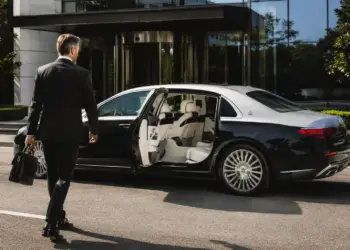
Another important factor is corporate perception. Many business professionals still associate the E-Class silhouette with executive authority and reliability. SUVs may dominate retail sales globally, yet sedans continue holding symbolic value in professional environments. Consequently, the E-Class remains common in airport transfers, executive shuttle services, and luxury hotel transportation fleets.
Engineering Behind Mercedes-Benz E-Class Executive Luxury Comfort
The engineering philosophy behind the Mercedes-Benz E-Class Executive Luxury experience focuses on reducing driver and passenger fatigue. Rather than maximizing cornering aggression, Mercedes engineers tune the vehicle around smoothness, predictability, and isolation from road imperfections. This approach aligns closely with real-world executive travel requirements, where comfort over hundreds of kilometers matters more than track-oriented responsiveness.
The suspension system plays a major role in this experience. Higher trims typically feature adaptive damping systems and optional air suspension technology that continuously adjusts to road conditions. Consequently, the E-Class absorbs rough pavement with impressive composure while maintaining body control at highway speeds. Compared with some rivals that prioritize sporty stiffness, the E-Class intentionally favors softer initial ride compliance.
Key comfort engineering highlights include:
- Adaptive suspension calibration
- Multi-link rear suspension design
- Advanced acoustic insulation materials
- Double-sealed cabin construction
- Laminated acoustic glass
- Reduced vibration through mild-hybrid integration
- Long wheelbase stability for highway travel
Engine smoothness also contributes significantly to executive comfort. The 2026 lineup continues using turbocharged inline-4 and inline-6 mild-hybrid powertrains in many global markets. The inline-6 configuration particularly suits luxury sedan applications because of its natural balance and refined power delivery. Moreover, integrated starter-generator systems improve stop-start smoothness and low-speed refinement during urban commuting.
Steering calibration reflects the same philosophy. The E-Class avoids overly heavy or artificially sporty steering inputs. Instead, it prioritizes ease of maneuverability in city environments while maintaining stability at motorway speeds. Consequently, the vehicle feels composed and predictable rather than aggressively performance-focused.
However, there are trade-offs associated with this comfort-first engineering approach. Some enthusiasts may prefer the sharper handling characteristics of the BMW 5 Series. Additionally, advanced suspension systems increase long-term maintenance complexity and ownership costs. Nevertheless, for buyers prioritizing effortless travel over outright sportiness, the E-Class continues to excel.
Mercedes-Benz E-Class vs Key Executive Rivals (2026)
| Model | Comfort Level | Technology | Driving Feel | Rear Seat Space | Price Positioning |
|---|---|---|---|---|---|
| Mercedes-Benz E-Class | Excellent ride isolation | Advanced MBUX ecosystem | Balanced and refined | Spacious | Premium executive |
| BMW 5 Series | Firm but controlled | High-performance oriented | Sportiest in class | Good | Premium sporty |
| Audi A6 | Quiet and composed | Strong digital integration | Neutral and stable | Moderate | Competitive premium |
| Genesis G80 | Plush and luxurious | High-value technology | Relaxed comfort | Very spacious | Value-focused luxury |
Interior Experience: The Digital Evolution of Executive Luxury
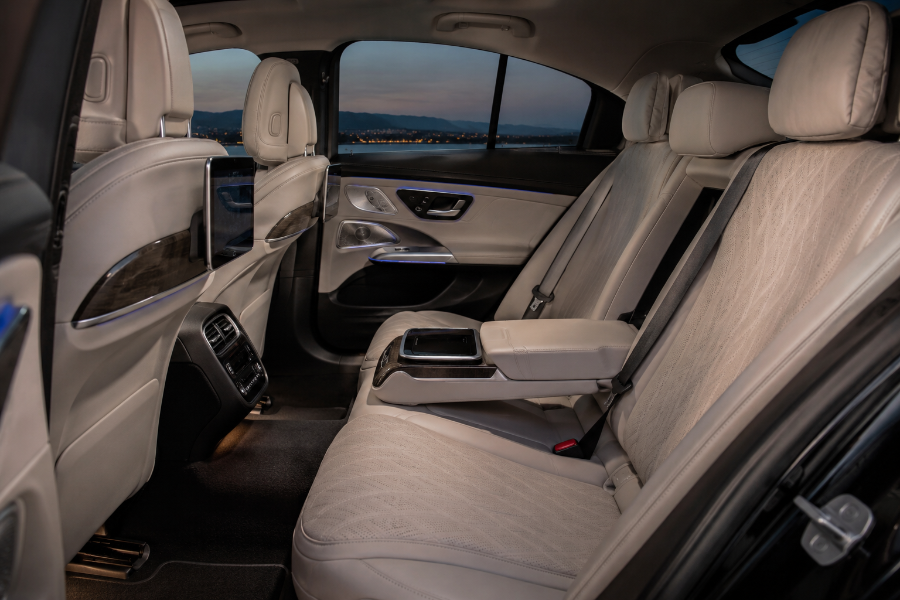
Luxury interiors in 2026 are increasingly defined by digital sophistication rather than traditional ornamentation alone. The Mercedes-Benz E-Class Executive Luxury cabin reflects this shift through its integration of the MBUX infotainment platform, large digital displays, and connected vehicle ecosystems. Meanwhile, Mercedes still retains traditional luxury cues such as soft-touch surfaces, wood trim, ambient lighting, and carefully damped controls.
The dashboard architecture emphasizes visual cleanliness and screen integration. Depending on trim level, buyers can access expansive digital instrument displays and passenger-side entertainment interfaces. Consequently, the cabin feels technologically advanced without completely abandoning classic executive sedan design principles. Voice assistance and AI-supported personalization systems also continue evolving across the Mercedes lineup.
Interior highlights commonly associated with the E-Class include:
- MBUX voice assistant integration
- Multi-screen digital cockpit layouts
- Configurable ambient lighting systems
- Heated and ventilated seating
- Premium leather upholstery options
- Acoustic comfort optimization
- Rear climate and executive seating packages
Rear-seat usability remains especially important in chauffeur-oriented markets. In regions like the Middle East and parts of Asia, many E-Class buyers spend substantial time as passengers rather than drivers. Therefore, rear legroom, seat cushioning, and cabin quietness become critical purchasing considerations. The E-Class continues addressing these needs through executive seating configurations and improved ride insulation.
However, increasing digitalization also introduces complexity. Some users criticize modern infotainment systems for requiring too many touchscreen interactions. Physical buttons have gradually disappeared, which may reduce usability during driving. Moreover, software-heavy luxury interiors can create long-term reliability concerns as systems age. Nevertheless, the E-Class generally balances innovation and functionality more effectively than many competitors.
Why Executives Still Prefer the E-Class Over SUVs?
Although SUVs dominate modern luxury sales charts, executive sedans still offer several practical advantages for professional users. The Mercedes-Benz E-Class Executive Luxury formula benefits from lower ride height, improved aerodynamic efficiency, and more controlled body movements during daily commuting. Consequently, many executives still prefer sedans for long-distance travel and urban mobility.
One major advantage is reduced body roll compared with taller SUVs. Sedans inherently provide more stable handling characteristics because of their lower center of gravity. Therefore, highway cruising often feels calmer and less physically tiring in the E-Class than in similarly priced luxury SUVs. This becomes especially important for professionals covering large distances regularly.
Reasons executives still choose the E-Class include:
- Lower fatigue during long commutes
- Easier urban maneuverability
- More efficient fuel consumption
- Traditional executive appearance
- Better high-speed stability
- More controlled ride dynamics
- Professional corporate image
Moreover, sedan proportions continue carrying symbolic prestige in business environments. In many corporate settings, executive sedans project understated authority more effectively than oversized SUVs. Consequently, the E-Class retains strong appeal among lawyers, consultants, diplomats, and senior managers.
Nevertheless, SUVs offer undeniable advantages in practicality. Vehicles like the Mercedes-Benz GLE provide higher seating positions, easier cargo access, and stronger road presence. Families may also prefer SUV versatility for mixed professional and personal use. Therefore, while sedans maintain executive appeal, they no longer dominate the premium market as they once did.
Ownership Experience & Real-World Usability
Owning a luxury midsize sedan involves balancing prestige and comfort against higher maintenance expectations. The Mercedes-Benz E-Class Executive Luxury experience generally delivers strong long-distance usability and premium refinement, yet ownership costs remain higher than mainstream vehicles. Scheduled servicing, advanced electronics, and premium tire requirements contribute to overall operating expenses.
Fuel efficiency has improved substantially with mild-hybrid technology. Modern inline-4 and inline-6 engines provide respectable economy figures while maintaining smooth power delivery. Consequently, the E-Class adapts better to modern emissions regulations and fuel-conscious buyers without abandoning luxury performance expectations.
Real-world ownership strengths include:
- Excellent highway comfort
- Strong cabin durability
- Efficient hybrid-assisted drivetrains
- Comfortable chauffeur operation
- Advanced safety systems
- Strong brand recognition
- High resale visibility in global markets
However, depreciation remains an important consideration. Luxury sedans typically lose value faster than premium SUVs because consumer demand increasingly favors crossovers. Additionally, repair costs for sophisticated electronic systems and air suspension components can become significant outside warranty coverage.
The E-Class also serves two distinct user groups. Some buyers drive themselves daily and value balanced handling with premium comfort. Others use the vehicle primarily with chauffeurs, emphasizing rear-seat refinement and smooth ride quality. Interestingly, the E-Class manages to accommodate both audiences reasonably well, which contributes to its enduring popularity.
Executive Sedan vs Luxury SUV (Real-World Use Case Comparison)
| Category | Executive Sedan | Luxury SUV |
|---|---|---|
| Comfort Stability | Better highway composure | Softer height advantage |
| Prestige Image | Traditional executive presence | Modern luxury status |
| Driving Ease | Easier city maneuvering | Higher visibility |
| Cost Efficiency | Better fuel economy | Higher operating costs |
| Urban Use | Easier parking and agility | Bulkier dimensions |
| Long Distance Travel | Lower fatigue levels | More spacious seating |
Market Position: Why the E-Class Still Holds Strong in 2026?
The continued strength of the Mercedes-Benz E-Class Executive Luxury position comes largely from brand equity and historical trust. Mercedes-Benz remains deeply associated with executive transportation globally, and the E-Class has served as a cornerstone product for decades. Consequently, many buyers continue viewing it as the safe and established choice within the midsize luxury segment.
Demand remains particularly strong in Europe, Asia, and Middle Eastern markets where chauffeur services and executive fleets continue relying on premium sedans. Corporate procurement departments also value the E-Class because it offers strong prestige without reaching flagship-level operating costs. Meanwhile, hybrid technology integration helps maintain regulatory compliance and fuel efficiency expectations.
Current market realities influencing the E-Class include:
- Continued SUV dominance in global sales
- Strong corporate sedan demand
- Growth of hybrid luxury drivetrains
- Increased digital cabin expectations
- Competition from Korean premium brands
- Pressure from electric luxury sedans
At the same time, competitive pressure continues intensifying. BMW pushes driving engagement, Audi focuses on minimalist technology integration, and Genesis emphasizes luxury value. Additionally, EV-focused sedans from newer manufacturers increasingly challenge traditional executive cars through software-driven experiences and rapid acceleration capabilities.
Nevertheless, the E-Class survives because its appeal extends beyond trend cycles. It represents stable, recognizable executive transportation rather than experimental luxury mobility. Therefore, even as market preferences evolve, there remains a consistent customer base seeking refined and professional transportation solutions.
Challenges Facing Mercedes-Benz E-Class Executive Luxury
Despite its strengths, the E-Class faces several important challenges in 2026. SUV dominance continues reducing overall sedan demand globally, especially in North America and China. Consumers increasingly prioritize elevated seating positions and crossover versatility over traditional sedan dynamics.
Technology costs also create pressure within the executive sedan market. Advanced infotainment systems, driver assistance features, and hybrid powertrains significantly increase production complexity. Consequently, vehicle pricing continues rising, which narrows the gap between midsize luxury sedans and larger flagship models.
Additional challenges include:
- Increasing EV competition
- Higher repair complexity
- Expensive software integration
- Luxury subscription feature criticism
- Rising ownership costs
- Strong crossover market momentum
Meanwhile, some users criticize modern Mercedes interiors for prioritizing screen quantity over intuitive ergonomics. Touch-sensitive controls and layered digital menus may reduce simplicity during daily operation. Furthermore, rapid technological evolution can make older systems feel outdated more quickly than traditional luxury features.
However, these challenges affect nearly all premium manufacturers. The E-Class still benefits from strong engineering credibility, global dealership infrastructure, and consistent executive branding. Consequently, it remains resilient despite changing automotive trends.
Future of Executive Luxury Sedans in 2026 and Beyond
The future of executive luxury sedans increasingly revolves around electrification, intelligent software integration, and sustainability-focused manufacturing. Mercedes-Benz continues adapting the E-Class formula through hybrid systems and advanced driver assistance technologies rather than abandoning the sedan format entirely.
Artificial intelligence and personalization features are becoming central to premium mobility experiences. Future E-Class generations will likely expand predictive climate control, adaptive seating adjustments, and AI-supported infotainment behavior. Meanwhile, semi-autonomous highway driving systems will continue improving executive commuting comfort.
Future trends shaping executive sedans include:
- Expanded hybrid-electric powertrains
- AI-assisted cabin personalization
- Sustainable interior materials
- Subscription-based software features
- Enhanced autonomous driving systems
- Lightweight efficiency-focused engineering
Importantly, the E-Class represents balanced prestige mobility rather than extreme luxury. It does not attempt to rival the ultra-isolated environment of the S-Class, nor does it target entry-level affordability like the C-Class. Instead, its strength lies in delivering practical executive refinement suitable for daily professional use.
Consequently, the Mercedes-Benz E-Class Executive Luxury identity remains globally recognizable because it aligns closely with real-world executive transportation needs. Silent comfort, understated prestige, and long-distance usability continue mattering even as automotive technology rapidly changes. Therefore, while executive sedans may occupy a smaller market share in the future, the E-Class is likely to evolve alongside industry trends rather than disappear entirely.
FAQs
Why is the Mercedes-Benz E-Class considered executive luxury?
The E-Class is considered executive luxury because it balances premium comfort, advanced technology, refined ride quality, and professional prestige within the midsize luxury sedan category.
How comfortable is the Mercedes E-Class for long drives?
The E-Class is highly comfortable for long-distance travel due to advanced suspension tuning, low cabin noise, supportive seating, and stable highway ride characteristics.
What engines are available in the E-Class 2026?
Most 2026 E-Class variants use turbocharged inline-4 and inline-6 mild-hybrid engines, combining improved efficiency with smooth performance delivery.
Is the E-Class better than BMW 5 Series?
The E-Class generally prioritizes comfort and refinement, while the BMW 5 Series focuses more heavily on sporty driving dynamics and sharper handling.
Why do executives prefer the E-Class?
Executives often prefer the E-Class because of its understated prestige, ride comfort, professional appearance, and strong reputation in corporate mobility.
Is the Mercedes E-Class good for chauffeurs?
Yes, the E-Class is widely used in chauffeur services because of its rear-seat comfort, smooth ride quality, and premium brand perception.
How does the E-Class compare to SUVs?
The E-Class offers better ride stability, easier maneuverability, and lower fatigue during long drives, while SUVs provide more cargo space and elevated seating positions.
What is the price range of the E-Class?
Pricing varies by market and trim level, though the E-Class generally occupies the premium midsize luxury sedan segment above entry luxury models.
Is the E-Class still relevant in 2026?
Yes, the E-Class remains relevant because executive buyers still value sedan comfort, refinement, hybrid efficiency, and professional styling despite SUV popularity.
What makes Mercedes E-Class interior special?
The E-Class interior stands out through its blend of digital cockpit technology, premium materials, ambient lighting, and refined executive-focused cabin design.