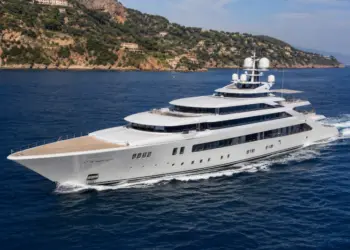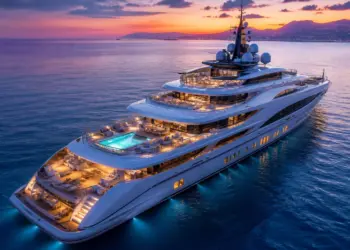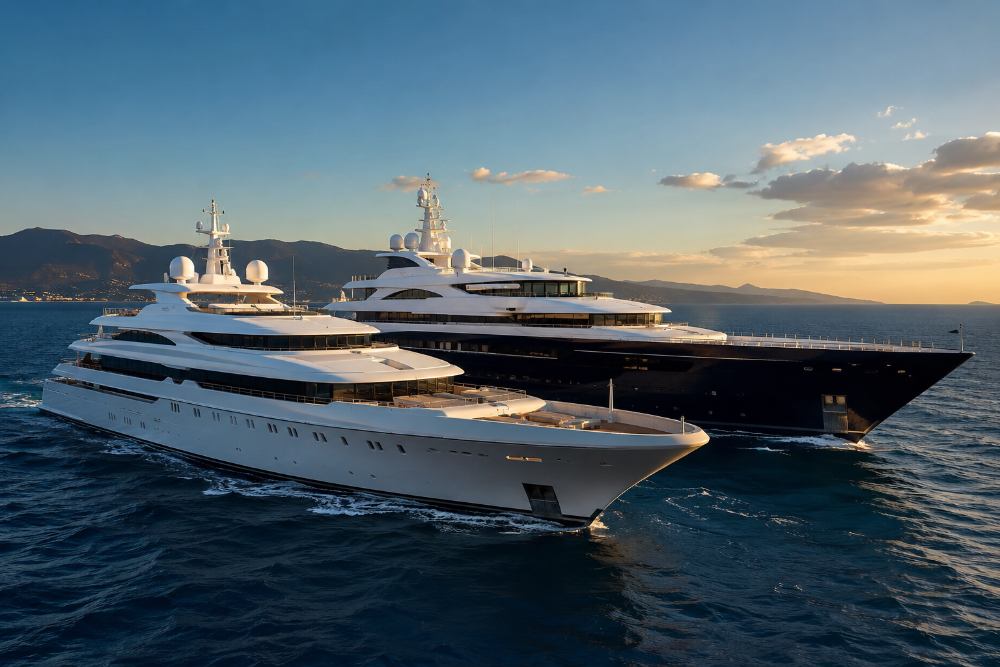
The debate around Mega Yachts vs Super Yachts has become increasingly prominent in the global luxury marine industry, particularly as billionaire wealth expands and yacht sizes continue to grow. While the terms are often used interchangeably in media and marketing, they do not always reflect consistent industry definitions. As a result, buyers, investors, and enthusiasts frequently misunderstand what distinguishes these two categories.
Moreover, the rise of ultra-large vessels some exceeding 100 meters has further blurred traditional classifications. Shipbuilders, brokers, and designers may label vessels differently depending on branding strategy rather than technical accuracy. Consequently, understanding the real difference between mega yachts and superyachts requires a closer look at industry standards, size benchmarks, and operational realities.
Understanding this distinction is not just semantic. It directly impacts purchasing decisions, operational costs, regulatory requirements, and onboard experience. Therefore, this article provides a data-driven, industry-aligned breakdown of Mega Yachts vs Super Yachts, offering clarity through definitions, classifications, and real-world implications.
Mega Yachts vs Super Yachts: Definitions and Industry Standards
The term superyacht has a relatively clear position within the marine industry. It generally refers to privately owned luxury yachts measuring 24 meters (approximately 79 feet) or more, operated with a professional crew. This classification is widely accepted by shipyards, classification societies, and charter companies, making it a standardized benchmark in yacht terminology.
However, the term mega yacht is far less formal. It is commonly used in media and marketing to describe larger superyachts, typically those exceeding 60 meters in length. Unlike “superyacht,” there is no universally enforced regulatory definition for mega yachts. Instead, it functions as an informal descriptor for vessels that push the upper boundaries of luxury, scale, and engineering complexity.
Importantly, there is significant overlap between these terms. A 70-meter yacht, for instance, can be categorized as both a large superyacht and a mega yacht depending on context. Therefore, the distinction is better understood as a gradient of scale rather than a strict category divide. This lack of rigid classification often leads to confusion, especially among new buyers or market observers.
Mega Yachts vs Super Yachts: Size, Scale & Classification Breakdown
Yacht classification primarily revolves around length overall (LOA), which serves as the most consistent metric across the industry. Superyachts typically fall within the 24m to 60m range, offering a balance between luxury and operational practicality. These vessels are large enough to require professional crews while still being manageable in terms of docking and maintenance.
Mega yachts, on the other hand, generally range from 60m to 100m or more. These vessels introduce a new level of complexity, including multiple decks, advanced engineering systems, and extended cruising capabilities. At this scale, yachts begin to resemble floating estates rather than recreational vessels.
Beyond this, a new category known as giga-yachts is emerging, referring to vessels exceeding 100 meters. These yachts represent the pinnacle of private maritime engineering and are often custom-built for billionaires. Consequently, the evolution from superyacht to mega yacht to giga-yacht reflects a broader trend of luxury scaling.
- Superyachts: 24m–60m
- Mega Yachts: 60m–100m+
- Giga Yachts: 100m+
This progression significantly affects cost, crew size, and operational capabilities. Larger yachts offer more amenities and range, but they also require exponentially higher investment and logistical support.
Superyacht vs Megayacht Comparison
| Feature | Superyachts | Mega Yachts |
|---|---|---|
| Size Range | 24m–60m | 60m–100m+ |
| Cost | $20M–$100M | $100M–$500M+ |
| Crew | 5–20 | 20–60+ |
| Range | Moderate | Long-range/global |
| Features | Luxury leisure | Advanced engineering, helipads, submarines |
| Ownership | Millionaires/HNWIs | Billionaires, royals |
| Usage | Charter & private | Mostly private, strategic mobility |
Design, Features & Onboard Experience
Superyachts are designed primarily for luxury leisure and entertainment. They typically include features such as sun decks, swimming pools, jacuzzis, and well-appointed interiors. While customization is available, many superyachts are semi-custom builds, allowing owners to personalize within predefined design frameworks.
In contrast, mega yachts prioritize engineering innovation and scale. These vessels often feature multiple decks, private cinemas, helipads, wellness centers, and even submarines. The design process is usually fully custom, involving naval architects, interior designers, and engineering teams working over several years.
Moreover, interior space expands dramatically as yachts grow larger. Mega yachts can accommodate dozens of guests and crew, offering a level of privacy and separation that smaller vessels cannot match. Consequently, the onboard experience transitions from luxury vacationing to private floating infrastructure.
Ownership, Cost & Economics
The financial difference between Mega Yachts vs Super Yachts is substantial. Superyachts typically cost between $20 million and $100 million, making them accessible to high-net-worth individuals. These vessels often balance luxury with manageable operating expenses.
Mega yachts, however, start at around $100 million and can exceed $500 million depending on customization and size. Ownership at this level is largely limited to billionaires, sovereign wealth entities, or royal families. The scale of investment transforms yacht ownership into a long-term financial commitment.
Annual maintenance costs are another critical factor. Both categories generally require 5% to 10% of the purchase price annually, but the absolute figures differ significantly. A $50M superyacht may cost $3M–$5M per year to maintain, while a $300M mega yacht could require $15M–$30M annually.
Luxury Yacht Ownership Economics
| Cost Factor | Superyachts | Mega Yachts |
|---|---|---|
| Purchase Cost | $20M–$100M | $100M–$500M+ |
| Annual Maintenance | 5–10% | 5–10% |
| Crew Cost | $500K–$2M | $5M–$15M |
| Fuel | Moderate | Extremely high |
| Docking | Limited ports | Specialized marinas |
| Charter Potential | High | Limited/private |
Who Buys Mega Yachts vs Super Yachts?
Superyachts are typically owned by high-net-worth individuals (HNWIs) such as entrepreneurs, executives, and celebrities. These buyers often use yachts for leisure, vacations, and occasional charter income. The accessibility of this category makes it a popular entry point into yacht ownership.
Mega yachts, however, are almost exclusively owned by ultra-high-net-worth individuals (UHNWIs), including billionaires and royalty. These owners view yachts not just as leisure assets but as extensions of their global lifestyle. In many cases, mega yachts serve as mobile residences, business venues, or secure travel platforms.
Additionally, some mega yachts are owned by corporations or sovereign entities, reflecting their strategic value. These vessels can host diplomatic events, business meetings, and private gatherings on a global scale. Therefore, ownership shifts from personal luxury to institutional-level utility.
Mega Yachts vs Super Yachts: Practical Differences in Use
The practical usage of these yachts differs significantly. Superyachts are often used for charter operations, allowing owners to offset costs while enjoying the vessel part-time. Charter markets for superyachts are well-developed, offering flexibility and revenue potential.
Mega yachts, on the other hand, are rarely chartered. Instead, they are used for private, long-range travel, often spanning continents. Their extended range and onboard facilities allow owners to remain at sea for weeks or months without requiring port access.
Moreover, mega yachts incorporate advanced security and privacy features, including secure communication systems and restricted-access zones. This makes them suitable for high-profile individuals requiring discretion. Consequently, the difference in use reflects broader distinctions in ownership intent and lifestyle.
Industry Trends in 2026
The yacht industry in 2026 is experiencing rapid transformation, driven by technological innovation and shifting wealth dynamics. One of the most notable trends is the rise of giga-yachts, reflecting the increasing demand for ultra-large vessels among billionaires.
Sustainability is also becoming a key focus. Shipbuilders are investing in hybrid propulsion systems, alternative fuels, and energy-efficient designs. This shift is particularly evident in mega yachts, where environmental impact is under greater scrutiny.
Another trend is the growing popularity of explorer yachts, designed for long-range travel in remote regions. These vessels combine luxury with rugged capability, appealing to owners seeking adventure rather than traditional cruising.
Finally, there is a shift toward fully custom builds, especially in the mega yacht segment. Buyers increasingly demand unique designs tailored to their specific needs, reinforcing the idea that mega yachts function as personalized maritime infrastructure.
Unique Insight: Luxury Scaling into Private Infrastructure
The evolution of Mega Yachts vs Super Yachts reflects a deeper transformation in luxury consumption. Superyachts represent leisure-focused luxury, while mega yachts signify a shift toward mobility, security, and global operations.
In essence, mega yachts are no longer just recreational assets. They function as self-contained ecosystems, capable of supporting long-term living, business operations, and secure travel. This shift highlights how extreme wealth is redefining luxury—not as excess, but as control over space, movement, and privacy.
FAQs
What is the difference between Mega Yachts vs Super Yachts?
The main difference lies in size and scale. Superyachts start at 24 meters, while mega yachts typically exceed 60 meters and offer more advanced features and capabilities.
What size is considered a superyacht?
A yacht is generally classified as a superyacht if it measures 24 meters or more and requires a professional crew.
What is a mega yacht?
A mega yacht is an informal term used for very large superyachts, usually ranging from 60 meters to over 100 meters.
How much do mega yachts cost?
Mega yachts typically cost $100 million to $500 million or more, depending on size and customization.
Who owns mega yachts?
Mega yachts are usually owned by billionaires, royalty, or sovereign entities, reflecting their high cost and complexity.
What is the largest yacht category?
The largest category is giga-yachts, which exceed 100 meters in length and represent the pinnacle of yacht engineering.
Are mega yachts better than superyachts?
Not necessarily. Mega yachts offer more space and features, but they also come with significantly higher costs and operational complexity.
How many crew members are required?
Superyachts typically require 5–20 crew members, while mega yachts may need 20–60 or more, depending on size.
Can superyachts be chartered?
Yes, superyachts are commonly available for charter, providing flexibility and potential income for owners.
What are yacht trends in 2026?
Key trends include giga-yachts, sustainable propulsion systems, explorer yachts, and increased demand for custom builds.