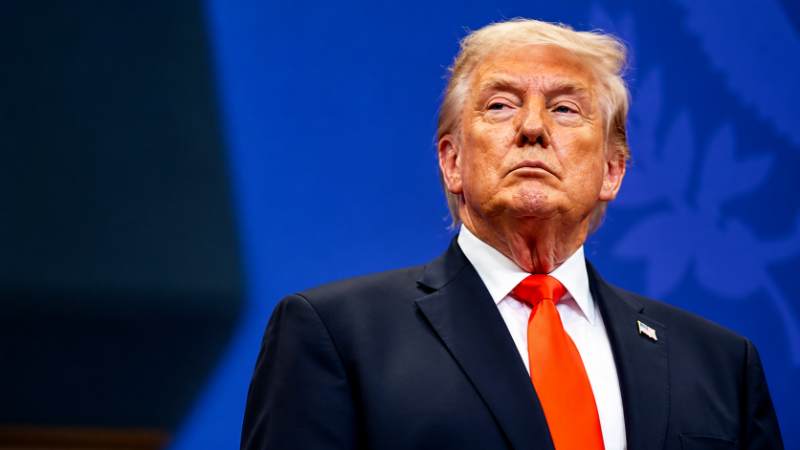
The Trump Crypto Expansion narrative is rapidly becoming one of the most closely watched developments at the intersection of politics, capital markets, and digital finance. As traditional wealth structures evolve, the reported scale of crypto-related exposure tied to Donald Trump signals a broader transformation in how high-net-worth individuals approach asset allocation. In 2026, digital assets are no longer fringe instruments—they are embedded within the architecture of global wealth strategies.
Reports تشير to an estimated $1.4 billion scale of crypto-related expansion, representing not necessarily direct holdings alone, but a mix of ecosystem participation, platform valuation, branding influence, and potential token exposure. This level of involvement highlights how crypto has transitioned from speculative positioning to a structured component of diversified portfolios, especially among politically connected capital networks.
Moreover, financial markets are paying close attention to how political figures engage with blockchain ecosystems. The Trump Crypto Expansion is being interpreted not just as a wealth move, but as a signal of political capital entering decentralized finance, creating ripple effects across investor sentiment, regulatory expectations, and institutional adoption patterns.
Trump Crypto Expansion: What the $1.4B Figure Represents?
The Trump Crypto Expansion figure of $1.4 billion should be understood as a composite valuation, not a singular asset holding. In modern crypto finance, wealth exposure can come from multiple layers including token allocations, equity stakes in blockchain ventures, licensing agreements, and ecosystem-driven revenue streams. Therefore, the figure likely reflects a combination of these structural components rather than direct cryptocurrency ownership alone.
Crypto valuations differ significantly from traditional assets. Tokens derive value from network utility, liquidity, governance rights, and speculative demand, while platform-based valuations often depend on user growth, transaction volume, and protocol adoption. Consequently, a $1.4B expansion could represent involvement in projects whose valuations fluctuate with broader market cycles, making it dynamic rather than fixed.
From a market perspective, large-scale crypto exposure tied to influential figures is interpreted as a confidence signal. However, it also introduces volatility, as investor sentiment may react disproportionately to political developments. Therefore, while the reported scale reflects strategic positioning, it must be viewed within the context of market-driven valuation shifts and public disclosures, not as a static financial benchmark.
Crypto as a Strategic Asset in Political Wealth Portfolios
The rise of the Trump Crypto Expansion aligns with a broader shift among high-net-worth individuals toward non-traditional asset classes. Crypto offers diversification beyond real estate, equities, and fixed income, providing exposure to a rapidly growing digital economy. This diversification is particularly relevant in an environment marked by inflationary pressures and currency volatility.
One of crypto’s key advantages is liquidity and borderless accessibility. Unlike real estate or private equity, digital assets can be transferred globally within minutes, enabling rapid capital reallocation. This feature is especially valuable for politically exposed individuals who operate within dynamic regulatory and geopolitical landscapes.
However, the strategic appeal of crypto comes with trade-offs. While it can act as a hedge against traditional financial instability, it also introduces high volatility and regulatory uncertainty. Therefore, the inclusion of crypto in wealth portfolios reflects a calculated balance between growth potential and systemic risk, rather than a wholesale replacement of traditional assets.
Traditional Assets vs Crypto Assets
| Feature | Traditional Assets | Crypto Assets |
|---|---|---|
| Liquidity | Moderate to low | High (24/7 markets) |
| Transparency | Regulated disclosures | Blockchain-based transparency |
| Volatility | Relatively low | Too high |
| Regulation | Established frameworks | Evolving and uncertain |
| Accessibility | Geographically restricted | Global, decentralized access |
| Return Potential | Stable, long-term growth | High-risk, high-reward |
Market Reaction to Trump Crypto Expansion
The Trump Crypto Expansion has influenced market sentiment in measurable ways. Large-scale crypto involvement by prominent figures often leads to short-term volatility spikes, as traders react to perceived endorsement signals. This effect is particularly visible in altcoin markets and ecosystem tokens linked to high-profile narratives.
Institutional investors, however, tend to interpret such developments more cautiously. While retail participants may view the expansion as bullish momentum, institutions focus on underlying fundamentals, including regulatory clarity, liquidity depth, and long-term viability of blockchain projects. This divergence creates a layered market response rather than a uniform trend.
Consequently, the broader crypto market experiences both confidence boosts and speculative surges. While increased visibility can attract capital inflows, it also raises concerns about market overheating and narrative-driven pricing, which may not always align with intrinsic value.
Regulation, Policy & Political Influence on Crypto Markets
The regulatory environment remains a critical factor shaping the impact of the Trump Crypto Expansion. In the United States, crypto regulation continues to evolve, with agencies focusing on securities classification, anti-money laundering compliance, and stablecoin frameworks. Political figures associated with crypto inevitably influence how these policies are perceived and implemented.
Political involvement in crypto markets creates both opportunities and risks. On one hand, it can accelerate policy clarity and institutional acceptance, encouraging broader adoption. On the other hand, it introduces conflict-of-interest concerns and potential regulatory scrutiny, especially when financial interests intersect with policymaking influence.
Therefore, the Trump Crypto Expansion must be analyzed within a policy-driven context, where regulatory developments can either amplify or constrain market growth. The interplay between political influence and financial markets adds a layer of complexity that extends beyond traditional investment analysis.
Crypto Expansion Impact on Financial Markets
| Factor | Impact of Crypto Expansion |
|---|---|
| Market Confidence | Increased but volatile |
| Capital Flow | Shift toward digital assets |
| Regulation Risk | Elevated uncertainty |
| Volatility | Short-term spikes |
| Institutional Adoption | Gradual acceleration |
| Long-Term Outlook | Fixed but subject to regulation |
Risks & Trade-Offs of Crypto Expansion
The Trump Crypto Expansion highlights several critical risks inherent in digital asset markets. First, price volatility remains one of the most significant challenges, with crypto valuations capable of large swings within short timeframes. This volatility can impact portfolio stability, especially at billion-dollar scales.
Regulatory risk is another major factor. Governments worldwide are increasing oversight of crypto markets, which could lead to restrictions, taxation changes, or compliance burdens. For politically exposed investors, these risks are amplified due to heightened scrutiny.
Additionally, liquidity risks exist in certain segments of the crypto ecosystem, particularly in low-cap tokens or emerging blockchain projects. While major cryptocurrencies offer deep liquidity, smaller assets may face execution challenges during market stress.
Read also: Canada Joins EPC Summit as Carney Seeks Allies Against Trump
Trump Crypto Expansion: Broader Financial Implications
The broader implications of the Trump Crypto Expansion extend beyond individual wealth. One of the most notable effects is the shift of capital from traditional assets into digital ecosystems, signaling a transformation in global financial structures. This shift reflects growing confidence in blockchain technology as a foundational layer for future finance.
Moreover, the involvement of politically influential figures introduces a new dynamic where financial capital and political capital converge within decentralized systems. This convergence has the potential to reshape how markets interpret authority, trust, and value creation in a digital-first economy.
However, the long-term impact depends on regulatory alignment and market maturity. While crypto offers significant growth opportunities, its integration into mainstream finance requires stability, transparency, and institutional-grade infrastructure.
2026 Crypto Market Trends & Outlook
The Trump Crypto Expansion is occurring within a broader context of accelerating crypto adoption in 2026. Global crypto market capitalization has shown sustained growth, driven by institutional investment, tokenized assets, and blockchain-based financial services. These trends indicate a shift toward crypto as a core component of financial systems rather than a speculative niche.
Institutional adoption is particularly noteworthy. Large asset managers and financial institutions are increasingly integrating crypto into their portfolios, driven by demand for diversification and exposure to emerging technologies. This trend reinforces the strategic relevance of crypto for high-net-worth individuals.
At the same time, regulatory frameworks are becoming more defined. Governments are working toward balanced approaches that enable innovation while mitigating risk, which could support long-term market stability. Consequently, the future of crypto appears tied to its ability to evolve into a regulated yet decentralized financial infrastructure.
FAQs
What is Trump Crypto Expansion?
The Trump Crypto Expansion refers to the reported increase in crypto-related financial exposure linked to Donald Trump’s broader wealth ecosystem, based on public disclosures and market analysis.
What does $1.4B crypto expansion mean?
It represents an estimated scale of involvement across crypto assets, platforms, or ecosystem participation, rather than a single direct investment.
Is Trump investing in cryptocurrency?
There is reported involvement in crypto-related ventures, but exact ownership structures are not fully disclosed publicly.
How do political figures influence crypto markets?
They impact investor sentiment, regulatory expectations, and market confidence, often leading to short-term volatility.
What are the risks of crypto investments?
Key risks include volatility, regulatory uncertainty, liquidity challenges, and market speculation.
How does crypto compare to traditional assets?
Crypto offers higher liquidity and return potential but comes with greater volatility and regulatory uncertainty.
What is driving crypto adoption in 2026?
Institutional investment, technological innovation, and growing acceptance of blockchain-based financial systems.
Is crypto a safe investment for billionaires?
It can be part of a diversified strategy, but it carries significant risk and requires careful allocation.
How does regulation impact crypto markets?
Regulation shapes market stability, investor confidence, and long-term growth potential.
What is the future of crypto in global finance?
Crypto is expected to evolve into a key component of global financial infrastructure, subject to regulatory alignment and technological maturity.