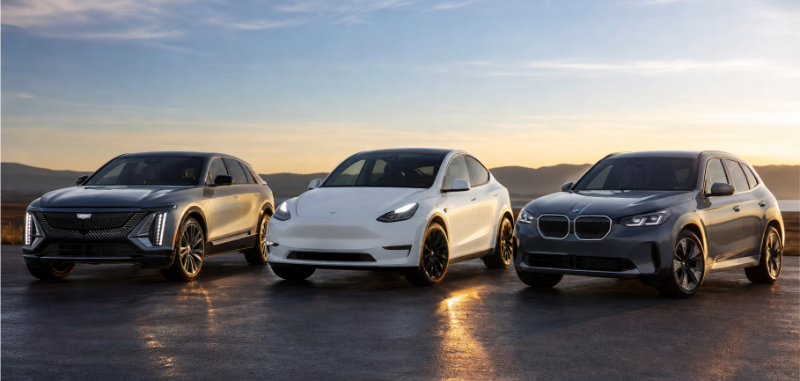
The comparison between Cadillac Lyriq, Tesla Model Y, and BMW iX3 has quickly become one of the most important buying decisions in the electric vehicle space. As EV adoption accelerates globally in 2026, consumers are no longer driven purely by hype or brand curiosity. Instead, they are asking practical questions about range, charging convenience, long-term ownership costs, and everyday usability.
Moreover, this shift marks a clear transition from early adopters to rational buyers. The EV market is maturing, and buyers now expect vehicles to perform seamlessly in real-world conditions. Consequently, comparisons like Cadillac Lyriq vs Tesla Model Y vs BMW iX3 are no longer niche they define how mainstream consumers choose their first or next electric SUV.
At a broader level, this matchup reflects a deeper industry battle. Tesla represents software-driven innovation and ecosystem dominance. BMW brings legacy engineering and driving precision. Cadillac, on the other hand, is redefining American luxury for the electric age. Therefore, understanding this comparison is essential for anyone entering the EV market in 2026.
Cadillac Lyriq vs Tesla Model Y vs BMW iX3: Electric SUV Market Showdown
The Cadillac Lyriq vs Tesla Model Y vs BMW iX3 comparison highlights three distinct philosophies in the electric SUV segment. Each vehicle is engineered with a different type of buyer in mind, and that difference is more significant than raw specifications alone. While all three compete in a similar price and size bracket, their approach to performance, comfort, and technology varies dramatically.
The Lyriq positions itself as a comfort-first luxury EV. It prioritizes ride quality, cabin quietness, and premium materials, aiming to attract buyers transitioning from traditional luxury SUVs. Meanwhile, the Tesla Model Y continues to dominate as a tech-first vehicle, offering unmatched software integration, over-the-air updates, and a tightly integrated charging ecosystem. The BMW iX3, however, strikes a middle ground, appealing to drivers who want a familiar driving experience without sacrificing electrification.
Key positioning differences:
- Lyriq: Luxury comfort and premium cabin focus
- Model Y: Software ecosystem and efficiency leader
- iX3: Balanced performance with traditional driving feel
- Tesla targets innovation-driven buyers
- Cadillac appeals to comfort-focused users
- BMW attracts brand-loyal drivers seeking familiarity
Ultimately, this comparison is less about “which is best” and more about “which fits your lifestyle.” Consequently, buyers must evaluate priorities rather than rely solely on headline specs.
Performance, Range & Battery Comparison in the Electric SUV Battle 2026
Performance and range remain central to the Cadillac Lyriq vs Tesla Model Y vs BMW iX3 debate. However, real-world usability often matters more than lab-tested numbers. Each SUV delivers competitive figures, yet their driving characteristics differ significantly depending on tuning and efficiency strategies.
The Cadillac Lyriq offers an estimated range of around 326 miles, focusing on smooth power delivery rather than aggressive acceleration. Its driving experience is refined and relaxed, making it ideal for long-distance comfort. In contrast, the Tesla Model Y emphasizes efficiency and speed, delivering quick acceleration and optimized energy usage that often translates into better real-world range consistency. The BMW iX3 provides balanced performance, offering a predictable and controlled driving feel that aligns with BMW’s traditional DNA.
Another critical factor is charging capability. Tesla maintains a strong advantage due to its Supercharger network and optimized charging curve. Meanwhile, Cadillac and BMW rely more heavily on expanding third-party networks, which are improving but still inconsistent in some regions. Therefore, range alone does not define usability—charging infrastructure plays an equally important role.
Cadillac Lyriq vs Tesla Model Y vs BMW iX3
| Feature | Lyriq | Model Y | iX3 |
|---|---|---|---|
| Range | ~326 miles | ~330 miles | ~285 miles |
| Battery | ~102 kWh | ~75 kWh | ~80 kWh |
| Charging Speed | Moderate-fast | Fast (Supercharger) | Moderate |
| Performance | Smooth, comfort-focused | Quick, responsive | Balanced |
| Ride Comfort | Excellent | متوسط | Good |
| Efficiency | Moderate | High | Moderate |
| Software | متوسط | Best-in-class | Good |
| Value | Strong luxury value | High resale | Premium pricing |
Cadillac Lyriq vs Tesla Model Y vs BMW iX3: Interior, Tech & User Experience
Interior experience is where the Cadillac Lyriq vs Tesla Model Y vs BMW iX3 comparison becomes particularly interesting. Unlike performance metrics, cabin design and usability directly affect daily satisfaction. Consequently, each vehicle offers a unique interpretation of what a modern EV interior should feel like.
The Lyriq stands out with its 33-inch curved display, premium materials, and near-silent cabin. It delivers a traditional luxury experience enhanced by modern digital elements. On the other hand, the Tesla Model Y adopts an ultra-minimalist approach, eliminating most physical controls in favor of a central touchscreen. This design emphasizes software but may feel less premium to some users. The BMW iX3 maintains a familiar layout, featuring the iDrive system, physical buttons, and ergonomic design that appeals to long-time BMW drivers.
Key differences in user experience:
- Lyriq: High-end materials and immersive display
- Model Y: Minimalist design with software dominance
- iX3: Traditional luxury with digital refinement
- Tesla leads in OTA updates and app integration
- Cadillac excels in comfort and ambiance
- BMW offers intuitive usability and driving ergonomics
Therefore, the choice depends on whether buyers prioritize digital innovation or tactile luxury.
Real Owner Insights & Market Perception in Tesla vs BMW vs Cadillac EV
Real-world feedback often reveals insights that specifications cannot. In the Cadillac Lyriq vs Tesla Model Y vs BMW iX3 discussion, owner experiences highlight a consistent theme: Tesla dominates in technology, while Cadillac leads in comfort and ride quality.
Many users emphasize that the Lyriq delivers a more relaxing and premium driving experience. As one widely shared sentiment puts it:
“Tech is better in Tesla but no comparison for the ride… Lyriq is awesome”
This reflects a broader perception shift in the EV market. Buyers are starting to value comfort and build quality more than raw acceleration or software features. Meanwhile, Tesla continues to attract users who prioritize innovation, seamless connectivity, and frequent updates.
Tesla Tech vs Luxury Comfort vs Driving Balance
| Category | Tesla Model Y | Cadillac Lyriq | BMW iX3 |
|---|---|---|---|
| Software | Excellent | Average | Good |
| Comfort | Average | Excellent | Good |
| Driving Feel | Sporty | Smooth | Balanced |
| Build Quality | Mixed | High | High |
| Brand Perception | Innovative | Premium | Reliable |
| Daily Usability | Strong | Strong | Strong |
Why Buyers Are Choosing Different EV SUVs in 2026?
The Cadillac Lyriq vs Tesla Model Y vs BMW iX3 comparison ultimately comes down to buyer psychology. In 2026, EV buyers are more informed and selective than ever before. They are no longer chasing novelty but instead focusing on long-term satisfaction and usability.
Tesla Model Y buyers tend to be tech-first consumers. They value the ecosystem, app integration, and charging convenience. Cadillac Lyriq buyers, however, are often transitioning from luxury gasoline SUVs and prioritize comfort, quietness, and premium interiors. BMW iX3 buyers typically seek familiarity, preferring a driving experience that closely resembles traditional BMW vehicles.
Key buyer motivations:
- Tesla: Innovation, charging network, resale value
- Cadillac: Comfort, luxury, smooth ride
- BMW: Driving balance, brand trust, familiarity
Consequently, each SUV succeeds by targeting a different mindset rather than competing directly on identical criteria.
Read also: BMW vs. Tesla | Brand & Model Comparison
Charging Infrastructure & Ownership Reality in 2026 EV Landscape
Charging infrastructure plays a decisive role in the Cadillac Lyriq vs Tesla Model Y vs BMW iX3 debate. While battery range is important, the ability to charge conveniently determines real-world usability. Tesla continues to lead due to its expansive Supercharger network, which offers reliability and ease of use.
However, third-party charging networks are expanding rapidly in 2026. Companies across North America, Europe, and Asia are investing heavily in fast-charging stations, improving accessibility for non-Tesla vehicles. Cadillac and BMW benefit from this growth, although inconsistencies still exist in certain regions.
Ownership considerations include:
- Tesla Supercharger network advantage
- Increasing availability of third-party chargers
- Home charging as a primary solution
- Public charging reliability varies by region
- Charging speed differences impact travel time
- Infrastructure influences long-term satisfaction
Therefore, buyers must evaluate not just the vehicle but the charging ecosystem available in their area.
Cadillac Lyriq vs Tesla Model Y vs BMW iX3: Costs & Value Analysis
Cost analysis in the Cadillac Lyriq vs Tesla Model Y vs BMW iX3 comparison goes beyond the purchase price. Total cost of ownership includes efficiency, maintenance, resale value, and incentives. Consequently, each SUV presents a different value proposition.
The Lyriq offers strong value in terms of luxury features relative to its price. The Model Y benefits from high efficiency and strong resale value, reducing long-term ownership costs. The BMW iX3, while priced at a premium, appeals to buyers who value brand reliability and driving consistency.
Cost considerations:
- Lyriq: Competitive luxury pricing
- Model Y: High resale and efficiency
- iX3: Premium pricing with brand trust
- Maintenance costs generally lower for EVs
- Insurance varies by region and model
- Incentives can significantly affect pricing
Therefore, the “best value” depends on whether buyers prioritize upfront savings or long-term efficiency.
Limitations & Trade-Offs in the Luxury EV SUV Battle
No comparison is complete without acknowledging trade-offs. The Cadillac Lyriq vs Tesla Model Y vs BMW iX3 debate highlights clear strengths but also notable limitations.
The Lyriq’s software ecosystem is less advanced compared to Tesla, which may affect long-term usability. The Model Y, while technologically superior, lacks the premium interior feel expected at its price point. The BMW iX3, although balanced, does not push innovation as aggressively as Tesla.
Key trade-offs:
- Lyriq: weaker software integration
- Model Y: less premium interior
- iX3: limited innovation
- Tesla excels in ecosystem
- Cadillac leads in comfort
- BMW offers consistency
Consequently, buyers must accept compromises depending on their priorities.
2026 EV Market Trends Shaping This Comparison
The Cadillac Lyriq vs Tesla Model Y vs BMW iX3 comparison reflects broader trends in the EV market. In 2026, electric vehicles are no longer niche products—they are mainstream choices for everyday drivers.
Key trends include:
- EV adoption reaching mass-market levels
- Software becoming a primary differentiator
- Expansion of charging infrastructure
- Growth of luxury EV segment
- Buyers prioritizing usability over novelty
- Increasing competition among legacy brands
This comparison represents a deeper shift: software vs comfort vs driving heritage. Tesla leads in software, Cadillac in comfort, and BMW in driving tradition. Therefore, the future of EVs will likely combine all three strengths.
FAQs
What is Cadillac Lyriq vs Tesla Model Y vs BMW iX3?
It is a comparison of three leading electric SUVs representing luxury, technology, and balanced driving in the 2026 EV market.
Which EV SUV is best in 2026?
There is no single “best”—Tesla leads in tech, Cadillac in comfort, and BMW in driving balance.
Is Tesla Model Y better than Cadillac Lyriq?
It depends on priorities—Tesla excels in software, while Lyriq offers superior comfort and luxury.
How much range does Cadillac Lyriq have?
The Lyriq offers approximately 326 miles of range, depending on configuration.
Which SUV has the best technology?
The Tesla Model Y leads with advanced software and over-the-air updates.
Is BMW iX3 worth buying in 2026?
Yes, especially for buyers seeking a traditional driving experience with electric efficiency.
Which EV SUV is most comfortable?
The Cadillac Lyriq is widely regarded as the most comfortable among the three.
How does charging compare between these SUVs?
Tesla has the advantage with its Supercharger network, while others rely on growing third-party infrastructure.
Which offers best value for money?
The Model Y offers strong long-term value, while the Lyriq provides luxury at a competitive price.
Should you buy Lyriq, Model Y, or iX3?
Choose based on priorities: tech (Tesla), comfort (Cadillac), or balance (BMW).