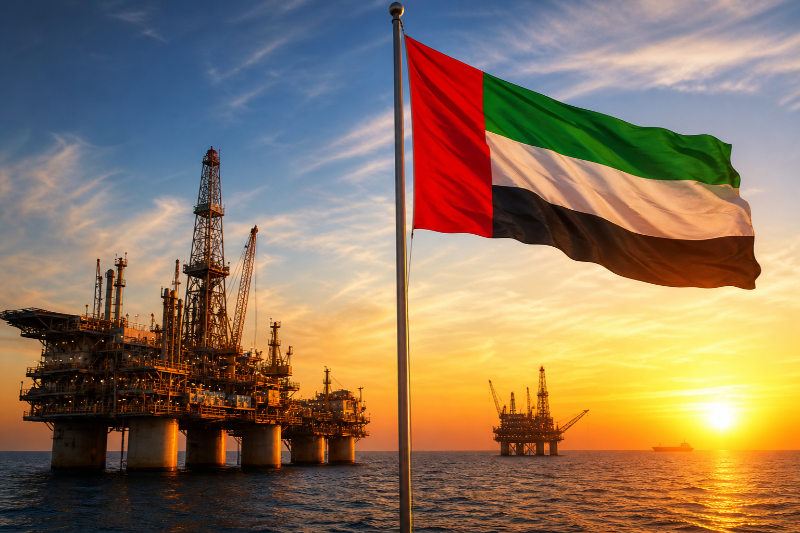
The UAE OPEC Exit is emerging as one of the most consequential developments in global energy markets in 2026, signaling a shift away from traditional cartel-driven coordination toward independent, investment-led oil strategies. For decades, the OPEC framework has defined production limits and pricing influence, but the United Arab Emirates is now repositioning itself to operate beyond those constraints. This move reflects a deeper transformation in how oil-producing nations balance sovereignty, market share, and long-term economic planning.
At the core of the UAE OPEC Exit is a strategic recalibration of priorities—favoring speed, flexibility, and capital efficiency over collective quota discipline. As global oil demand patterns evolve and geopolitical tensions reshape supply chains, Abu Dhabi is aiming to accelerate upstream investments and expand production capacity without being tied to group decisions. This aligns with broader Gulf ambitions to maximize hydrocarbon value while simultaneously preparing for a diversified economic future.
Investors and policymakers are closely monitoring this transition because it represents more than just a policy shift; it signals a structural change in global oil governance. The UAE OPEC Exit highlights a growing divide between nations that prefer coordinated market management and those that prioritize independent growth. Consequently, this development could redefine pricing dynamics, reshape alliances, and introduce new volatility into energy markets.
UAE OPEC Exit: What’s Driving the Shift
The UAE OPEC Exit is primarily driven by frustration with production quota limitations imposed by OPEC. While these quotas are designed to stabilize global oil prices, they often restrict countries with higher production potential from fully utilizing their capacity. For the UAE, which has invested heavily in expanding its oil infrastructure, such constraints limit revenue generation and delay returns on capital-intensive upstream projects. Therefore, exiting OPEC allows the country to align production with its actual capabilities rather than externally imposed limits.
Another critical factor behind the UAE OPEC Exit is the desire for faster decision-making in upstream investments. Under OPEC, production adjustments require consensus among member states, which can slow down responses to market opportunities. By stepping outside this framework, the UAE can accelerate project approvals, deploy capital more efficiently, and respond dynamically to fluctuations in global demand. This agility is particularly important in a market increasingly influenced by geopolitical disruptions and shifting consumption patterns.
Moreover, the UAE’s ambitions to expand production capacity significantly contribute to this strategic move. Through its national oil company, Abu Dhabi National Oil Company, the country aims to reach higher output levels in the coming years. Achieving this goal requires operational independence and the ability to scale production without restrictions. Consequently, the UAE OPEC Exit is not merely a reaction to current limitations but a proactive step toward long-term capacity expansion and market positioning.
OPEC vs Independent Oil Strategy: A Structural Shift in Energy Governance
The contrast between OPEC membership and an independent oil strategy lies in the balance between coordination and autonomy. Within OPEC, member countries agree to production quotas that aim to manage global supply and stabilize prices. However, this system often requires compromises that may not align with individual national interests. In contrast, an independent strategy allows countries like the UAE to prioritize their own economic objectives, even if it introduces greater exposure to market fluctuations.
From a financial perspective, independence enhances investment flexibility. Without OPEC-imposed limits, the UAE can optimize production levels based on profitability rather than compliance. This shift enables more efficient capital allocation and potentially higher returns on upstream investments. However, it also means relinquishing the collective pricing power that OPEC provides, which has historically helped stabilize revenues during periods of market volatility.
Operationally, independence transforms how national oil companies function. Entities like ADNOC gain greater control over production planning, project timelines, and export strategies. This autonomy allows for quicker adaptation to technological advancements and evolving market conditions. As a result, the UAE OPEC Exit represents a broader shift toward decentralized energy governance, where individual nations compete more directly for market share.
OPEC Membership vs Independent Oil Strategy
| Factor | OPEC Membership | Independent Strategy |
|---|---|---|
| Production Control | Quota-based | Fully autonomous |
| Investment Speed | Slower (consensus-driven) | Faster (independent decisions) |
| Pricing Power | Collective influence | Market-driven |
| Market Flexibility | Limited | High |
| Revenue Stability | More stable | More volatile |
| Geopolitical Influence | Collective bloc | Individual leverage |
Impact of UAE OPEC Exit on Global Oil Markets
The UAE OPEC Exit has significant implications for global oil supply dynamics. By removing production constraints, the UAE could increase output, contributing additional barrels to the global market. This potential supply increase may exert downward pressure on oil prices, particularly if demand growth does not keep pace. However, the actual impact will depend on how quickly the UAE scales production and how other producers respond.
Market sentiment is also influenced by the perception of reduced cohesion within OPEC. The exit of a key member like the UAE raises concerns about the organization’s ability to maintain unified production policies. Consequently, traders may anticipate less predictable supply management, leading to increased price volatility. This uncertainty could reshape how markets price risk, particularly in futures contracts.
Furthermore, the UAE OPEC Exit could trigger a domino effect among other producers considering similar moves. If additional countries prioritize independence, the global oil market may shift toward a more fragmented structure. This would reduce the influence of centralized coordination and increase competition for market share, ultimately redefining supply-demand equilibrium.
Investor Perspective: Opportunities After UAE OPEC Exit
From an investor standpoint, the UAE OPEC Exit creates new opportunities in the energy sector. Increased upstream investment activity is expected as the UAE accelerates exploration and production projects. This expansion could attract international capital, particularly from investors seeking exposure to stable, resource-rich markets with strong growth potential.
Infrastructure development is another area of opportunity. As production capacity increases, the UAE will need to enhance its logistics, storage, and export capabilities. Investments in pipelines, terminals, and refining facilities are likely to rise, creating a ripple effect across the energy value chain. Consequently, the UAE is positioning itself as a hub for integrated energy investments.
Additionally, the UAE OPEC Exit may shift global capital allocation toward Gulf markets. Investors often favor environments with regulatory clarity and operational flexibility, both of which are strengthened by independence. This trend could boost investor confidence and reinforce the UAE’s reputation as a reliable and agile energy partner.
UAE OPEC Exit Impact on Global Energy Markets
| Factor | Expected Impact |
|---|---|
| Investment Flow | Increase toward UAE |
| Oil Prices | Potential volatility |
| Supply Stability | Less predictable |
| Investor Confidence | Generally positive |
| Market Volatility | Higher |
| Strategic Positioning | Strengthened UAE role |
Geopolitical Implications of UAE OPEC Exit
The UAE OPEC Exit reshapes geopolitical dynamics within the Middle East and beyond. By stepping away from collective decision-making, the UAE signals a shift toward strategic autonomy, which may alter its relationships with other oil-producing nations. This move could lead to recalibrated alliances, particularly with countries that remain committed to OPEC’s framework.
At the same time, the UAE strengthens its position as an independent energy player. This autonomy allows it to engage more flexibly with global consumers, including major economies in Asia and Europe. Consequently, the UAE can negotiate bilateral agreements that better align with its economic interests, enhancing its geopolitical influence.
However, the exit also introduces diplomatic complexities. Maintaining strong العلاقات with OPEC members while pursuing independent policies requires careful balancing. The UAE must navigate these relationships to avoid tensions that could impact broader regional stability.
UAE OPEC Exit: Risks & Trade-Offs
Despite its advantages, the UAE OPEC Exit involves several risks. One of the primary concerns is the loss of coordinated pricing support provided by OPEC. Without collective production management, the UAE becomes more exposed to market-driven price fluctuations, which can impact revenue stability.
Another challenge is increased competition. By operating independently, the UAE must compete more directly with other major producers, including those within OPEC and beyond. This competitive environment may pressure margins, particularly during periods of oversupply.
Diplomatic implications also represent a potential downside. The UAE OPEC Exit could strain relationships with countries that view the move as undermining collective efforts. Balancing independence with cooperation will be crucial to mitigating these risks.
Economic Strategy and Diversification in a Post-OPEC Era
The UAE OPEC Exit aligns with the country’s broader economic diversification strategy. Oil revenues continue to play a critical role in funding non-oil sectors, including technology, tourism, and renewable energy. By maximizing hydrocarbon output, the UAE can generate the capital needed to invest in these future-oriented industries.
Simultaneously, the UAE is investing in renewable energy projects to reduce long-term dependence on fossil fuels. This dual approach—expanding oil production while developing clean energy—reflects a pragmatic strategy aimed at balancing immediate economic needs with future sustainability goals.
Long-term planning remains central to this strategy. The UAE OPEC Exit provides the flexibility needed to adapt to changing global energy trends, ensuring that the country remains competitive in both traditional and emerging energy markets.
2026 Energy Market Trends and the Rise of Independent Producers
The UAE OPEC Exit is part of a broader trend toward fragmentation in global oil alliances. As countries prioritize national interests, the traditional model of coordinated production is giving way to more decentralized approaches. This shift reflects changing market conditions, where speed and adaptability are increasingly valuable.
Independent producer strategies are gaining traction as nations seek greater control over their resources. This trend is accompanied by intensified competition for market share, particularly in Asia, which remains a key growth region for oil demand. Consequently, producers must adopt more agile strategies to remain competitive.
Ultimately, the UAE OPEC Exit represents a fundamental shift from coordination to control in global oil markets. By prioritizing autonomy, the UAE is redefining how energy power is exercised, setting a precedent that could influence other producers in the years ahead.
FAQs
What is UAE OPEC Exit?
The UAE OPEC Exit refers to the country’s decision to leave OPEC and operate independently in managing its oil production and investment strategy.
Why would UAE leave OPEC?
The UAE seeks greater flexibility, faster investment decisions, and the ability to expand production without quota restrictions.
How does OPEC membership affect oil production?
OPEC membership imposes production quotas designed to stabilize global oil prices through coordinated supply management.
What happens if UAE exits OPEC?
The UAE gains full control over production but loses the collective pricing influence of OPEC.
How will oil prices be affected?
Prices may become more volatile due to reduced coordination among major producers.
Is UAE increasing oil production capacity?
Yes, the UAE is actively expanding capacity through ADNOC to boost long-term output.
What does this mean for global investors?
It creates new opportunities in upstream projects, infrastructure, and energy markets in the UAE.
How does this impact Middle East geopolitics?
It shifts alliances and increases the UAE’s independent influence in global energy diplomacy.
Is OPEC losing influence in 2026?
OPEC’s influence may weaken as more countries consider independent strategies.
What are the risks of leaving OPEC?
Risks include price volatility, increased competition, and potential diplomatic tensions.