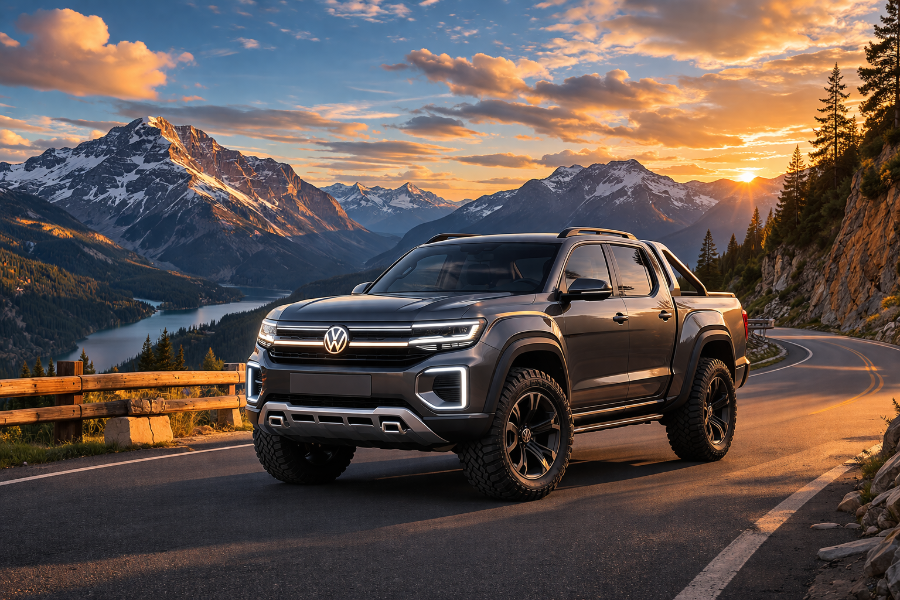
Volkswagen is showing a clearer interest in expanding into the pickup truck segment, marking a potential shift toward higher-margin utility vehicles. The move reflects broader industry trends where global automakers are increasingly targeting trucks due to their strong profitability and consistent demand, especially in North America.
The discussion around a possible Volkswagen Premium Pickup comes at a time when pickups remain one of the most dominant vehicle categories in key markets. In the United States, they account for a significant share of total vehicle sales, making them strategically important for global manufacturers.
While Volkswagen has not confirmed a final product plan, leadership comments suggest that the company is actively evaluating both compact and midsize pickup segments. This signals a careful, data-driven approach focused on long-term positioning rather than immediate product rollout.
Volkswagen’s Growing Interest in the Pickup Segment
Volkswagen’s renewed attention to pickups reflects its broader strategy of focusing on high-demand and high-margin vehicle categories. The company has acknowledged internally that it cannot ignore the scale and profitability of the pickup market, particularly in the United States.
The Volkswagen Premium Pickup discussion is not isolated but part of a wider review of utility vehicles across global markets. Moreover, the brand is assessing how pickups can fit within its existing platform strategy and regional product planning.
Key confirmed points include:
- Volkswagen leadership has stated a pickup truck is “not ruled out”
- The company is actively evaluating compact and midsize pickup segments
- Focus remains on U.S.-aligned vehicle requirements
- Utility and lifestyle vehicle demand is a key driver of internal discussions
Consequently, Volkswagen’s approach remains exploratory but structured, with clear emphasis on market alignment rather than rapid expansion.
Global Demand and the Strategic Importance of Pickups
Pickup trucks continue to be one of the strongest-performing automotive segments globally. North America remains the largest market, but demand is also growing in regions such as Australia, parts of Europe, and emerging economies where utility vehicles are gaining popularity.
The Volkswagen Premium Pickup strategy aligns with this demand trend, as automakers seek stable, high-volume segments with strong profitability. Moreover, pickups often generate higher margins compared to traditional sedans or compact cars.
Key market drivers include:
- High consumer demand in the U.S. and Canada
- Strong utility value for both personal and commercial use
- Growth of lifestyle-oriented pickup ownership
- Expansion of mid-size and compact pickup segments globally
Therefore, Volkswagen’s interest reflects a broader industry shift toward utility-focused mobility solutions.
Volkswagen’s Confirmed Position and Market Signals
Volkswagen has not announced a production pickup for the U.S., but leadership statements confirm ongoing evaluation. The company’s CEO in the U.S. has publicly acknowledged that pickup opportunities are under consideration.
The Volkswagen Premium Pickup concept is being assessed through two main directions: a traditional midsize truck and a more compact lifestyle-oriented pickup. However, no final decision has been made regarding platform or design direction.
Confirmed signals include:
- Internal evaluation of compact pickup segments
- Internal evaluation of midsize pickup segments
- Consideration of U.S. market requirements
- No final production decision announced
Moreover, Volkswagen continues to emphasize flexibility in responding to regional demand trends, especially in North America where pickups dominate vehicle sales.
Existing Volkswagen Pickup Foundation: Amarok
Volkswagen already has experience in the pickup segment through the Volkswagen Amarok, which serves as its global midsize pickup model. The Amarok has been positioned primarily for markets outside the United States, including South America, Europe, and Australia.
The Volkswagen Premium Pickup discussion builds on this foundation, as the Amarok demonstrates the company’s ability to compete in the midsize truck category. Moreover, it provides a baseline for engineering and production knowledge in this segment.
Key Amarok characteristics include:
- Midsize pickup positioning
- Global-market availability outside the U.S.
- Continued production and development in key regions
- Shared engineering collaboration with global partners in some generations
Consequently, the Amarok serves as a potential reference point for any future expansion strategy.
Volkswagen Pickup Strategy Overview
| Category | Current Model | Market Position | Strategic Relevance |
|---|---|---|---|
| Midsize Pickup | Volkswagen Amarok | Global midsize truck | Existing foundation for expansion |
| Compact Pickup (Potential) | Not confirmed | Lifestyle utility segment | High-growth urban market |
| U.S. Midsize Pickup (Potential) | Not confirmed | Toyota Tacoma / Ford Ranger segment | High-volume, high-margin opportunity |
| Premium Lifestyle Pickup (Potential) | Not confirmed | Upmarket utility segment | Brand differentiation opportunity |
This structured view highlights how the Volkswagen Premium Pickup strategy may evolve across multiple segments. Moreover, it shows how Volkswagen is aligning its global portfolio planning with regional demand patterns.
Why Premium Pickups Matter for Volkswagen?
Premium pickups represent one of the most attractive growth opportunities in the automotive industry. They combine strong consumer demand with higher-than-average profit margins, making them especially appealing to global manufacturers.
The Volkswagen Premium Pickup strategy aligns with several key advantages:
- Higher profitability compared to sedans and compact cars
- Strong demand in North America and Australia
- Growing popularity of lifestyle-focused utility vehicles
- Opportunity for brand diversification in the U.S. market
Therefore, pickups offer Volkswagen a pathway to strengthen both revenue and brand presence in high-value markets.
Competitive Landscape in the Pickup Segment
The global pickup market is highly competitive and dominated by established players. In the United States, models such as the Ford Ranger and Toyota Tacoma lead the midsize category, while full-size trucks dominate overall sales.
The Volkswagen Premium Pickup would enter a segment where competition is already mature and highly brand-loyal. Moreover, compact pickups are gaining momentum, increasing competitive pressure in lower segments as well.
Key competitors include:
- Ford Ranger
- Toyota Tacoma
- Toyota Hilux (global markets)
- Ford Maverick (compact segment)
- Hyundai Santa Cruz (lifestyle pickup segment)
Consequently, Volkswagen would need strong positioning to establish itself effectively.
Read also: 2026 Tesla Model 3 Review: Specs & Pricing Explained
Volkswagen’s Broader Strategy Alignment
Volkswagen’s interest in pickups aligns with its broader global strategy focused on SUVs, utility vehicles, and platform efficiency. The company has been increasingly shifting away from lower-margin segments and toward higher-demand categories.
The Volkswagen Premium Pickup strategy fits into this transformation by leveraging existing modular architectures and regional customization strategies. Moreover, it reflects Volkswagen’s focus on scalable global platforms.
Key strategic priorities include:
- Expansion of SUV and utility vehicle lineup
- Increased regional product customization
- Use of global modular platforms (such as MQB)
- Focus on high-volume, high-demand segments
Therefore, pickups represent a logical extension of Volkswagen’s current strategic direction.
Global Pickup Market Comparison
| Segment | Demand Level | Key Players | Market Trend |
|---|---|---|---|
| Full-size pickups | Very High (U.S.) | Ford, GM, Ram | Stable dominance |
| Midsize pickups | High | Toyota, Ford, Chevrolet | Growing competition |
| Compact pickups | Rising | Ford Maverick, Hyundai Santa Cruz | Fast-growing lifestyle segment |
| Premium pickups | Emerging | Limited direct competitors | High-margin opportunity |
This comparison shows why the Volkswagen Premium Pickup strategy is gaining attention internally. Moreover, it highlights the opportunity in underdeveloped premium utility positioning.
Challenges and Key Considerations
Despite strong market potential, entering the pickup segment presents significant challenges. Volkswagen must carefully evaluate platform decisions, production costs, and brand positioning.
Key challenges include:
- Intense competition from established pickup brands
- High customer loyalty in truck segments
- Complex platform and engineering requirements
- Need for strong brand identity in utility vehicles
However, Volkswagen’s global scale and platform expertise may help mitigate some of these challenges over time.
Read also: Classic Gem: 1971 Charger SE Triple Black With 440 Engine
2026 Market Trends Impacting Volkswagen Premium Pickup
The automotive industry in 2026 is being shaped by several key trends that directly influence the Volkswagen Premium Pickup opportunity. Electrification and hybridization are becoming increasingly important across all vehicle segments.
Key trends include:
- Growth of hybrid and electric pickup development
- Rising demand for lifestyle-oriented utility vehicles
- Increasing global interest in mid-size pickups
- Stronger focus on fuel efficiency and versatility
Moreover, automakers are adapting to changing consumer expectations for technology-rich and multi-purpose vehicles.
FAQs
Is Volkswagen making a pickup truck?
Volkswagen has not confirmed a production pickup, but it has stated that a truck is “not ruled out” and is currently under evaluation.
What pickup models does Volkswagen currently have?
Volkswagen’s main global pickup is the Amarok, which is positioned in the midsize segment.
Will VW launch a truck in the U.S.?
A U.S. launch has not been confirmed, but Volkswagen is actively evaluating the market.
What segment will Volkswagen target?
The company is considering both compact and midsize pickup segments depending on market demand.
Why are pickups important for automakers?
Pickups offer strong profitability, high demand in key markets, and consistent long-term sales performance.